If your air mattress feels softer in the morning than it did at bedtime - or hits the floor by 3 a.m. - you are not doing anything wrong. Some overnight pressure loss is normal, and the rest comes from a small list of fixable causes.
This guide walks through the five reasons an air mattress deflates, how to find a leak you cannot see, and what to do to keep it firm overnight. The advice draws on hands-on tests from Real Simple, The Spruce, and the manufacturer guidance from Bestway.
The short answer
Air mattresses deflate for five common reasons:
- Temperature changes - cold air contracts and pressure drops.
- Material stretching - new PVC expands during the first few uses.
- Slow leaks - pinholes, seam wear, or punctures from sharp objects.
- Valve problems - a loose or improperly seated stopper lets air seep out.
- Weight or movement stress - exceeding the rated capacity or jumping on the bed pushes air through seams.
Most of the time the fix is a $5 patch kit and a tighter valve. The rest is room-temperature management.
Why air mattresses deflate
1. Temperature changes
Air contracts when it cools. If you inflate the bed in a warm room and the temperature drops overnight, the same volume of air takes up less space and pressure falls. Sleep Advisor calls this out as the single most common cause of overnight softness with no actual hole.
Fix: top up the bed before sleep and put a blanket between the mattress and the floor to insulate it.
2. Material stretching (new bed only)
New PVC and vinyl mattresses stretch on the first few inflations. The Sleep Studies recommends inflating to about 75% on day one, topping up to full the next morning, and repeating for a couple of nights to let the material settle. After the break-in period the bed holds pressure normally.
3. Slow leaks
Pinhole punctures, weakened seams, and pet claws are the most common true-leak culprits. Even good airbeds can develop leaks at the welded seams over time - the structural beam edges flex with body weight and eventually weep air.
4. Valve problems
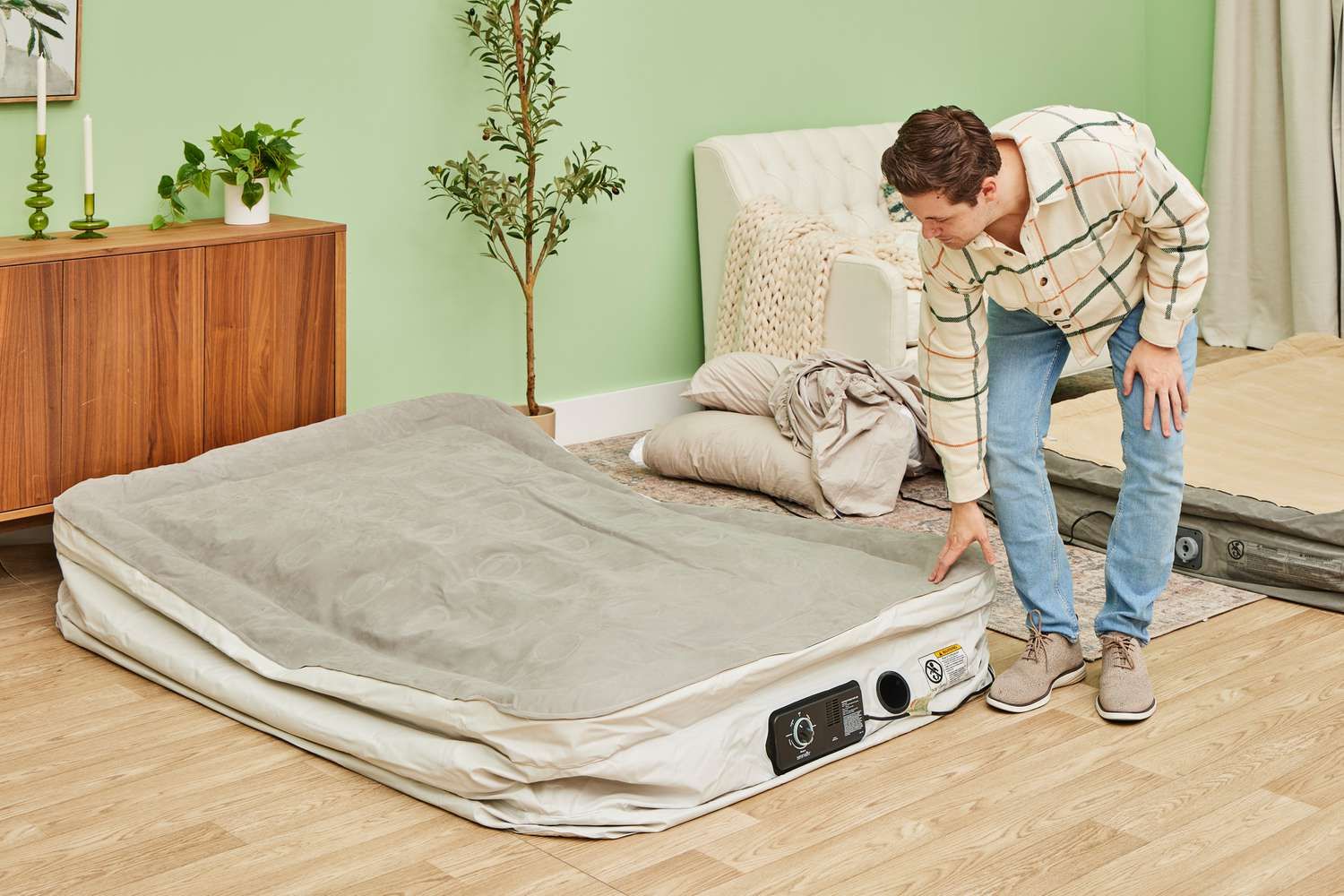
Most airbed valves have an outer cap and an inner stopper. If the inner stopper is not pushed all the way in, the bed will lose air silently. Press the stopper in firmly until you hear it seat, then screw the outer cap down.
5. Weight and movement stress
Every mattress has a weight rating - typically 300 lb for a twin, up to 600 lb for a queen. Exceeding it stresses seams and beams. Sitting on the edge, jumping, or letting kids bounce concentrates load and can pop the welded baffles inside.
How to find a leak you cannot see
Inflate the bed fully on a hard floor, then work the surface section by section.
- Listen. Press your ear close to the surface and slowly lean on different zones. A hiss is usually the first sign.
- Soapy-water test. Mix a teaspoon of dish soap with a cup of water in a spray bottle. Mist the seams, valve, and any suspect spots. Bubbles mark the leak.
- Submerge for stubborn ones. If the bed is small enough, partially submerge sections in a bathtub and watch for bubbles.
- Mark it. Use a permanent marker or a piece of tape so you can find the spot again after the surface dries.
Check the valve area first - it is the most common single point of failure and the easiest to overlook.
How to patch and fix a deflating air mattress
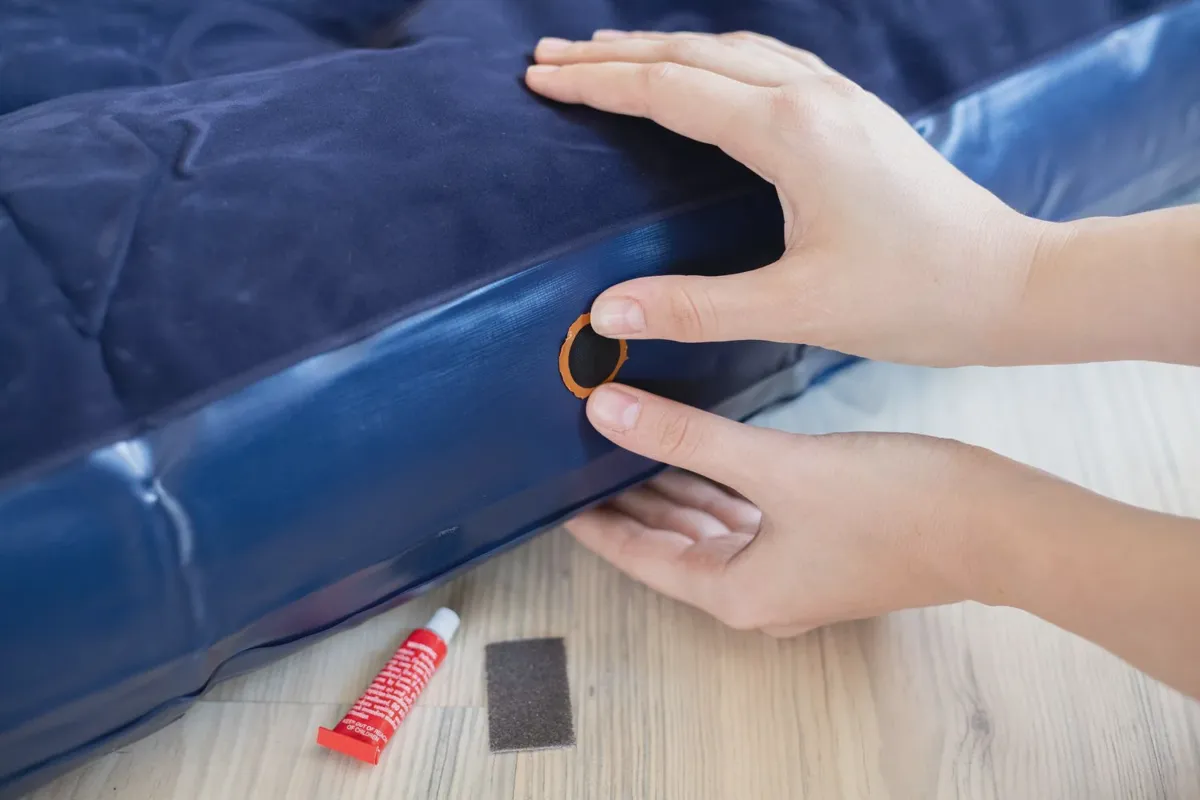
Once you have located the leak, the patch process is straightforward. The Spruce documents the same steps most manufacturers ship with their repair kits:
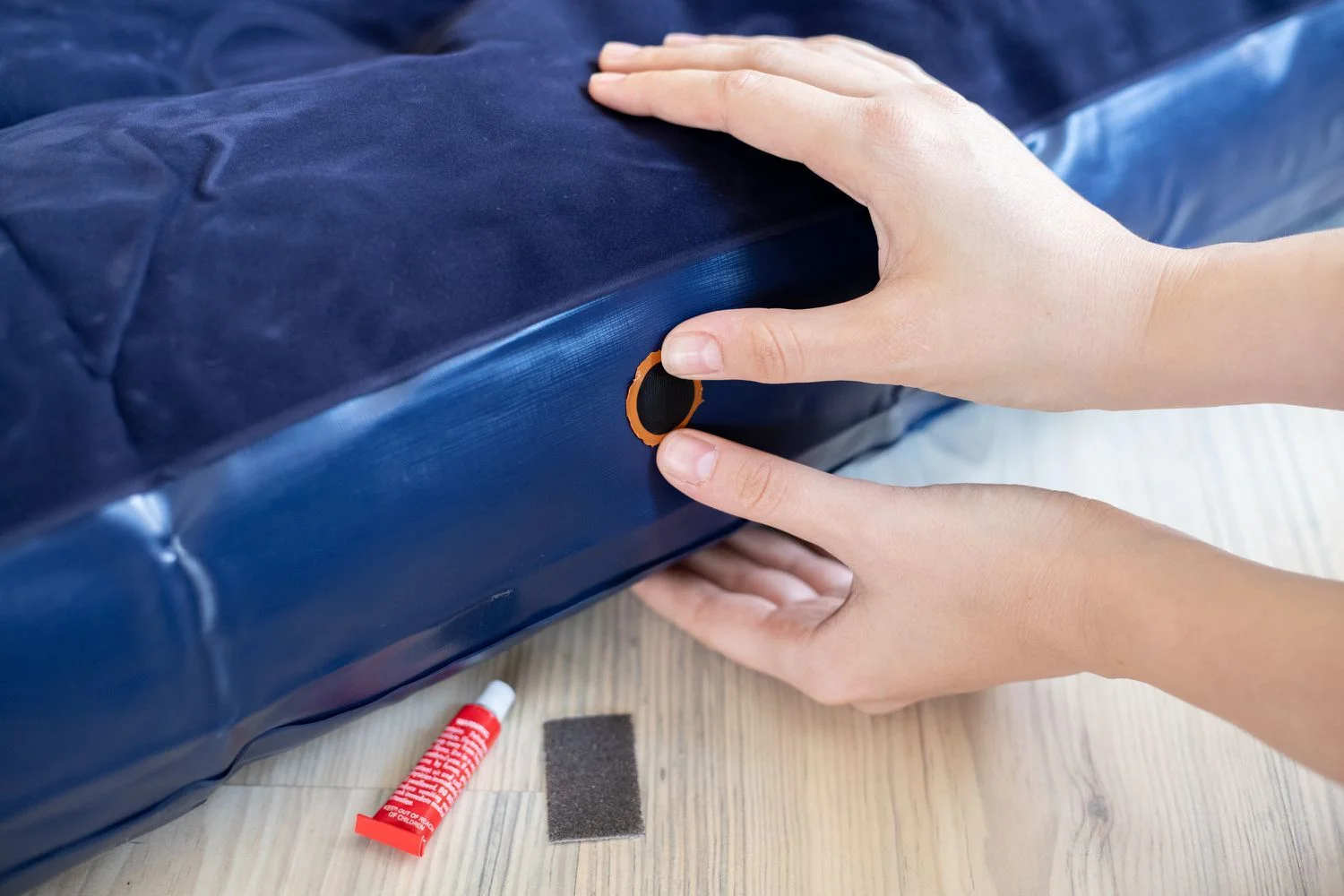
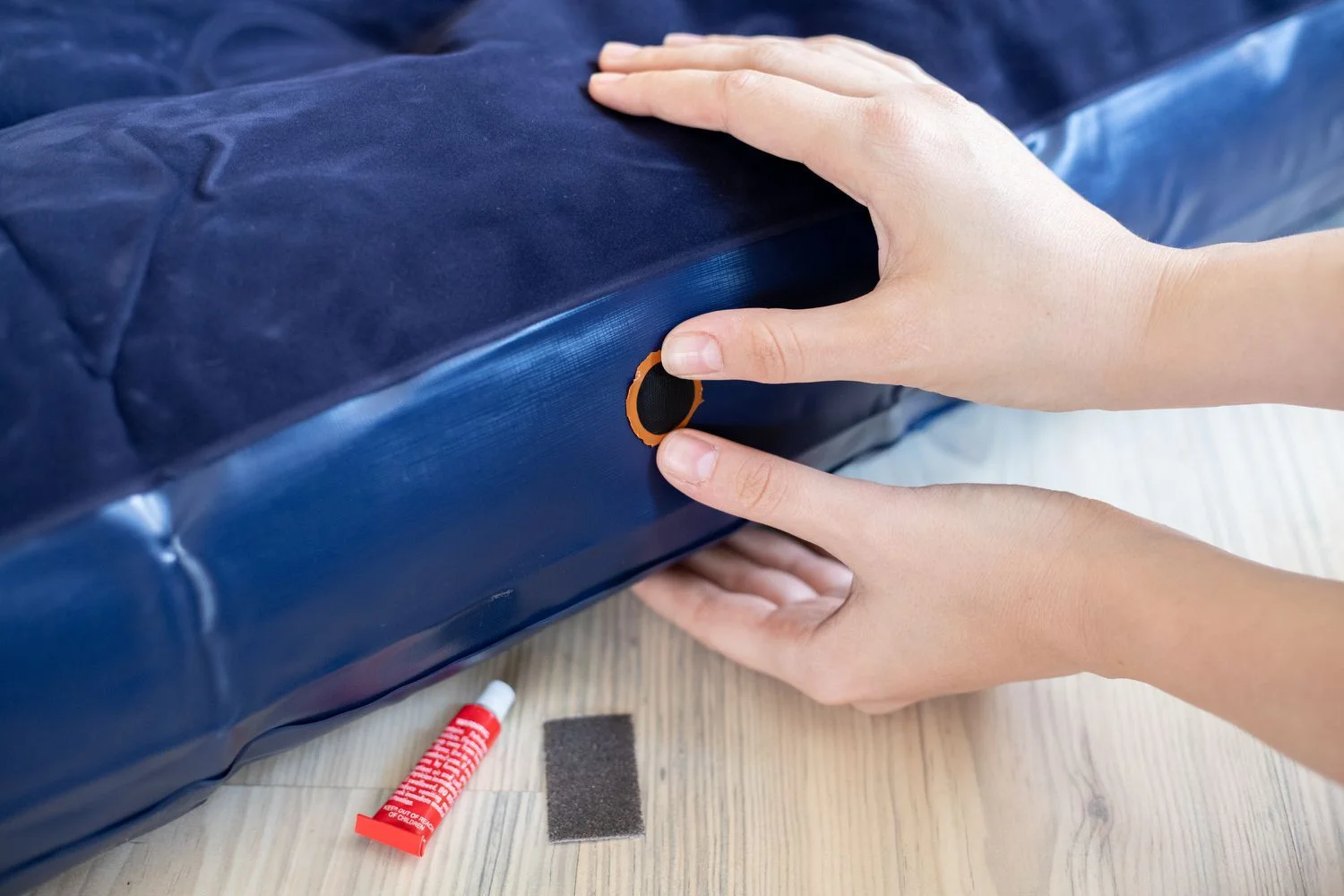
- Deflate the mattress completely and clean the area around the leak with rubbing alcohol. Let it dry.
- Lightly sand the surface around the hole if your kit includes sandpaper - this helps the patch bond to PVC.
- Cut a patch from the kit at least 1 inch larger than the hole on every side.
- Apply the included adhesive to the patch (or use the self-adhesive backing), press it firmly onto the surface, and weight it with a book for 8 to 12 hours so the seal cures.
- Re-inflate to about 75%, check for new bubbles around the patch, then top up to full.
If the leak is at a welded seam, a patch will hold short term but the seam usually fails again. At that point the bed is at end of life.
When patching is worth it
- Single pinhole on the top or sides, away from a seam.
- Mattress is less than two years old and otherwise firm.
- You are using it occasionally for guests - not nightly.
- Internal beams still inflate evenly, with no bulges.
When to replace the bed
- Leak runs along a welded seam or baffle.
- Surface has visible bulges or distorted beams.
- Bed is over five years old and softening overall.
- You are using it as a primary nightly bed - a real mattress will be cheaper per night.
How to keep an air mattress inflated overnight
- Break it in. Inflate fully for 24 to 48 hours before the first use to let the PVC stretch.
- Inflate in the room you will sleep in. Letting the bed equalize to room temperature before bed reduces overnight contraction.
- Top up just before bed. Five to ten extra seconds of pump time covers normal cold-air loss.
- Insulate from the floor. A blanket or rug between the mattress and a hard floor cuts heat loss substantially.
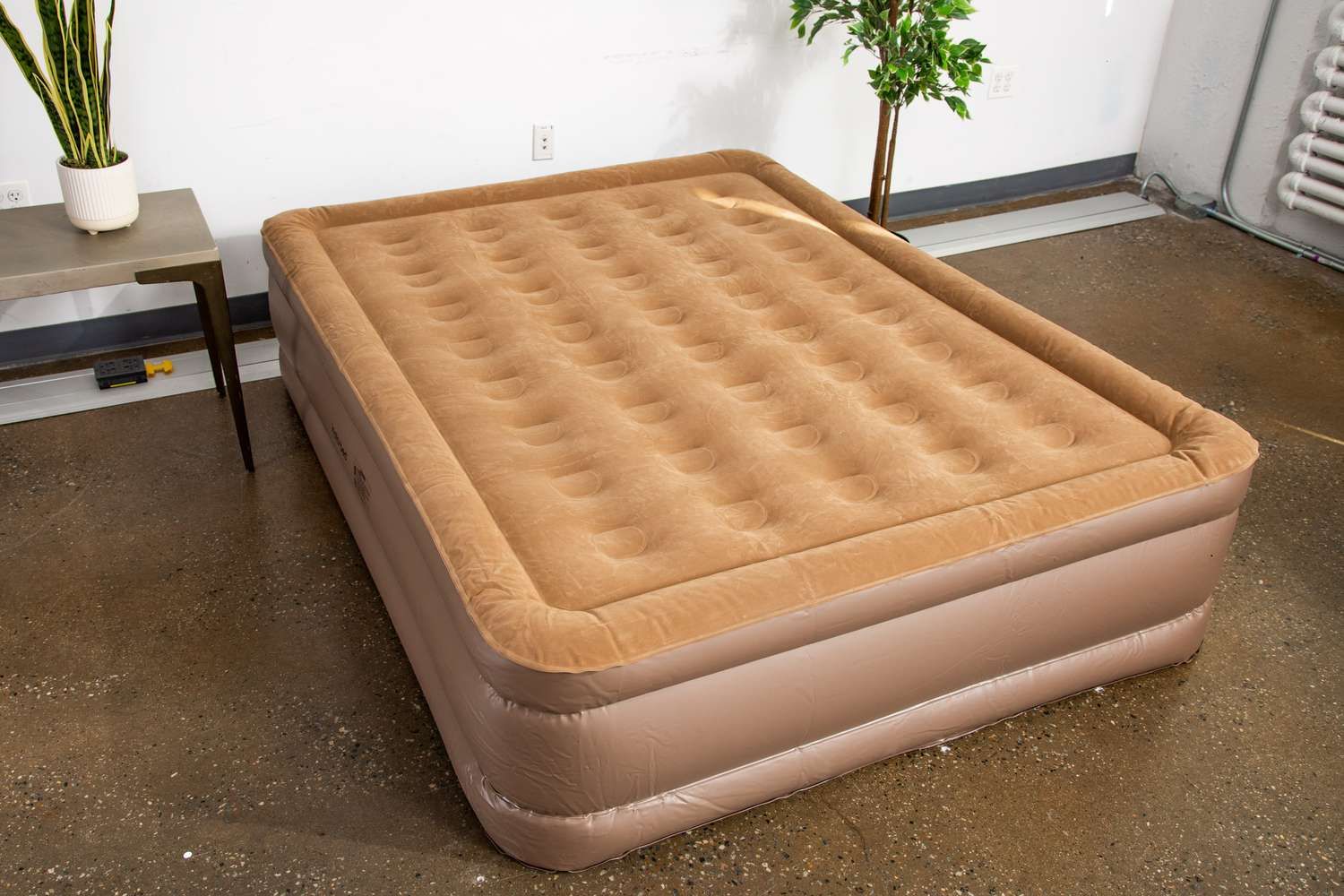
- Stay under the weight rating. Twin: ~300 lb. Queen: ~500-600 lb. Two adults sharing a queen is fine; jumping is not.
- Do not store inflated. Air pressure on the seams over weeks weakens them. Deflate, fold loosely, and store in a cool dry place.
- Use a topper or protector. A thin foam or fabric layer reduces direct seam stress and protects from claws and zippers.
When an air mattress is the wrong tool
Air mattresses are designed for occasional use - camping, guests, a few nights between moves. If you are sleeping on one for months while you wait on a real bed, the seams are not the only thing under stress; your back is too. A budget foam mattress at $200-$300 will outlast and out-support any airbed past the one-month mark.
Frequently asked questions
Why does my air mattress deflate overnight even with no hole?
Almost always temperature contraction or material stretching, not a leak. Cold air takes up less space, so the same amount of air reads as lower pressure. New PVC also stretches during the first few uses. Top the bed up before bed and insulate it from a cold floor; if the issue persists past the first week, run a soapy-water leak test on the seams and valve.
How long should an air mattress hold air?
A healthy airbed should hold near-full pressure for 6-8 hours of sleep with only a slight softening, mostly from temperature change. If you are losing more than about 25% of firmness overnight in a stable-temperature room, there is a leak - typically at the valve or a seam.
Can I patch an air mattress with regular tape or glue?
Duct tape and household glue rarely hold for more than a few hours - they do not bond well to PVC and the patch flexes off. Use a vinyl repair kit (the same kind sold for pool floats and inflatable boats) for a lasting fix. Most airbed brands include one in the box.
Why is my air mattress losing air on a hot day?
Heat expands air, so a bed inflated cool and then warmed in a hot room can over-pressurize and stretch the seams - then read as soft once it cools. Inflate to about 90% on hot days and let the air settle before topping up.
How long does an air mattress last?
With occasional guest use, a quality airbed lasts roughly 3-5 years. Daily use cuts that to 12-18 months - the seams and internal beams are not engineered for nightly load. Used as intended (occasional, weight under the rating, deflated when stored), 5+ years is realistic.
Looking for a real bed instead?
If you are using an air mattress nightly while you decide, browse our editor-tested mattress guides for picks under $500.