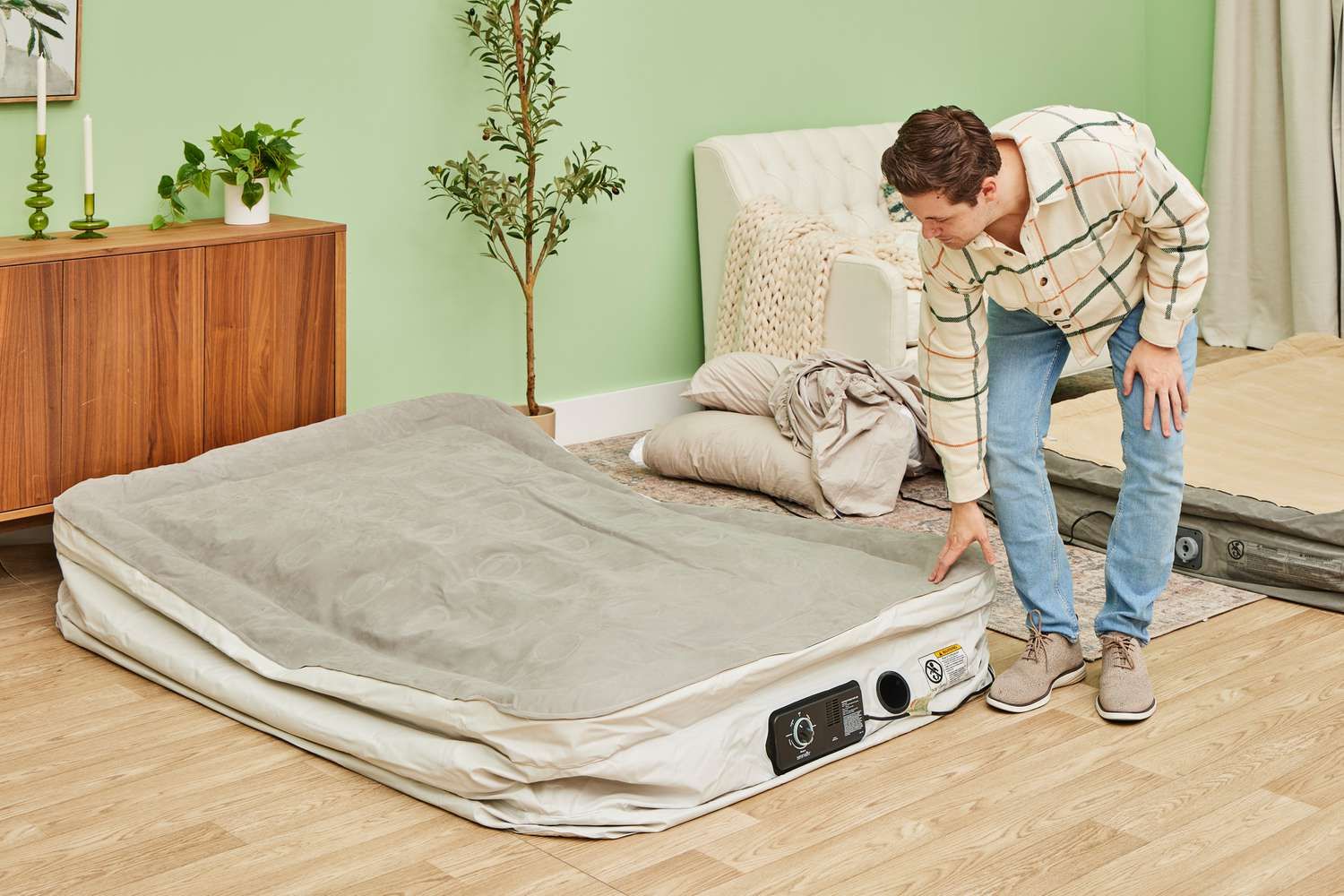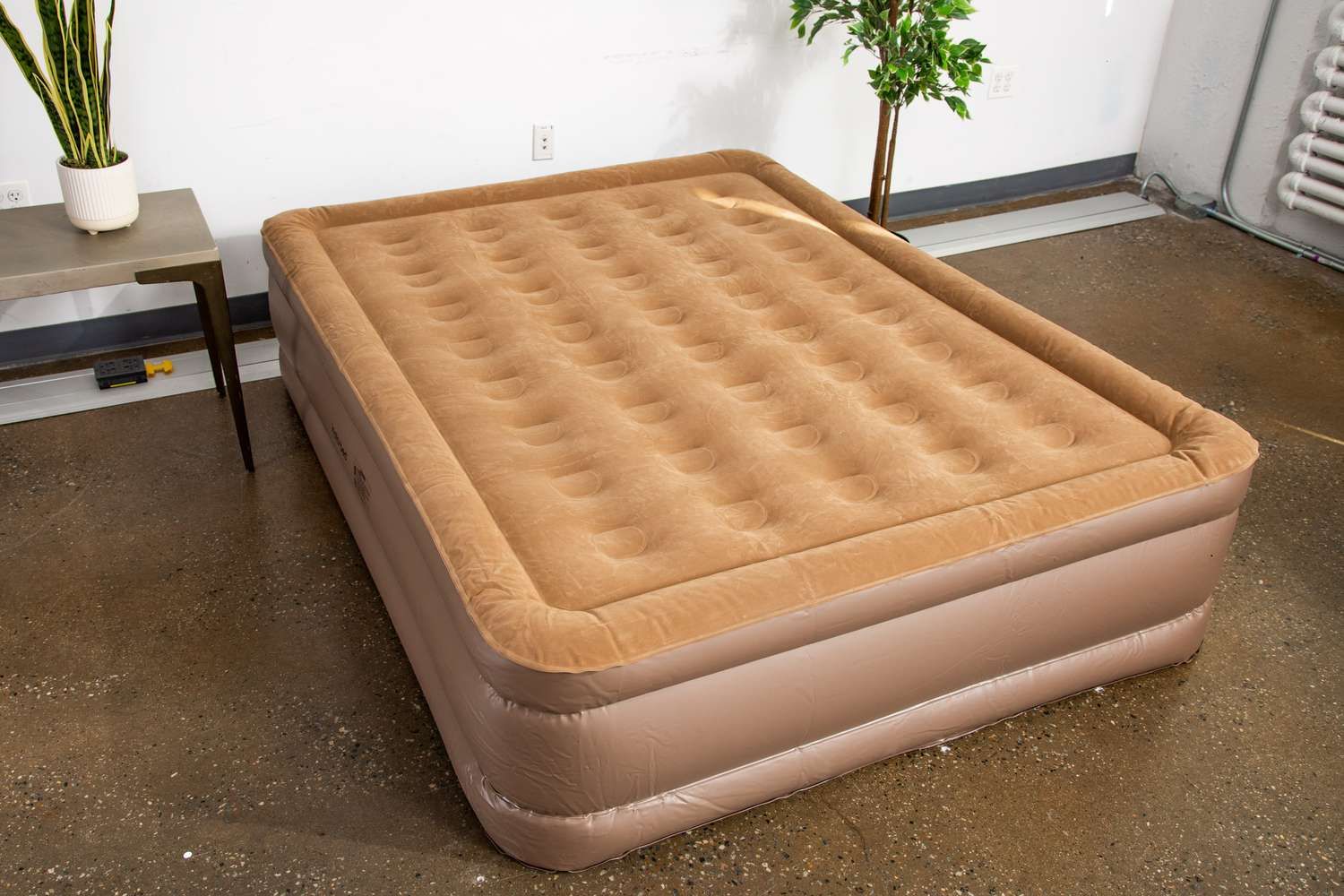
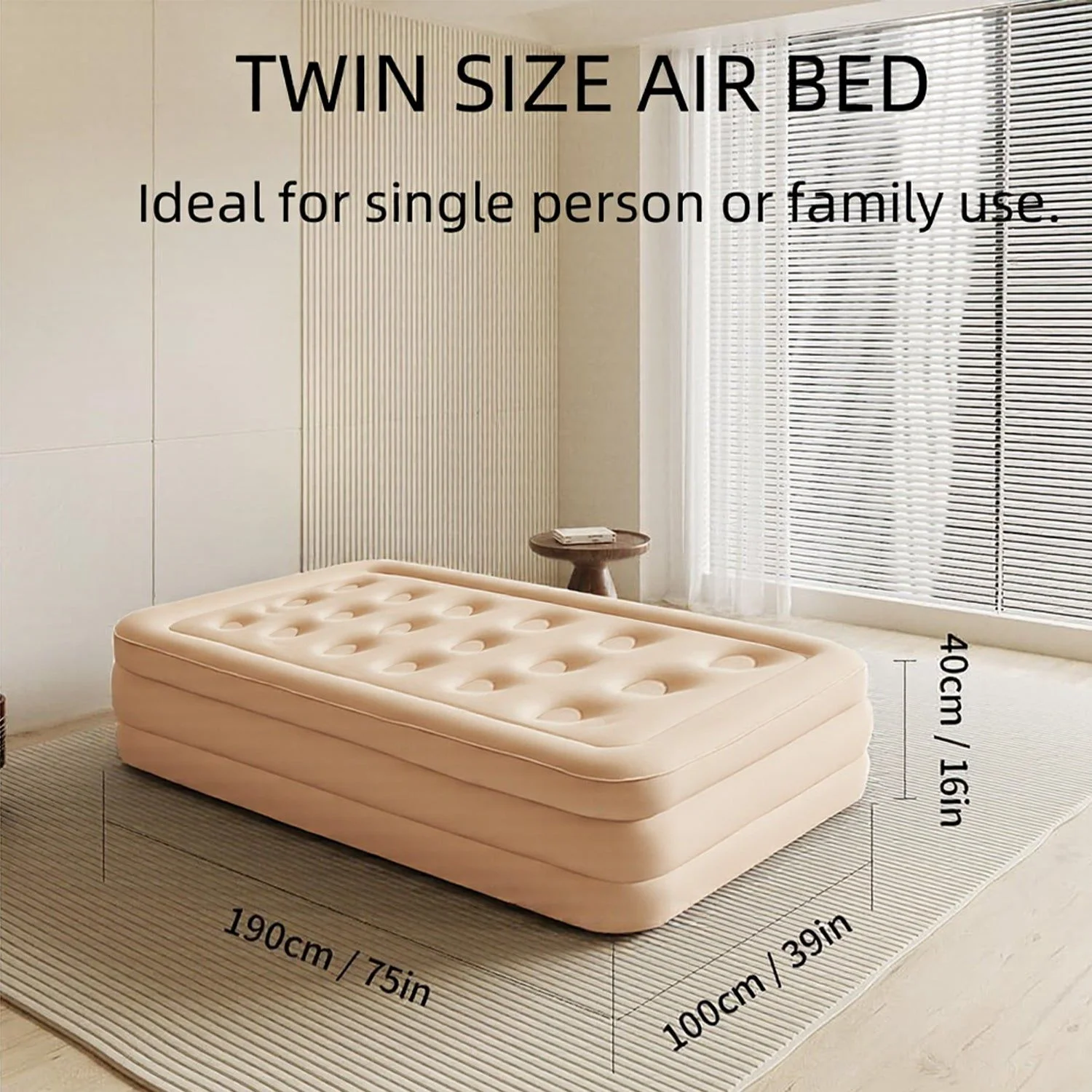
The short answer: most air mattresses are rated for 300 to 600 pounds, with size and build doing most of the work. A standard twin holds about 300 lb, a full sits at 400-500 lb, a queen at 500-600 lb, and heavy-duty queens and kings can reach 800-1,000 lb. Coleman publishes those exact tiers across its airbed line - twin 300 lb, full 450 lb (split between two sleepers), queen 600 lb.
Below is the working number for each size, the construction details that move it up or down, and the maintenance habits that decide whether your mattress hits its rated lifespan or fails inside a year.
Air mattress weight limits by size
Twin (38 × 74 in) - about 300 lb
Designed for one adult or a child. Reddit users routinely report seam failures within weeks when a single sleeper is over the rated limit, even with no second person on the bed. If you weigh more than 250 lb, skip the twin and step up to a full or a heavy-duty model.
Full / double (54 × 74 in) - 400 to 500 lb
Manufacturers usually rate fulls at 400-500 lb total, which Coleman splits as 450 lb across two sleepers. That works for two lighter adults or one heavier adult. Two adults averaging 200 lb each will exceed most full ratings.
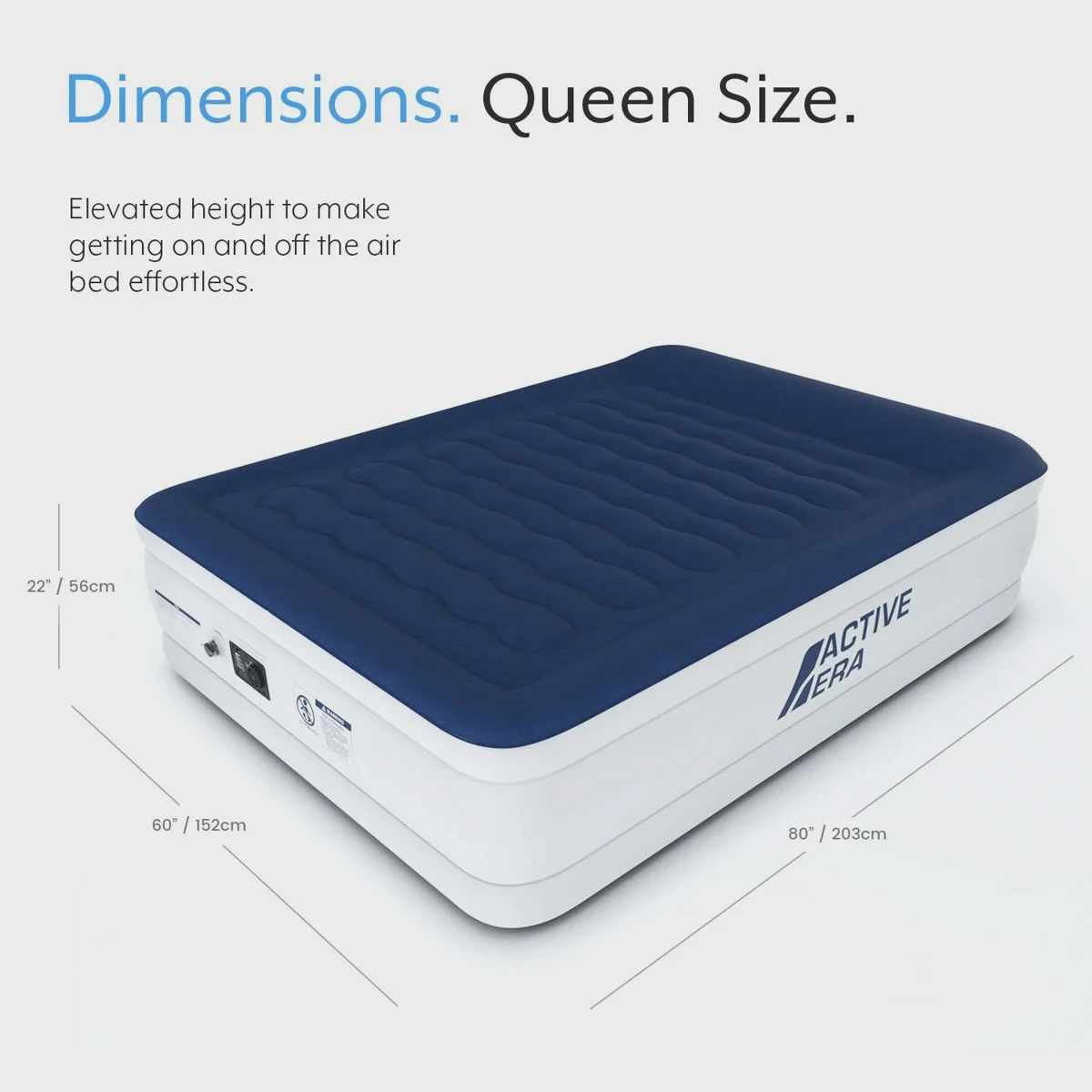
Queen (60 × 80 in) - 500 to 600 lb
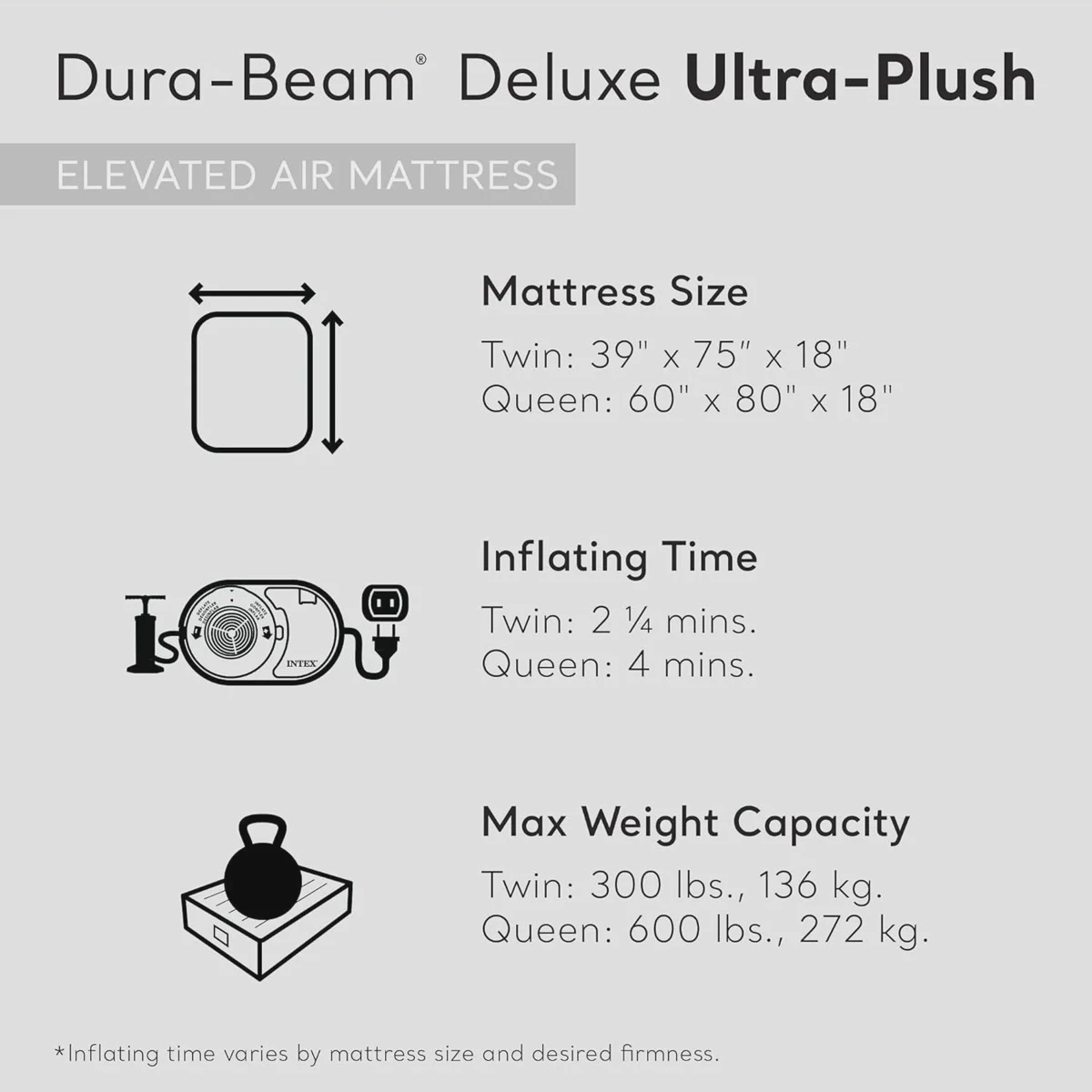
The most common size sold and the one with the widest band of options. Standard Intex Dura-Beam queens are rated 600 lb. Premium queens with internal coil reinforcement push higher; budget queens bottom out near 500.
King (76 × 80 in) and Cal King (72 × 84 in) - 600 to 1,000 lb
Standard kings start where queens stop, around 600 lb total. Heavy-duty raised kings with reinforced coil construction can reach 800-1,000 lb across two sleepers. If a couple's combined weight is over 500 lb, look explicitly for an 800+ lb rating rather than assuming.
Air mattress weight limit by size
Working capacity ranges from major manufacturers (Intex, Coleman, SoundAsleep, Bestway, SereneLife). One person unless noted.
How construction changes the rating
Two air mattresses of identical size can differ by hundreds of pounds in capacity. Three internal elements explain the gap.
Internal beams or coils
Polyethylene tubes (Intex's Dura-Beam) or fiber-tech columns (Bestway) replace the older horizontal-chamber design. More beams, thicker walls, and stiffer fibers carry more load. Premium queens have 35+ vertical coils; budget queens have 14-20.
PVC thickness (mil rating)
PVC shell thickness is measured in mils (thousandths of an inch). Disposable camping mattresses use 0.4-0.5 mm vinyl; heavy-duty home models use 0.6-0.8 mm with multi-layer laminate. Thicker shell means higher rated load and lower stretch over time.
Edge support
Vertical edge beams (typically 12-14 in tall on raised airbeds) keep weight from rolling off the perimeter. Without them, the rated-capacity number is misleading - sleepers near the edge will compress through to the floor.
Brand-by-brand: published weight ratings
Manufacturer ratings vary more than most product specs do. These are the published numbers from major brands (always verify on the specific SKU before buying):
- Coleman: twin 300 lb (1 person), full 450 lb (2 people), queen 600 lb. Their published guidance treats fulls and larger as two-person ratings.
- Intex Dura-Beam: queen sizes typically 600 lb. Premier raised queens and Deluxe Pillow Rest variants share that ceiling - capacity is set by the beams, not the height.
- SoundAsleep: Dream Series queen rated 500 lb total. Lower than Intex but with notably thicker PVC and more internal coils.
- Bestway: queen ratings cluster at 660 lb across the Tritech and AlwayzAire lines.
- Heavy-duty / camping crossover (King Koil, EnerPlex, Active Era): queen 600-800 lb; king 800-1,000 lb.
Signs you have enough capacity
- Mattress holds full inflation overnight
- Edges feel stable when sitting
- No popping or stretching sounds when you lie down
- Sleepers' combined weight is at least 50 lb under the rating
Signs you are over the limit
- Soft middle or visible sag within minutes of lying down
- Hissing seam noise or daily re-inflation needed
- Edges roll under sleeper weight
- Stretched, baggy PVC after one or two uses
Maintenance habits that protect the rating
A mattress rated 600 lb still fails early if it is mishandled. Four habits keep it on spec:
- Inflate fully before use. An under-inflated mattress concentrates load on the inflated sections and stresses internal beams. Top off pressure on each subsequent night.
- Lift, do not drag. Dragging across carpet or rough flooring is the most common puncture cause.
- Use a fitted sheet or mattress protector. Skin oils degrade vinyl over time and shorten the seam life.
- Distribute weight. Avoid sitting on the same spot every night; rotate the mattress 180° every few uses to even out the wear pattern.
Air mattress weight limit FAQ
How much weight can a queen air mattress hold?
Most queen-size air mattresses are rated 500-600 lb total. Premium queens (heavy-duty Intex, Bestway Tritech, Active Era) push to 660 lb; reinforced models reach 800 lb. Confirm the exact spec on your SKU - capacity varies more between SKUs from the same brand than between brands.
Am I too heavy for a twin air mattress?
If you weigh over 250 lb, yes. Twin airbeds are rated for 300 lb but real-world durability drops sharply within 50 lb of the ceiling. Step up to a full (400-500 lb) or a heavy-duty twin (600 lb) instead.
What is the highest weight capacity air mattress I can buy?
Reinforced heavy-duty kings reach 1,000 lb. Brands include King Koil, Active Era, EnerPlex, and Insta-Bed Never Flat. Look for explicit 'heavy-duty' or '800+ lb' language; standard kings stop near 600 lb.
Will going over the weight limit pop the mattress immediately?
Usually not on the first night. The more common failure mode is gradual: stretched PVC, a soft middle, slow leaks at the seams, then a blowout 1-3 weeks in. By the time it pops, the mattress has been compromised for days.
Does the brand actually matter, or is it all about size?
Both. Size sets the upper bound (a twin will never out-rate a king), but brand and SKU set where you land within that band. Coleman, SoundAsleep, and Bestway publish their numbers honestly; off-brand Amazon listings often inflate ratings by 100-200 lb. Check third-party reviews if the listed capacity looks unusually high.
Are heavy-duty air mattresses worth the price?
If your combined sleeper weight is within 50 lb of a standard queen's 600 lb rating, yes. The reinforced coil structure and thicker PVC roughly double the lifespan in real use. For occasional guest-room use under 400 lb total, a standard model is fine.
Need a permanent bed instead?
Air mattresses are great for guests and camping, but if you are sleeping on one nightly, a real mattress will sleep better and last longer. Banner Mattress sells full-size sleep sets starting under $400.