Short answer: no. Every Tuft & Needle mattress sold today is certified by two independent programs that test for the chemicals shoppers actually worry about - CertiPUR-US for the foam and GREENGUARD Gold for whole-mattress emissions. None of T&N's mattresses use fiberglass. That puts them in the same safety tier as Casper, Nectar, and Purple, though it does not make them organic in the GOTS/GOLS sense that brands like Avocado and Naturepedic occupy.
Below is a plain-English breakdown of each certification, what it does and does not cover, the fiberglass question that drives most of the SERP traffic, and how T&N stacks up against fully organic alternatives.
Why T&N is considered non-toxic
- CertiPUR-US foam - no PBDEs, formaldehyde, heavy metals, or banned phthalates
- GREENGUARD Gold emissions certification on the finished mattress
- No fiberglass anywhere in the cover or fire barrier
- Manufactured in the United States with a polyester/cotton + food-grade salt fire barrier
- OEKO-TEX Standard 100 certified covers and bedding
Where it falls short
- Foam is petroleum-derived polyurethane - not a natural latex or organic-cotton build
- Mild new-mattress smell (off-gassing) for the first few days
- Not GOTS or GOLS certified - if you specifically want certified-organic materials, look at Avocado, Naturepedic, or Birch instead
What CertiPUR-US actually verifies
CertiPUR-US is a third-party foam-testing program. T&N's adaptive polyfoam and memory foam are tested and certified to be made without:
- Ozone-depleting chemicals
- PBDE flame retardants (and TDCPP, TCEP, TDBPP, TEPA)
- Heavy metals - mercury, lead, and others
- Formaldehyde
- Phthalates regulated by the U.S. CPSC
It also requires low VOC (volatile organic compound) emissions - under 0.5 parts per million - which is what controls the new-mattress smell.
What GREENGUARD Gold adds on top
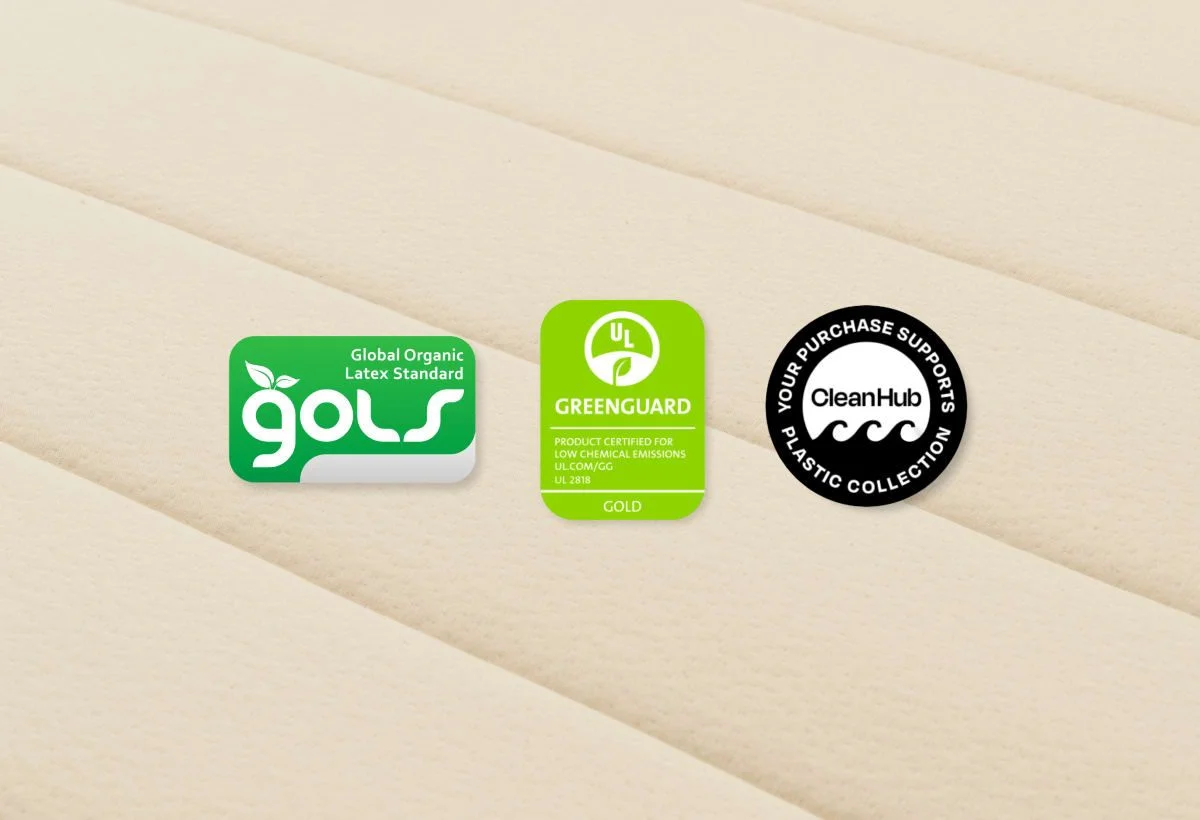
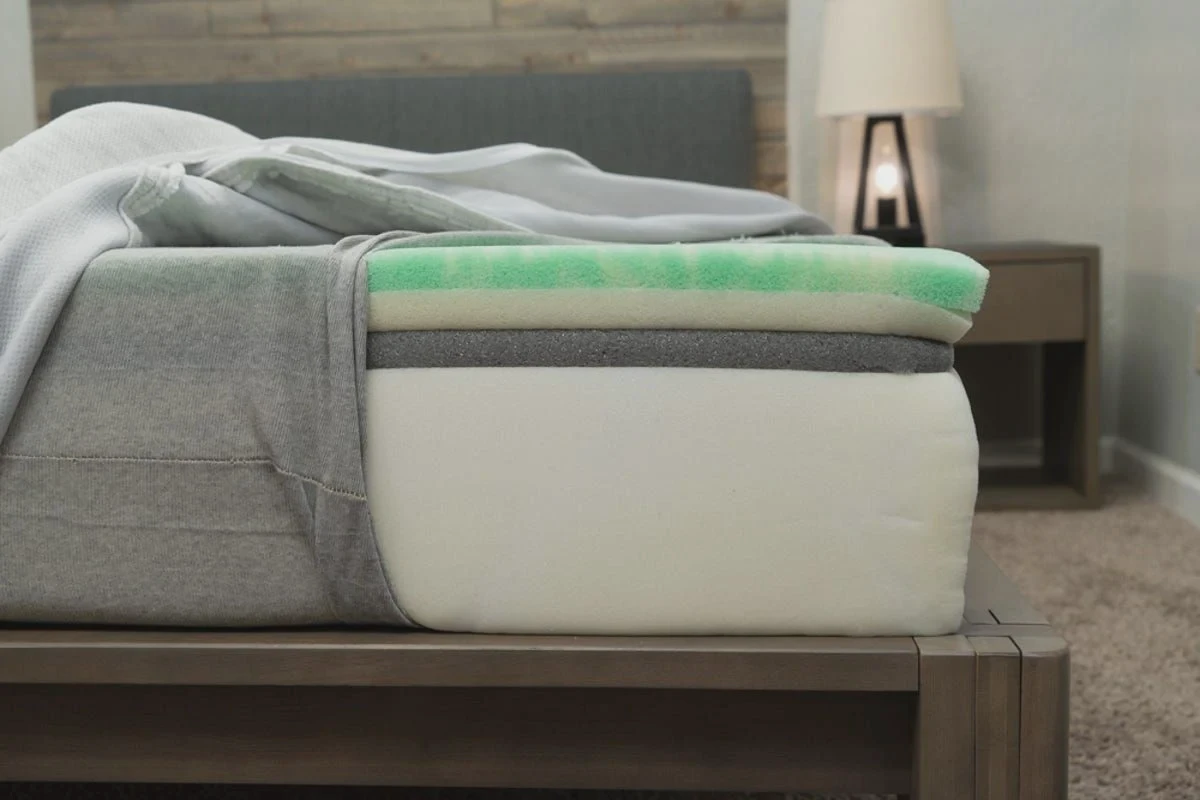
CertiPUR-US covers foam in isolation; GREENGUARD Gold tests the assembled mattress in a chamber for chemical emissions. The Gold tier is the strictest, designed for environments like schools and healthcare facilities where sensitive populations live. Every T&N mattress sold today carries it.
The fiberglass question
Most cheap memory-foam mattresses meet U.S. flammability rules by sewing fiberglass strands into the cover. When the cover is removed, the strands shed and contaminate the home - that's the source of the lawsuits and TikTok warnings around brands like Zinus and the viral 2025 "toxic bedroom" stories. Tuft & Needle does not use fiberglass in any layer. The fire barrier is a knit polyester/cotton blend treated with food-grade silica salt - same approach Casper and most U.S.-built premium foam beds use.
Practical takeaway: you should still never unzip and remove a mattress cover on any brand, but with T&N specifically there is no fiberglass risk if you do.
What T&N is not: certified organic
Non-toxic and organic are not the same label. T&N's foams are petroleum-derived polyurethane that has been tested safe, but they are not made from natural latex, organic cotton, or wool. If your priority is certified-organic materials - GOTS for textiles, GOLS for latex - you'll want to look at Avocado, Birch, Naturepedic, or My Green Mattress instead. Consumer Reports' November 2025 roundup is the cleanest reference for that tier.
How to handle off-gassing on day one
Even GREENGUARD Gold mattresses arrive vacuum-sealed and can have a faint smell for 24-72 hours. Unbox in a ventilated room, leave windows open if you can, and let it expand for a full day before sleeping on it. The smell is not a sign of toxicity - it's trapped low-VOC emissions clearing - but sensitive sleepers are more comfortable letting it air out.
Tuft & Needle safety: quick answers
Do Tuft & Needle mattresses contain fiberglass?
No. T&N does not use fiberglass in any model. The fire barrier is a polyester/cotton knit treated with food-grade silica salt.
Are Tuft & Needle mattresses CertiPUR-US certified?
Yes - every foam used in T&N mattresses is CertiPUR-US certified, meaning it's tested free of PBDEs, formaldehyde, heavy metals, ozone depleters, and regulated phthalates, with low VOC emissions.
Are Tuft & Needle mattresses organic?
No. They are non-toxic and low-emission, but the foams are synthetic polyurethane, not natural latex or organic cotton. If you specifically want a GOTS or GOLS certified mattress, look at Avocado, Birch, or Naturepedic.
How long does Tuft & Needle off-gas after unboxing?
Most owners report the smell is gone within 24-72 hours. Unbox in a well-ventilated room and let the mattress fully expand before the first night of sleep.
Is Tuft & Needle safe for kids and people with chemical sensitivities?
GREENGUARD Gold is the certification used for mattresses going into schools and healthcare settings, so T&N meets that emissions threshold. People with severe chemical sensitivities or specific latex/wool preferences may still prefer a certified-organic build.