Waking up to a urine stain on a foam mattress is stressful, but you almost never need to throw the bed out. The trick with memory foam and other all-foam mattresses is that they behave like sponges - they pull liquid deep into the layers, so the wrong cleaning move (soaking, scrubbing, bleach) does more damage than the accident itself.
Below is the low-moisture, foam-safe method that lines up with the consensus from Sleep Foundation, GhostBed, and Leesa. Work fast - fresh stains pull out far more cleanly than dried ones.
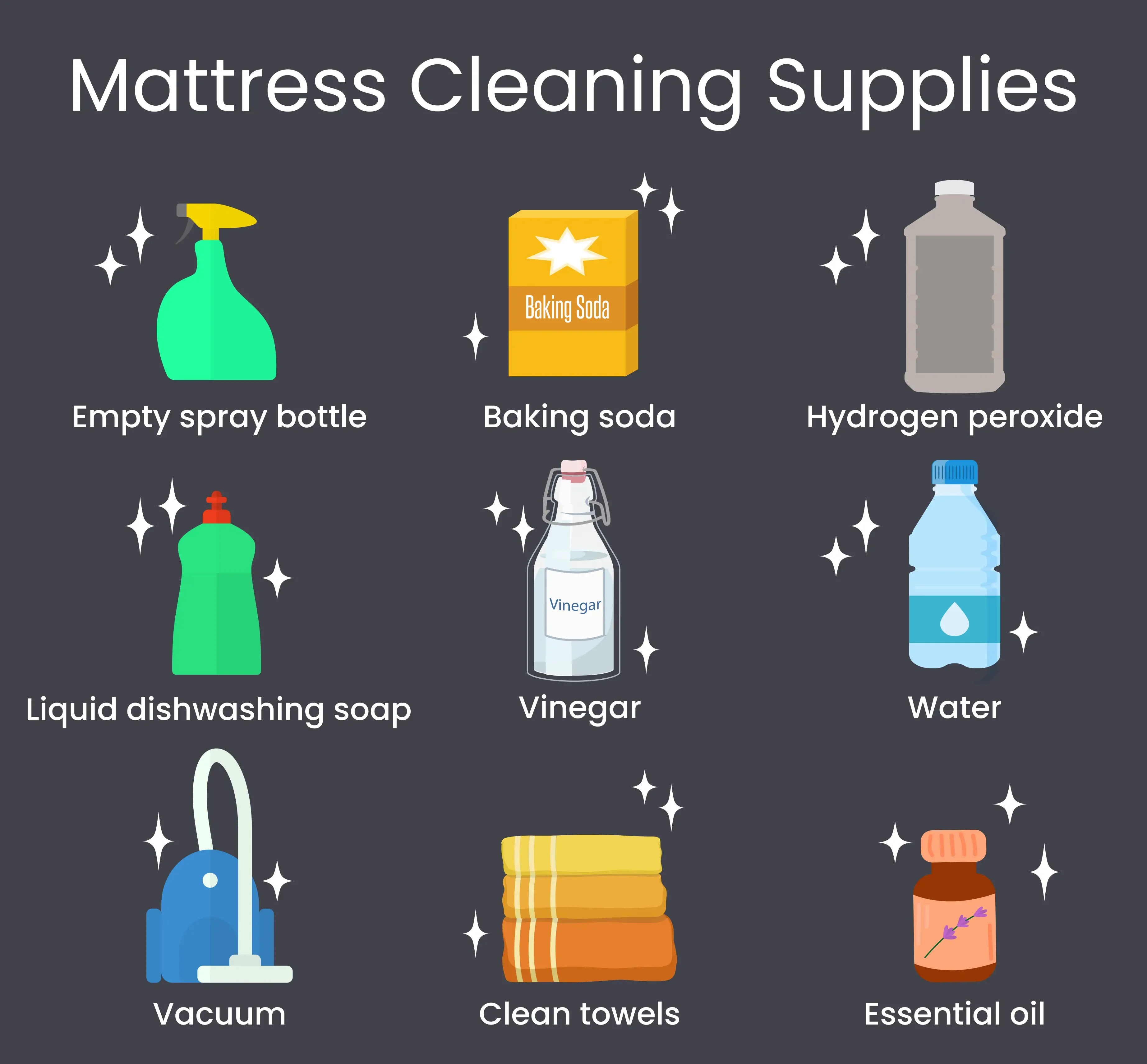
What you'll need
- Clean white cloths or paper towels
- White vinegar
- 3% hydrogen peroxide (for set-in stains and odor)
- Baking soda
- Liquid dish soap (a few drops)
- Empty spray bottle
- Vacuum with upholstery attachment
Skip bleach and ammonia - both can break down memory foam and the polyurethane layers underneath. An enzyme cleaner is a useful add-on for old or repeat stains because it digests the uric acid that ordinary soap can't.
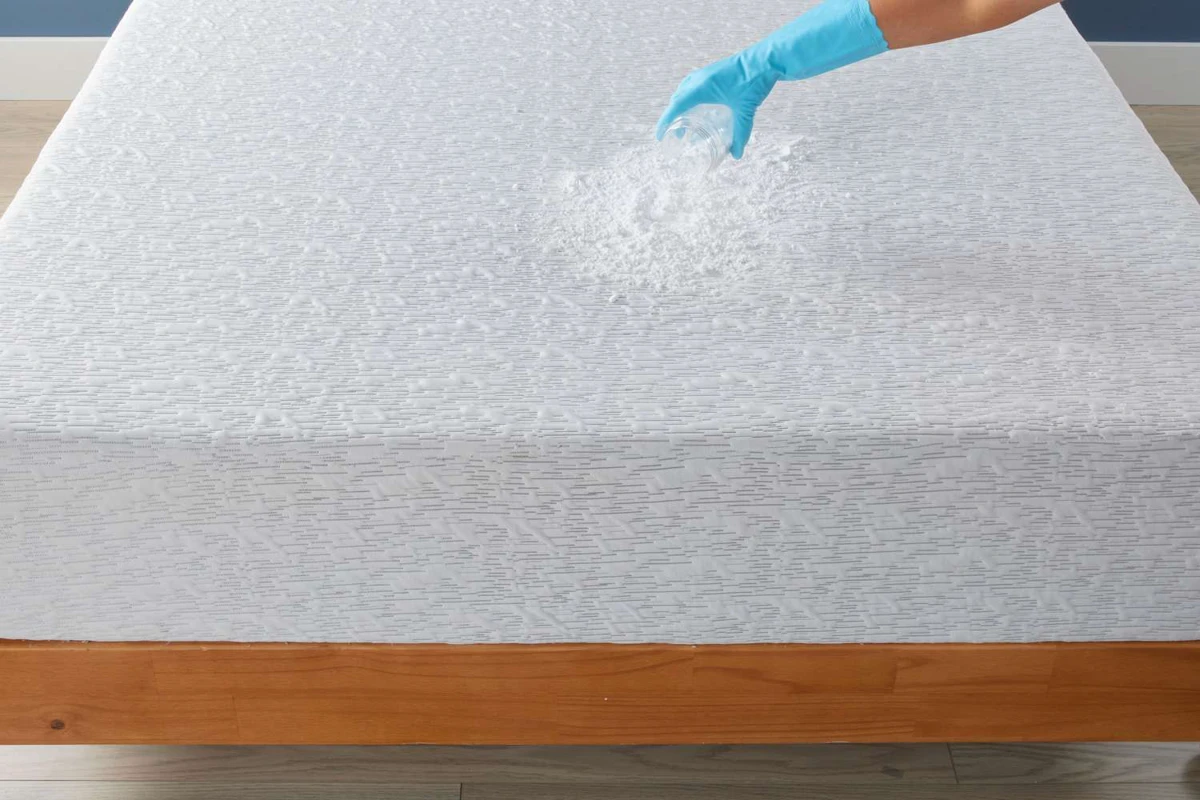
Protect your mattress before the next accident
Step 1: Strip the bed immediately
Pull off sheets, mattress protector, and any pillows that touched the spot. Get them straight into the washing machine with detergent and a cup of white vinegar - vinegar neutralizes the ammonia smell that gives urine its kick.
Tempur-Pedic owners face the same first-five-minutes window, but the foam itself behaves differently from generic memory foam - see how to clean a tempurpedic mattress with urine on it.
Step 2: Blot, don't rub
Press a dry cloth or stack of paper towels straight down on the stain. Stand on it if you have to. Rotate to a dry section as it saturates and keep going until almost nothing transfers. Rubbing in circles drives the liquid deeper into the foam - the exact thing you're trying to avoid.
Step 3: Mix and mist a vinegar solution
In your spray bottle combine equal parts cool water and white vinegar, plus 3-4 drops of dish soap. Mist the stain - don't drench it. The goal is to dampen the surface, not to push more liquid into the foam. Let it sit 10-15 minutes, then blot dry with a clean cloth.
For stronger or set-in stains, swap the vinegar mix for a peroxide solution: 8 oz of 3% hydrogen peroxide, 3 tablespoons of baking soda, and a couple of drops of dish soap. This is the same mix Sleep Foundation and most foam-mattress brands recommend for older stains. Mist lightly, let it air-dry, and vacuum the residue.
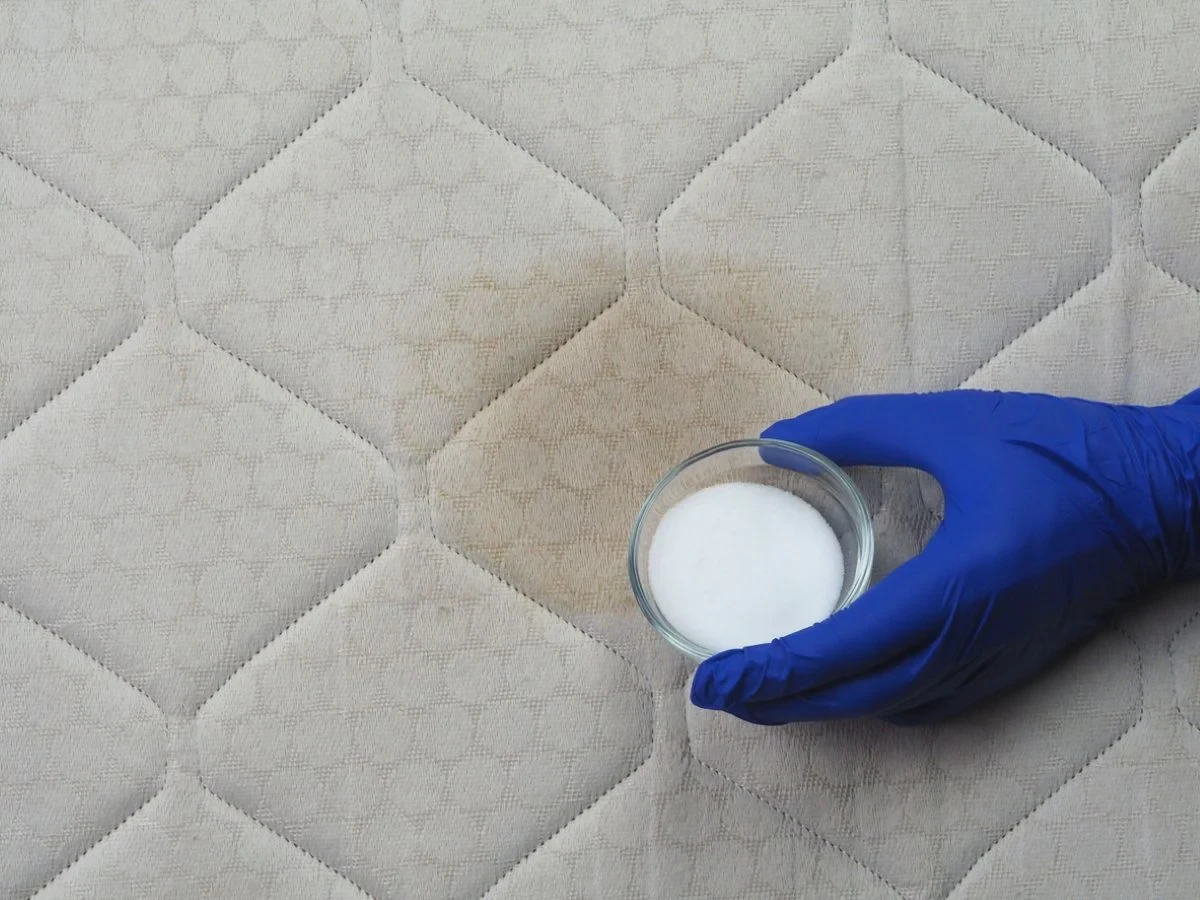
Step 4: Cover with baking soda
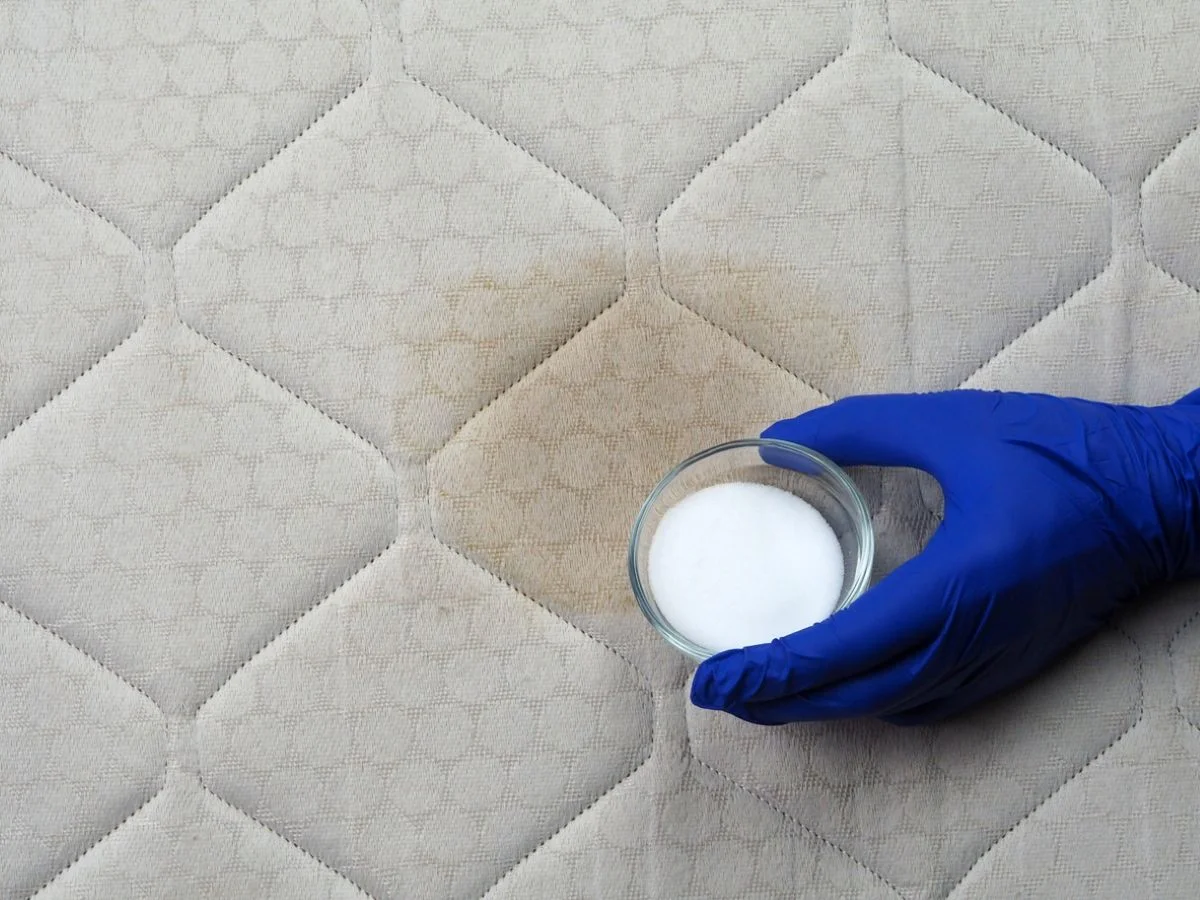
Sprinkle a thick layer of baking soda over the treated area - don't be shy, you want it visibly white. Leave it for at least 8 hours, or overnight. Baking soda pulls residual moisture out of the foam and absorbs the ammonia compounds responsible for the smell. This is the step that actually draws urine out of the mattress - the vinegar mist breaks down the stain, and the baking soda then wicks the dissolved residue up to the surface where you can vacuum it away.
Foam-safe DIY
- Vinegar + water + a drop of dish soap for fresh stains
- Hydrogen peroxide + baking soda + dish soap for set-in stains
- Baking soda overnight to neutralize odor
- Enzyme cleaner for old or repeat stains (digests uric acid)
- Fans, open windows, or a dehumidifier to fully dry the foam
What to avoid
- Bleach - degrades memory foam and polyurethane layers
- Ammonia - chemically similar to urine, makes the smell worse
- Steam cleaners and carpet shampooers - push moisture deep into foam
- Soaking the mattress with any liquid (mold risk inside the layers)
- Putting sheets back before the foam is fully dry
Step 5: Vacuum thoroughly
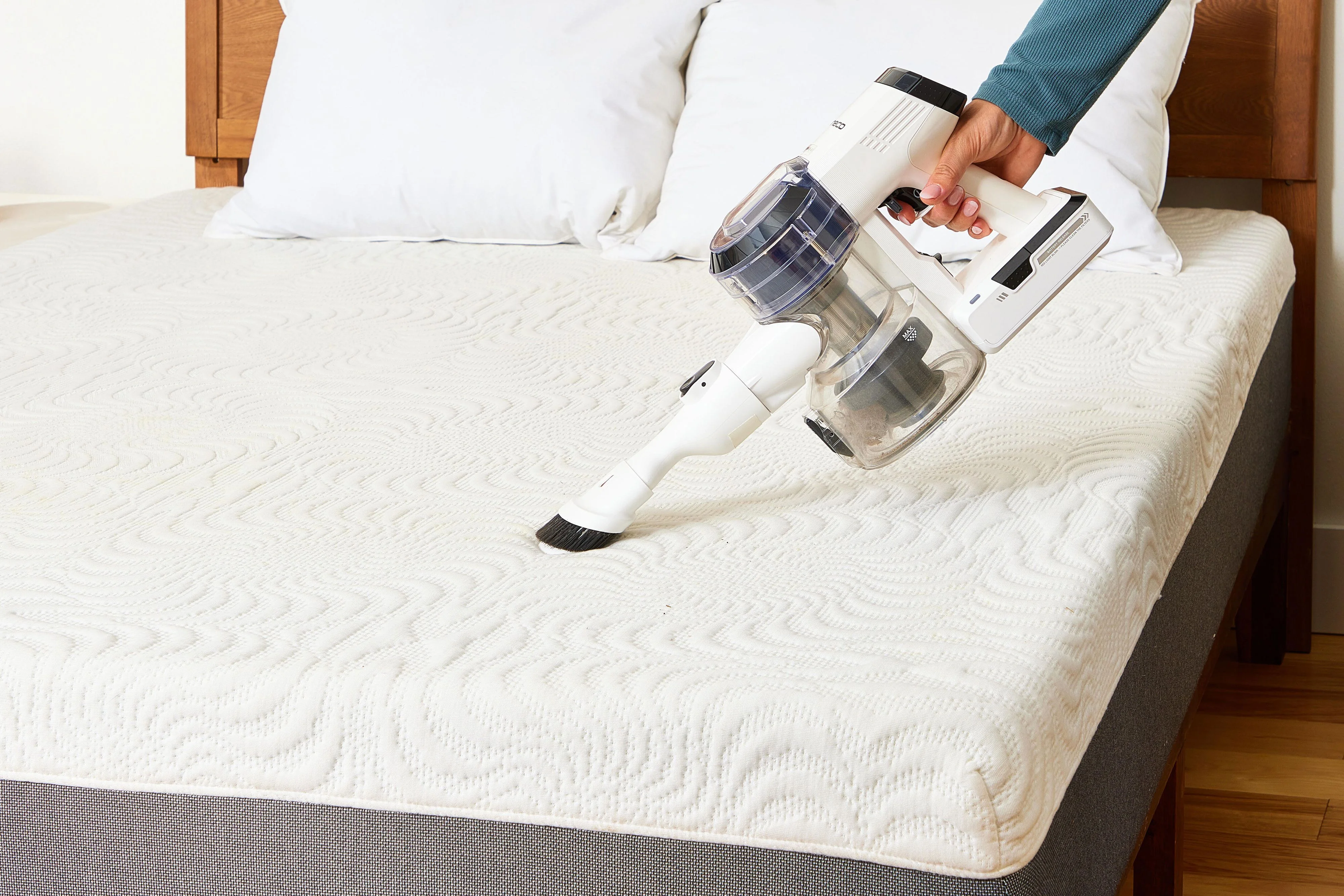
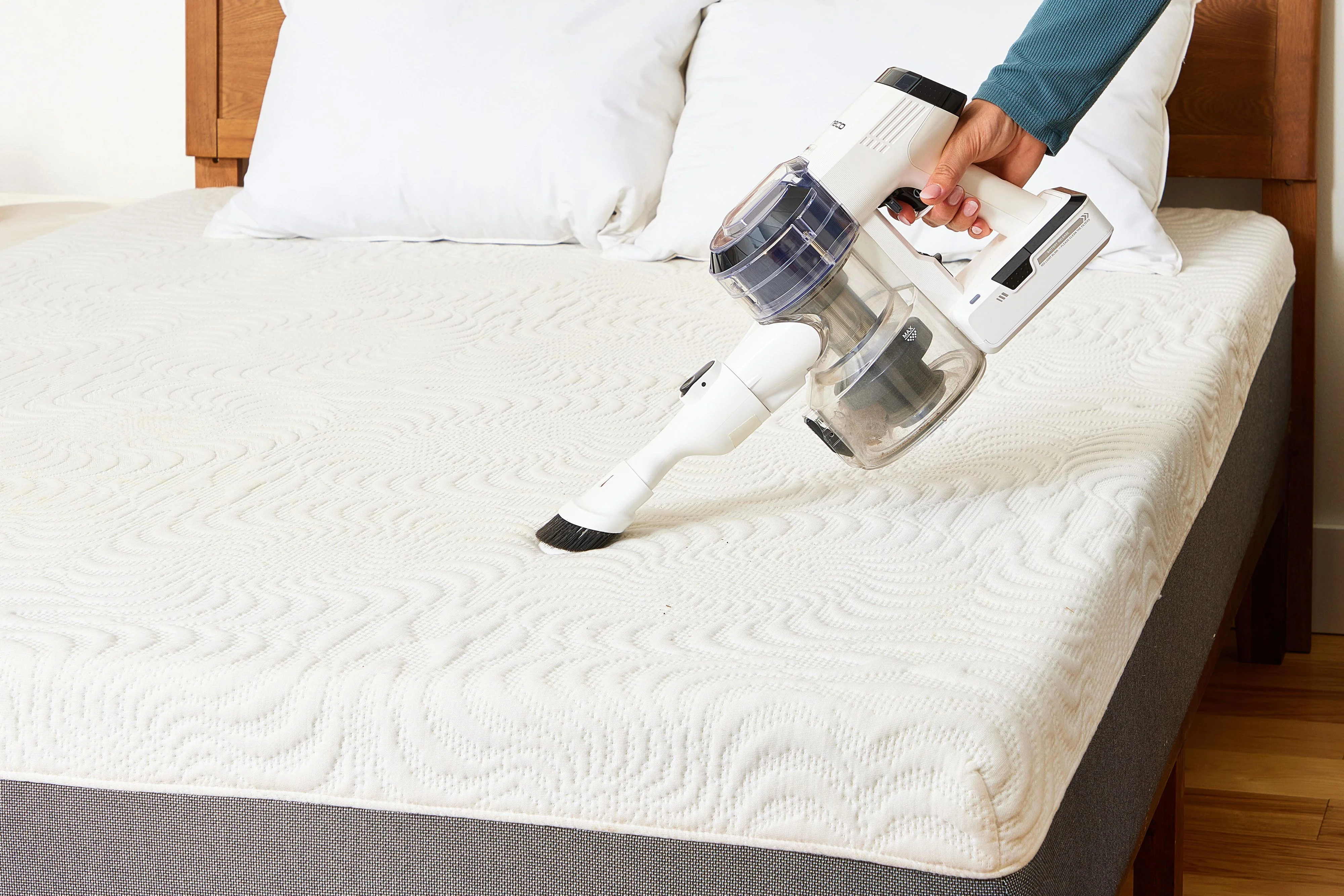
Use the upholstery attachment on a low setting. Run it over the area in slow, overlapping passes until no more powder lifts. If the mattress still smells, repeat the baking-soda step rather than reaching for a heavier chemical.
Step 6: Air-dry completely before remaking the bed
Foam holds residual moisture you can't see, and trapped moisture is what grows mold inside the layers. Stand the mattress on its side near an open window, point a fan at it, or run a dehumidifier in the room. Don't put sheets back on for at least 6-8 hours, and longer if the air is humid.
Step 7: Protect the mattress going forward
If this was the first accident, it probably won't be the last - especially with toddlers, pets, or anyone in a recovery bed. A waterproof mattress protector is the single highest-leverage thing you can buy after a urine incident. Choose one with a quiet, breathable membrane (TPU or cotton terry over a polyurethane backing) so it doesn't sleep hot or crinkle.
If the stain is old or the smell keeps coming back
Dried urine forms uric-acid crystals that bond to the foam. Vinegar masks the smell for a day or two; only an enzyme-based pet cleaner (Nature's Miracle, Rocco & Roxie, Angry Orange) actually breaks those crystals down. Saturate just the stained area, let it sit per the bottle's instructions, blot, and finish with the baking-soda step above.
If after two passes the smell still returns when the mattress warms up, the urine has likely soaked through the cover into deeper foam layers. At that point a professional upholstery cleaner or a foam replacement is the realistic call - the inside of the mattress isn't something a spray bottle can reach.
When DIY isn't enough
Looking for a foam mattress that's easier to keep clean?
We carry foam, hybrid, and adjustable mattresses with washable, replaceable covers and waterproof protectors at all of our showrooms.
Cat or dog urine: a few extra rules
Pet urine is more concentrated than human urine, and cats in particular leave behind a sulfur smell that ordinary cleaners can't touch. Skip the vinegar mix entirely on pet accidents - vinegar smells enough like ammonia to invite repeat marking. Go straight to an enzyme cleaner, then baking soda.
Frequently asked questions
Is it possible to get pee out of a foam mattress?
Yes, in almost every case. Fresh stains come out cleanly with a vinegar-water-dish-soap mist followed by baking soda. Set-in stains usually need a hydrogen-peroxide mix or an enzyme cleaner. The mattress is only beyond saving if the urine has fully soaked through the cover into the deep foam layers and the smell keeps returning after multiple cleanings.
Vinegar vs hydrogen peroxide - which is better for urine?
Vinegar is best for fresh stains because it neutralizes ammonia odor on contact. Hydrogen peroxide (3%) is better for older or set-in stains because it breaks the chemical bonds in dried urine. Most foam-mattress care guides recommend trying vinegar first and escalating to a peroxide-baking-soda mix only if the smell persists.
Does Dawn dish soap clean urine on a mattress?
Dish soap on its own won't fully break urine down, but a few drops mixed into either a vinegar-water solution or a hydrogen peroxide-baking soda solution helps lift the stain by breaking the surface tension. Skip detergents with heavy fragrance or dye - they can leave their own residue in the foam.
Will memory foam be ruined if it gets wet?
Brief, light moisture is fine - foam is designed to handle some humidity. The problem is prolonged saturation: water trapped deep in the foam grows mold and weakens the cell structure. That's why low-moisture cleaning (mist, blot, baking soda) and full air-drying matter so much.
Can I use a steam cleaner to remove urine from foam?
No. Steam cleaners and carpet shampooers force moisture deep into the foam, which is exactly the opposite of what foam needs. Stick with mist-and-blot cleaning, baking soda, and full air-drying.
How long should the mattress dry before I sleep on it?
At least 6-8 hours of active drying - fan, open window, or dehumidifier - and longer if you live somewhere humid. Press a dry paper towel into the area before remaking the bed; if anything transfers, keep drying.