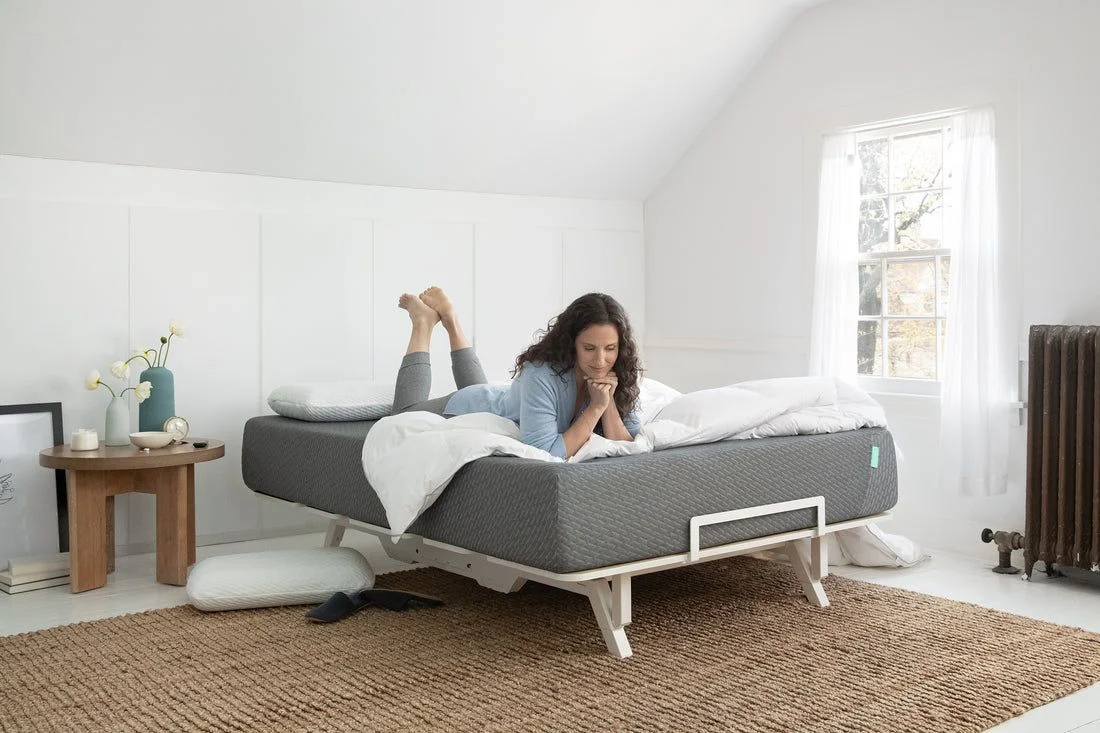
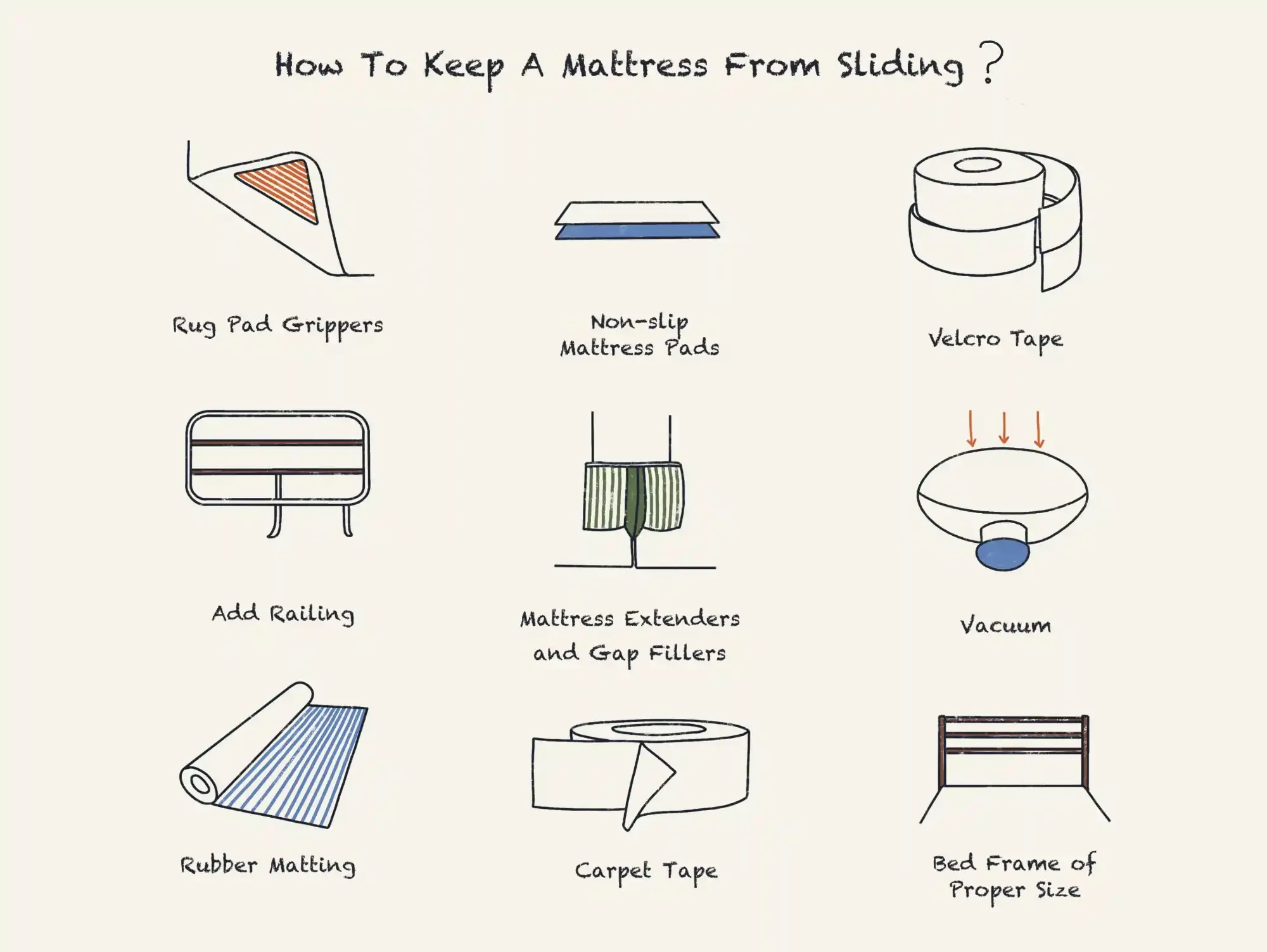
A mattress that creeps an inch every night is rarely a defect - it's a friction problem. Smooth platform slats, polished metal frames, and lightweight foam beds all give a mattress an easy ride. The good news: in most rooms you can stop sliding in under fifteen minutes with one of the fixes below. Start at the top of the list (cheapest, fastest, no tools) and work down only if the slide returns.
Why mattresses slide in the first place
Four causes account for almost every case we see in the showroom:
- Smooth surfaces. Painted metal frames, varnished wood platforms, and synthetic-fabric upholstered bases give the mattress cover almost no grip.
- Size mismatch. A queen mattress on a frame meant for a king will slide every direction. Even a one-inch gap is enough to walk overnight.
- Lightweight foam beds. All-foam mattresses weigh roughly 30-40% less than hybrids and innersprings. Less weight, less static friction.
- Adjustable bases. Every head-up cycle nudges the mattress toward the foot of the bed. Without a retainer, drift is built in.
1. Non-slip rubber gripper pad (start here)
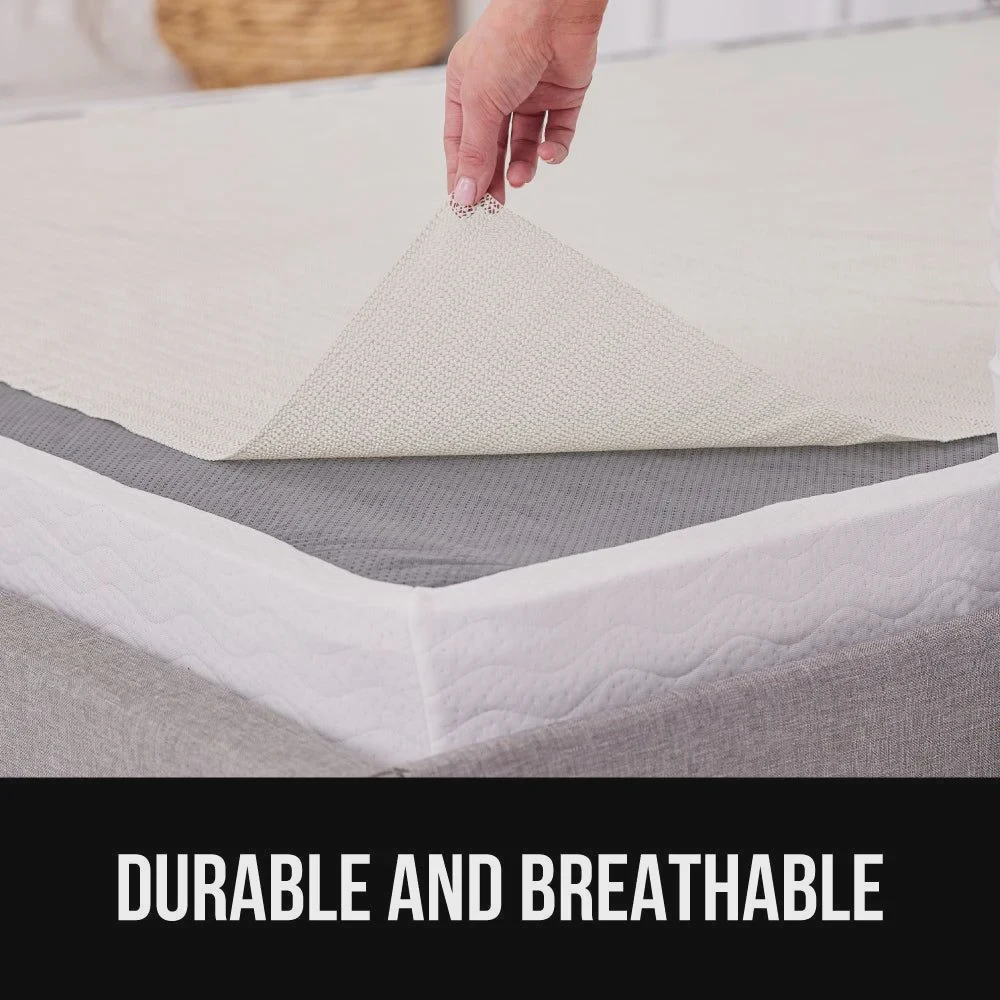
A rubberized mesh pad - sold as a mattress gripper or sometimes as a rug pad - sits between mattress and base and adds friction on both sides. It's the single most reliable fix for the typical platform-bed sliding problem, and at $20-$40 it's also the cheapest. Look for one cut to your mattress size; oversized pads can be trimmed with scissors.
Why we recommend this first: it works under any mattress type, leaves no residue on the frame, and you can pull it out when you flip or rotate the bed.
2. Metal mattress retainer bars (best for metal frames)
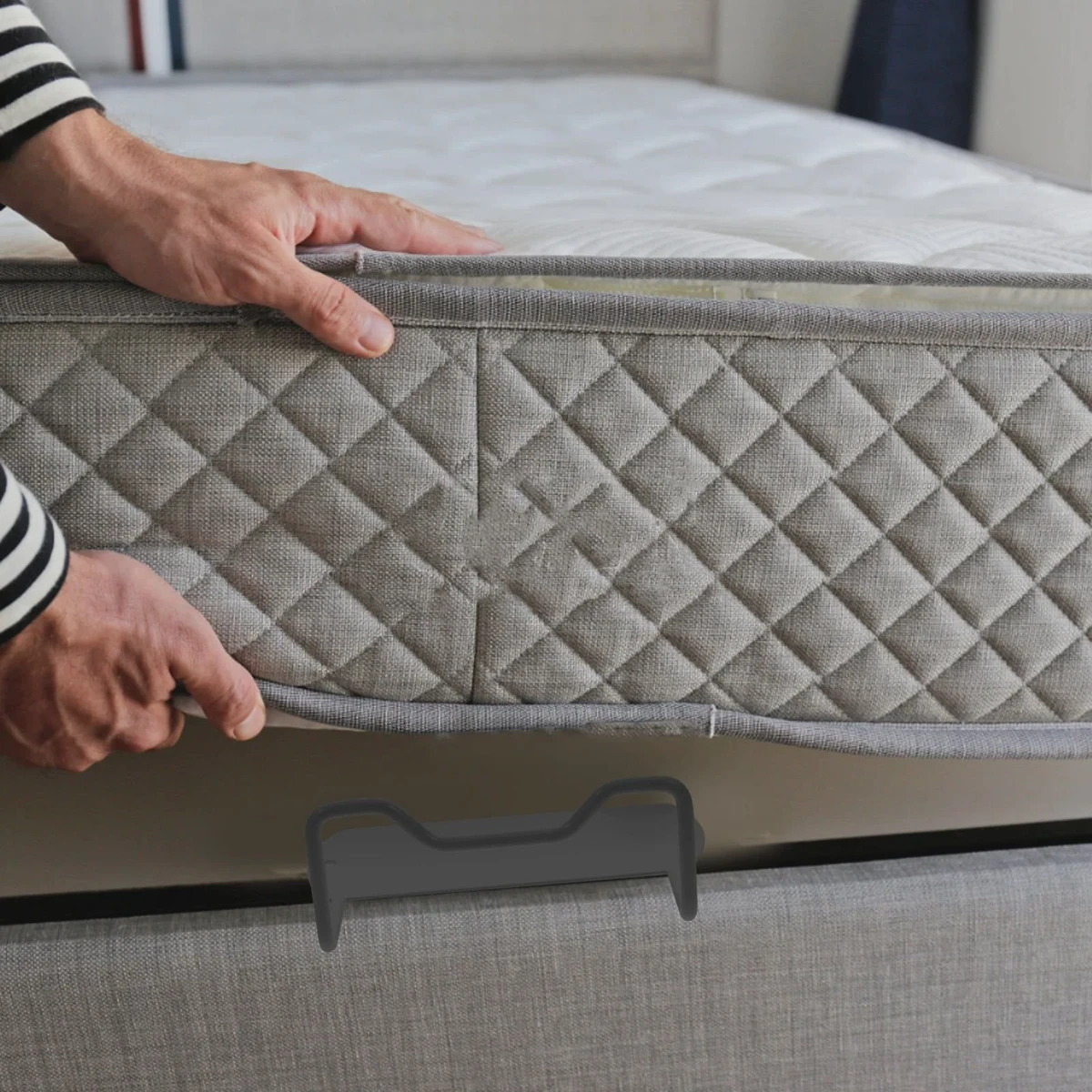
Retainer bars - sometimes called slide stoppers - are L-shaped metal clamps that bolt to the side rails of a metal frame. They create a physical lip the mattress can't climb over. If your frame is the steel slat-and-rail style sold with platform beds, this is the most permanent fix you can install in ten minutes.
Two caveats: they only fit metal frames with a side rail to clamp onto, and they leave a small ridge along each side. On thin mattresses (under 8") the ridge can be visible.
3. Industrial Velcro strips (best for adjustable bases)
Adjustable bases push a mattress toward the foot of the bed every time the head section raises and lowers. A row of self-adhesive Velcro strips - the loop side on the mattress underside, the hook side on the base - locks the two together. Use 3-4 strips per side and press for at least 30 seconds; cheap brands lose tack within months, so spring for industrial-strength tape.
If you ever need to flip the mattress, the strips peel off - but the adhesive may leave a residue on the mattress cover. Test in an inconspicuous spot first.
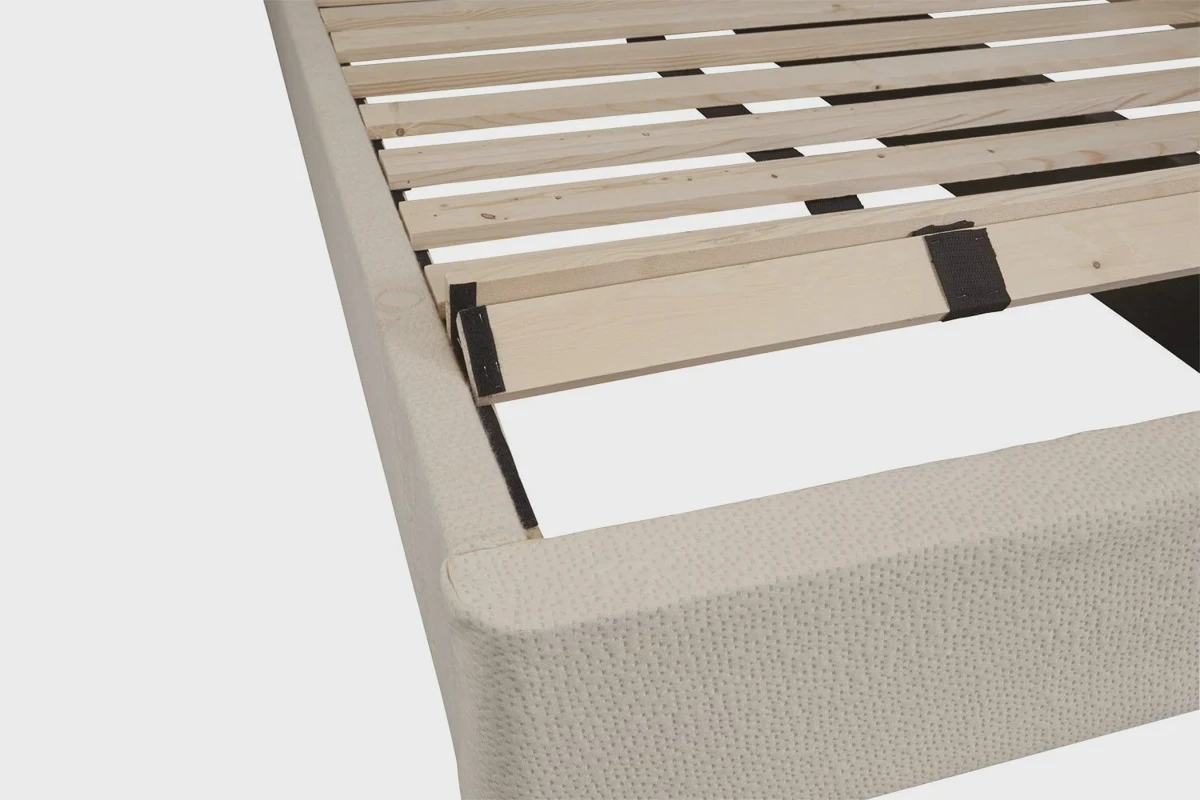
4. Rubberized shelf liner (the $5 hack)
If you don't want to wait for shipping, a roll of rubberized shelf liner from any hardware store does roughly 80% of what a dedicated gripper pad does, for under $10. Cut two strips to run the length of the bed and lay them on top of the slats or box spring. It's not as durable as a real gripper - expect to replace yearly - but as a Friday-night fix, it works.
5. Confirm the size match
Pull the mattress fully off the frame and check both against a tape measure. Standard sizes:
- Twin: 38" × 75"
- Full: 54" × 75"
- Queen: 60" × 80"
- King: 76" × 80"
- California King: 72" × 84"
Any gap larger than ½" on a side is enough to let a mattress wander. If you find a mismatch, foam gap-fillers or pool noodles wedged into the gap are a workable stopgap; replacing the frame is the long-term answer.
6. Add a bunky board on slat bases
Wide-spaced slats (more than 3" apart) let foam mattresses sag into the gaps and crab-walk sideways. A 1"-2" thick bunky board - a rigid plywood-and-fabric panel - turns a slat base into a flat surface and almost always cures the slide. Bonus: it extends mattress life by spreading load evenly.
7. Carpet tape under the mattress
Double-sided carpet tape is a brute-force option for cases where everything else fails. Run two strips across the base under the mattress. The grip is strong, but removal is messy - peel slowly and use a citrus-based adhesive remover on residue. Skip this method on natural fiber covers (linen, cotton ticking) where the adhesive can stain.
8. Vacuum the base (the free fix)
Dust, lint, and pet hair build up between mattress and base and act as tiny ball bearings. Lift the mattress, vacuum the base, and wipe metal frames with a slightly damp cloth. Do this every time you change sheets and you'll buy real friction back without spending a dollar.
Best for most beds: rubber gripper pad
- Works on any mattress and any base type
- Removable - no residue when you rotate the mattress
- $20-$40 and ships in two days
- Trim-to-fit with regular scissors
Skip if
- You sleep on an adjustable base - go straight to industrial Velcro instead
- Your frame is significantly larger than the mattress - fix the size mismatch first
- Slats are spaced more than 3" apart - add a bunky board first
Mattress sliding FAQ
What can I put under my mattress to keep it from sliding?
A rubberized mesh gripper pad (sometimes sold as a rug pad) is the most reliable option for the average bed. It costs $20-$40, fits between mattress and base, and works under any mattress type. For metal frames, metal retainer bars are even more permanent.
Why does my mattress slide off my adjustable bed?
Every time the head section raises and lowers, the mattress is gradually pushed toward the foot of the bed. Adjustable bases need a positive lock - industrial Velcro strips between the mattress and base are the standard fix, and most adjustable-base manufacturers sell branded retainer kits.
Will a mattress topper stop my mattress from sliding?
No - a topper sits on top of the mattress and doesn't change the friction at the base. If anything, a heavy topper can mask the problem temporarily by adding weight. Address the contact between mattress and frame first, then add the topper.
Is it bad if my mattress slides?
It can be. A mattress that drifts off-center loads its edges unevenly, which accelerates sag and edge collapse. It's also a fall risk if the mattress overhangs the foot of the bed. Treat persistent sliding as something to fix, not live with.
How often should I check the fix?
Look at the alignment every time you change sheets. Gripper pads compress over 12-18 months and lose grip; Velcro strips lose tack faster. A 30-second visual check catches the problem before it becomes nightly drift again.
When to give up and replace the frame
If you've stacked two of the fixes above and the mattress still walks, the frame is probably the problem. Look for: visible warp in the side rails, a center support that flexes when you press it, slats spaced wider than 3", or a base that wobbles when you sit on the edge. A new platform frame in the $200-$400 range solves these structural causes for good - and pairs well with our guide on the best mattresses for back pain, which depends on a flat, stable base to perform as designed.