
A Tempur-Pedic mattress typically lasts 8 to 12 years, but real-world lifespan ranges widely. Owners with lighter body weights, a sturdy foundation, and a mattress protector frequently get 12-15 years of comfortable sleep. Heavier sleepers, soft foundations, or hot, humid bedrooms can shorten that to 6-8 years before noticeable comfort decline sets in.
Tempur-Pedic backs every mattress with a 25-year limited warranty: full coverage for years 1-10, and prorated coverage for years 11-25 (sagging only counts as a defect once it exceeds 0.75 inches). That warranty is generous on paper, but most sleepers replace their mattress because comfort drops off - not because the foam fully fails.
Average Lifespan by Tempur-Pedic Model
All Tempur-Pedic mattresses use the brand's proprietary TEMPUR memory foam, but density and construction differ across the lineup. As a rough 2026 guideline:
- TEMPUR-Cloud (entry-level all-foam): 7-9 years
- TEMPUR-Adapt (all-foam or hybrid): 8-10 years
- TEMPUR-ProAdapt (mid-range): 10-12 years
- TEMPUR-LuxeAdapt (flagship all-foam): 10-13 years
- TEMPUR-ProBreeze / LuxeBreeze (cooling models): 10-13 years
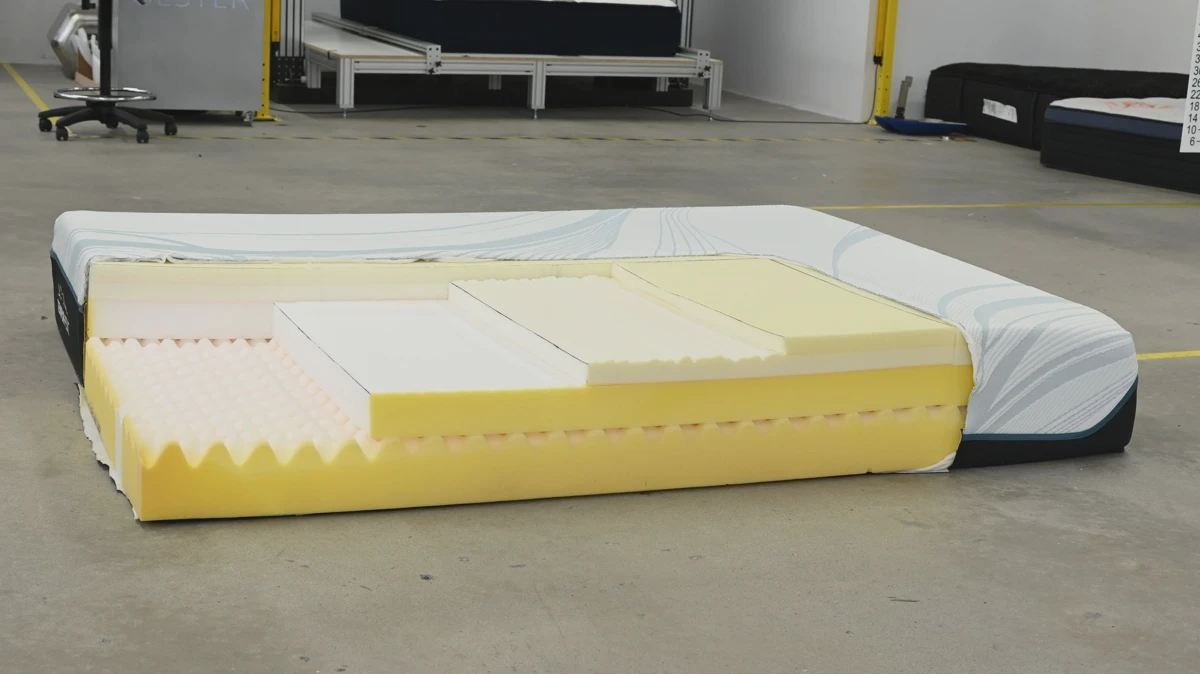
Higher-tier models use denser TEMPUR-APR and TEMPUR-ES formulations that resist body impressions longer than the lighter TEMPUR-ES Lite foam in the Cloud. Hybrid versions add a pocketed coil base, which can extend perceived support life because coils don't compress over time the way foam does - but the comfort layers above still set the practical replacement clock.
What Affects How Long Yours Will Last
Body weight and sleep position
Sleepers over 230 lbs put roughly 30-40% more long-term load on memory foam comfort layers. Couples sharing a queen will see body impressions develop faster than a solo sleeper on the same model. Side sleepers also concentrate force on the shoulder and hip zones, which is usually where the first impression appears.
Foundation quality
Tempur-Pedic's warranty requires a solid platform or a slatted base with slats no more than 2.75 inches apart. A sagging box spring or wide-slat frame voids the warranty and accelerates uneven wear - the foam dips into the gaps and develops permanent indentations within a few years. The TEMPUR-Ergo adjustable base is purpose-built for the lineup and extends life by avoiding flat-pressure pooling.
Bedroom climate
Memory foam softens with heat and stiffens with cold. A bedroom that consistently runs over 80°F or below 60°F shortens foam resilience. Humid environments also accelerate cover and foam breakdown. Aim for 65-72°F and moderate humidity if you want maximum lifespan.
Maintenance habits
A waterproof mattress protector from day one is the single highest-leverage thing you can do - sweat, body oils, and spills are the leading cause of premature foam degradation. Tempur-Pedic mattresses cannot be flipped (they're one-sided by design), but rotating head-to-foot every 6 months evens out wear, especially for couples. For spills, sweat stains, and the right way to wash the removable cover without voiding the warranty, see our walkthrough on how to clean a Tempur-Pedic mattress.
5 Signs It's Time to Replace Your Tempur-Pedic
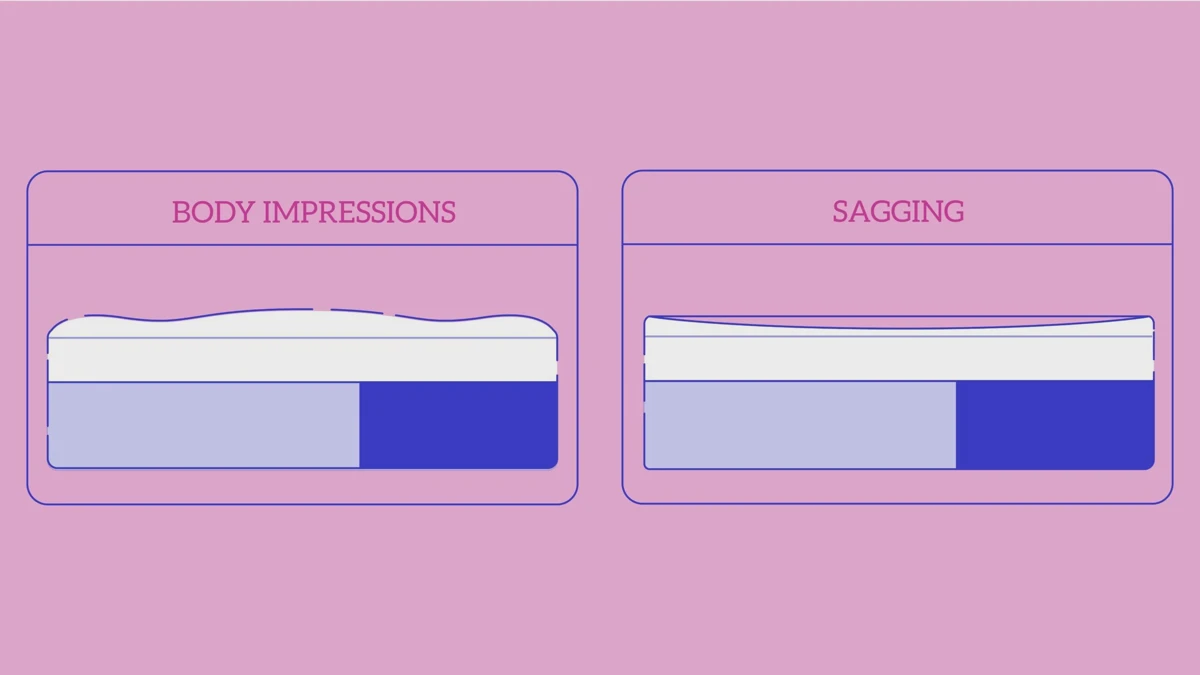
- Visible sagging or body impressions over 0.75 inches deep. This is also the warranty threshold - measure with a straightedge across the mattress when you're not on it.
- Waking up sore. Persistent back, hip, or shoulder pain that fades after an hour out of bed signals lost pressure relief.
- Sleeping better elsewhere. If a hotel mattress or the guest room consistently feels better, your primary mattress has likely degraded.
- Sleeping hot suddenly. When the cover and foam break down, airflow drops and the mattress traps more heat. This often shows up around year 7-8 on older models.
- Worsening allergies. Dust mites, dander, and dead skin accumulate inside any mattress over a decade - a frequent trigger for unexplained morning congestion.
How to Make Your Tempur-Pedic Last Longer
- Use a breathable, waterproof mattress protector from day one.
- Place it on a solid platform or close-slatted (≤2.75") foundation - never directly on the floor (blocks airflow, traps moisture).
- Rotate head-to-foot every 6 months. Do not flip.
- Vacuum the mattress every 1-2 months and spot-clean stains with mild detergent and water - never soak the foam.
- Avoid bouncing, jumping, or sitting on the same edge daily - concentrated load creates permanent impressions.
- Keep the bedroom in the 65-72°F range with moderate humidity.
Should You Replace or Add a Topper?
If your Tempur-Pedic is under 7 years old and you're noticing comfort changes - but the surface is flat with no impressions over 0.75 inches - a quality topper is a reasonable bridge solution that can buy you 1-2 years. Toppers themselves last about 5 years. If the mattress is past 10 years, has visible sagging, or you're waking up sore most mornings, it's time for a full replacement. A topper masks symptoms but won't fix degraded support layers underneath.
Frequently asked questions
Can you flip a Tempur-Pedic mattress?
No. Tempur-Pedic mattresses are designed one-sided - the comfort layers are on top and the support core is on the bottom. Flipping puts you on the firm support core and ruins comfort. You should rotate head-to-foot every 6 months instead.
Does the 25-year warranty mean it lasts 25 years?
No. The warranty covers manufacturing defects (sagging over 0.75 inches, splitting cover seams) for 25 years - full coverage years 1-10, prorated 11-25. Most owners replace their mattress for comfort reasons well before then. Plan on 8-12 years of comfortable sleep, with care extending it to 12-15.
Do hybrid Tempur-Pedic mattresses last longer than all-foam?
Slightly. The pocketed coil base in hybrids stays supportive longer than a polyfoam core, but the TEMPUR comfort layers on top are what actually wear out, and those are similar across both versions. Expect 1-2 extra years on average.
How long does a Tempur-Pedic take to break in?
Tempur-Pedic recommends a full 30-day adjustment period. The foam softens slightly and conforms to your body in the first 2-4 weeks, especially in cooler bedrooms. If it still feels wrong after 30-60 nights, contact the retailer about the comfort guarantee.
Will a Tempur-Pedic sag like a spring mattress?
Not in the same way. You won't get broken coils or a hammock dip. Instead, the memory foam develops body impressions - permanent compressed zones where you sleep - and the surrounding foam stays firmer. That uneven feel is the most common reason for replacement.