A memory foam mattress topper typically lasts 3 to 5 years with daily use, though high-density toppers (4 lb/ft³ or more) can stretch to 6-8 years if you treat them well. Cheap 2 lb/ft³ foam? Plan on replacing it after 1 to 3 years. The number isn't fixed - it slides up or down depending on density, thickness, body weight, the mattress underneath, and how often you actually clean and rotate the thing.
This guide breaks down what determines that lifespan, the warning signs that your topper is done, and the maintenance habits that genuinely add years (not the ones that just sound nice).
Quick answer: typical lifespans by density
Foam density is the single biggest predictor of how long your topper will hold up. Density is measured in pounds per cubic foot (lb/ft³) and tells you how much actual foam is packed into the slab - not how firm it feels. A high-density topper can feel soft and still last twice as long as a low-density one.
- 2 lb/ft³ (low density): 1-3 years. Common in budget toppers under $80.
- 3 lb/ft³ (medium density): 3-5 years. The mass-market sweet spot.
- 4 lb/ft³ (high density): 5-7 years. What most premium brands use.
- 5+ lb/ft³ (premium): 7-10 years. Tempur-Pedic-style viscoelastic foam.
If a product page doesn't list density, that's a red flag - reputable brands publish it.
What actually determines how long it lasts
Foam density and quality
Higher-density foam has more polyurethane per cubic foot, so the cell walls resist compression longer. Low-density foam compresses, then never fully rebounds - that's the body impression you wake up in. Look for CertiPUR-US certified foam too: it screens for ozone depleters, heavy metals, formaldehyde, and high-VOC flame retardants, all of which can also accelerate breakdown. GreenGuard Gold certification is the second mark worth checking. It caps low-level VOC emissions tightly enough for schools and healthcare settings, which is a useful proxy for cleaner foam chemistry overall.
Thickness
Thickness matters separately from density. A 1-inch topper can't redistribute pressure the way a 3-inch topper can - it bottoms out faster, and the foam at the impression points wears through sooner.
- 1 inch: Light cushioning, wears out in 1-2 years.
- 2 inches: Decent for back/stomach sleepers; 2-4 years.
- 3 inches: Best general-purpose thickness; 3-5 years.
- 4 inches: Heavy cushioning for side sleepers and pressure-point relief; 4-6 years.
Body weight and sleep position
A topper carrying 250 lb of pressure for 8 hours a night ages faster than the same topper under a 130 lb sleeper. Side sleepers concentrate weight on the shoulder and hip, so those zones break down before the rest of the slab. If you're a heavier sleeper or a strict side sleeper, jump up one density tier from what you'd otherwise pick.
The mattress underneath
This is the factor people miss. A topper is a comfort layer - it isn't structural. If your mattress is sagging, the topper sags with it, and the foam takes the strain that the mattress should be absorbing. A topper on a worn-out mattress will fail in 1-2 years even if it's high-density. Replace the mattress, or at minimum stop blaming the topper.
Frequency of use
A topper in a guest room used 20 nights a year can last a decade. A topper used 365 nights a year wears at roughly 18× the rate. There's no trick here - usage is linear.
Heat, humidity, and cleanliness
Memory foam softens under heat. Sweat, body oils, and humidity break down the cell structure from within. Toppers in non-air-conditioned bedrooms in humid climates lose 1-2 years off their expected lifespan. A breathable cover and a mattress protector reduce this dramatically.
7 signs it's time to replace your topper
You don't need all seven. Two or three is usually enough to call it.
- Permanent body impressions deeper than ¾ inch. Run your hand across the surface. If you can feel a clear depression where you sleep, the foam has failed structurally.
- You wake up sore - especially shoulders, hips, or lower back. A working topper relieves pressure. A dead one transmits it.
- The topper feels lumpy or uneven. Foam doesn't redistribute when it breaks down. It bunches.
- Persistent odor that doesn't air out. Memory foam absorbs sweat and skin oils. After 4-5 years, even washed covers can't mask it.
- Visible tears, crumbling edges, or yellow flaking. The polyurethane is oxidizing and disintegrating.
- It feels harder than it used to. Counterintuitive but common - degraded foam can stiffen as it loses elasticity.
- You sleep better in a hotel bed. Honest test. If a generic hotel mattress feels noticeably better than yours, your topper (or mattress) is the problem.
How to extend your topper's life
These habits add measurable years, not weeks:
- Use a waterproof mattress protector. This is the single biggest extender. It blocks sweat, oils, dust mites, and accidental spills - all of which degrade foam from the inside.
- Rotate it 180° every 2-3 months. Foam can't be flipped (memory foam is single-sided), but rotating evens out wear at the head and foot.
- Air it out monthly. Strip the bedding, leave the topper exposed for a few hours. Moisture leaves the foam, and ventilation slows mold and bacteria.
- Spot-clean only. Never put memory foam in a washing machine. For a stain, mix equal parts white vinegar and water, dab the spot with a damp cloth (don't soak the foam), let the mixture sit for about 15 minutes, then wipe with a clean damp cloth and air dry away from direct heat.
- Deodorize with baking soda twice a year. Sprinkle, let sit 4-8 hours, vacuum. This pulls out trapped moisture and odor.
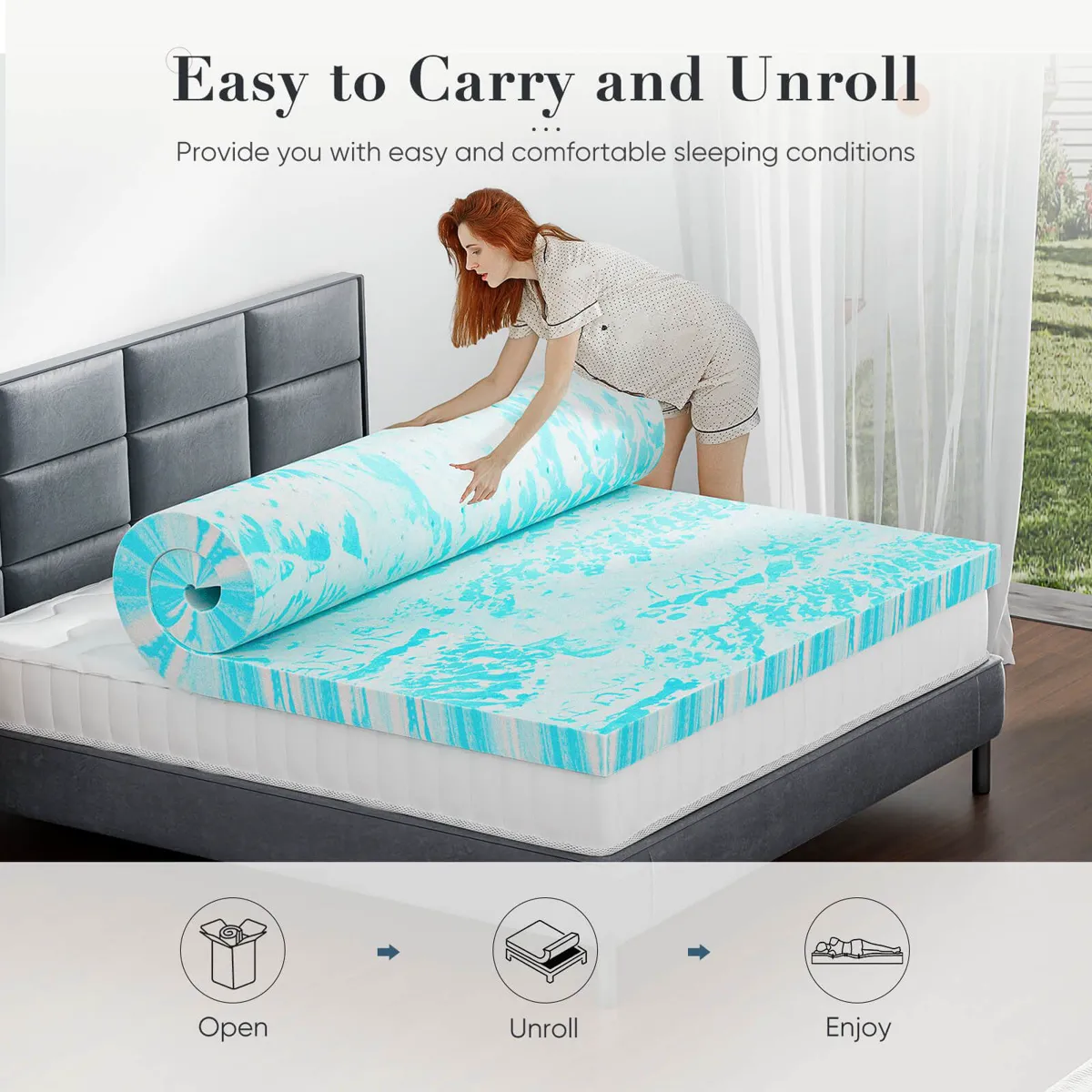
- Don't fold or bend it for storage. Roll it loosely if you must move it. Folding creates permanent creases that break the foam structure.
- Keep the room cool and dry. Below 75°F and below 60% humidity is ideal. Memory foam that runs hot also degrades faster.
How memory foam toppers compare to other materials
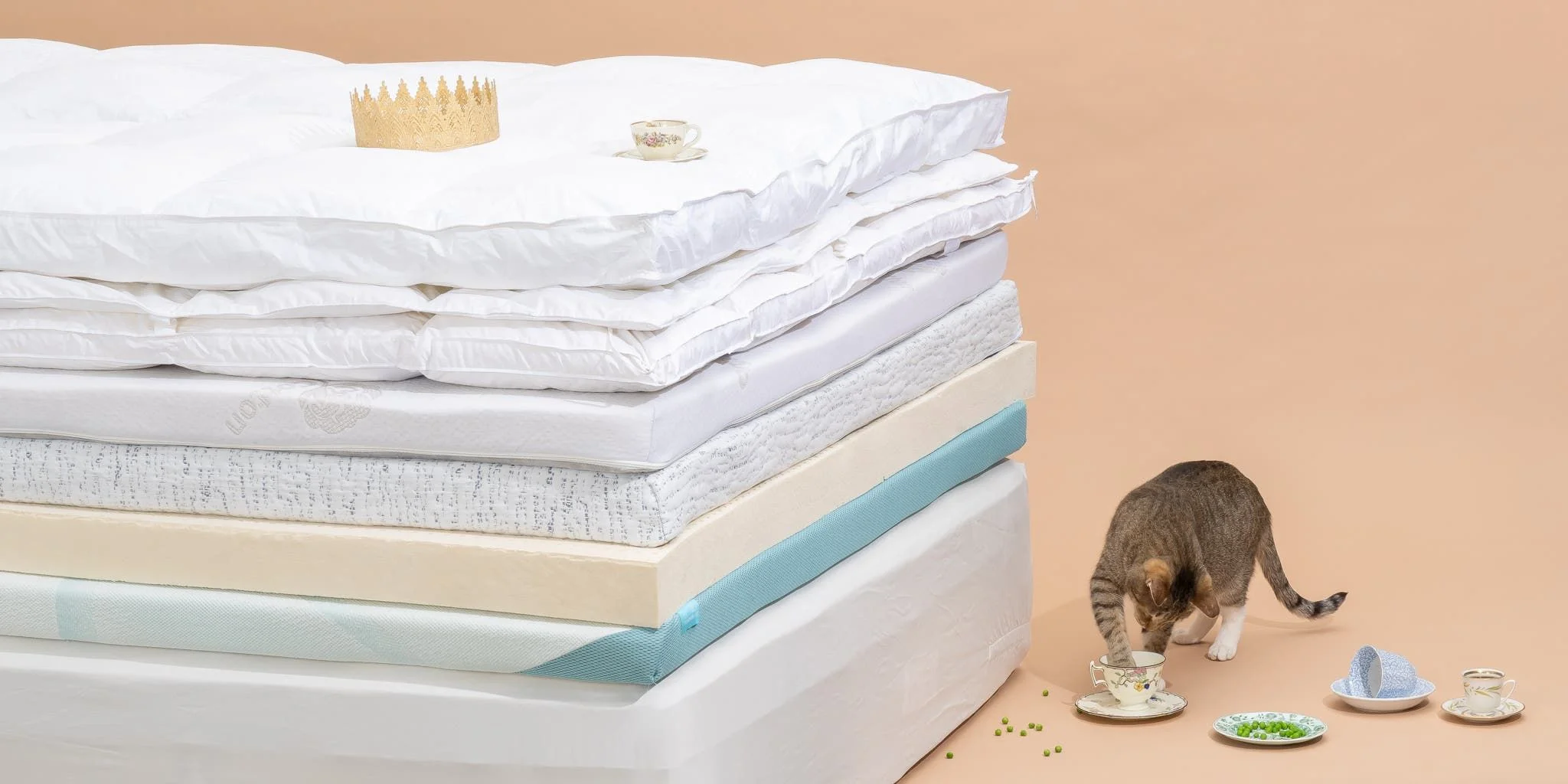
Lifespan varies a lot by material. If durability is your priority, memory foam isn't actually the longest-lasting option.
- Memory foam: 3-5 years (up to 8 with premium density).
- Latex (natural or Talalay): 8-15 years. Most durable topper material on the market.
- Wool: 5-10 years. Naturally antimicrobial; doesn't compress permanently.
- Down or down-alternative: 1-3 years. Soft, but flattens fast.
- Polyester fiberfill: 1-2 years. Usually the cheapest, and it shows.
If you want maximum lifespan, latex outlasts memory foam by 2-3×. Memory foam wins on contouring and pressure relief; latex wins on longevity and breathability.
When to replace the topper vs. the whole mattress
If your mattress is under 5 years old and the topper is the source of discomfort, replace just the topper. If your mattress is 7+ years old or sagging visibly, replacing only the topper is a temporary fix - the mattress will keep dragging the new topper down. At that point, budget for both.
A good way to test: pull the topper off and sleep on the mattress alone for two nights. If the mattress feels firm and supportive, the topper was the problem. If you wake up sore on the bare mattress, that's the real issue.
Bottom line
Plan on a quality memory foam topper lasting 3 to 5 years. Pay extra for 4 lb/ft³ density, use a protector, rotate it quarterly, and you can push that to 6-8 years. Skip the protector and put it on a sagging mattress, and you'll be shopping again before year three.
Frequently asked questions
How long does a memory foam mattress topper last on average?
Most memory foam mattress toppers last 3 to 5 years with daily use. High-density toppers (4 lb/ft³ or higher) can last 6 to 8 years if maintained well, while budget 2 lb/ft³ toppers often need replacing within 1 to 3 years.
Should you flip a memory foam mattress topper?
No - memory foam toppers are single-sided and should never be flipped. The contoured top layer faces up; the supportive base faces down. Instead, rotate the topper 180° (head to foot) every 2 to 3 months to even out wear.
How can I tell when my memory foam topper is worn out?
Look for permanent body impressions deeper than 3/4 inch, morning soreness in shoulders or hips, lumpy or uneven feel, persistent odor that won't air out, visible tearing or crumbling, or unusual stiffness. Two or more of these signs means it's time to replace.
Can you wash a memory foam mattress topper?
Never put memory foam in a washing machine - it tears and waterlogs the cell structure. Spot-clean with a mild detergent diluted in water, dab gently, and air dry completely away from direct heat. Use baking soda twice a year to deodorize.
Does foam density really change the lifespan?
Yes, significantly. A 4 lb/ft³ topper can outlast a 2 lb/ft³ topper by 3 to 4 years because higher density means more polyurethane per cubic foot, so cell walls resist compression longer. If a product page doesn't list density, treat that as a red flag.
How does my mattress affect my topper's lifespan?
A topper is a comfort layer, not a structural one. If the mattress underneath is sagging, the topper sags with it and the foam takes strain it isn't built for. Even a high-density topper can fail in 1 to 2 years on a worn-out mattress.