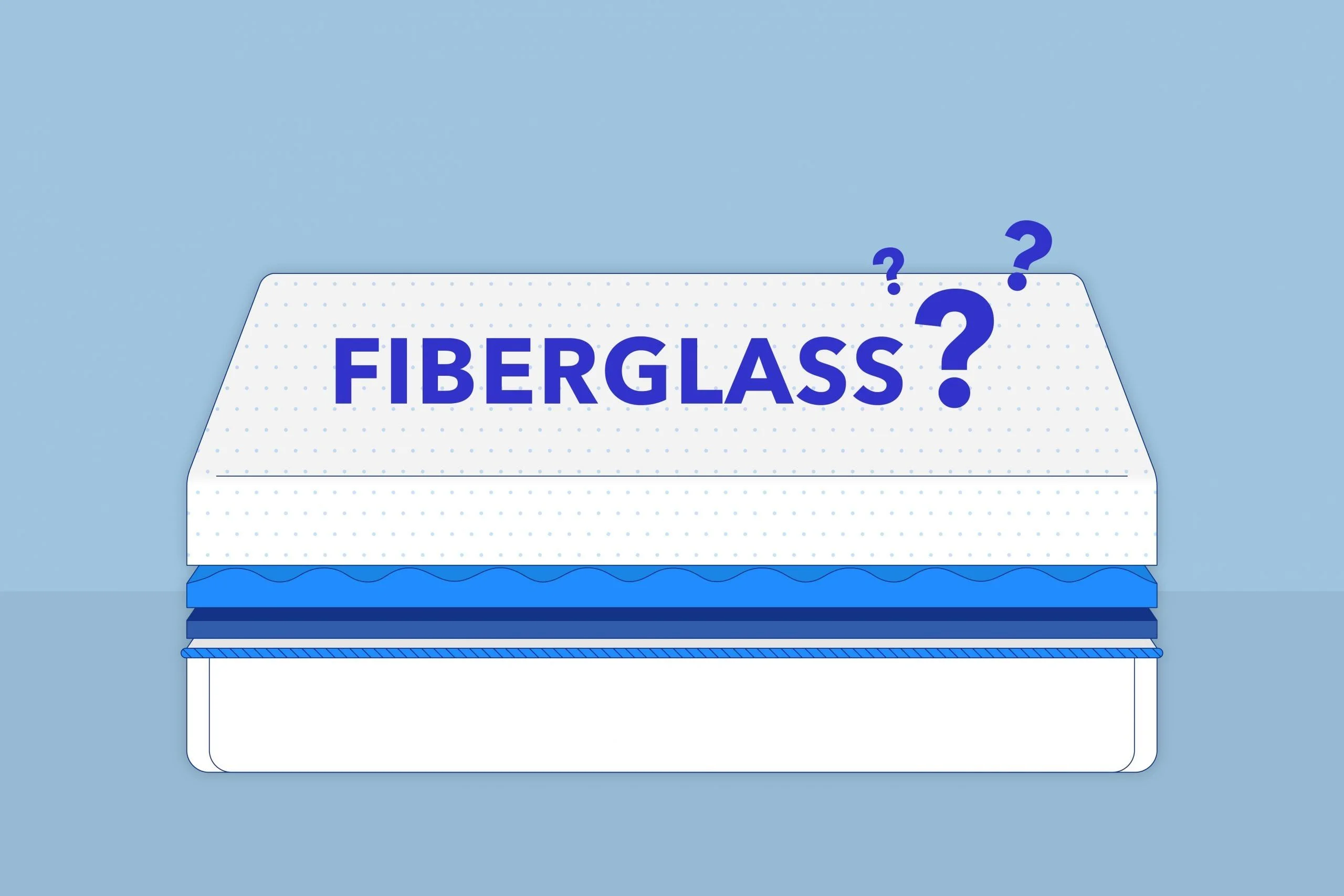
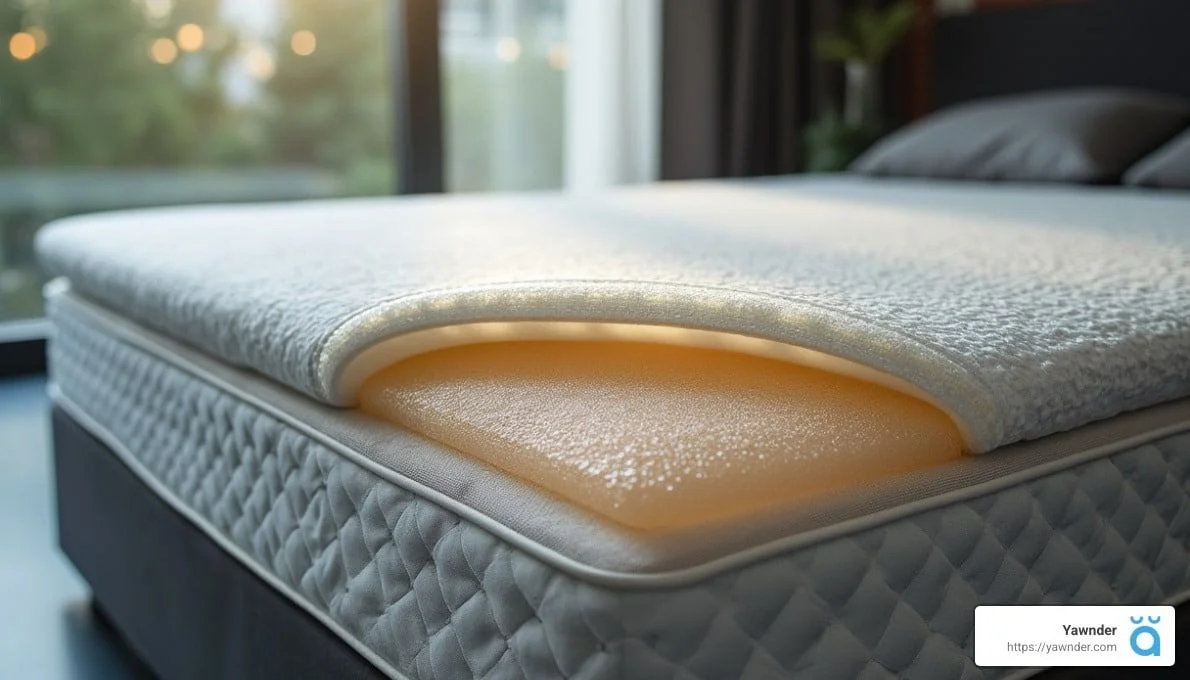
Kevlar - the same aramid fiber DuPont engineers into bulletproof vests and firefighter turnout gear - has quietly become one of the most important materials in modern mattress safety. Brands use it as a fire sock around the foam core to meet the federal flammability standard (16 CFR Part 1633) without coating the bed in chemical retardants or fiberglass.
But how much does a Kevlar mattress actually cost? The honest answer is: it depends on what's underneath the Kevlar layer. The fiber itself is expensive, but a Kevlar fire barrier alone doesn't make a $300 mattress into a $2,000 one. Below is what real Kevlar-equipped mattresses sell for in 2026, broken down by size, type, and brand tier.
Kevlar Mattress Cost at a Glance
- Budget hybrid with Kevlar fire sock: $300 - $700 (queen)
- Mid-range memory foam with Kevlar barrier: $700 - $1,400 (queen)
- Premium latex/organic with Kevlar sock: $1,800 - $3,500 (queen)
- Crib & baby mattresses with Kevlar: $200 - $500
Older guides quoting $100 mattresses are confusing the price of Kevlar fabric per yard with the price of a finished bed. A queen mattress uses several yards of fabric, plus the foam, coils, quilting, and assembly - so the true entry point is closer to $300, and credible non-toxic builds start around $1,500.
What Is a Kevlar Mattress, Exactly?
A "Kevlar mattress" is almost never made entirely of Kevlar. The fiber is woven into a thin sock or quilted layer that wraps the foam or coil core, sitting just under the cover fabric. Its job is to slow ignition and contain smoldering long enough to satisfy U.S. flammability law without using brominated chemicals, antimony, boric acid, or fiberglass - all of which have raised health concerns in the past decade.
Kevlar's relevant properties for bedding:
- Tensile strength of roughly 2,600-3,700 MPa - about five times stronger than steel by weight.
- Decomposes only above 800°F (about 425°C), well past the flashpoint of polyurethane foam.
- Inert and non-toxic in finished form; does not off-gas like chemical fire retardants.
- Resists tearing, puncturing, and abrasion, which extends the useful life of the cover.
Kevlar Mattress Price by Size
Pricing scales roughly with surface area, but premium brands compress the gap between twin and king. Use the queen price as your anchor and add or subtract from there:
- Twin: $250 - $1,800 (about 60-70% of queen)
- Twin XL: $280 - $2,000
- Full / Double: $320 - $2,200
- Queen: $300 - $2,800 (the volume size - most discounts hit here)
- King: $450 - $3,400
- California King: $480 - $3,500
Where the Money Actually Goes
If you're comparing two Kevlar mattresses at very different prices, the spread almost never comes from the Kevlar itself. The cost drivers are:
- Foam quality. CertiPUR-US polyfoam costs a fraction of GOLS-certified organic latex. Latex alone can add $800-$1,200.
- Coil count and gauge. Pocketed coil hybrids with 1,000+ individually wrapped coils run $200-$400 more than bonnell-coil builds.
- Cover fabric. Organic cotton, Tencel, or wool covers are dearer than polyester blends.
- Manufacturing. Made-in-USA or Canadian organic factories carry higher labor costs than overseas production.
- Warranty and trial. 20-year warranties with 100+ night home trials are baked into the retail price.
Kevlar vs. Fiberglass vs. Chemical Retardants
Every mattress sold in the United States must pass a 30-minute open-flame test. Manufacturers can satisfy that rule three ways. Kevlar is the priciest of the three but also the cleanest:
- Fiberglass sock: Cheapest. Effective, but if the cover is removed (which the law prohibits but consumers do anyway), the fiberglass migrates into the home and is extremely difficult to clean up.
- Chemical retardants: Brominated and chlorinated compounds plus antimony trioxide. Cheap but linked to off-gassing, hormone disruption, and persistence in indoor dust.
- Kevlar (or rayon-Kevlar blends): Most expensive. Inert in finished form, no migration risk, no off-gassing. Used by Essentia, Avocado (in some lines), and several boutique organic builders.
For context on the high end of the market, see our roundup of the best most expensive mattress.
Pros of a Kevlar Mattress
- Meets U.S. flammability law without chemical retardants or fiberglass.
- Inert and non-toxic - safe for chemically sensitive sleepers and infants.
- Tear- and puncture-resistant, extending cover lifespan past 10 years.
- Hypoallergenic; resists mold, mildew, and dust mites.
- No off-gassing odor compared to chemically treated mattresses.
Cons to Weigh
- Higher upfront price - typically $200-$600 more than a comparable fiberglass build.
- Limited brand selection; most premium players are direct-to-consumer.
- Kevlar barrier alone does not fix poor foam, coils, or comfort layers - read the full spec sheet.
- Some Kevlar covers are stiffer than cotton-only covers, which a few sleepers can feel.
Kevlar Crib and Baby Mattresses
Infant mattresses are the strongest case for paying up for Kevlar. Babies spend 12-16 hours a day on the surface, breathe close to it, and frequently mouth the fabric - exposure pathways that turn off-gassing and fiberglass into real concerns. Expect to pay $200-$500 for a Kevlar-equipped crib mattress versus $80-$150 for a polyfoam build with chemical retardants. Look for GREENGUARD Gold or CertiPUR-US plus an explicit "no fiberglass / no flame retardants" claim.
Care and Maintenance
A Kevlar fire barrier is set-and-forget - you'll never touch it under normal use. Care comes down to the surface cover and the foam underneath:
- Always use a washable mattress protector. The Kevlar layer is sealed inside; you should not be opening it.
- Rotate the mattress 180° every three months for the first year, then twice a year afterward.
- Vacuum the cover with an upholstery attachment monthly to lift dust and skin cells.
- Spot-clean spills with cold water and mild soap - never soak. Heat and harsh solvents can degrade the cover fabric over the Kevlar.
- Do not unzip and remove the cover unless the manufacturer explicitly says it's safe. Most warranties void if the fire barrier is exposed.
Is a Kevlar Mattress Worth the Money?
For most sleepers, the calculus is simple: if a Kevlar version of the mattress you already want is within $300-$500 of the fiberglass version, it is almost always worth the upgrade. You get the same comfort, a cleaner fire-safety story, and a cover that holds up longer. Where Kevlar stops making sense is when the marketing is doing all the work - a $400 imported hybrid claiming "military-grade Kevlar protection" probably has a thin Kevlar-blend layer doing little more than the cheaper alternatives.
Three buyer profiles where Kevlar is clearly worth it:
- Households with infants or toddlers.
- Anyone with chemical sensitivities, asthma, or autoimmune conditions.
- Long-haul buyers who plan to keep the mattress 10+ years and want the cover to outlast the foam.
Kevlar Mattress FAQ
Are Kevlar mattresses bulletproof?
No. The Kevlar in a mattress is a thin fire-resistant fabric, not the dense layered weave used in body armor. It's there to slow ignition and meet federal flammability standards, not to stop projectiles.
Do Kevlar mattresses contain fiberglass?
Reputable Kevlar mattresses use Kevlar specifically to avoid fiberglass. Some budget builds use a rayon-Kevlar blend, which is still fiberglass-free. Always check the law tag and product page - if it lists "glass fiber" or "silica," it's not a true Kevlar build.
How long does a Kevlar mattress last?
The Kevlar barrier itself lasts indefinitely. Real lifespan is set by the foam or coils - 8-10 years for polyfoam, 12-15 years for high-density memory foam, and 20+ years for natural latex.
Why is Kevlar more expensive than fiberglass?
Kevlar fiber costs roughly 5-10 times more per pound than fiberglass and is harder to weave and sew. Brands using it are also typically positioned as premium or organic, which adds margin on top of the raw material spread.
Which mattress brands use Kevlar?
Essentia, Avocado (select lines), Brentwood Home, and several boutique organic manufacturers use Kevlar fire socks. Many other premium brands use proprietary rayon-silica or wool-based barriers that achieve a similar non-toxic outcome without using Kevlar specifically.
Looking for a Non-Toxic Mattress That Won't Wreck Your Budget?
Banner Mattress carries Kevlar-equipped and fiberglass-free models from trusted brands at every price point. Stop by a showroom or browse online to feel the difference before you buy.