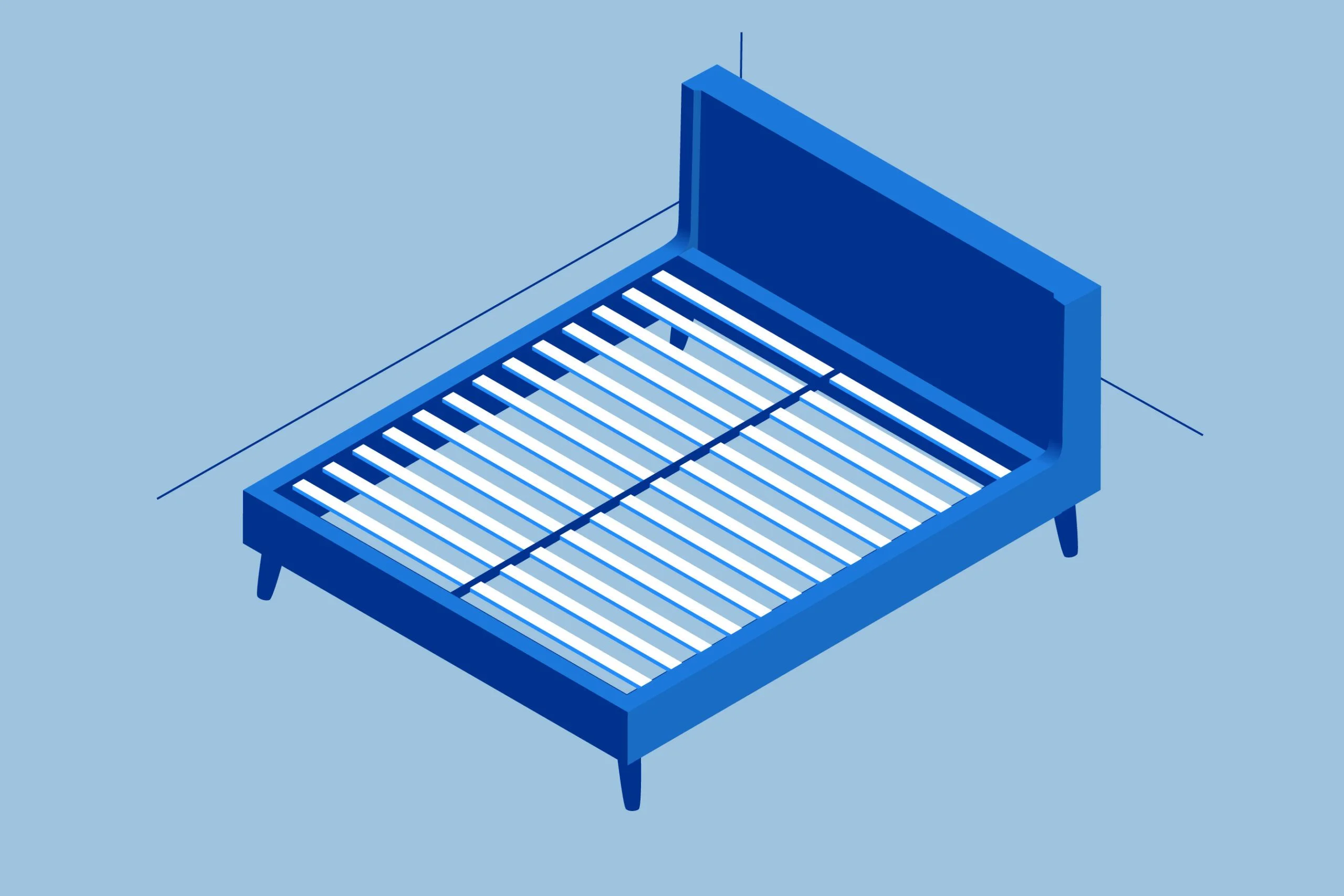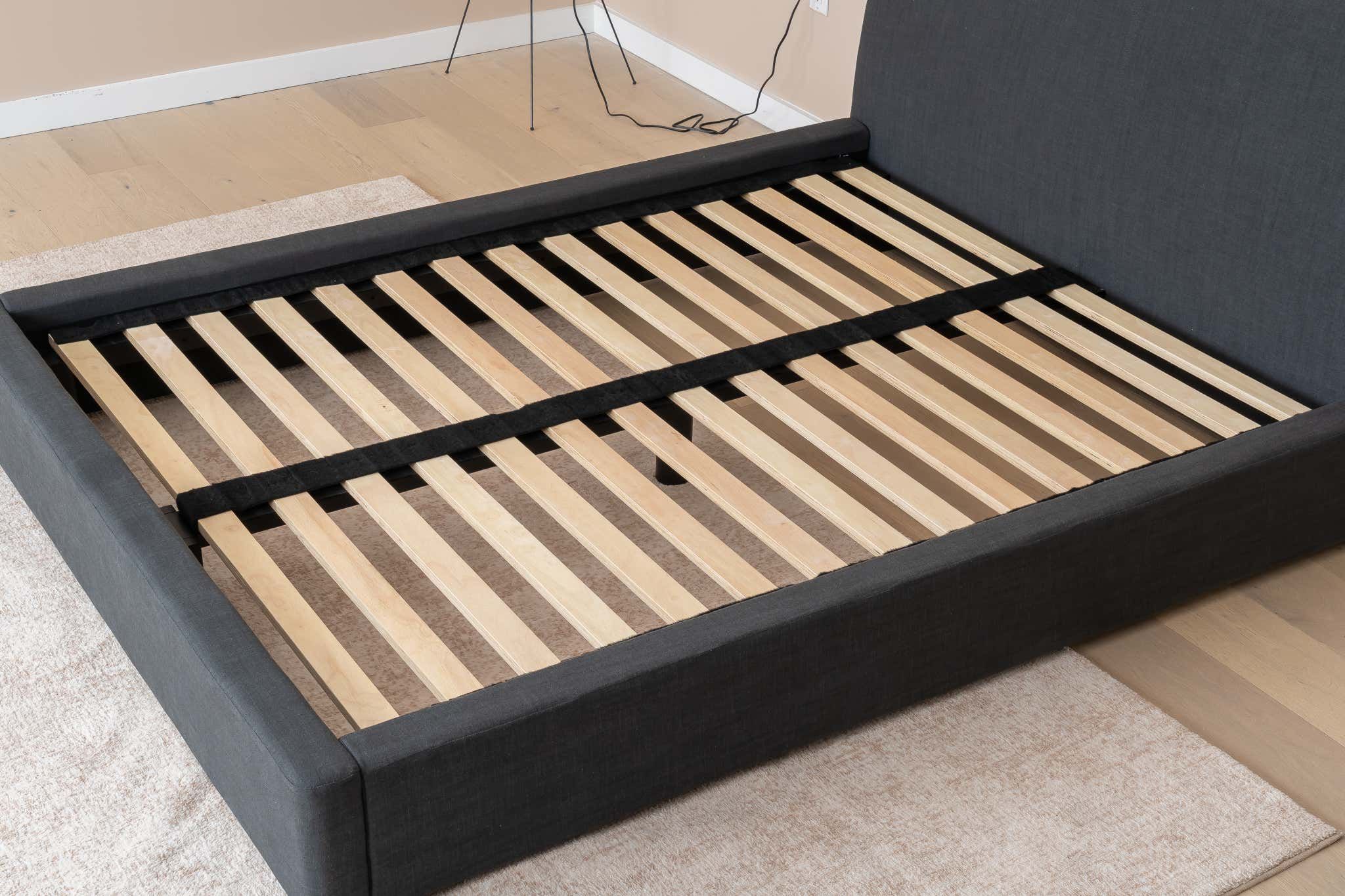

A squeaky metal bed frame is annoying, but it's almost never a sign that the frame is failing. In nine repair cases out of ten the noise is coming from one of three places: a loose bolt at a corner joint, metal-on-metal contact between slats and the side rail, or an aging box spring whose internal coils have lost their fabric padding. The fix is usually a wrench and ten minutes - not a new frame.
This guide walks through how to locate the squeak in about five minutes, then nine fixes that target the actual source. We've ordered them from "costs nothing, takes two minutes" to "replace the part" - work top-down and you'll silence most beds before you reach the bottom of the list.
Step 1: Find the source before you fix anything
The single biggest mistake people make is reaching for WD-40 first. If the squeak is coming from the box spring, lubricant won't help - you'll just have a smelly bed that still squeaks. Before any repair, isolate which component is making the noise.
- Strip the bed down to the bare frame. Remove pillows, bedding, mattress, and box spring. Set them aside.
- Push down on the bare frame at each corner and at the center. If it squeaks empty, the frame itself is the source - jump to fixes 1-3.
- Add the box spring only and press down. Squeak appears now? It's the box spring or its contact with the frame - fixes 4 and 7.
- Add the mattress last and press. New squeak at this stage points to the mattress itself (rare unless it's an old innerspring) or the mattress-to-box-spring contact - fixes 5 and 8.
Five minutes of diagnosis saves an hour of wasted lubricant and re-tightening. Once you know the source, only one or two of the fixes below apply to you.
Fix 1: Tighten every bolt with a real wrench
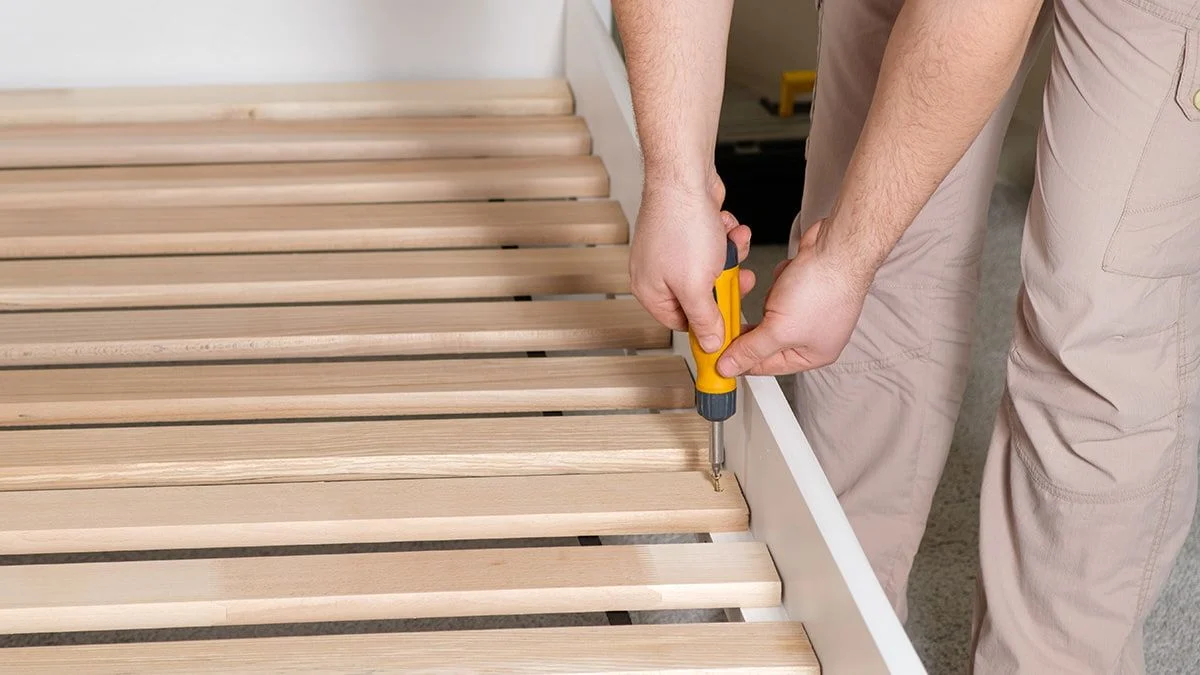
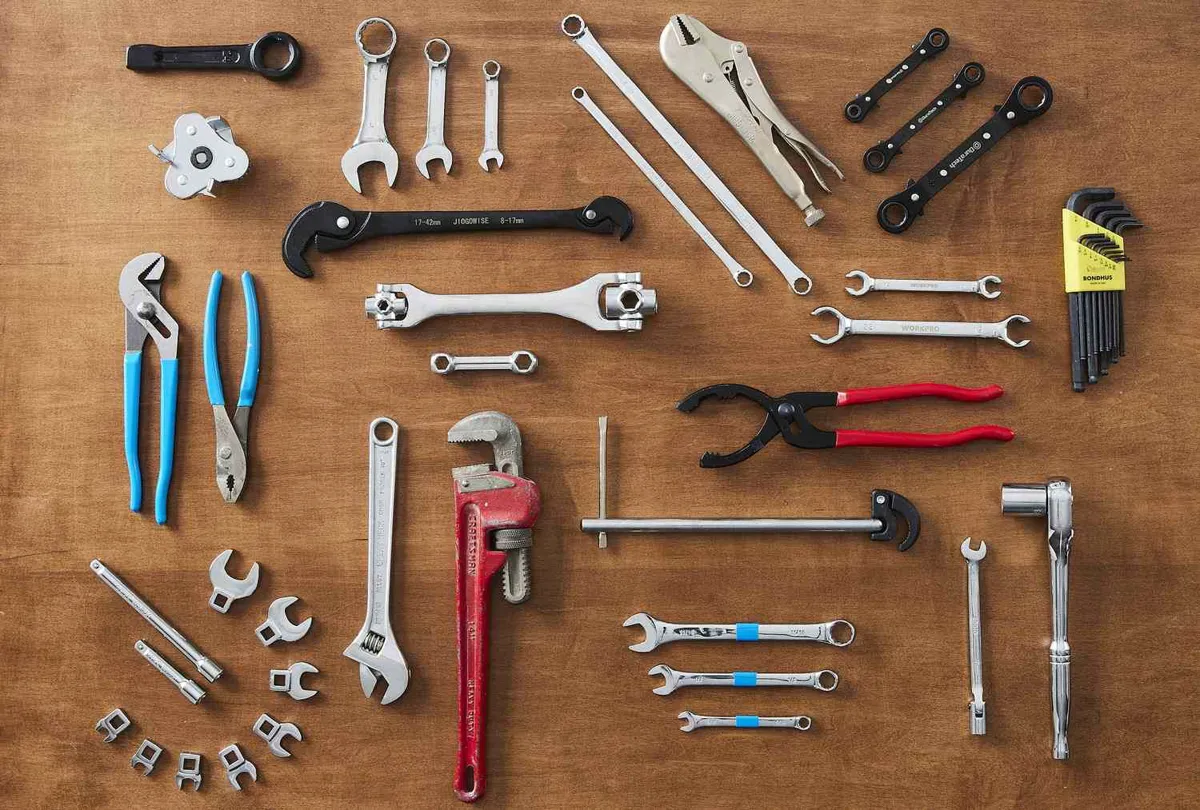
Almost every metal bed frame uses bolts at four to eight corner joints, plus center-rail or cross-support hardware. These work loose over months of normal movement - a couple of millimeters of play is all it takes for metal to grind on metal. Use a socket wrench or an adjustable wrench, not the small Allen key that came with the frame: that tool is for assembly torque, not maintenance retightening.
Work around every joint in sequence. If a bolt spins freely without tightening, the threads are stripped or the nut has cracked - see fix 6. If you see orange rust on the bolt head, replace the bolt outright; rusted threads will keep loosening no matter how hard you torque them.
Fix 2: Add felt pads or rubber washers between metal contact points
On a metal frame the slat brackets, center support legs, and headboard hardware are all metal-on-metal. Even a perfectly tight bolt can squeak if the surfaces it clamps together can flex against each other. The professional fix is a thin rubber or felt washer at every connection point.
A pack of #10 or #12 rubber washers from any hardware store costs around four dollars and stops more squeaks than any lubricant. Loosen the bolt, slip a washer onto the shaft so it sits between the two metal pieces, then re-torque. For slat-to-rail contact, stick-on adhesive felt pads work even faster - no disassembly required.
Fix 3: Lubricate the joints (with the right lubricant)
Lubricant is fix 3, not fix 1, because if the joint is loose or unpadded, oil only buys you a quiet week. With those handled, a lubricant at each metal-on-metal contact eliminates the high-frequency creak you hear when the frame flexes under your weight.
- Silicone spray is the best choice indoors - odorless, dries clean, won't stain bedding.
- WD-40 works but is technically a water-displacer, not a long-term lubricant. Fine for a quick fix; reapply every few months.
- Paraffin wax or a candle stub rubbed onto the contact point is dry, permanent, and won't smell. Best option for slats that touch the rail.
- Avoid cooking oil and petroleum jelly - both go rancid and attract dust.
Fix 4: Cushion the box-spring-to-frame contact
If your diagnosis pointed to the box spring, the squeak is usually not inside the box spring itself - it's the wooden box-spring frame rubbing against the metal side rails or center support. A folded old t-shirt, a strip of foam, or a length of self-adhesive weatherstrip foam laid along the top of each side rail isolates the wood from the metal and silences this noise instantly.
If the box spring is more than seven or eight years old and squeaks even when isolated from the frame, the internal coils are likely the source - see fix 9.
Fix 5: Level the frame on the floor
An unlevel frame puts uneven load on every joint, so the bolts cycle between tight and loose every time you roll over. Push down on each corner of the bare frame in turn - if any corner rocks, that leg is short or the floor is uneven.
Slip a folded business card, a thin cedar shim, or a stack of furniture pads under the short leg until the frame sits flat. Don't use thick cardboard or socks under the leg long-term - they compress and the rocking returns within weeks.
Fix 6: Replace stripped or rusted hardware
If a bolt won't tighten, the threads are gone. If the bolt head is orange or flaking, the bolt is rusting from the inside. In both cases tightening harder makes things worse - you'll snap the bolt off in the frame and turn a five-minute fix into a drilled-out repair.
Take the old bolt to a hardware store, buy a stainless replacement of the same diameter, length, and thread pitch, and add a fresh nylon-insert lock nut. Stainless or zinc-plated hardware will not rust and the lock nut won't back off from vibration. Total cost: under five dollars per joint.
Fix 7: Pad the slats individually
Metal slats sit in a metal channel along each side rail. Every time you shift weight, every slat flexes a tiny amount and grinds against that channel. The fix is the same idea as fix 2, but applied to each slat instead of the bolted joints.
Cut strips of self-adhesive felt or pieces of old t-shirt and slip one under each slat where it rests on the rail. On platform-style metal frames with welded slats this isn't possible, but on the more common bracket-mounted slat frames it eliminates 90% of the residual squeak after fixes 1-3.
Fix 8: Add a thin plywood layer between mattress and box spring
If your diagnosis pointed to the mattress-on-box-spring interface - most often with an older innerspring mattress - a piece of half-inch plywood cut to mattress dimensions distributes load evenly and stops the two surfaces from flexing against each other. Big-box hardware stores will cut plywood to size for free; queen-size sheets run about $30.
This is also the right move if your bed sags slightly in the middle. The plywood is a real-world test: if the squeak goes away with plywood under the mattress, your box spring has lost its support and is the next thing to replace.
Fix 9: Replace the box spring or the frame
Most box springs are designed to last seven to ten years. If yours is older, has visible sag, or squeaks even when fully isolated from the frame, no amount of repair will silence it permanently - the internal coils have lost their fabric backing and are grinding against the wood frame from the inside.
Replace with a same-size box spring or, better, switch to a solid foundation: a slatted platform foundation or a heavy-duty steel frame with anti-sway diagonal supports. Modern "squeak-resistant" steel slat frames use rubber-isolated joints and welded center supports specifically to eliminate the failure modes covered in this article. Expect to spend $120-$300 depending on size.
When the squeak is actually the mattress
Foam and latex mattresses essentially cannot squeak - they have no internal hardware. If your diagnosis pinned the noise to the mattress and you have a hybrid or innerspring more than eight years old, the coil pocket springs have likely worn through their fabric pockets. There is no DIY repair for this; the mattress is at end-of-life and replacement is the only fix. A foam or latex replacement also eliminates the box-spring problem entirely, because most foam mattresses ship with their own foundation that doesn't use coils.
Squeaky metal bed frame FAQ
Will WD-40 fix a squeaky metal bed frame?
Sometimes - but only as a temporary fix. WD-40 is a water-displacer, not a long-term lubricant. If the squeak is from a loose bolt or unpadded metal contact, WD-40 quiets it for a week or two and then it returns. Tighten the bolts and add felt or rubber washers first; use silicone spray or paraffin wax for the lubrication step.
What's the best lubricant for a metal bed frame?
Silicone spray for indoor use - odorless, dries clean, lasts months. Paraffin wax (a candle stub) is the best dry option for slat-on-rail contact. Avoid cooking oil, petroleum jelly, and any food-grade oil; they go rancid and attract dust.
Are metal bed frames more prone to squeaking than wood?
Yes, slightly. Metal-on-metal contact creates higher-frequency squeaks that are more noticeable than wood creaks, and metal frames have more bolted joints than most wooden platform beds. The trade-off is metal frames are stronger and easier to repair - every fix in this article is a 10-minute job, where wood-frame squeaks often require glue and clamps.
How long should a metal bed frame last?
A quality metal frame should last 15-20 years with periodic bolt-tightening. The box spring or foundation underneath usually needs replacing first, around the 7-10 year mark.
Does the mattress matter for squeak?
Yes. Foam and latex mattresses essentially cannot squeak - no internal coils to wear out. Innerspring and older hybrid mattresses develop coil-on-fabric noise after eight years or so, which no frame fix can solve.
Still squeaking after every fix?
If you've worked through all nine fixes and the noise won't quit, your frame or box spring has reached end-of-life. Banner Mattress carries squeak-resistant steel platform frames and modern foundations across every size.