Type "are IKEA mattresses toxic" into Google and you'll find two camps shouting past each other: one says they're perfectly safe, the other says any polyurethane foam is poison. Neither is quite right. IKEA mattresses sit in a middle lane - meaningfully cleaner than the average budget foam mattress, but a long way from the GOTS-certified organic latex beds sold by dedicated non-toxic brands.
This guide cuts through the noise: what IKEA actually bans, what regulators require, what off-gassing really is, and which IKEA models are the safest choice if chemical exposure is your top concern.
The short answer
No, IKEA mattresses are not toxic by any current US or EU consumer safety standard. They do not contain brominated flame retardants (PBDE), they do not contain fiberglass, and they comply with REACH (EU), CPSC 16 CFR 1633 (US), and California Prop 65 disclosure rules.
However, most IKEA mattresses also are not "non-toxic" in the way the wellness market uses that word. They are made primarily of polyurethane foam - a petroleum product that releases VOCs when new - and most are not GREENGUARD Gold or GOTS certified. The one major exception is the VATNESTRÖM, which uses GOTS-certified organic cotton and wool over a pocket-coil core.
What's actually inside an IKEA mattress?
IKEA sells four broad mattress categories in the US, and the materials differ sharply between them. Lumping them together is where most "is IKEA toxic" arguments go wrong.
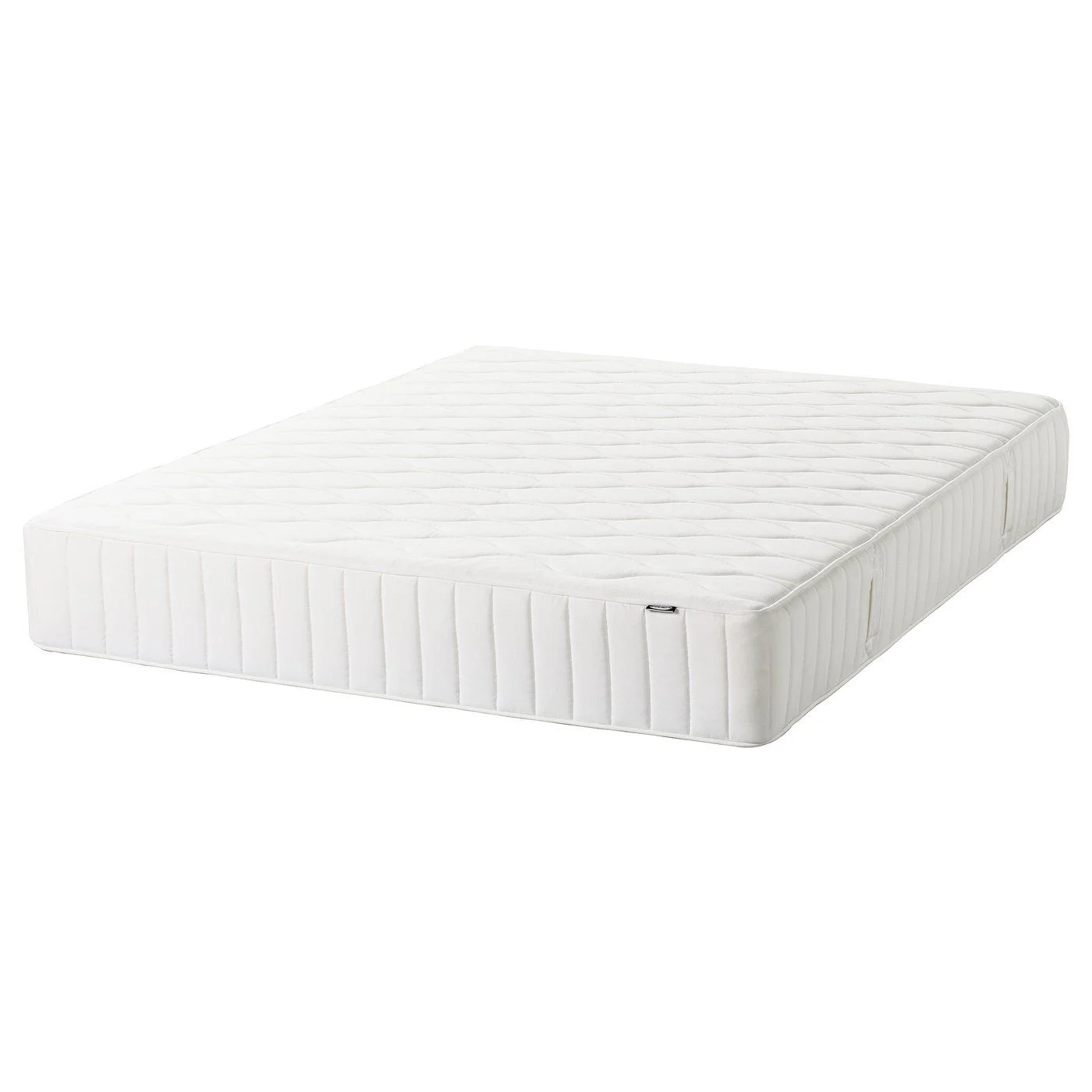
- Foam mattresses (MORGEDAL, MATRAND): polyurethane core with a polyester-blend cover. Memory foam variants add a viscoelastic layer.
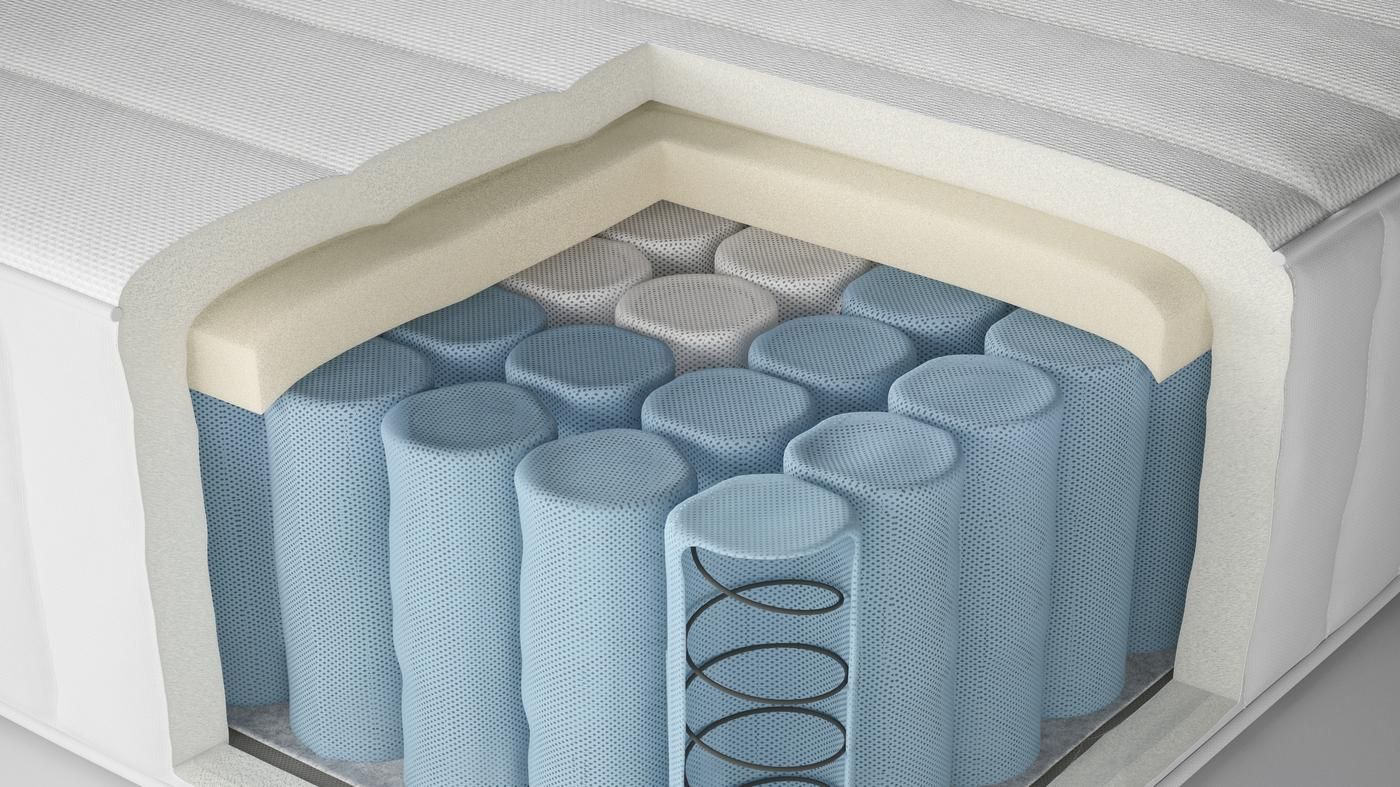
- Pocket spring mattresses (VESTERÖY, VALEVÅG, ÅKREHAMN): individually pocketed steel coils with a thin polyurethane comfort layer and polyester wadding.
- Hybrid (HJELLESTAD): pocket coils plus latex or memory foam comfort layer.
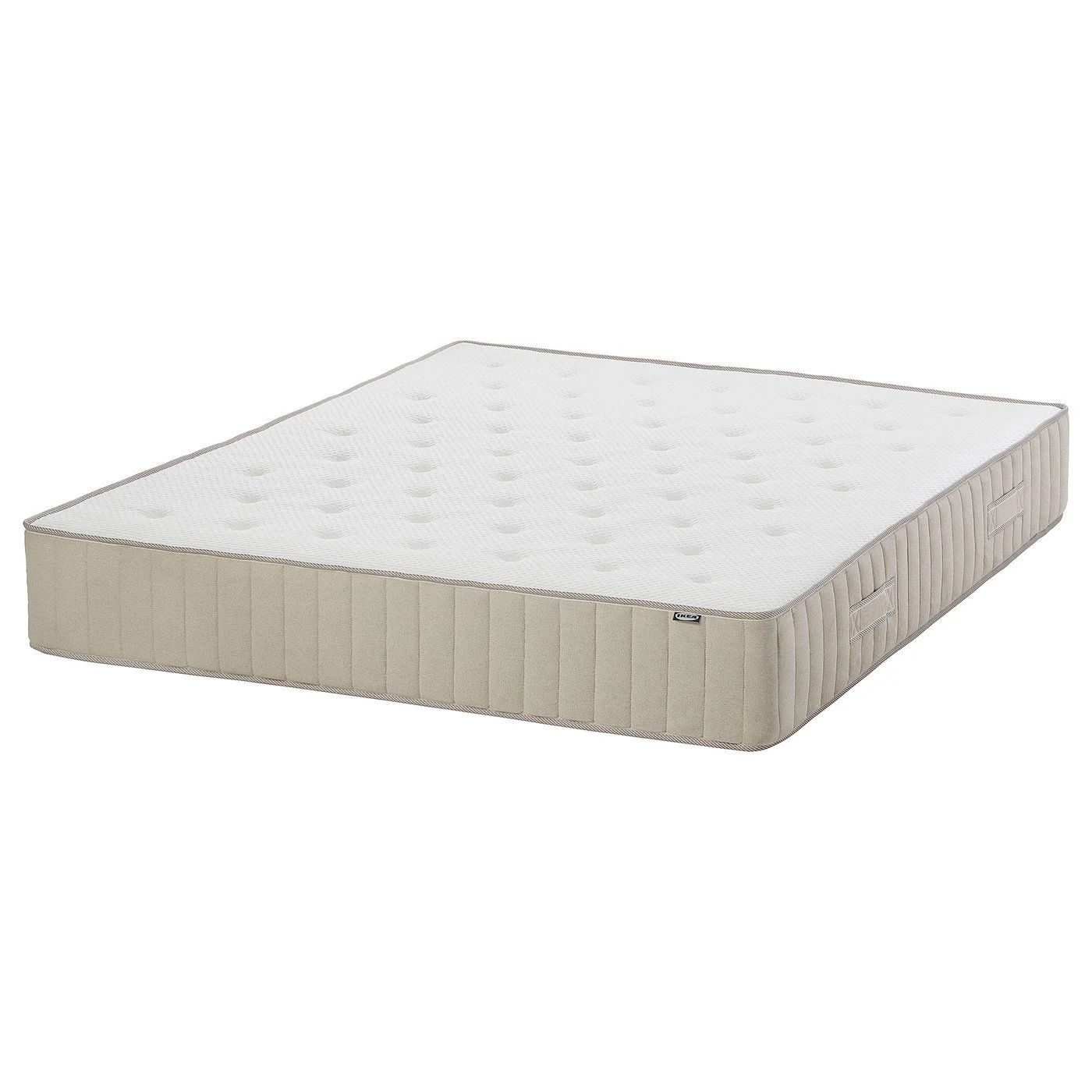
- Natural / organic (VATNESTRÖM, MAUSUND): GOTS-certified organic cotton, wool, natural latex, and pocket coils. No polyurethane foam.
Roughly 80% of IKEA's US mattress lineup falls into the first two categories - foam and pocket spring with a thin foam topper. If you want to skip polyurethane entirely, your options are narrower.
Flame retardants: what IKEA bans (and what it uses instead)
This is the area where IKEA has genuinely led the industry. Brominated and chlorinated flame retardants - including the PBDE family linked to endocrine and developmental harm - were banned from IKEA products in 1998, a decade before most US states followed. Per IKEA's published material policy, the company "strives to totally refrain from the use of chemical flame retardants" and instead meets fire safety law through inherently flame-resistant materials.
How? US-market mattresses must pass CPSC 16 CFR 1633, the open-flame test that became federal law in 2007. IKEA passes it using:
- Wool fire barriers in the natural lines (VATNESTRÖM, MAUSUND) - wool is naturally flame-resistant and self-extinguishing.
- Rayon / silica-treated rayon in the foam and pocket-spring lines. The fiber chars rather than burning.
- Non-halogenated phosphorus salts on stitch-bonds, piping, and zippers in some post-2015 US models - present in trace amounts only, not in the foam itself.
Key takeaway: any IKEA mattress manufactured for the US/Canadian market after January 2015 has no flame retardant chemicals in the foam itself. Trace phosphorus-based salts on hardware components are several orders of magnitude below California Prop 65 thresholds.
Fiberglass: not in the bag
Fiberglass became a viral concern after several Amazon-tier brands (Zinus, Linenspa, Olee Sleep) were caught using glass-fiber socks as a cheap fire barrier. When the cover is unzipped, the fibers escape and embed in everything they touch.
IKEA does not use fiberglass in any mattress sold globally. This has been confirmed in IKEA's own customer service knowledge base and verified by independent teardowns. If you've seen a fiberglass-warning TikTok about a mattress that turned out to be IKEA-branded - it was either misidentified or counterfeit.
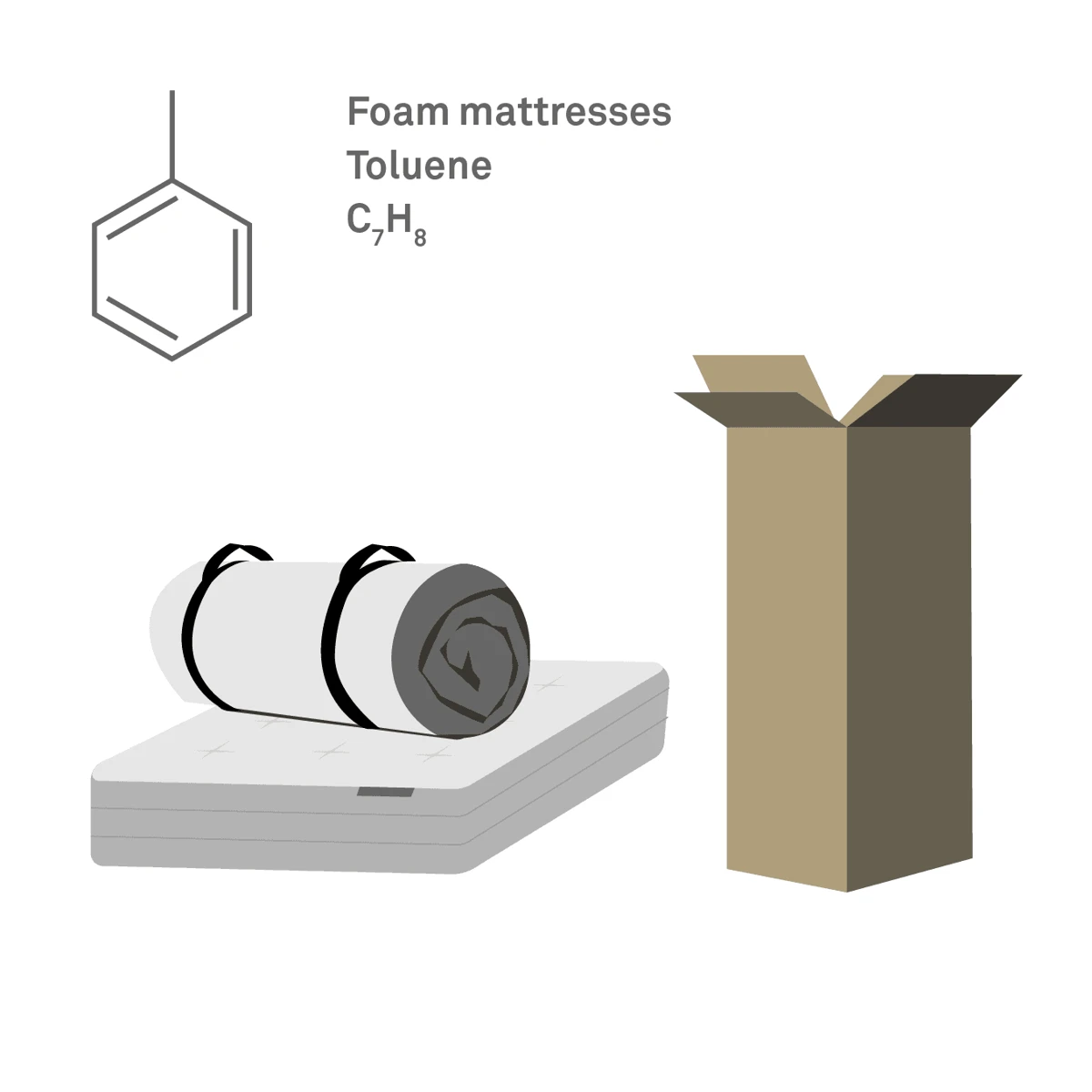
Off-gassing: real, but short-lived
Off-gassing is the temporary release of volatile organic compounds (VOCs) from polyurethane foam. The smell is the catalysts and blowing agents left over from manufacturing - not the foam itself - and it's the single most common complaint about any new foam mattress, IKEA or otherwise.
What the science says:
- VOC concentrations from new polyurethane mattresses peak in the first 24 hours, drop by ~80% within a week, and return to ambient indoor levels within 4-6 weeks (per a 2019 study in Building and Environment).
- IKEA's own customer service guidance: "Our new mattresses may have a smell when you open them as they have been vacuum sealed but we can assure you this will go away with some airing, in up to 72 hours."
- If you're chemically sensitive (MCS, asthma, pregnancy), allow 2-4 weeks of airing in a well-ventilated, unoccupied room before use.
Practical mitigation: unbox in a garage or spare room, leave it off-bed for 48-72 hours with a fan running, and keep windows cracked. Most users report the smell is undetectable by day three.
Certifications: what IKEA does and doesn't have
This is where IKEA's positioning gets honest but uncomfortable. The brand publishes its own internal IOS-MAT material standards (publicly available) and complies with REACH and Prop 65, but it largely skips third-party non-toxic certifications on its conventional foam lines.
- CertiPUR-US (foam: low VOCs, no PBDE, no formaldehyde, no heavy metals) - IKEA's foam meets these limits internally but the brand does not pay for the CertiPUR seal on most US SKUs.
- GREENGUARD Gold (low chemical emissions for indoor air) - not pursued on the conventional foam line. IKEA states the certification cost would meaningfully raise retail prices.
- GOTS (Global Organic Textile Standard) - applies to VATNESTRÖM cotton and wool components.
- OEKA-TEX Standard 100 - applied to most IKEA textile components including mattress covers, confirming they're free of >300 regulated harmful substances.
Reading between the lines: lack of GREENGUARD Gold doesn't mean IKEA's foam fails its limits. It means IKEA hasn't paid for the third-party verification on those SKUs. If that distinction matters to you, see the safer-picks section below.
Formaldehyde and other chemicals
Per IKEA's chemical policy: "Trace amounts of formaldehyde can be found in our products as it is a naturally occurring substance, however, we do not add formaldehyde to our range." The brand has also phased out - often ahead of legislation - perfluorinated stain repellents (PFAS), antimony catalysts, and arsenic compounds.
The materials list IKEA bans across mattresses includes:
- All brominated and chlorinated flame retardants (PBDE, HBCD, TCEP, TDCPP)
- Fiberglass and asbestos-related fibers
- PFAS / PFOA stain treatments
- Heavy metals: lead, mercury, cadmium, hexavalent chromium
- Phthalates regulated under REACH Annex XVII
- Added formaldehyde (compliant with Japan's F☆☆☆☆ standard, the world's strictest)
Which IKEA mattresses are the safest pick?
Safer IKEA picks
- VATNESTRÖM - pocket coil + GOTS organic cotton + wool fire barrier. No polyurethane. Closest IKEA gets to a non-toxic mattress.
- MAUSUND - natural latex over pocket coils with wool padding. Discontinued in some regions but still sold in EU.
- VESTERÖY / VALEVÅG - pocket spring with thin (1-2 in) polyurethane comfort layer. Less foam = less off-gassing surface area.
- ÅKREHAMN - entry-level pocket coil, similar foam reduction profile to VESTERÖY.
Skip these if avoiding foam
- MORGEDAL - all-foam polyurethane core. Higher VOC load, longer airing window.
- MATRAND memory foam - viscoelastic foam outgasses for longer than standard PU. Allow 1-2 weeks.
- Any mattress shipped vacuum-rolled and bought sight-unseen if you have MCS or asthma.
How IKEA compares to other budget mattress brands
Against direct competitors in the $200-$700 range:
- vs. Zinus / Linenspa / Olee Sleep: IKEA wins on fiberglass (none vs. confirmed use), flame retardant transparency, and supply-chain documentation.
- vs. Tuft & Needle / Casper Element: comparable safety profile; competitors carry CertiPUR-US seal that IKEA doesn't pay for.
- vs. dedicated non-toxic brands (Avocado, My Green Mattress, Naturepedic): IKEA's VATNESTRÖM competes on materials but not on full GOLS/GOTS coverage. Conventional IKEA foam is meaningfully less clean than these.
Bottom line on the value question: if your budget is $400 and your alternative is a fiberglass-laden Amazon brand, IKEA is the clearly safer pick. If your budget is $1,500+ and chemical exposure is the top criterion, a GOTS-certified organic mattress is a better fit than IKEA's conventional line.
Frequently asked questions
Do IKEA mattresses contain formaldehyde?
No added formaldehyde. IKEA's chemical policy states formaldehyde is not added to any product. Trace amounts may be present as a natural background substance - well under Japan's F☆☆☆☆ standard, the strictest in the world.
Are IKEA mattresses CertiPUR-US certified?
Most are not. IKEA's foam meets CertiPUR-US chemical limits per its internal IOS-MAT standards but does not pay for the third-party certification on conventional US SKUs. The VATNESTRÖM does carry GOTS certification on its cotton and wool components.
How long should I air out a new IKEA mattress?
48 to 72 hours in a well-ventilated room is enough for most people. If you're chemically sensitive, pregnant, or buying for an infant, allow 2 to 4 weeks. Memory foam variants (MATRAND) need longer than standard polyurethane (MORGEDAL).
Is the VATNESTRÖM truly non-toxic?
It's the closest IKEA gets. Pocket coils with GOTS-certified organic cotton, wool fire barrier, and no polyurethane foam. It's not GREENGUARD Gold certified, but it skips the materials that drive most non-toxic concerns - synthetic foam, brominated flame retardants, and synthetic fire barriers.
Are IKEA mattresses safe for babies and toddlers?
Crib mattresses sold by IKEA (UNDERLIG, JÄTTETROTT) meet US CPSC and EU EN 16890 infant safety standards. For peace of mind with off-gassing, air out the mattress for 1 to 2 weeks before use, or choose the natural-fiber UNDERLIG variant where available.
Did IKEA ever use toxic flame retardants?
IKEA banned brominated flame retardants (PBDE) in 1998. Mattresses produced before then for the US market may have contained them, but they have been phased out for over 25 years. Pre-2015 US mattresses also had non-halogenated flame retardants in the foam; post-2015 models do not.
The verdict
IKEA mattresses aren't toxic - but they're not chemical-free either, and the brand is honest about that. For most shoppers buying in the $300-$700 range, the safety profile is genuinely better than the Amazon-tier alternatives, and the off-gassing concern is real but temporary.
If avoiding all polyurethane foam is your goal, buy the VATNESTRÖM and air it out for two weeks. If you can stretch the budget to $1,200+, dedicated non-toxic brands give you third-party certifications IKEA doesn't pay for. And if you're shopping under $400, IKEA is - without exaggeration - one of the safest options at that price point.
Looking for a fully certified non-toxic mattress?
Browse our roundup of doctor-tested organic and GREENGUARD Gold-certified mattresses across every budget.