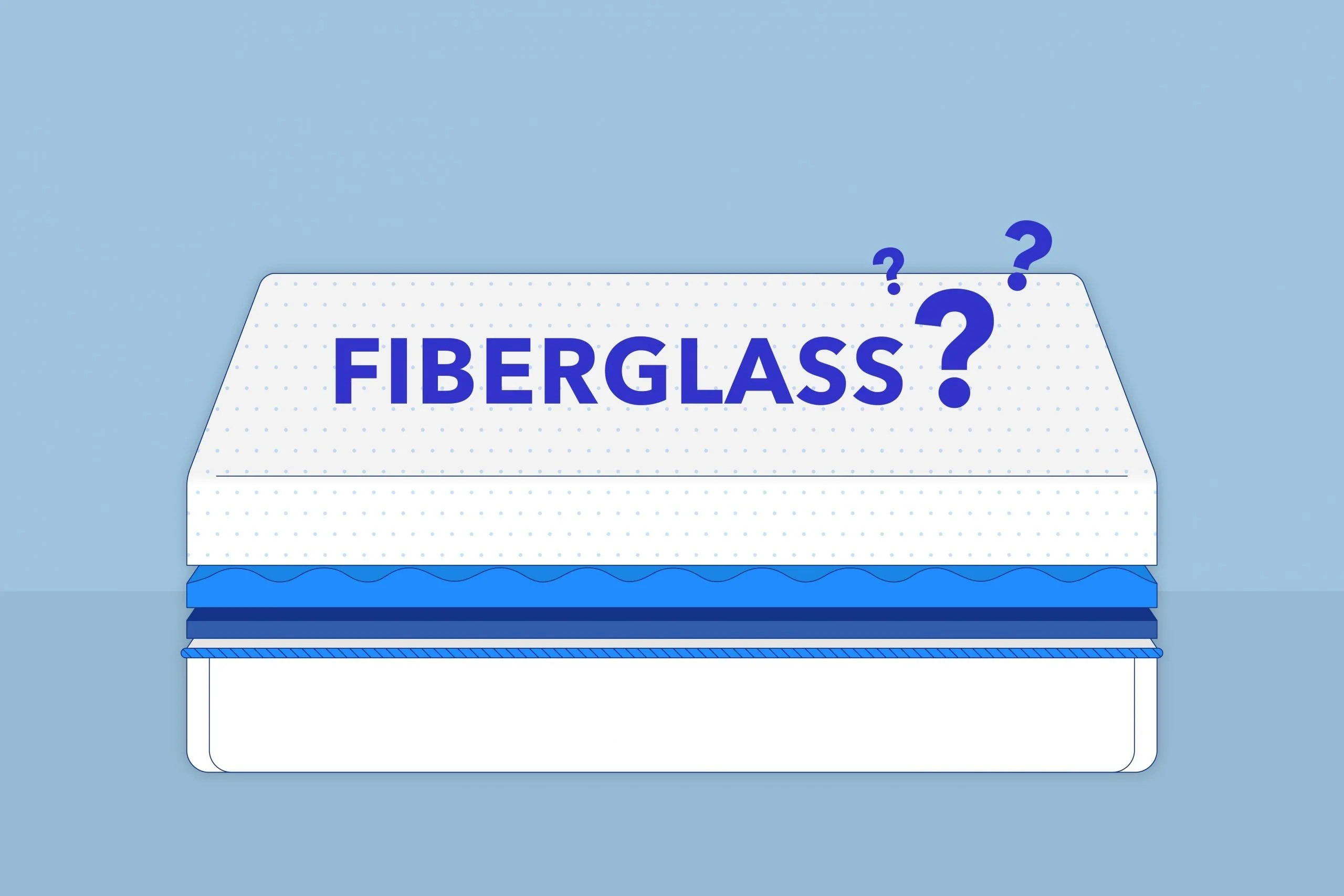
Short answer: yes - many of Linenspa's budget memory foam mattresses contain fiberglass woven into an inner sock that acts as a fire barrier. Linenspa's customer-service replies on Amazon and Home Depot have repeatedly stated, "we do not currently manufacture any products with fiberglass," but independent investigations, owner photos, and CPSC incident reports tell a different story. The safe rule of thumb: assume any sub-$300 memory foam mattress is fiberglass-bearing unless the listing explicitly says "fiberglass-free," and never unzip the inner cover.
Why fiberglass shows up in budget mattresses at all
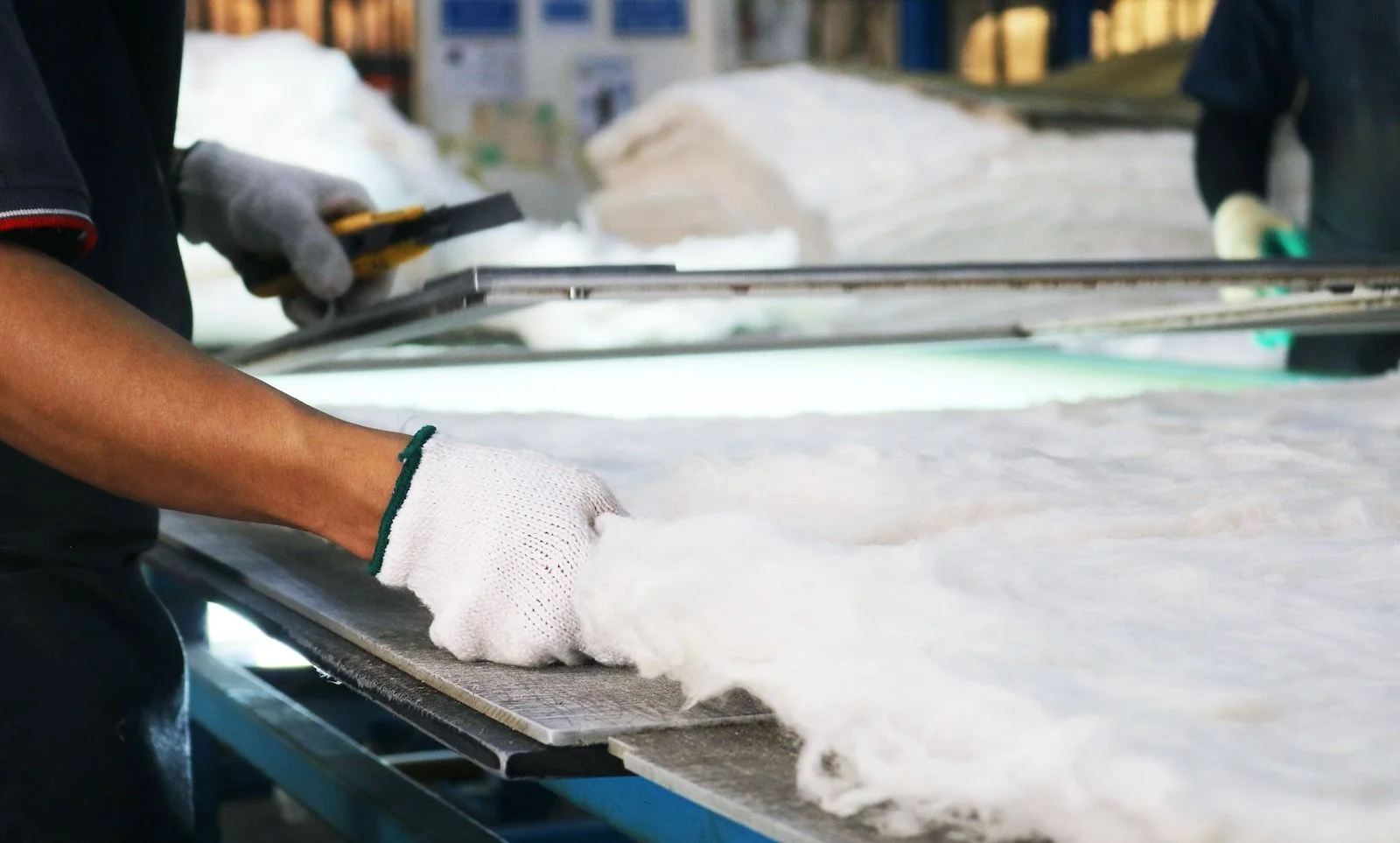
Federal law (16 CFR Part 1633) requires every mattress sold in the U.S. to resist an open-flame ignition test. Premium brands meet this with wool, rayon-silica blends, or proprietary thistle-pulp socks. Cheaper imports - Linenspa, Zinus, Lucid, Vibe, and many Amazon white-label models - meet it with a thin fiberglass layer sewn into a non-removable inner cover. The fiberglass itself is contained when intact, but the moment the inner zipper is opened or the cover tears, microscopic glass shards spread through HVAC, clothing, and skin.
What Linenspa actually says - and where it conflicts
- Public Q&A replies (Amazon, Home Depot, Walmart) state Linenspa "does not use any fiberglass."
- But independent reviewers (eachnight, EgoHome, Tom's Guide) and CPSC SaferProducts.gov reports identify fiberglass in Linenspa 6-, 8-, and 10-inch memory foam models.
- Newer Linenspa Essentials and Linenspa Signature lines are now marketed as "fiberglass-free" - confirmation that older inventory wasn't.
- Reddit r/Mattress threads document owners finding glass shards after their pets or kids tugged at the inner cover.
Translation: the brand's blanket denial is unreliable. The only authoritative source is your specific mattress's law tag and product listing.

How to check if your Linenspa has fiberglass
- Find the white law tag (usually sewn into the side or foot).
- Look at the materials list. Red flags: "glass fiber," "glass wool," "fiberglass," or generic "other fibers" without a specific alternative listed.
- Look at the cover-removal warning. "Do not remove cover" in bold is the strongest single tell - that warning exists because removal releases the fiberglass barrier.
- Cross-reference the model name on linenspa.com. Current listings say "fiberglass-free" explicitly when applicable; absence of that phrase on a budget memory foam SKU usually means it isn't.
- Check the manufacture date on the law tag. Anything stamped before mid-2023 is more likely to contain fiberglass than newer production.
Which Linenspa models are fiberglass-free
As of 2026, the following Linenspa lines are marketed fiberglass-free in their official spec sheets:
- Linenspa Signature Collection (10" and 12" hybrid)
- Linenspa Essentials Hybrid (most current SKUs - verify on the listing)
- Linenspa Latex Hybrid
Older Linenspa 5", 6", and 8" all-foam models - particularly anything purchased before 2023 - are the highest-risk SKUs. The classic Linenspa 8-inch memory foam hybrid sold at Lowe's, Walmart, and Amazon has the most fiberglass-related complaints in CPSC data.
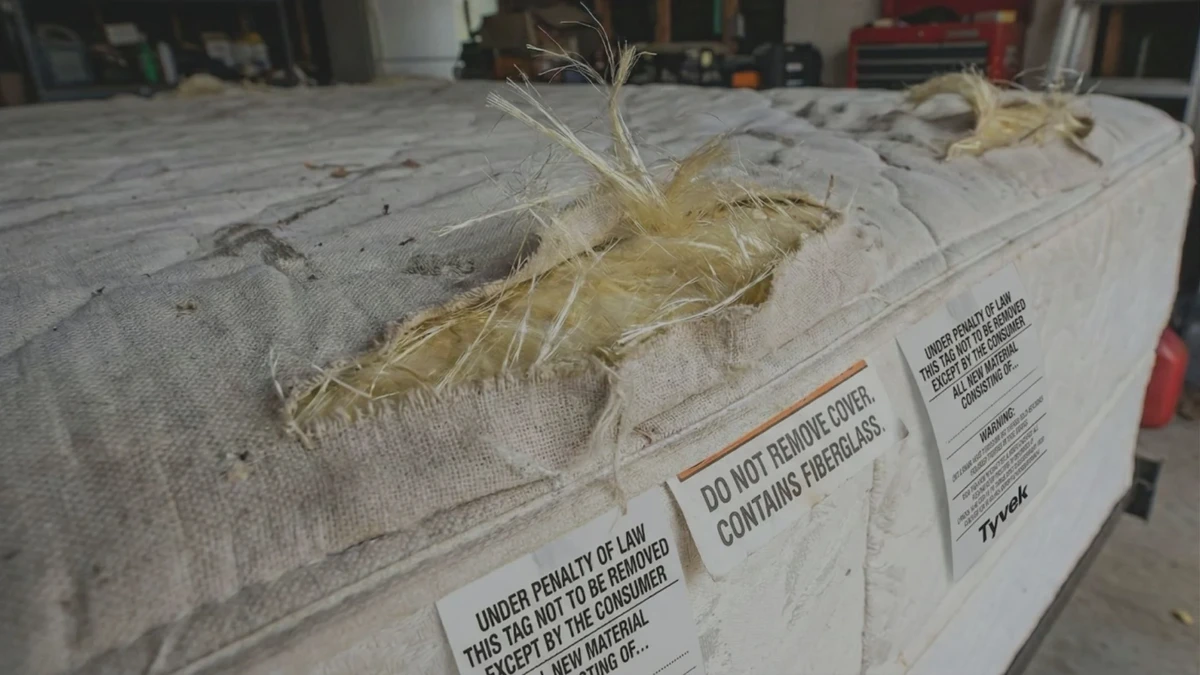
What to do if you find fiberglass
- Stop using the mattress immediately. Do not vacuum with a household vacuum - it spreads fibers through the exhaust.
- Seal the mattress in a zippered encasement (vinyl or tightly-woven cotton) before moving it.
- Bag and discard all bedding, soft toys, and curtains in the room - fibers embed in fabric and survive normal washing.
- Wipe hard surfaces with damp microfiber, then discard the cloth. Use a HEPA-filter vacuum on carpet, ideally a rented professional unit.
- File a CPSC SaferProducts.gov report and contact Linenspa directly with photos of the law tag and the affected area - this is what's eventually pushing the company toward fiberglass-free production.
Better picks if fiberglass is a dealbreaker
If you want the Linenspa price band without fiberglass risk, the safest paths are: (1) Linenspa's current hybrid lines that explicitly state fiberglass-free, (2) Saatva, Avocado, Brentwood Home, or Birch - all use wool or rayon-silica fire barriers, or (3) any Banner Mattress hybrid, all of which use natural-fiber barriers. The price gap between a fiberglass-bearing memory foam mattress and a wool-barrier hybrid has narrowed dramatically since 2023; you're rarely saving more than $150 by accepting the risk.
Bottom line
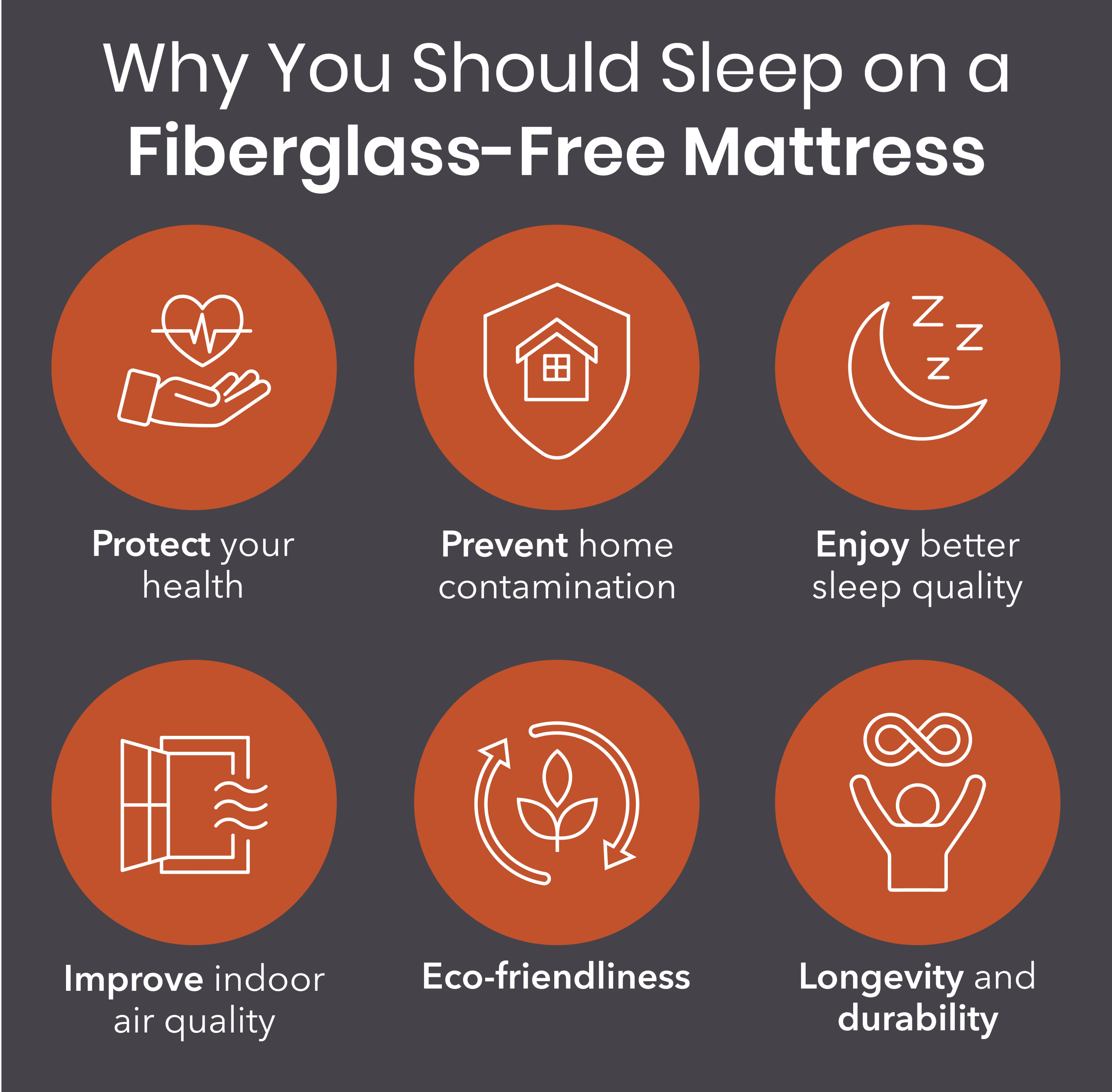
Don't trust the blanket "we don't use fiberglass" replies - trust the law tag on your specific mattress. If it says glass fiber or warns against removing the cover, fiberglass is in there. Keep the inner cover zipped, don't let pets or kids near it, and replace the mattress with a fiberglass-free model the next time you upgrade.