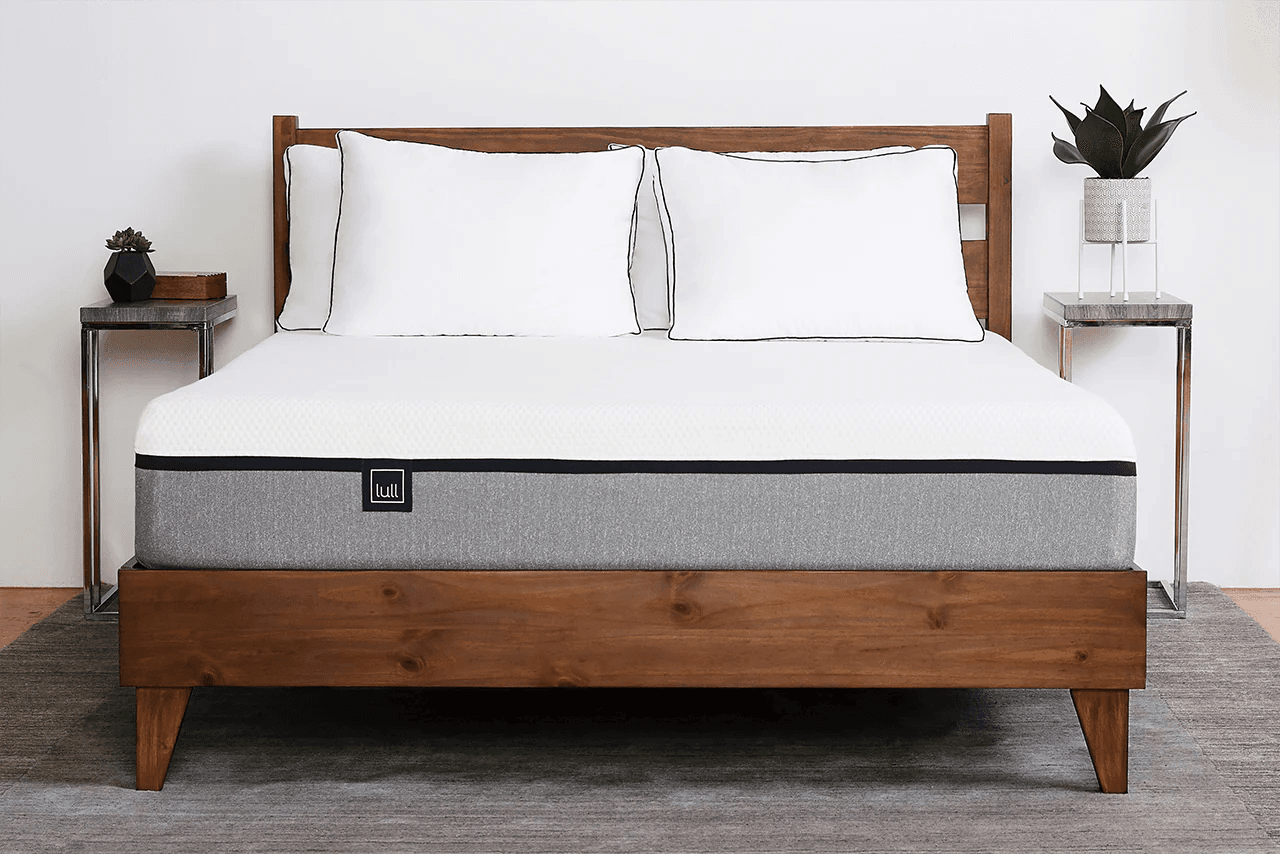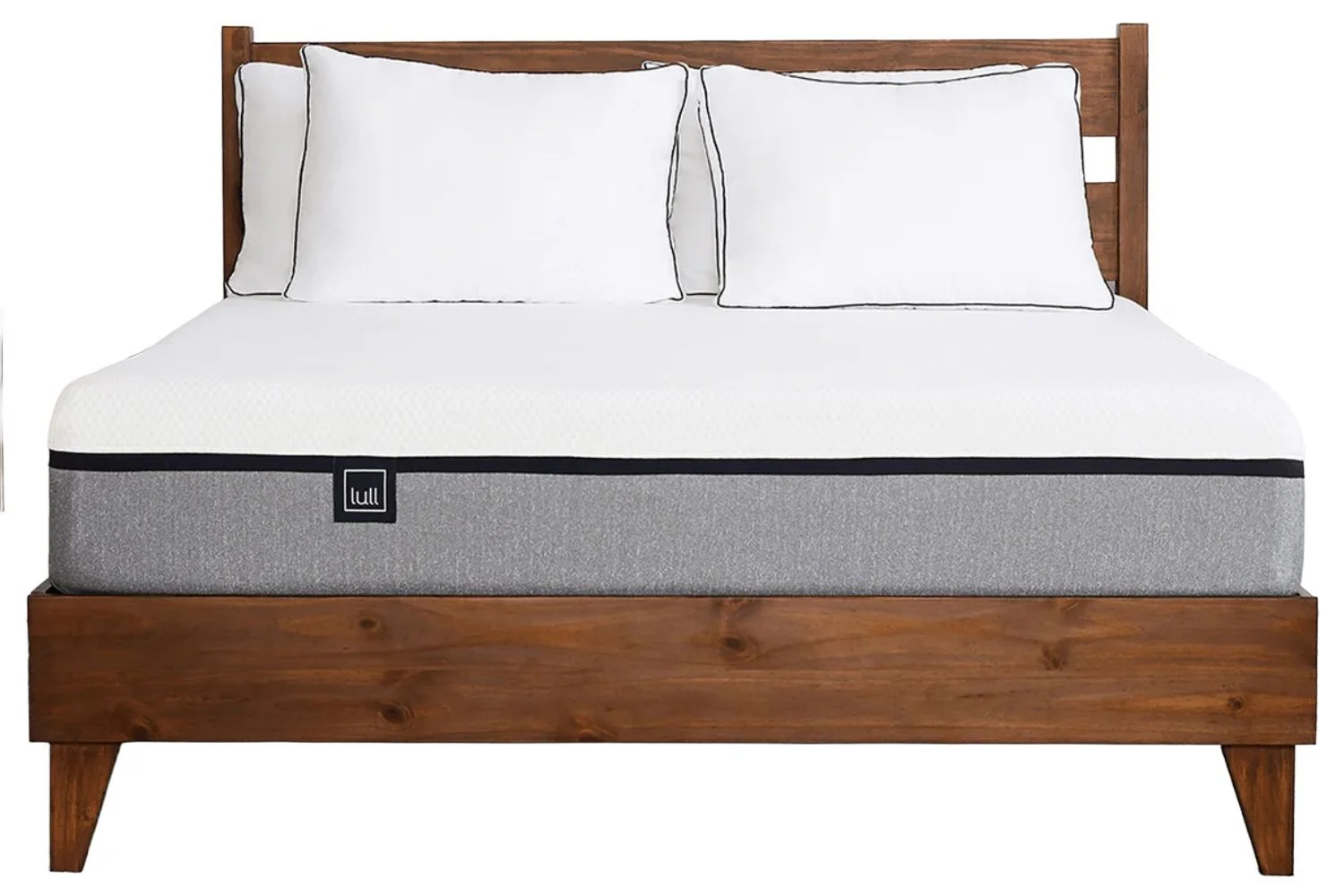
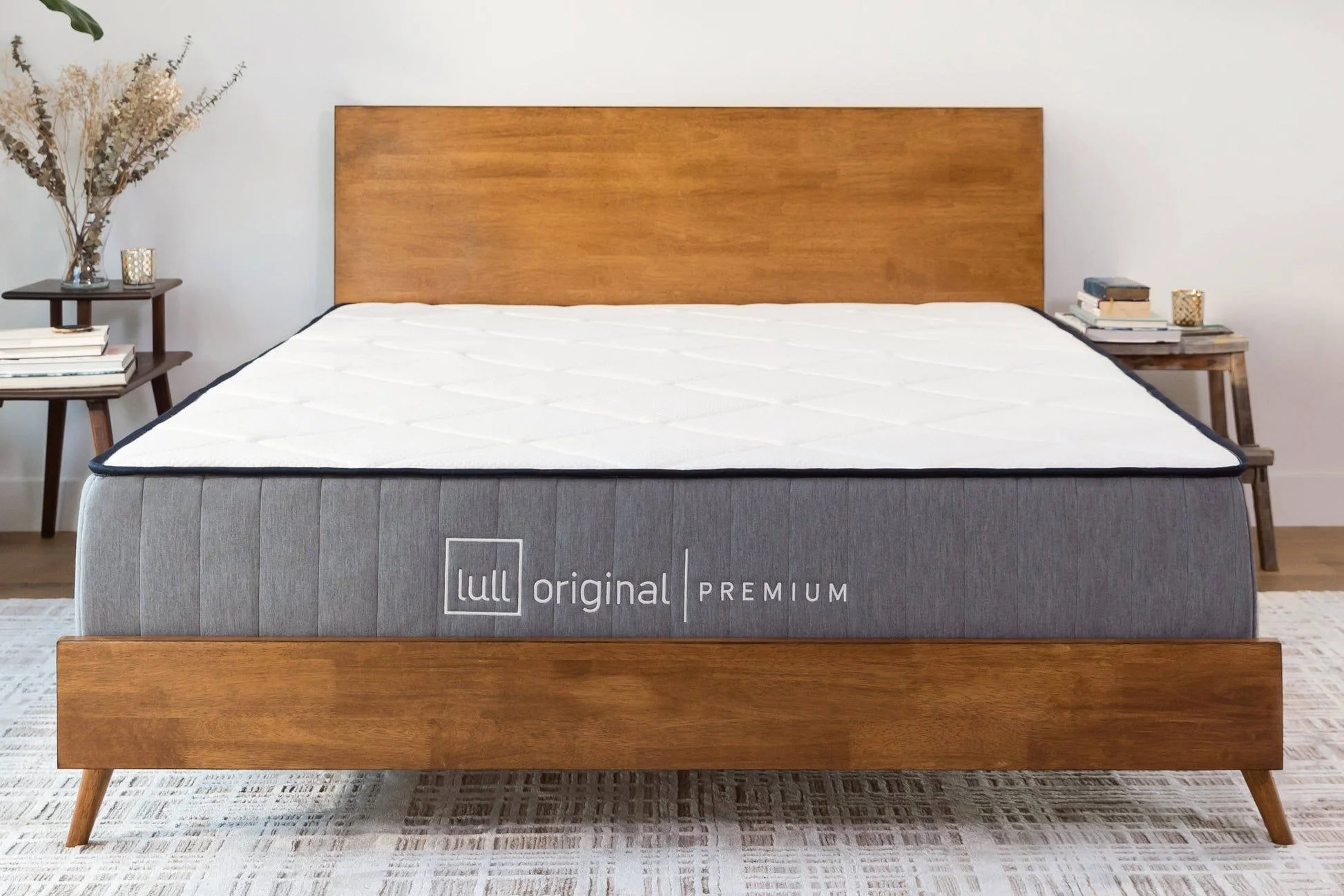
Lull is a budget-friendly bed-in-a-box brand founded in 2015, best known for its 10-inch Original memory foam mattress. The lineup now spans three models - the Original, the firmer 12-inch Original Premium, and the coil-supported Luxe Hybrid - sold direct from lull.com with a 365-night trial and a lifetime limited warranty.
Independent testers consistently rate Lull as a competent, slightly-firm foam bed that punches above its price tag on edge support and value, but trails the category on pressure relief and off-gassing. Below we summarise the third-party evidence (NapLab, MattressClarity, CNET, Sleep Foundation) and lay out who each model genuinely fits - and who should skip it.
Disclosure: This review is editorial. Banner Mattress may earn a commission if you buy through outbound links, at no extra cost to you. We do not accept payment for placement.
At a glance
- Type: All-foam (Original, Original Premium) and hybrid (Luxe Hybrid)
- Firmness: 6.5-7.5/10 (medium-firm to firm)
- Heights: 10" Original, 12" Premium, 13" Luxe Hybrid
- Queen price: $799-$1,499 before promotions
- Trial: 365 nights · Warranty: lifetime limited · Free shipping in the contiguous US
- Best for: back and stomach sleepers, lighter to average-weight (130-230 lb), budget shoppers
- Skip if: you sleep strictly on your side, weigh over 230 lb, or are sensitive to off-gassing
Who Lull is best for
- Back and stomach sleepers. Independent reviewers (NapLab, MattressClarity) place Lull in the slightly-firm range (7-7.5/10), which keeps the hips from sinking - the right feel for back and stomach positions.
- Average-weight sleepers (130-230 lb). The medium-firm comfort layer balances support with enough cushion at this weight band.
- Couples on a budget. NapLab gave the Original a 7.2/10 motion-transfer score and a 9.2/10 edge support score - strong numbers for a sub-$1,000 queen.
- First-time online buyers. The 365-night trial is one of the longest in the category and removes most of the risk of buying unseen.
Who should skip it
- Strict side sleepers. Despite Lull's own marketing copy, NapLab and MattressClarity both flag insufficient shoulder/hip pressure relief at the 7+ firmness rating. A softer pick like the Nectar Classic or Helix Midnight is a better match.
- Sleepers over 230 lb. The 1.5" comfort layer compresses faster under heavier loads, leaving you on the transition foam. Look at the Saatva Classic or a thicker hybrid instead.
- Off-gassing-sensitive shoppers. NapLab measured a 14-day off-gassing window on the Original (6.1/10) - well above the category median.
- Hot sleepers needing aggressive cooling. The gel infusion helps, but the Original is still an all-foam bed. The Luxe Hybrid (with coils) is the cooler choice within the lineup.
Performance: what the data says
Firmness
NapLab measures the Original at 7.5/10 (slightly firm). MattressClarity rates it 7/10 (medium-firm). Lull's own marketing puts it at 5-6/10 - overstated against the independent measurements. Plan for a firmer-than-medium feel out of the box.
Pressure relief
NapLab: 7.0/10. The 1.5" gel memory foam contours decently for back and stomach sleepers but leaves side sleepers' shoulders working against the firmer transition layer. Side sleepers under 130 lb may still find it acceptable; heavier side sleepers will not.
Motion isolation
NapLab: 7.2/10. Good for an all-foam bed but not class-leading - Nectar and Layla isolate motion better. The Luxe Hybrid's pocketed coils are isolated well enough that couples typically report no disturbance from a partner shifting.
Edge support
NapLab: 9.2/10 - the standout score in Lull's profile, and the strongest reason couples or solo sleepers who use the full mattress surface should consider it. The Luxe Hybrid is firmer at the perimeter still, thanks to its pocketed coil unit.
Cooling
NapLab: 8.0/10. The gel infusion and breathable cover keep surface temperature in check for most sleepers. True hot sleepers should pick the Luxe Hybrid (coils for airflow) or shop a coil-on-coil bed like the Saatva Classic.
Off-gassing
NapLab: 6.1/10, with detectable VOCs for ~14 days. Unbox in a ventilated room and wait 48-72 hours before sleeping on it for the most comfortable break-in.
Durability
MattressClarity estimates a 5-7-year useful life on the Original - typical for a sub-$1,000 foam bed. The lifetime warranty covers manufacturing defects but not the gradual softening that drives most replacements.
Pros
- Class-leading edge support for an all-foam mattress (9.2/10 NapLab)
- 365-night trial - one of the longest in the industry
- Strong motion isolation for couples on a budget
- Three model tiers, including a true hybrid for hot sleepers
- Lifetime limited warranty
- Free shipping and returns in the contiguous US
Cons
- Firmer than the brand advertises (NapLab measures 7.5/10, not 5-6)
- Below-average pressure relief for strict side sleepers
- Roughly 14-day off-gassing window on the all-foam models
- Below-average overall performance vs same-priced competitors (NapLab 8.15/10, bottom 22%)
- 5-7-year practical lifespan on the Original despite the lifetime warranty
Construction
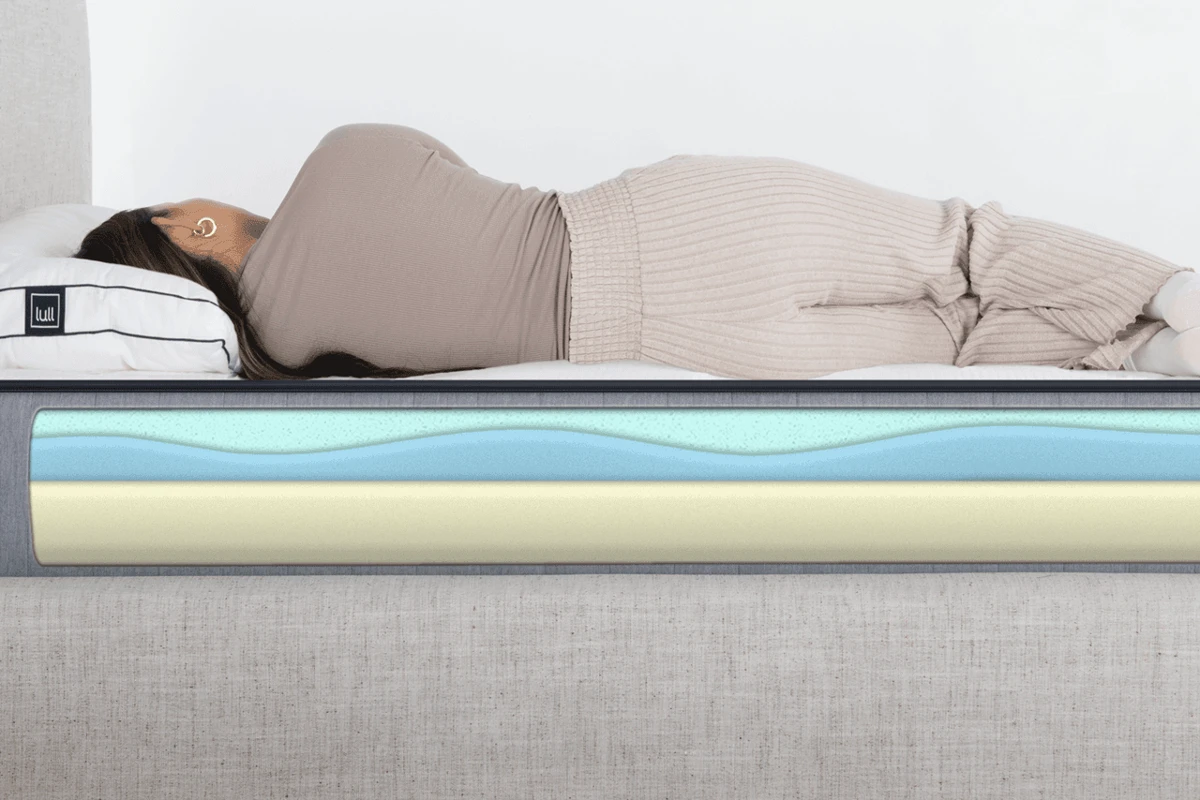
Lull Original (10")
- 1.5" gel-infused memory foam comfort layer
- 1.5" responsive transition foam
- 7" high-density polyfoam support core
- Polyester/rayon quilted cover
Lull Original Premium (12")
A taller, slightly firmer (NapLab 7/10) all-foam build aimed at back and stomach sleepers. Adds an extra inch of comfort foam plus a denser support core. Overall NapLab score 8.27/10.
Lull Luxe Hybrid (13")
Six-layer hybrid with pocketed coils, a tufted stretch-knit cover, and reinforced perimeter coils. The pick for couples, hot sleepers, and anyone who wants more bounce than the foam models deliver.
Sizes and prices (2026)
MSRPs from lull.com. Lull runs near-permanent promotions, so the lower end of each range is the realistic street price.
Memory Foam (Original / Original Premium)
- Twin (38" × 75"): $499-$799
- Twin XL (38" × 80"): $499-$899
- Full (54" × 75"): $699-$999
- Queen (60" × 80"): $799-$1,099
- King (76" × 80"): $1,099-$1,399
- California King (72" × 84"): $1,099-$1,399
Luxe Hybrid
- Twin: $999 · Twin XL: $1,099 · Full: $1,299
- Queen: $1,499 · King: $1,699 · California King: $1,699
How Lull compares
- vs Nectar Classic - Nectar is softer (6/10), better for side sleepers, similar price. Pick Lull if you want firmer support and stronger edges.
- vs Saatva Classic - Saatva is a coil-on-coil innerspring with stronger durability and back-pain support, but costs roughly 2× more. Saatva wins on longevity; Lull wins on price.
- vs Tuft & Needle Original - T&N's poly foam runs cooler in independent tests, but Lull's edge support and motion isolation are better.
- vs Casper Original - Casper's zoned foam delivers better pressure relief for side sleepers; Lull is firmer and a more reliable pick for back and stomach sleepers.
Trial, warranty, and shipping
- 365-night sleep trial - required 30-night break-in before returns
- Lifetime limited warranty (covers indentations >1.5" and manufacturing defects)
- Free shipping and returns in the contiguous US; surcharges for AK/HI
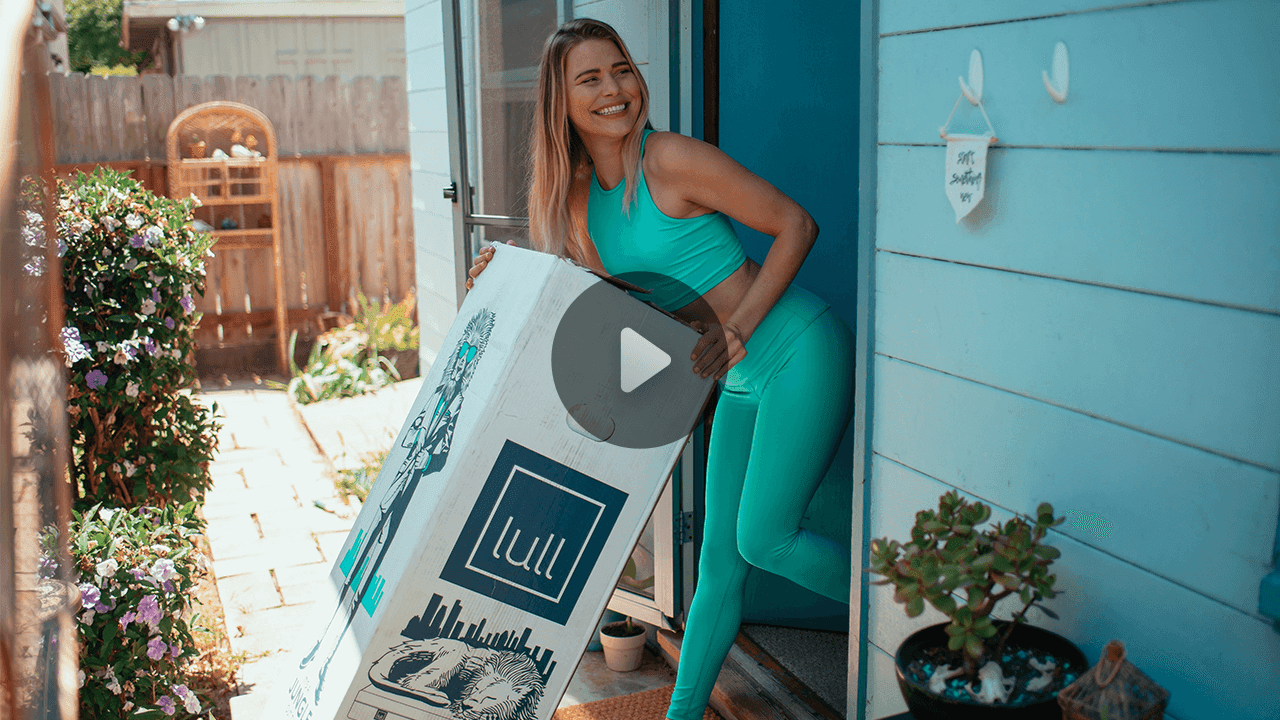
- Compressed and shipped in a box; expect full expansion within 24-48 hours
Lull mattress FAQ
Is Lull a good mattress brand?
Lull is a competent budget brand. NapLab gave the Original an 8.15/10 overall - below the category average but strong for the price, with standout edge support (9.2/10). It's a solid pick for back and stomach sleepers under $1,000, but premium sleepers will get more from a Saatva or Helix at 1.5-2× the price.
Is Lull good for side sleepers?
Not really. Despite Lull's marketing, both NapLab and MattressClarity flag below-average pressure relief at the brand's slightly-firm 7+ feel. Strict side sleepers will be more comfortable on a softer Nectar Classic or a zoned bed like the Helix Midnight.
How firm is the Lull mattress?
Independent testers measure the Original at 7-7.5/10 (slightly firm to firm), not the 5-6/10 Lull advertises. The Original Premium is roughly the same firmness in a thicker build, and the Luxe Hybrid feels close to a true medium-firm thanks to its pocketed coils.
How long does a Lull mattress last?
Plan on 5-7 years of comfortable use on the Original - typical for a sub-$1,000 all-foam bed. The lifetime warranty covers indentations greater than 1.5 inches and manufacturing defects, but not the gradual softening that drives most replacements.
Does the Lull mattress off-gas?
Yes. NapLab measured a roughly 14-day off-gassing window (6.1/10 score). Unpack the mattress in a ventilated room and let it air for at least 48-72 hours before sleeping on it.
Lull vs Nectar - which is better?
Pick Nectar if you sleep on your side, want a softer feel, or share the bed and prioritise motion isolation. Pick Lull if you want firmer support, sleep on your back or stomach, or value the longest sleep trial in the category.