Mattress materials decide almost everything about how a bed feels: pressure relief, temperature, motion isolation, durability, even how it ages over a decade of nightly use. Brand names matter less than the foam densities, coil gauges, and cover fibers stacked inside.
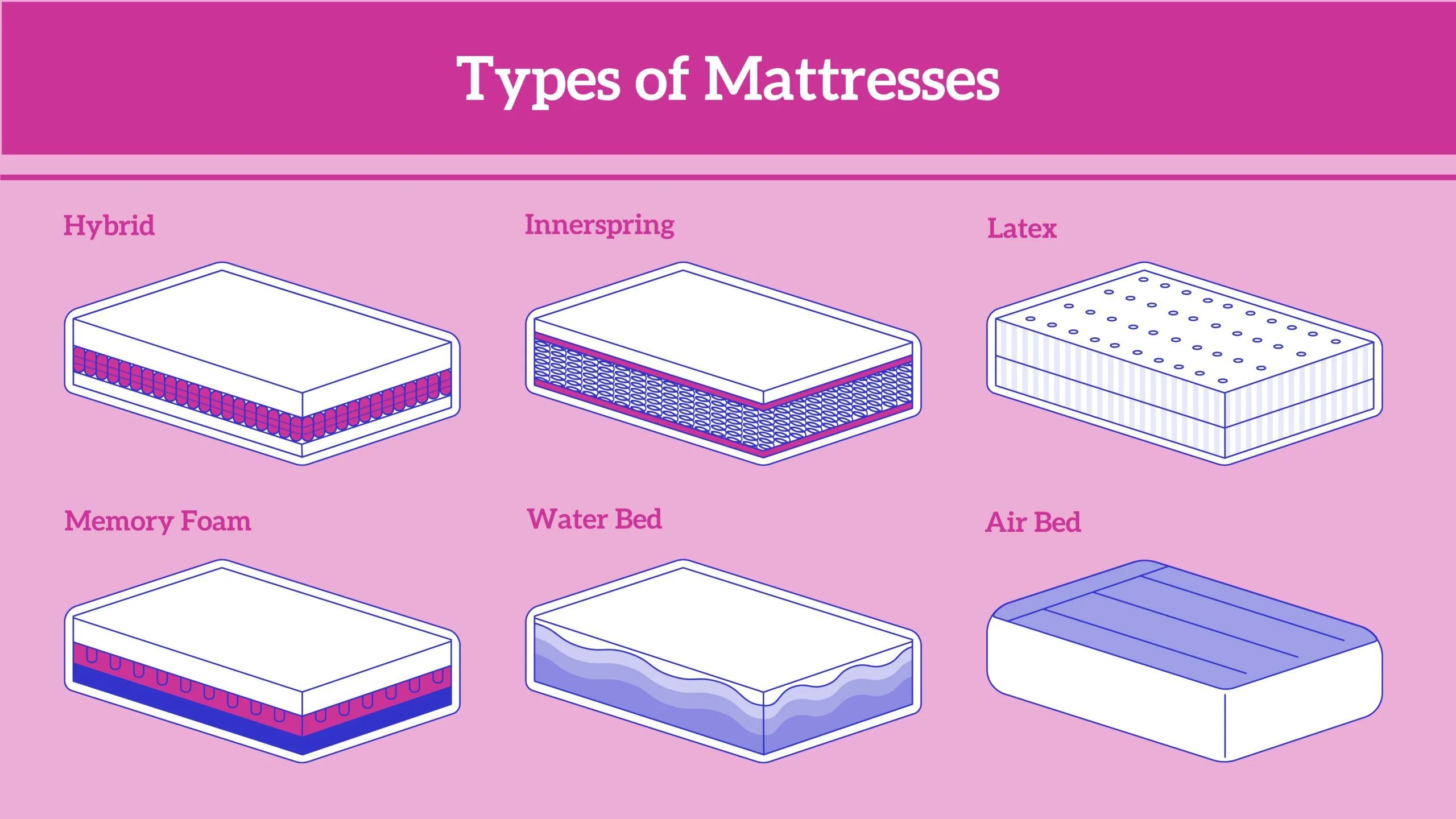
This guide breaks down the six mattress material categories sold today (memory foam, polyfoam, latex, innerspring, hybrid, and gel-grid), what each layer actually does, and how to match construction to your sleep style, body weight, and budget.
Anatomy of a mattress: the three layers that matter
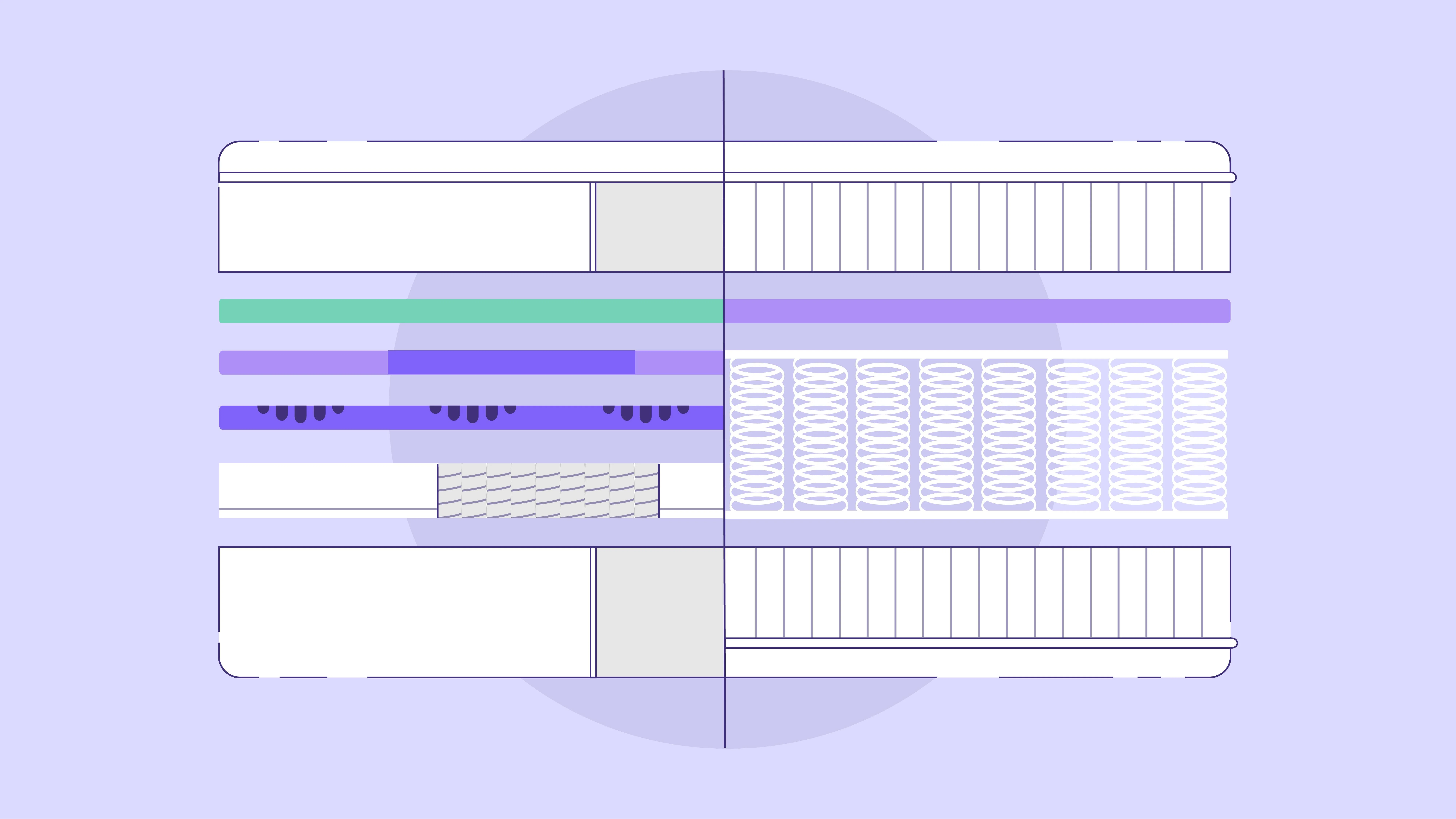
Almost every mattress on the market - from a $300 bed-in-a-box to a $4,000 luxury hybrid - uses the same three-layer structure. The materials in each layer are what change the feel.
Support core (bottom 6-8 inches). Carries 70-80% of the load. Built from high-density polyfoam (1.8 lb/ft³ or higher), pocketed coils (typically 13-15 gauge steel), or dense latex. A weak support core is the #1 cause of premature sagging - beds with sub-1.5 lb polyfoam cores often fail within 3-4 years.
Comfort layers (middle 2-5 inches). What you actually feel. Memory foam, latex, gel foam, micro-coils, or specialty foams like Purple's polymer grid. Determines firmness perception and pressure relief.
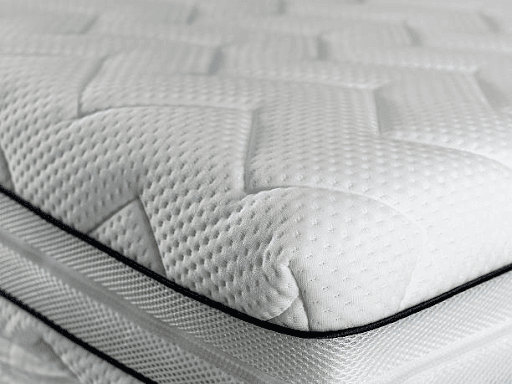
Cover and quilting (top 1-2 inches). Cotton, polyester, rayon, Tencel, or wool blends, often quilted with a thin foam layer. Affects breathability and surface feel more than support.
Knowing which layer is doing the work helps you read spec sheets instead of marketing copy.
The 6 mattress materials, ranked by what they actually do
1. Memory foam (viscoelastic polyurethane)
Memory foam contours by responding to body heat and pressure, slowly conforming and then rebounding. It's the gold standard for motion isolation (couples) and pressure relief at the shoulders and hips (side sleepers).
- Density matters more than thickness. Look for 4 lb/ft³ or higher in the comfort layer for a bed that lasts 8+ years. Sub-3 lb foam softens fast.
- Heat is the trade-off. Traditional memory foam traps body heat. Open-cell, plant-based, or copper-infused variants run cooler.
- Best for: side sleepers, couples, light to average-weight sleepers (under 230 lb).
- Skip if: you sleep hot, weigh over 250 lb (you'll bottom out), or hate the "sinking" feel.
2. Polyfoam (polyurethane foam)
The cheaper cousin of memory foam - bouncier, less contouring, used in budget all-foam mattresses and as a transition layer above coils. Density grades vary wildly:
- HD (high-density) polyfoam: 1.8+ lb/ft³, used in support cores.
- HR (high-resilience) polyfoam: 2.5+ lb/ft³, premium comfort layer material with a latex-like bounce.
- Conventional polyfoam: under 1.5 lb/ft³, found in cheap mattresses - avoid for anything you plan to keep more than 3 years.
Best as a support layer or in hybrid constructions, not as a primary comfort material.
3. Latex (Dunlop and Talalay)
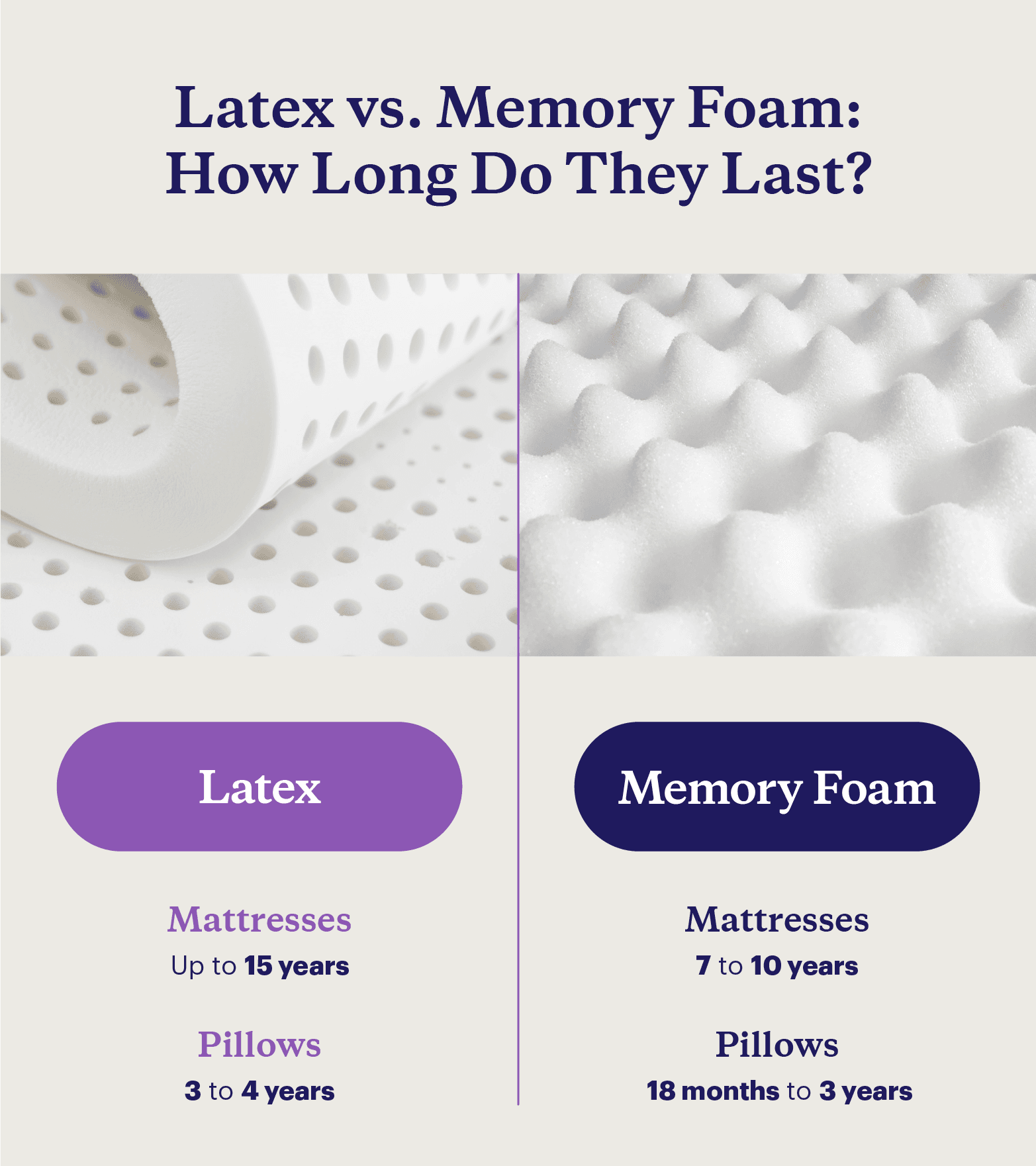
Made from rubber tree sap, latex is the most durable mattress material available. A quality all-latex bed lasts 12-20 years - double the lifespan of memory foam.
- Dunlop latex is denser and firmer, typically used in support cores.
- Talalay latex is lighter and more pressure-relieving, used in comfort layers.
- Natural vs. synthetic vs. blended: look for GOLS-certified natural latex if eco-credentials matter. Synthetic latex (SBR) is cheaper but less durable.
- Best for: hot sleepers, allergy sufferers (naturally dust-mite resistant), back sleepers who want responsive bounce.
- Skip if: you're price-sensitive (entry-level all-latex starts around $1,800 queen) or strongly prefer a slow-melting hug.
4. Innerspring (coil-only)
The original mattress construction - a coil unit with thin fiber padding on top. Mostly sold to budget-conscious or motel/guest-room buyers today. Coil specs to read:
- Gauge: lower number = thicker wire = firmer. 13-gauge is firm, 15-gauge is plush.
- Coil count: queen mattresses should have 800+ for adequate support.
- Coil type: Bonnell (cheapest, hourglass), continuous wire, offset, or pocketed (best motion isolation).
Pure innersprings are bouncy, sleep cool, and transfer motion noticeably. The thin comfort layer means pressure points at the shoulders and hips are common.
5. Hybrid (pocketed coils + foam or latex)
The bestselling category since 2018. Combines a pocketed-coil support core with 2-4 inches of memory foam, latex, or polyfoam on top. You get coil airflow and edge support plus foam contouring.
- Best for: combination sleepers, couples with different preferences, anyone over 230 lb (coils handle weight better than all-foam).
- What to look for: at least 2 inches of comfort foam (anything thinner gives a "innerspring with a pad" feel), individually pocketed coils (not Bonnell), and reinforced edge coils.
- Trade-off: heavier, harder to move, $200-500 more than equivalent all-foam.
6. Gel grid / specialty polymer
Purple's hyper-elastic polymer grid is the best-known example, but Tempur-Pedic, Casper, and others now sell similar materials. The grid buckles under pressure points and stays firm everywhere else.
- Pros: sleeps very cool (open airflow), excellent pressure relief without the foam hug, distinctive responsive feel.
- Cons: heavy (Purple Hybrid Premier weighs over 150 lb queen), expensive ($1,800+), polarizing feel some sleepers describe as "rubbery."
Matching materials to sleep position and body weight
Side sleeper, under 230 lb: memory foam or soft hybrid. Avoid firm innerspring.
Back sleeper, 130-230 lb: medium-firm hybrid or latex. Avoid plush all-foam.
Stomach sleeper: firm hybrid or innerspring. Avoid plush memory foam.
Couple, mixed preferences: hybrid with zoned coils. Avoid all-foam.
Hot sleeper: latex or hybrid with a gel grid. Avoid dense memory foam.
Heavy sleeper (250+ lb): heavy-duty hybrid or all-latex. Avoid budget all-foam.
Allergy sufferer: natural latex with a cotton or wool cover. Avoid synthetic blends.
What about cover materials?
Covers affect breathability, durability, and surface temperature more than people realize.
- Cotton: breathable, soft, machine-washable when removable. Standard on most mid-range mattresses.
- Polyester / rayon blends: cheap, durable, less breathable. Common on budget beds.
- Tencel (lyocell): ultra-breathable, moisture-wicking, eco-friendly - found on premium hybrids and latex beds.
- Wool quilting: flame-resistant (replaces fire-retardant chemicals), temperature-regulating, expensive.
- Phase-change materials (PCM): woven into covers to absorb body heat. Effective but adds $100-300 to the price.
How to choose: a 4-step decision framework
1. Start with sleep position and weight. This narrows the field more than any other factor. Side sleepers under 230 lb want pressure relief; stomach sleepers want firm support; combination sleepers want responsiveness.
2. Identify your dealbreakers. Sleep hot? Skip dense memory foam. Have allergies? Look at natural latex. Sharing the bed with a restless partner? Pocketed coils + memory foam comfort layer.
3. Read the spec sheet, not the marketing. Foam density, coil gauge, and cover material tell you what the bed will feel like in 5 years - not "cooling technology" or "cloud-like comfort." Reputable brands publish full constructions; brands that hide specs usually have something to hide.
4. Use the trial period. Almost every online mattress comes with a 100-night risk-free trial. It takes 3-4 weeks for your body to adapt to a new sleep surface, so don't judge in the first few days. If it still feels wrong after a month, return it.
The bottom line
The "best" mattress material is the one that matches your body, your sleep style, and your budget - not the one with the loudest ad campaign. Hybrids are the safest default for most sleepers. Memory foam wins on motion isolation and pressure relief. Latex wins on longevity and temperature. Innerspring is mostly a budget play. Gel grids are a niche luxury.
Understand the layers, read the specs, and use the trial period. That's the entire formula.
Mattress materials FAQ
What is the most durable mattress material?
Natural latex is the most durable mattress material - a quality all-latex bed lasts 12 to 20 years, roughly double the lifespan of memory foam or hybrid mattresses. High-density polyfoam (1.8+ lb/ft³) and pocketed-coil support cores also hold up well over a decade with proper rotation.
Which mattress material sleeps coolest?
Latex and gel-grid mattresses (like Purple) sleep coolest because they have open cell structures or air channels that promote airflow. Hybrids run cooler than all-foam beds thanks to coil-driven airflow. Traditional memory foam sleeps warmest; look for open-cell, plant-based, or copper-infused variants if you sleep hot but want foam.
Memory foam vs. hybrid: which is better?
Hybrid is the safer default for most sleepers - better edge support, cooler sleep, easier to move on, and handles heavier weights. Memory foam wins for couples (best motion isolation) and side sleepers under 230 lb who want deep pressure relief at the shoulders and hips. If you cannot decide, hybrids fit a wider range of body types and sleep positions.
Is natural latex worth the extra cost?
Yes, if you plan to keep the mattress 10+ years, sleep hot, or have allergies. GOLS-certified natural latex is hypoallergenic, dust-mite resistant, and outlasts memory foam by roughly double. Entry-level all-latex queens start around $1,800 - the per-year cost over a 15-year lifespan is often lower than a $1,000 foam bed replaced every 6 to 7 years.
What foam density should I look for?
For memory foam comfort layers, 4 lb/ft³ or higher signals a bed that will last 8+ years; sub-3 lb foam softens within 2 to 3 years. Polyfoam support cores should be 1.8 lb/ft³ minimum, ideally 2.0+. Reputable brands publish density specs - if a brand will not disclose them, the foam is almost always low-density.
Are mattresses with fiberglass safe?
Fiberglass is used as a flame barrier under the cover in many budget mattresses (often Zinus, Linenspa, and other under-$500 beds). It is safe when the cover stays intact, but if the cover is removed for washing, fiberglass shards can spread through your home and are extremely hard to clean up. Look for mattresses with wool, rayon, or silica flame barriers instead - usually disclosed on the law tag and in the product specs.