Short answer: yes, mattresses in a box are good for most sleepers in 2026 - but the category has matured, and not every boxed bed is created equal. The best foam and hybrid options now match (and in some categories, beat) traditional showroom mattresses on stability, motion isolation, and longevity, while costing 30-50% less. The trade-offs are real though: weaker edge support on budget models, off-gassing for the first few days, and the simple fact that you can't try one in a store before it shows up at your door.
This guide is the version we wish we'd had when we started testing boxed mattresses in our review lab. We've personally unboxed and slept on more than 200 of them across every major brand, and below we'll walk through what's actually changed since the first wave of bed-in-a-box hype, where these beds genuinely shine, where they don't, and which kinds of sleepers are best served by going boxed versus sticking with a traditional store-bought mattress.
What is a mattress in a box, exactly?
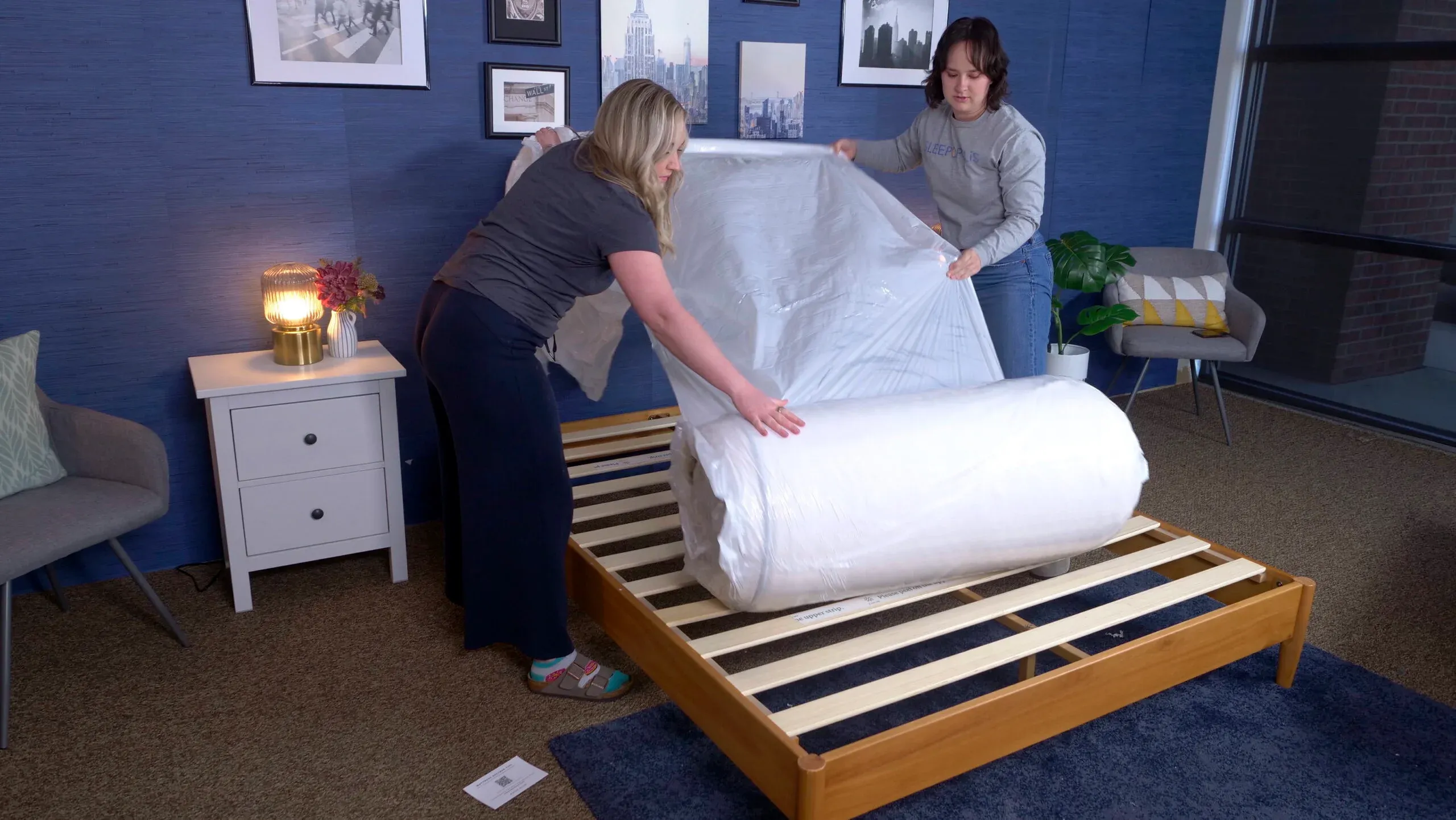
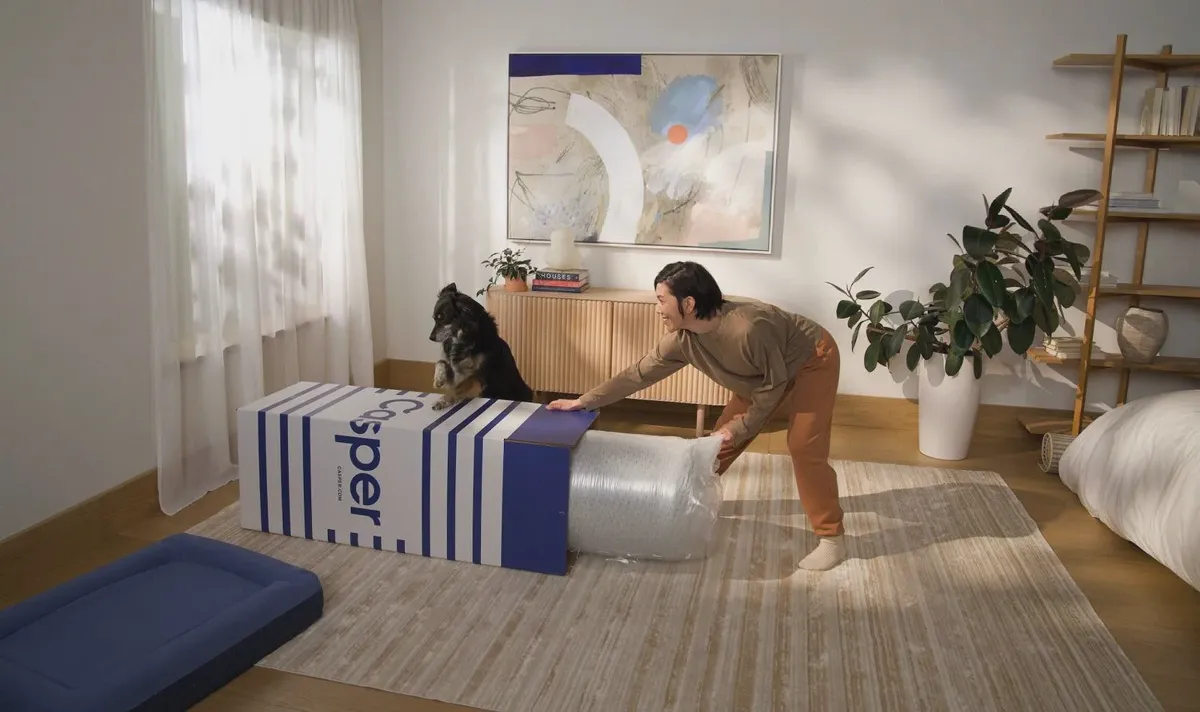
A mattress in a box (sometimes called a bed in a box or boxed mattress) is a foam, hybrid, or latex mattress that has been compressed, vacuum-sealed, rolled up, and shipped to your home in a single upright box. After you cut it open and lay it flat, it expands to its full size over 24 to 72 hours.
The format took off in the mid-2010s when direct-to-consumer brands like Casper, Tuft & Needle, and Nectar showed that you could ship a queen-size mattress through a regular freight carrier and skip the showroom markup entirely. A decade later, more than half of Consumer Reports' rated mattresses are now sold in a box, and most legacy brands - Sealy, Serta, Tempur-Pedic - have their own boxed lines.
The compression itself is mostly harmless to modern foam and pocket-coil constructions. Older springs and ultra-tall pillow-tops still ship the traditional way, but everything else has effectively migrated to the box.
The real pros of mattresses in a box
After testing dozens of boxed beds head-to-head against traditional showroom mattresses, these are the advantages that hold up in practice - not just on a marketing page.
Lower price for comparable build
Boxed mattresses cut out the showroom, the salesperson commission, and most of the freight markup. A queen hybrid that retails for $1,800 in a furniture store often has a near-identical equivalent online for $900-$1,200 with similar coil counts and foam densities. You're paying for the mattress, not the building it sits in.
Genuinely easy delivery
This is the underrated win. A queen mattress in a box weighs 70-110 lb in a roughly 18×18×42-inch carton. One person can drag it down a hallway; two can carry it up a narrow staircase. Traditional queen mattresses are 80 inches long the moment they leave the truck - try fitting one through an apartment door at the end of an L-shaped hallway and you'll understand why the box format won.
Long sleep trials and clear return policies
Nearly every boxed brand offers a 100-night trial as table stakes. Many - Nectar, DreamCloud, Saatva - go to 365 nights. That's a structural advantage over store mattresses, where 30 to 90 days is typical and restocking fees can apply. The reason is simple: returned boxed mattresses are usually donated to charity rather than re-sold, so brands price the return rate (~5-10%) into the original cost.
Modern materials, broader options
Because boxed brands launched in the era of memory foam, gel-infused foam, and pocketed coils, the category skews modern. Latex hybrids, copper-infused covers, zoned-support coils, and split-firmness designs for couples are all easier to find online than in most regional showrooms.
Stability and motion isolation
Consumer Reports' 2024 testing found that the best foam mattresses-in-a-box actually outperform their innerspring counterparts on stability - meaning less wobble when one partner gets out of bed. For light sleepers and couples, that's a quiet but meaningful win.
The real cons (don't skip this section)
Edge support is the weak spot
If you sit on the side of the bed to put on shoes, or you sleep close to the edge with a partner, this matters. Most all-foam boxed mattresses sag noticeably at the perimeter compared to a traditional innerspring with reinforced edge coils. Hybrids fix the issue, but you pay for it - expect $1,200+ for a queen with proper edge support.
Off-gassing for the first 1-5 days
Memory foam emits a chemical smell when first unwrapped. It's harmless according to the EPA and dissipates with airflow, but if you're sensitive to scents, plan to let the mattress breathe in a ventilated room before sleeping on it. Latex and natural-fiber options off-gas far less.
You can't test before you buy
This is the structural trade-off. The 100-night trial offsets it, but you still spend the first few weeks recalibrating expectations. If you have a strong existing preference (firm innerspring, ultra-plush pillow-top), buying sight-unseen is a real risk.
Quality variance is wider than the marketing suggests
There's a real gap between the top tier (Saatva Classic, Helix Midnight Luxe, DreamCloud Premier) and the budget tier ($300-$500 Amazon-only brands). Roll-packing a low-density foam mattress can compress out some of its useful life - it'll feel fine on night one and visibly indent within 18 months. Foam density (look for 4.0+ lb/ft³ in the support layer) and coil gauge are the specs that actually matter.
Setup requires patience
Most boxed mattresses need 24-72 hours to fully decompress. Sleeping on one before it's expanded won't damage it, but the firmness will feel wrong, which is a bad way to start a 100-night trial.
Mattress in a box vs. traditional mattress: who wins where
Neither format is universally better. Here's how the categories split based on our testing and on Consumer Reports and Sleep Foundation comparison data:
Price: Mattress in a box wins. Expect 30-50% lower prices for comparable construction.
Selection: Mattress in a box wins, especially for hybrid, latex, and split-firmness options.
Try-before-you-buy: Traditional wins. Nothing replaces 10 minutes lying on a mattress, even if showroom conditions don't perfectly match home use.
Delivery and setup: Mattress in a box wins for tight spaces, walk-up apartments, and DIY setup. Traditional wins if you want white-glove delivery with old mattress haul-away (some boxed brands now offer this for an upcharge).
Edge support: Traditional wins, especially compared to all-foam boxed beds. Boxed hybrids close the gap.
Lifespan: Roughly tied. Both formats average 7-10 years; well-built latex (boxed or otherwise) can last 12-15.
Trial period: Mattress in a box wins decisively - 100 to 365 nights versus 30 to 90 in most stores.
Resale and returns: Traditional wins for in-store credit; boxed wins for hassle-free at-home returns.
Best types of mattress in a box, by sleeper
This isn't a brand round-up - it's a match-the-construction-to-your-body shortcut.
Side sleepers: Look for medium-soft memory foam or hybrid with a plush comfort layer. Memory foam contours pressure points (hips, shoulders) better than innerspring. Models like the Nectar Classic and Layla Hybrid (flippable firmness) are common picks.
Back and stomach sleepers: Medium-firm hybrid is the sweet spot. You want enough push-back to keep your hips from sinking, which means coils plus a thin foam comfort layer. The Saatva Classic (technically a hybrid that ships in a box for some sizes) and DreamCloud Premier are well-suited.
Hot sleepers: Avoid all-foam, especially dense memory foam. Choose a hybrid with pocketed coils and breathable cover materials (Tencel, cotton, copper-infused). Latex hybrids are the coolest-sleeping boxed option.
Couples: Pocketed-coil hybrids beat innerspring for motion isolation; all-foam beats both. If you and your partner disagree on firmness, look at split-firmness designs or flippable models.
Heavier sleepers (230+ lb): Skip soft all-foam. Pick a hybrid with high-density support foam (4.0+ lb/ft³), 13.5-gauge or thicker coils, and reinforced edges. Lifespan and edge support both matter more at higher body weights.
Back pain sufferers: Medium-firm hybrid with zoned support is the most consistent recommendation across orthopedic and sleep research. Avoid the very softest and very firmest options on either end.
How long does a mattress in a box actually last?
The honest answer: 7 to 10 years for most foam and hybrid boxed beds, and 10 to 15 years for well-made latex. That's effectively the same lifespan as a traditional mattress in the same price tier - the box itself doesn't shorten the life of the mattress, but the price tier you bought into does.
Budget boxed mattresses ($300-$500 queen) typically start showing body impressions and edge sag at the 3- to 5-year mark. Mid-tier ($800-$1,500) holds up well to 8-10 years with proper care. Premium ($1,800+) routinely hits 10+ years.
Care habits matter as much as construction:
- Use a supportive foundation. Slats more than 3 inches apart will void most warranties and cause premature sagging. A solid platform or a dense slat base is the safest choice.
- Rotate every 3-6 months for the first two years. Most modern boxed mattresses are one-sided, so don't flip - just rotate head-to-foot.
- Use a mattress protector. Stains void warranties on most brands; a $30 protector is the cheapest insurance you'll ever buy.
- Vacuum the surface twice a year to keep dust and skin cells from working into the foam.
Should you buy a mattress in a box?
Probably yes - if you fit one of these profiles:
- You live in an apartment or have tight stairs and doorways.
- You want to spend $600-$1,500 on a queen and get the most for your money.
- You're fine deciding at home over 30+ nights instead of 10 minutes in a showroom.
- You want hybrid, latex, or modern foam construction without driving to a specialty store.
Probably stick with traditional if:
- You strongly prefer firm innerspring or ultra-plush pillow-top constructions you've slept on for years.
- You want white-glove delivery, setup, and old-mattress removal as part of the package.
- You weigh 250+ lb and want extra-reinforced edge support that few boxed beds offer at the budget tier.
- You can't get past the idea of buying a mattress without testing it first.
For most people in 2026, the boxed format is no longer a compromise - it's just how mattresses are sold now. The 100-night trial is the safety net, and the 30-50% savings versus showroom pricing is real.
Frequently asked questions
Do mattresses in a box sag?
They can, but it's a function of price and construction more than the box itself. Low-density foam (under 3.0 lb/ft³) and thin-gauge coils sag fastest - usually within 3-5 years. Quality hybrids with reinforced perimeters and 4.0+ lb/ft³ support foam stay flat for 8-10 years or longer. Rotating regularly and using a proper foundation slows the wear meaningfully.
How long should I wait before sleeping on a mattress in a box?
Most manufacturers say 24 to 72 hours. You can technically sleep on it sooner - it won't damage the foam - but the firmness and feel won't be representative. If you're starting a sleep trial, give it the full 72 hours so you're judging the real mattress, not a half-decompressed one.
Are bed-in-a-box mattresses safe? What about the chemical smell?
The smell is off-gassing of volatile organic compounds (VOCs) from the foam and adhesives. The EPA and Sleep Foundation both classify the levels in CertiPUR-US-certified foam (which most major brands use) as safe. The smell typically dissipates in 1 to 5 days with airflow. Latex and natural-fiber mattresses off-gas far less.
Can I return a mattress in a box?
Yes - almost universally. Most brands offer 100-night trials with free return pickup and full refunds. They typically donate returned mattresses to charity rather than re-sell them, so don't feel guilty about exercising the trial.
Is a mattress in a box worth it for back pain?
A medium-firm hybrid with zoned support is the consensus recommendation for chronic back pain, and it's easier to find that exact construction in a boxed format than in most local showrooms. The 100-night trial also lets you actually evaluate it over multiple weeks, which is what most physical therapists recommend over a 10-minute store test.
The bottom line
Mattresses in a box are good - for most people, they're now the default good choice. The format saves money, fits through tight doorways, ships fast, and comes with the longest sleep trials in the industry. The trade-offs (edge support, off-gassing, no in-store testing) are real but manageable, especially if you spend in the $800-$1,500 mid-tier rather than chasing the cheapest option on Amazon.
If you're shopping right now, start by deciding on construction (foam vs. hybrid vs. latex), match it to your sleep position and body weight using the guide above, and then narrow to two or three brands with strong return policies. The mattress will arrive in a box; whether it stays there for ten years is mostly about the construction you picked, not the format it shipped in.