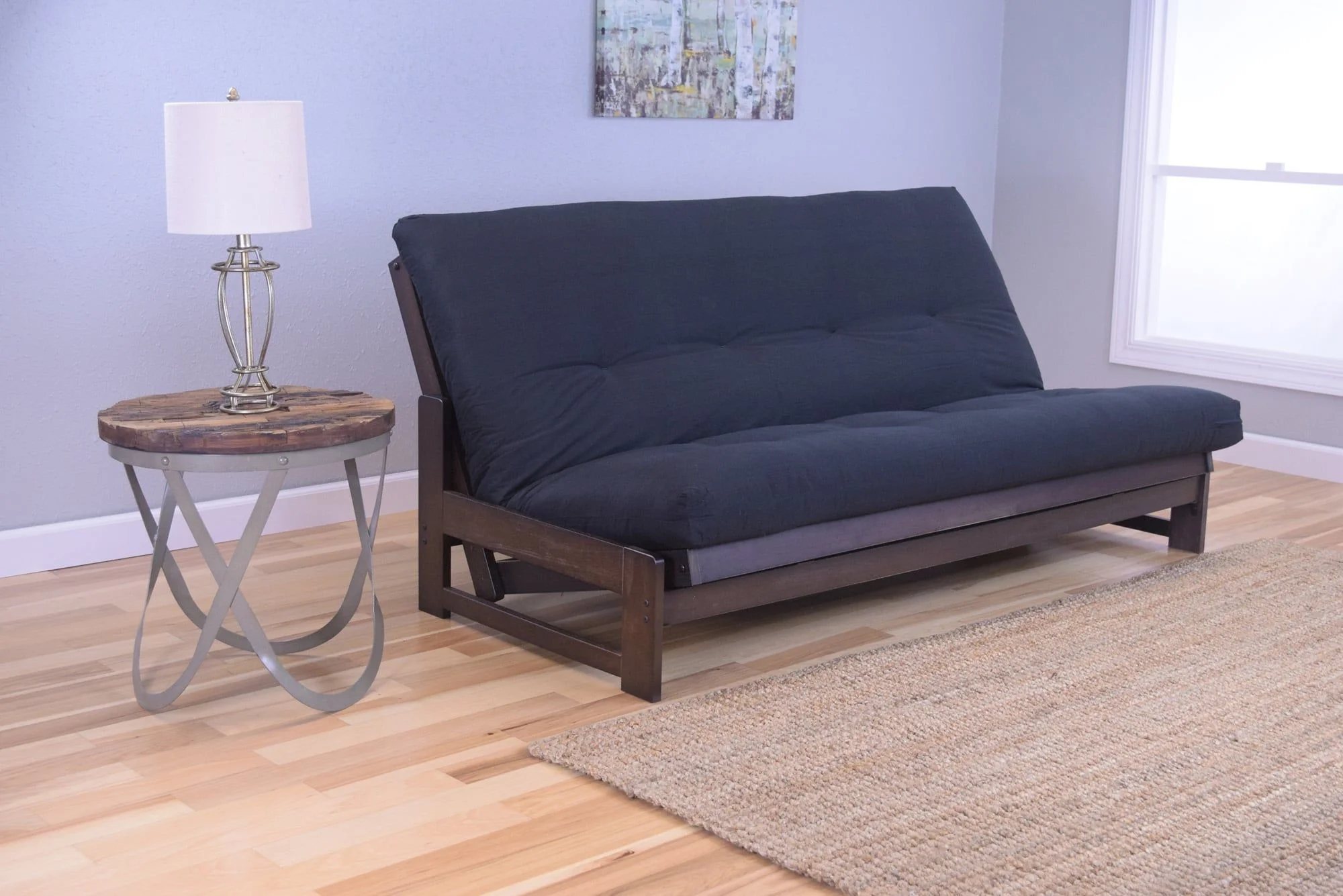

Yes - you can put a memory foam mattress on a futon, but only if you keep the frame flat as a bed and pick the right thickness for your slat spacing. Fold a standard memory foam slab in half to make a couch and you will permanently crease the foam, void most warranties, and shorten the mattress’s usable life by years.
This guide explains exactly when memory foam works on a futon, what slat spacing and thickness you need, and the dedicated foldable foam options to use if you actually need the futon to convert. We also flag the heat, sagging, and warranty traps that the typical "futon hack" articles skip.
The short answer: flat-only, with the right frame
Use it as a bed-only setup: a standard memory foam mattress lies flat on a bi-fold or platform-style futon frame and works fine, provided the slats are spaced no more than 2.75” (7 cm) apart and the foam is at least 6” thick.
Don’t use it as a sofa: memory foam, latex, and most hybrids cannot be folded daily without permanent damage. The cell structure compresses on the fold line, you lose support, and you almost always void the warranty (most foam mattress warranties explicitly prohibit folding or bending).
If you need it to convert: buy a purpose-built foldable foam futon mattress (Milliard, Jamdok, DHP, Mozaic) - the foam is segmented, lower density, and engineered to bend. A 6” trifold is the sweet spot for occasional guest use; an 8” bi-fold for nightly sleep.
Slat spacing is the make-or-break detail
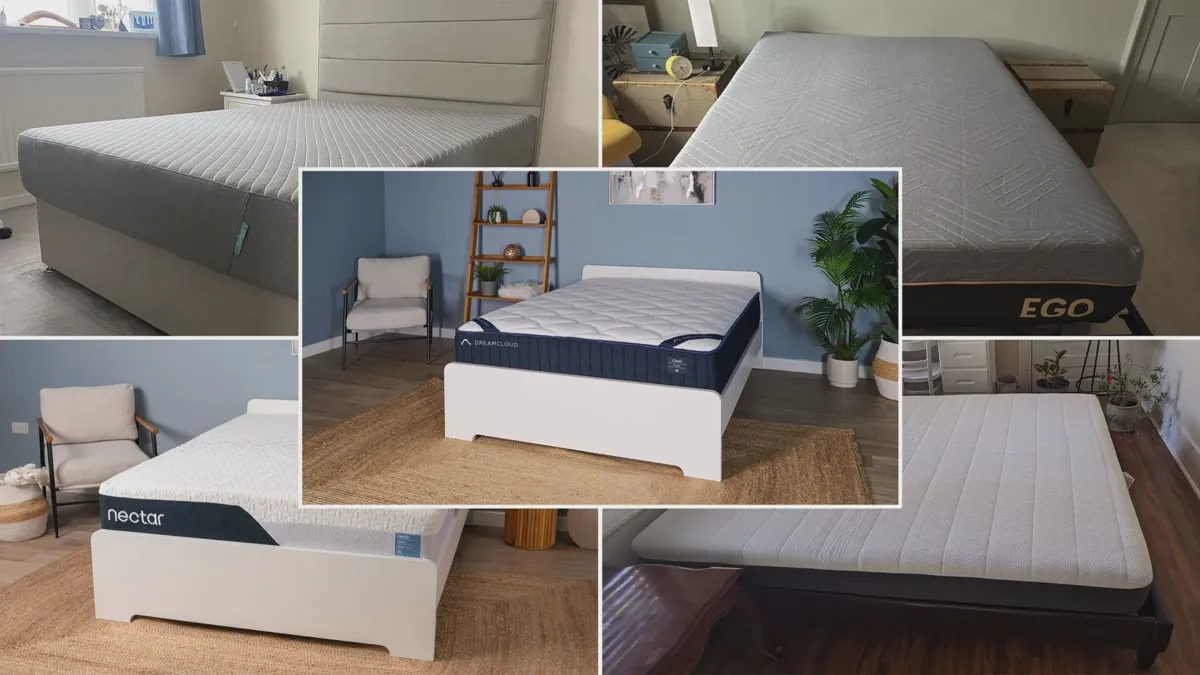
The single biggest reason memory foam fails on futon frames is slat spacing. Memory foam needs continuous, even support - gaps wider than the foam can bridge cause the mattress to sag into each gap, creating washboard pressure points and accelerating wear.
- Maximum spacing: 2.75” (7 cm) between slats. Tighter is better.
- Slat width: at least 2.5” wide hardwood slats - flimsy 1” pine slats can snap under foam load when a sleeper rolls.
- If your frame fails this test: add a bunkie board (1-2” plywood or solid panel) on top of the slats. Cheap, mattress-warranty-safe, and fixes most older bi-fold frames.
Quick test: lay a paperback flat across two adjacent slats. If it dips noticeably or falls through, your frame is not ready for memory foam without a bunkie board.
How thick should the memory foam be?
Thickness depends on whether the futon is a primary bed or a guest setup, and on sleeper weight.
- Guest / occasional use: 6” total height is enough. Look for 2-3” of memory foam over a high-density polyfoam base.
- Nightly sleep, single sleeper under 230 lb: 8” minimum, with at least 3” comfort layer.
- Couples or sleepers over 230 lb: 10-12” thick, ideally a hybrid or zoned-foam mattress so the support core doesn’t bottom out on the slats.
- Side sleepers: add 1-2” to the above for shoulder/hip pressure relief - or layer a 3” memory foam topper over a thinner futon mattress.
Anything thinner than 6” on a slatted frame will telegraph the slats through to the sleeper within a few months.
Bi-fold vs. tri-fold vs. platform - what your frame can handle
Platform / sofa-bed style: flat all the time, no folding mechanism. Treat it like a regular bed - any quality memory foam mattress works as long as slat spacing is correct.
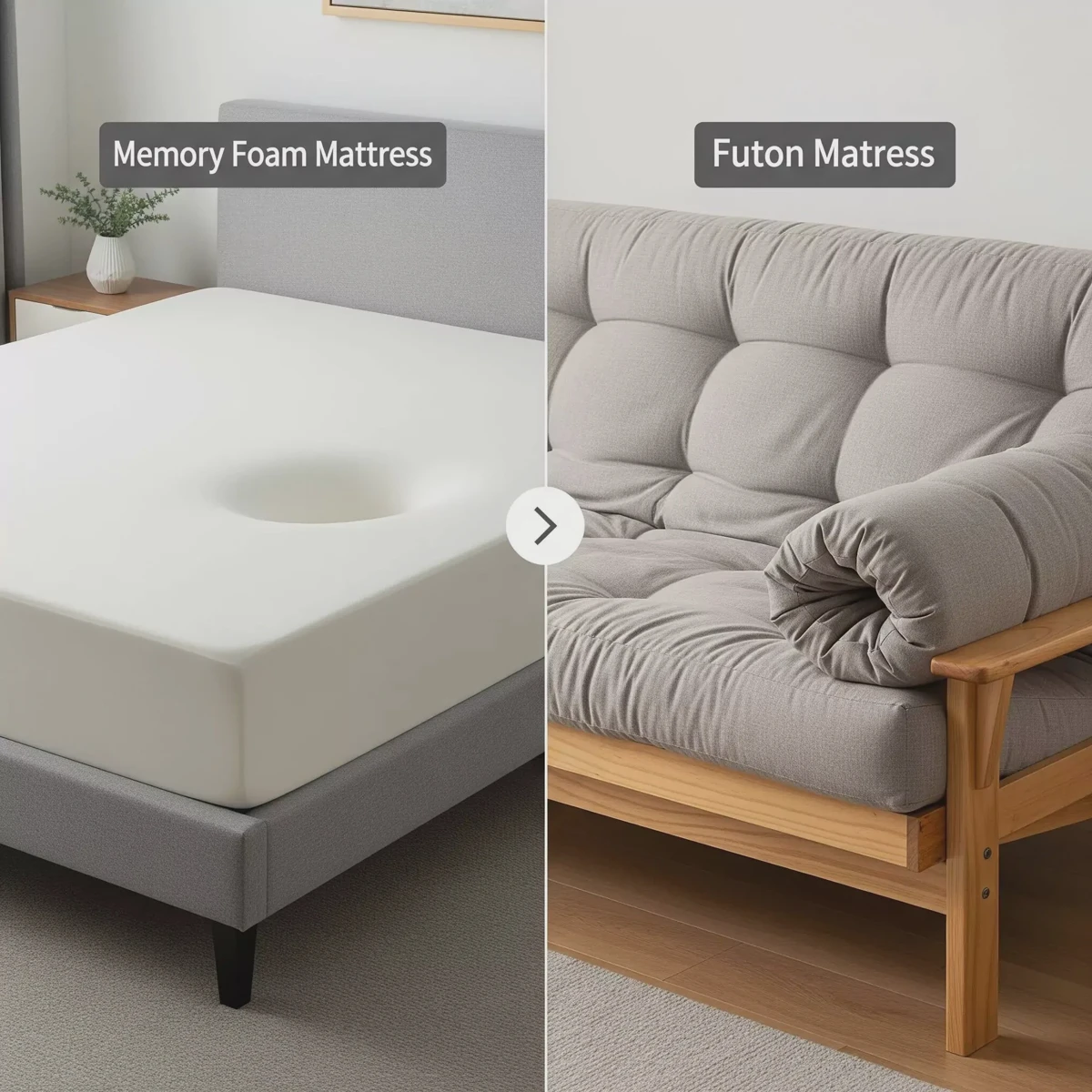
Bi-fold (the classic Western futon): folds at the middle to form a couch. A standard 8-10” memory foam mattress will work flat, but every fold permanently damages it. Either commit to bed-only, or buy a foldable foam futon designed for the fold cycle.
Tri-fold / Japanese shikibuton style: three sections, used on the floor or low frames. Conventional memory foam will not fold here either - but 4-6” trifold foam mattresses (e.g., Milliard, Best Choice Products) are made specifically for this and are inexpensive enough to replace every few years.
Heat, off-gassing, and humidity - the real-world tradeoffs
Memory foam on a futon amplifies two known foam complaints because futons usually sit in living rooms (warmer, less ventilated than bedrooms) and on closed-base frames (no underside airflow).
- Heat retention: traditional memory foam runs hot. Pick a gel-infused, open-cell, or copper-infused variant, or layer a cooling mattress protector (phase-change cover or wool topper).
- Off-gassing: CertiPUR-US certified foam off-gasses for 24-72 hours. Air the mattress in a ventilated room before putting it on the futon.
- Moisture trap: foam doesn’t breathe well against a closed futon base. Use a slatted frame or, if your futon has a deck, drill a few 1” ventilation holes. Rotate the mattress 180° monthly to prevent body-impression sag and mildew.
When a memory foam topper beats a full mattress
If you already own a futon mattress that’s too firm but otherwise functional, a 2-4” memory foam topper is the smartest fix.
- 2” topper: removes surface firmness, keeps fold-ability if your futon flips daily.
- 3” topper: the side-sleeper sweet spot - significantly reduces shoulder pressure without overwhelming the base.
- 4” topper: basically a second mattress; only use it on a frame that stays flat, since it will bunch up at the fold.
Look for 3-4 lb/ft³ density (durable, supportive) and 12-15 ILD (medium-soft) for general use. Avoid bargain toppers under 2.5 lb/ft³ - they collapse in 6-12 months.

Common mistakes that ruin memory foam on a futon
- Folding it "just once a week." Foam fatigue is cumulative. Every fold compresses cell walls - by month 6 the crease is permanent.
- Skipping the bunkie board on wide-slat frames. Sagging shows up in 60-90 days and is not warranty-covered (frames are considered the consumer’s responsibility).
- Putting plastic between mattress and frame. Traps moisture, breeds mold inside the foam - invisible until it smells.
- Buying ultra-cheap "memory foam" futon mattresses under $150. Most are 1.5 lb/ft³ polyfoam with a thin foam veneer; they bottom out within months.
- Not checking weight ratings. Most futon frames are rated 250-400 lb total. Add two adults plus a 70 lb mattress and you’re at the edge - slats crack first.
Best foldable memory foam futon mattresses (if you actually need it to fold)
These are designed for the fold cycle and won’t void the warranty when used on a bi-fold or tri-fold frame:
- Milliard 6” Memory Foam Futon Mattress - the default starter. Works on standard Western bi-fold frames; CertiPUR-US foam; ~$170-220 in Full.
- Jamdok 6” Tri-Fold - best for floor or low Japanese-style frames; doubles as a guest bed; ~$130-180.
- DHP 8” Independently Encased Coil + Foam - hybrid alternative for nightly sleep; firmer support, less hot than pure foam.
- Mozaic 8” Cotton/Foam Futon Mattress - cotton outer with memory foam core; designed to fold; better breathability for warm rooms.
Frequently asked questions
Will a regular queen memory foam mattress fit a queen futon frame?
Yes - a 60” × 80” queen memory foam mattress fits a queen futon frame dimensionally. The catch is fold-ability: queen futon frames are usually platform-style (no fold) so this works fine. If your queen futon does fold, do not use a non-foldable mattress on it.
Can I use a memory foam mattress on an IKEA futon (Beddinge / Friheten)?
Beddinge and Friheten use a sofa-bed mechanism that requires the mattress to fold or roll. Use only the IKEA-specified mattress, or a thin (3-4”) foldable foam mattress. A standard memory foam slab will block the conversion mechanism and damage the foam.
How long will a memory foam mattress last on a futon?
Flat-use only with proper slats: 7-10 years (same as on a regular bed frame). Folded daily: 1-2 years before noticeable crease damage. With a bunkie board on a wide-slat frame: typically 8-10 years.
Is a memory foam topper enough, or do I need a new mattress?
If your existing futon mattress is firm but structurally sound (no broken springs, no sagging, less than 5 years old), a 3” memory foam topper solves most comfort complaints for $80-150. If the base is sagging or broken, a topper masks the problem for ~6 months before the sag reappears.
Why does my memory foam feel harder on the futon than on a regular bed?
Memory foam softens with body heat. Futons sit in cooler living rooms, often on uninsulated floors, so the foam stays firmer. Pre-warming the bed (electric blanket on low for 10 minutes) or switching to a softer ILD topper fixes it.
Bottom line: keep the futon flat, get the slat spacing right, and pick a foam thickness that matches how you sleep. If you absolutely need the fold, spend the extra $50-100 on a purpose-built foldable foam futon - it’s cheaper than replacing a ruined memory foam mattress in two years.