Affiliate disclosure: Banner Mattress may earn a commission on links to retailers, at no extra cost to you. Our recommendations stay editorially independent.
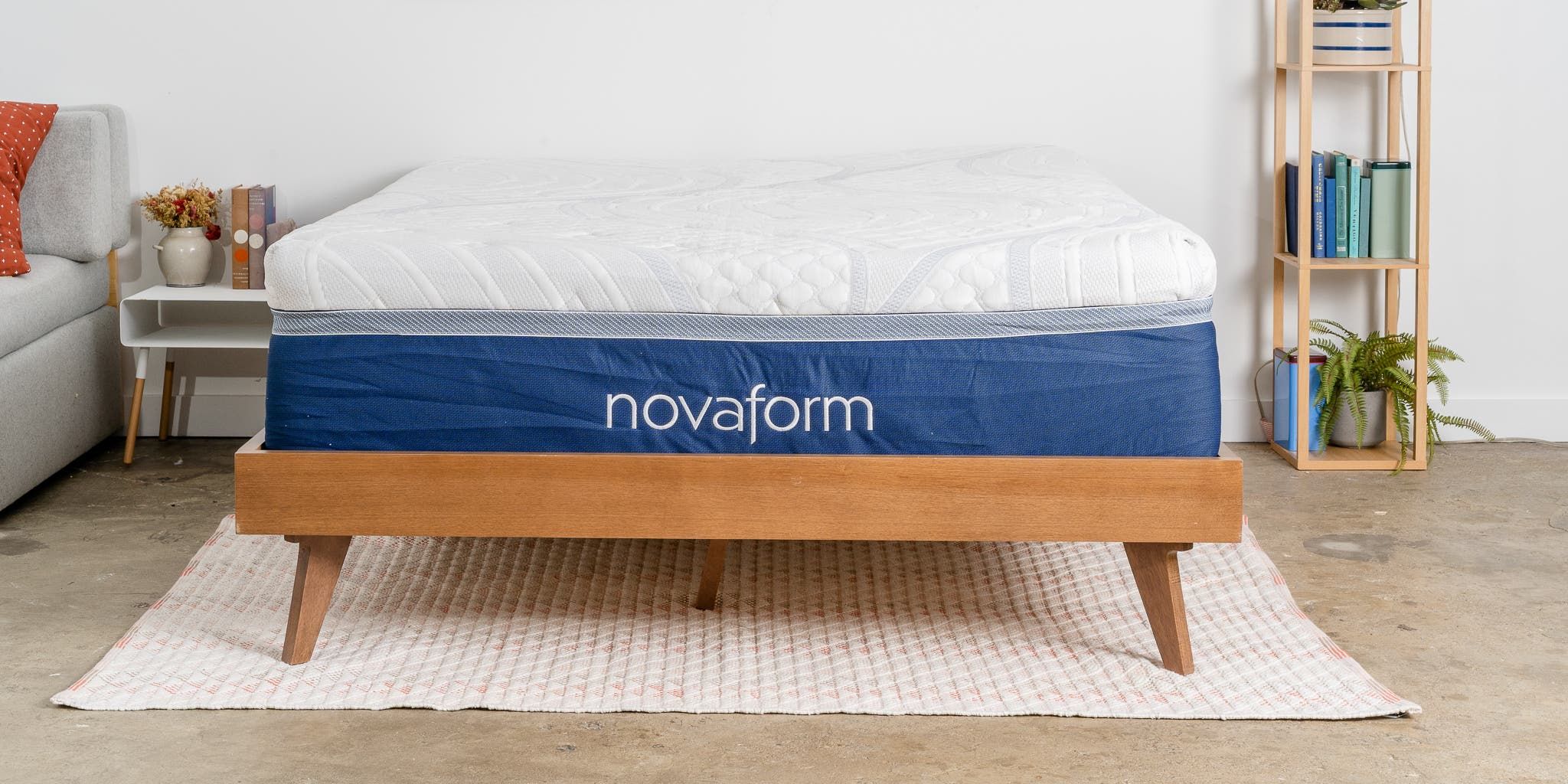
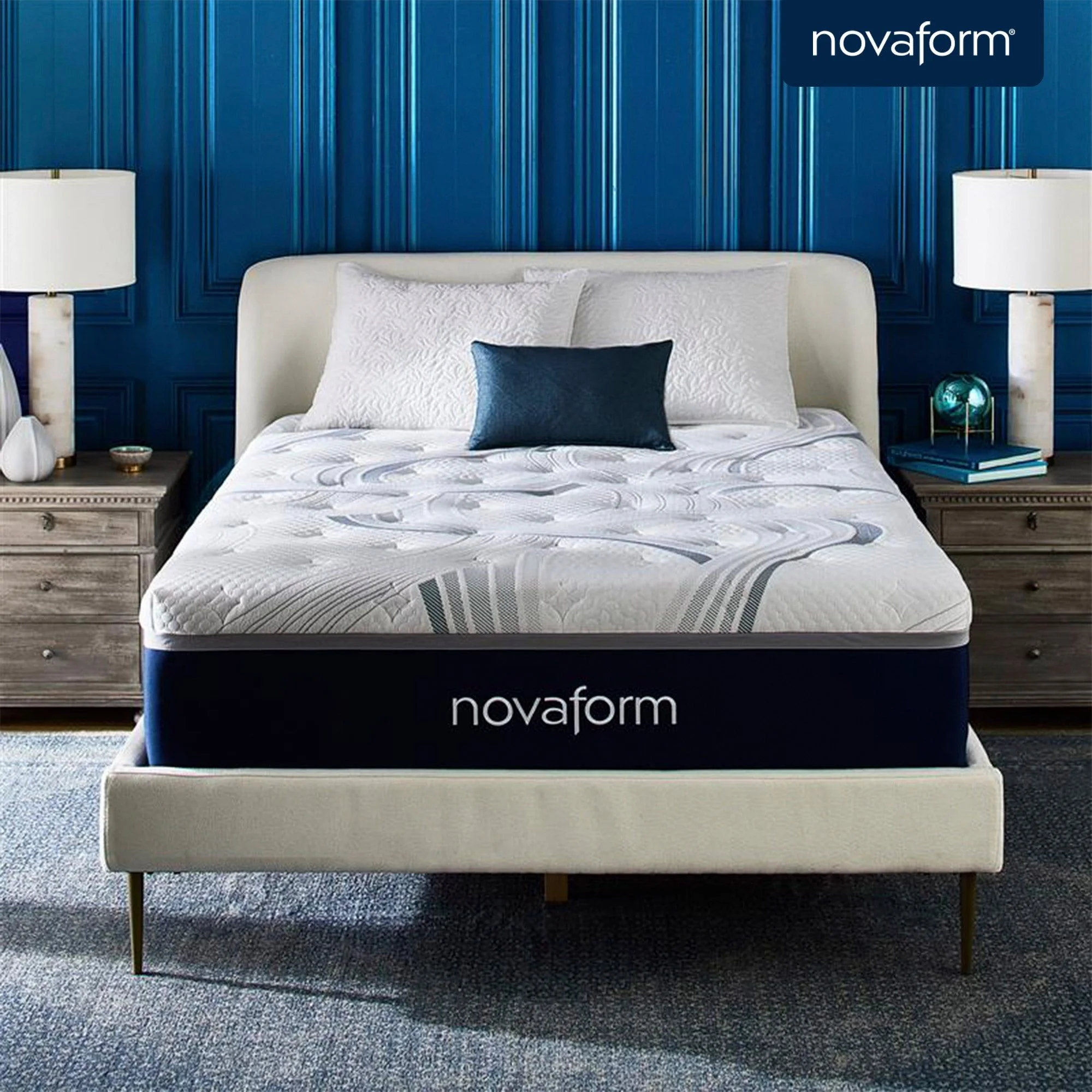
The Novaform ComfortGrande is a 14-inch all-foam mattress sold almost exclusively through Costco. It pairs gel-infused memory foam with a thick polyfoam support core at a price most direct-to-consumer brands can't match - Queen sizes typically land around $580, well under half what comparable memory-foam beds cost from premium brands (NapLab).
In recent independent testing, the ComfortGrande has earned mixed-but-reasonable scores: Mattress Clarity rates it 4.1/5 with a medium-firm 7/10 firmness, while Sleep Foundation scores it 7.9/10 and calls out strong motion isolation and pressure relief for side sleepers. NapLab's lab benchmark places performance in the bottom 7% of mattresses they've tested, so expectations matter.
This review covers who the Novaform ComfortGrande is right for in 2026, where its weak spots show up, and how it compares to the alternatives Costco shoppers usually cross-shop.
Important - 2023 mold recall: Costco recalled roughly 47,000 Novaform mattresses in September 2023 after mold was found between the cover and foam in mattresses returned to stores. Current production is unaffected, but if you bought a ComfortGrande between 2018 and 2023, check Costco's recall notice (CNET).
Who the Novaform ComfortGrande is best for
If a Costco run is already part of your routine and you're shopping under $700, the ComfortGrande makes a strong case - especially for these sleepers:
- Side sleepers up to 230 lbs. The 3-inch gel memory foam comfort layer cradles shoulders and hips. Sleep Foundation called pressure relief one of its standouts.
- Back sleepers who want a balanced medium-firm feel rather than aggressive contouring.
- Couples sensitive to motion transfer. Memory foam's natural deadening, plus the 14-inch profile, isolates movement well - useful when one partner gets up early.
- Budget-first buyers. Costco's pricing and return policy create real value floor; the bed is hard to lose money on.
Who should skip it
- Hot sleepers. Despite gel infusion and channel foam, all-foam beds run warmer than hybrids. The AI Overview consensus is that cooling is "decent, but not great."
- Sleepers over 230 lbs. The 8-inch polyfoam core works for average weights but allows excessive sinkage at higher weights, compromising spinal alignment.
- Edge sleepers. Independent tests consistently flag below-average edge support - a known trait of thick all-foam designs.
- Stomach sleepers who want a firm push-back. The medium-firm feel allows hip sinkage some find uncomfortable.
Sizes and pricing
Costco's pricing on Novaform shifts with seasonal promotions and member discounts; the table below reflects typical recent listings. Always check Costco for current pricing.
- Twin - 39″ × 75″ - typically around $400
- Full - 54″ × 75″ - typically around $500
- Queen - 60″ × 80″ - typically around $580
- King - 76″ × 80″ - typically around $700
- California King - 72″ × 84″ - typically around $700
Free shipping in the contiguous US is standard. Costco members get the brand's full warranty plus Costco's signature return window.
Performance: how the ComfortGrande sleeps
Firmness and feel
Mattress Clarity rates the ComfortGrande a 7/10 on its 1-to-10 firmness scale - "just slightly firmer than your average medium-firm bed" - based on the reviewer feeling shoulder and hip pressure on her side but adequate support on her back and stomach. The bed delivers a "balanced foam feel" rather than the slow-moving sink of traditional memory foam: the foam springs back faster than classic memory foam but is not as bouncy as a hybrid. Plan on a 7-to-14-day break-in.
Pressure relief
Pressure relief on side and back is where the ComfortGrande earns its keep. The thick 3-inch gel-infused memory foam pad disperses load across shoulders and hips for sleepers in the 130-230 lb range. Lighter sleepers may sit higher on the surface and miss some of the contouring; heavier sleepers may bottom out on the polyfoam core. Mattress Clarity's 4/5 support score reflects this split - their average-weight tester reported "really comfortable" cushioning on the back and "well supported" hips on the stomach, but felt "a little bit of pressure" on the shoulder and hip when side-sleeping, consistent with the 7/10 firmness reading.
Motion isolation
Strong. Memory foam's slow response naturally absorbs movement, and the 14-inch profile of the ComfortGrande adds enough mass that bed-exits and tossing rarely transmit to the other side.
Temperature regulation
Mixed. Gel beads and channel foam help, but no all-foam mattress competes with a coil-supported hybrid for airflow. If you sleep hot year-round, look at Costco's hybrid options or step up to a brand like Helix or Saatva. If "warm but not unbearable" is acceptable, the ComfortGrande does fine.
Edge support
Below average. The thick all-foam profile collapses noticeably at the perimeter when you sit on the edge to put on shoes or sleep close to the side. Mattress Clarity rates edge support 3/5: their reviewer could comfortably "bend over and tie my shoes" while sitting on the side, but lying along the edge felt unstable - "I didn't feel like I could have stayed there for long before rolling off the bed." Couples who use the full surface area may notice it; solo sleepers in a Queen or larger usually don't.
Off-gassing
Expect a noticeable initial smell when you cut the plastic. The mattress is CertiPUR-US certified, so VOC content is within third-party limits. Mattress Clarity's reviewer described the unboxing smell as "strong enough for me to notice" but not bothersome, and reports the chemical odor "is usually gone after 24 hours, but it can sometimes take up to 48." Air the bedroom and the smell typically clears within a day or two rather than a week.
Construction
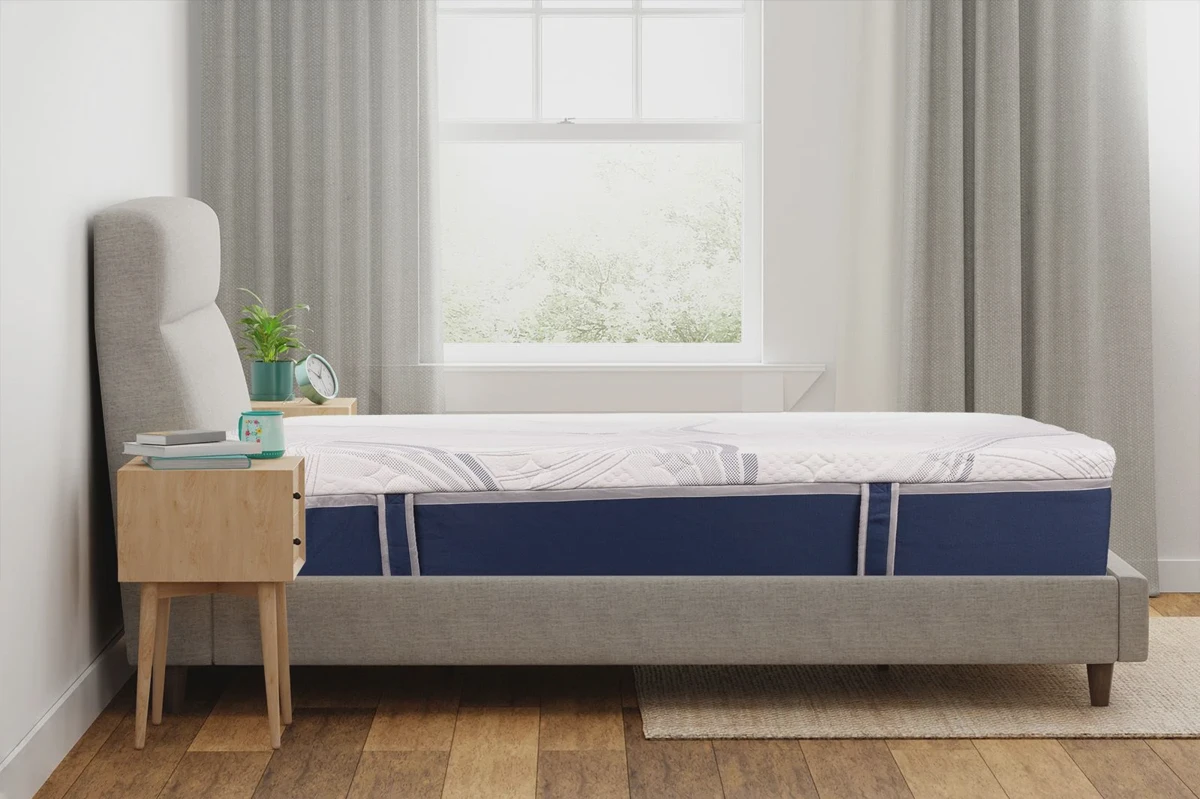
The ComfortGrande is an all-foam stack:
- Quilted cover. Soft fabric designed for breathability and stretch.
- 3 inches of gel-infused memory foam. The pressure-relief layer; gel beads target heat dissipation.
- 3 inches of channel foam. Air channels promote ventilation and add a transitional layer between comfort and core.
- 8 inches of charcoal-infused support polyfoam. Provides the structural support; charcoal is marketed as an odor-control assist.
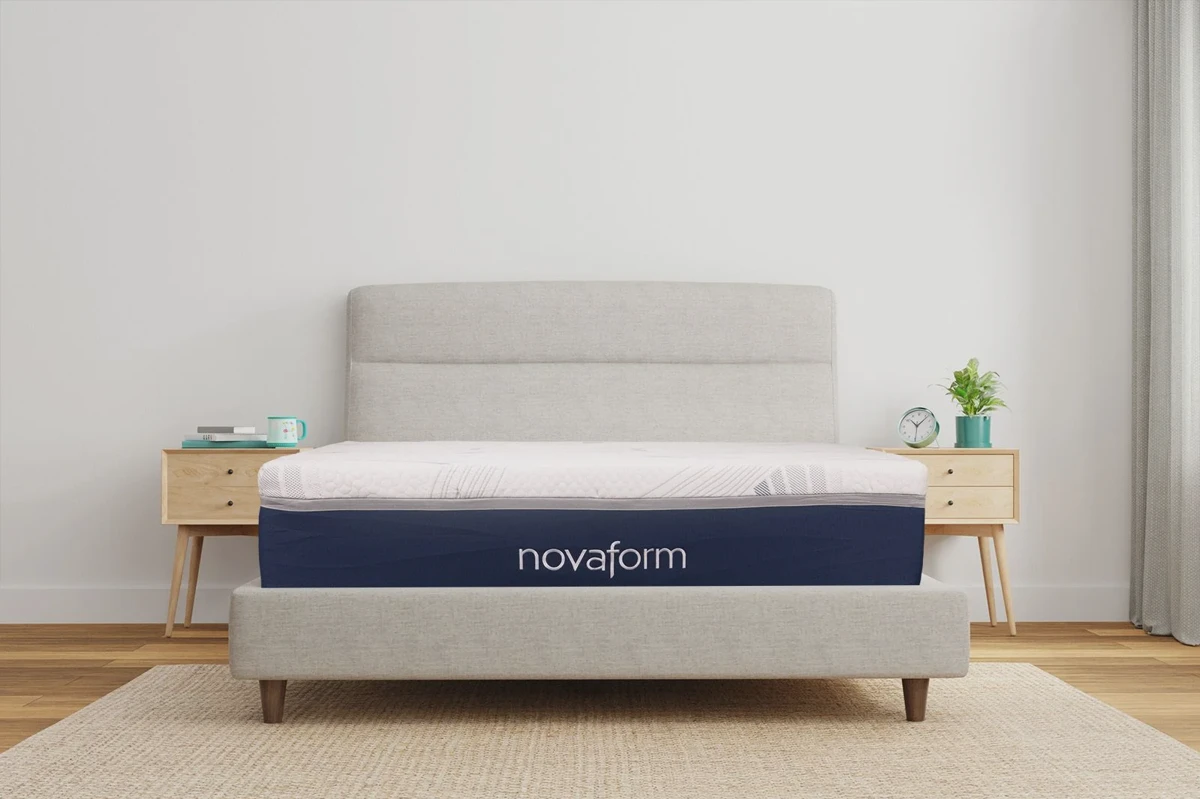
- Total profile: 14 inches. Plan on a tall bed frame or low-rise foundation if you want the surface within easy reach.
This stack is conservative - no zoned coils, no latex, no airflow grids. It's what makes the bed cheap, and also what caps its top-end performance.
How it compares to the alternatives
If you're cross-shopping, three alternatives come up most often in 2026:
- Nectar Memory Foam. Similar all-foam construction, often available at comparable prices through warehouse-club promos. Nectar offers a 365-night home trial - far longer than Costco's standard return window - and a forever warranty. Better for buyers who want a long try-it-at-home period.
- Helix Midnight (hybrid). Costs more, but the coil base solves the cooling and edge-support gaps. Worth the upgrade if you sleep hot or are over 230 lbs.
- Saatva Classic. Premium innerspring with three firmness options and a free white-glove delivery. Targets back-pain sleepers who want firmer support and brand-direct service.
For most people prioritizing budget and short-list shopping, the ComfortGrande beats the Costco hybrid alternatives for pressure relief but loses to them on cooling and edge support. Match the trade-off to your sleep style.
Trial, warranty, and shipping
- Warranty: 20-year limited warranty from Novaform - roughly twice the length of a typical mattress warranty, per Mattress Clarity.
- Return policy: Costco's standard return policy applies. Mattress Clarity reports that Novaform itself "doesn't state an explicit trial period," but because Costco is the only retailer, "you can issue a return at any time" as long as you're within roughly a 50-mile radius of a warehouse. Confirm with your local Costco before buying, since large-item policies are not identical at every store.
- Shipping: Free shipping to the 50 US states. The mattress arrives compressed in a box and expands within 24-72 hours.
Novaform mattress FAQs
Is Costco recalling Novaform mattresses?
Costco recalled approximately 47,000 Novaform mattresses in September 2023 after mold was found between the cover and foam in mattresses returned to stores. Current production is unaffected. If you bought a ComfortGrande between 2018 and 2023, check Costco's recall notice and contact your local warehouse for guidance.
Which is better, Casper or Novaform?
It depends on priority. Casper offers more polished home-trial logistics and direct customer support, plus models with hybrid construction for cooling. Novaform almost always wins on price thanks to Costco's warehouse-club model. For value-first shopping, Novaform is the better pick; for white-glove service and a 100-night home trial, Casper.
What's better, Sealy or Novaform?
Sealy is a much broader brand sold across most retail channels with hybrid and innerspring options at every price tier - better if you want coil-based support or store-floor try-before-you-buy. Novaform is narrower (mostly all-foam, mostly Costco) and competes on pressure relief and price. Side sleepers usually prefer Novaform; hot sleepers and edge sleepers usually prefer a Sealy hybrid.
Does the Novaform ComfortGrande sleep hot?
It sleeps warmer than a hybrid but cooler than a basic memory-foam bed. Gel infusion and channel foam help, but no all-foam mattress matches a coil-supported hybrid for airflow. If you regularly wake up sweating, a hybrid is a safer bet.
How long does the Novaform mattress need to break in?
Most reviewers report a 7-14 day break-in. Off-gassing fades within 3-7 days in a ventilated room. The foams settle into their advertised feel after roughly two weeks of regular use.
Is the Novaform ComfortGrande good for back pain?
For average-weight back and side sleepers, the medium-firm feel and 3-inch gel memory foam comfort layer support neutral spinal alignment and relieve hip/shoulder pressure. Sleepers over 230 lbs or those who need a firm push-back may do better on a hybrid with zoned support.