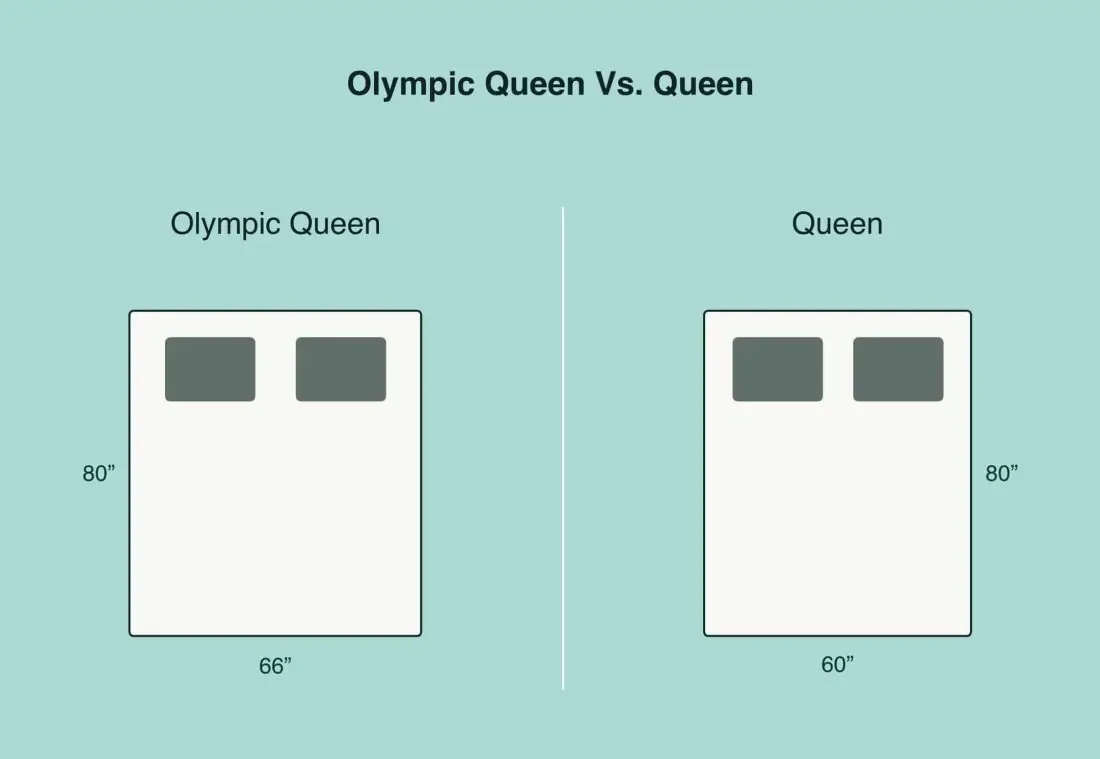
An Olympic queen mattress is six inches wider than a standard queen but the same length. That single difference, 66 x 80 inches versus 60 x 80 inches, drives everything that follows: how it fits your room, what bedding you can buy off the shelf, and whether it is worth the trade-off over a king.
Quick answer: which one should you pick?
- Pick a standard queen if you sleep solo or with one partner, want widely available sheets and frames, and your room is on the smaller side.
- Pick an Olympic queen if you and a partner share the bed with kids or pets, want extra elbow room, and cannot fit (or do not want) a 76-inch king.
Olympic queens were introduced in 1999 and remain a specialty size, sometimes sold as "super queen" or "expanded queen." That matters mostly when you go to buy sheets and a frame, which we cover below.
Olympic queen vs queen at a glance
Size comparison
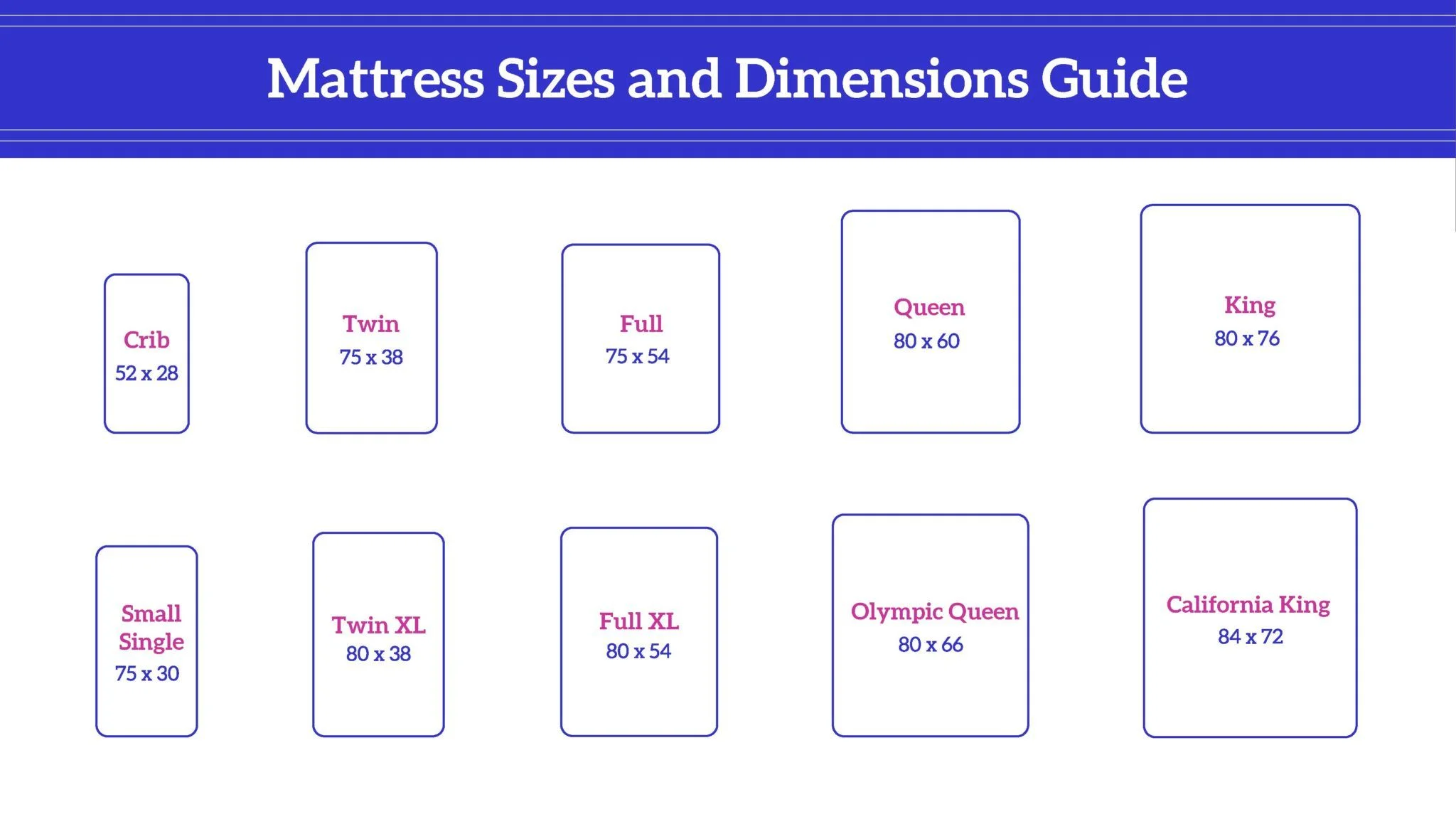
Dimensions and surface area
Both sizes share the 80-inch length, so vertical fit in a room is identical. The Olympic queen adds six inches of width:
- Standard queen: 60 x 80 in (4,800 sq in)
- Olympic queen: 66 x 80 in (5,280 sq in)
- Difference per sleeper: an extra 3 inches of personal width on each side, roughly 10 percent more surface area overall.
For reference, a king is 76 x 80 in and a California king is 72 x 84 in, so the Olympic queen sits cleanly between a queen and a king. Queens are the most popular mattress size in the US by a wide margin, accounting for roughly 47 percent of beds Americans sleep on, which is why most bedding and frame inventory is sized for the 60-inch standard rather than the 66-inch Olympic.
Room size and layout
A 10 x 10 ft bedroom is the practical minimum for either size. With a queen you have noticeably more walking space and can comfortably add a dresser; with an Olympic queen the layout still works, but you will want to plan around door swings, closet access, and nightstand width before committing.
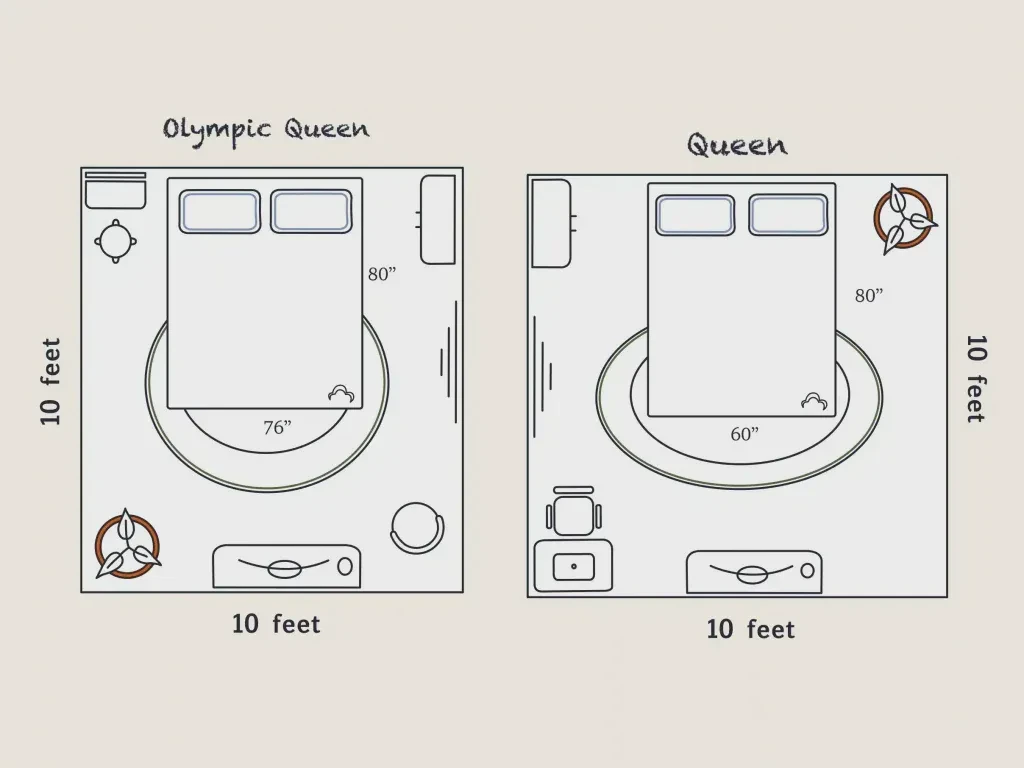
If your room is closer to 9 x 9 ft, default to the standard queen. If it is 11 x 11 ft or larger, the Olympic queen is comfortable and a king becomes worth pricing out.
Bedding and frame availability
This is where the Olympic queen costs you convenience. Standard queen sheets are stocked in essentially every linen department; Olympic queen sheets are a specialty product you usually have to order from the mattress maker or a dedicated linen store.
- Sheets: queen sheets will not fit an Olympic queen. King sheets technically work but leave loose fabric you have to tuck.
- Comforters and duvets: size up to king for full drape; queen-sized covers will look short on the sides.
- Bed frames: fewer Olympic queen platforms exist. A standard queen frame technically holds the mattress with about 3 inches of overhang per side, but a properly sized Olympic queen frame is the safer long-term choice.
Price
Pricing overlaps more than you might expect. Both sizes typically land in the same broad range, with Olympic queen runs from specialty makers occasionally pushing higher on premium models:
- Standard queen: roughly $1,000 to $2,500 for mainstream foam, hybrid, and innerspring builds.
- Olympic queen: roughly $800 to $2,500 depending on brand and materials, with fewer ultra-budget options.
Factor in sheets and a frame and the Olympic queen total cost can creep $100 to $300 higher than a comparable queen package.
Pros and cons
- Olympic queen: 6 in extra width per night for couples, kids, or pets
- Olympic queen: smaller footprint than a king but more space than a queen
- Standard queen: widest selection of sheets, frames, and accessories
- Standard queen: fits more bedrooms and budgets without compromise
Cons
- Olympic queen: limited specialty bedding and frame availability
- Olympic queen: typically a special-order item with longer lead times
- Standard queen: can feel tight for two adults plus a pet or child
- Standard queen: less shoulder room for restless sleepers
Other queen-size variations
- California queen (60 x 84 in): four inches longer than a standard queen, suited to taller sleepers.
- Short queen (60 x 75 in): five inches shorter, common in RVs and campers.
- Split queen (two 30 x 80 in halves): two pieces for adjustable bases or tight stairwells.
Olympic queen vs queen FAQ
Will queen sheets fit an Olympic queen mattress?
No. Standard queen sheets are 60 in wide and will be too narrow for an Olympic queen, which is 66 in. You will need to buy Olympic queen sheets or use king sheets and tuck the extra material.
Can an Olympic queen sit on a standard queen frame?
Technically yes, with about three inches of overhang on each side. It is a workable short-term fix, but a properly sized Olympic queen frame is recommended for long-term support and so you do not damage the mattress edges.
Is an Olympic queen worth it?
It is worth it if you regularly share the bed with a partner plus children or pets and a king does not fit your room. If you sleep alone or with one partner without crowding, a standard queen is more practical and cheaper to outfit.
How common are Olympic queen mattresses?
Olympic queen was introduced in 1999 and remains a specialty size. You will find it from a handful of major brands (Brooklyn Bedding, Purple, Nectar, Amerisleep, and others), but standard queens still vastly outsell them.
Olympic queen vs king: which should I choose?
If you have the room and budget for a king (76 x 80 in), it gives each sleeper ten inches more width than a queen and the largest selection of bedding. Pick an Olympic queen when a king will not fit the room or when you want most of a king's width without the king-sized frame footprint.
Is a super queen the same as an Olympic queen?
Yes. "Super queen" and "expanded queen" are both alternate names some manufacturers use for the same 66 x 80 in mattress. The bed was introduced in 1999 and a handful of brands market it under each label, so when shopping for sheets, a frame, or the mattress itself, treat the three terms as interchangeable and confirm the 66-inch width on the spec sheet.
How much bigger is an Olympic queen than a queen?
An Olympic queen is six inches wider than a standard queen and the same length: 66 x 80 in versus 60 x 80 in. That works out to 480 extra square inches of sleep surface (about 10 percent more total area), or roughly three additional inches of personal width per sleeper when two adults share the bed.