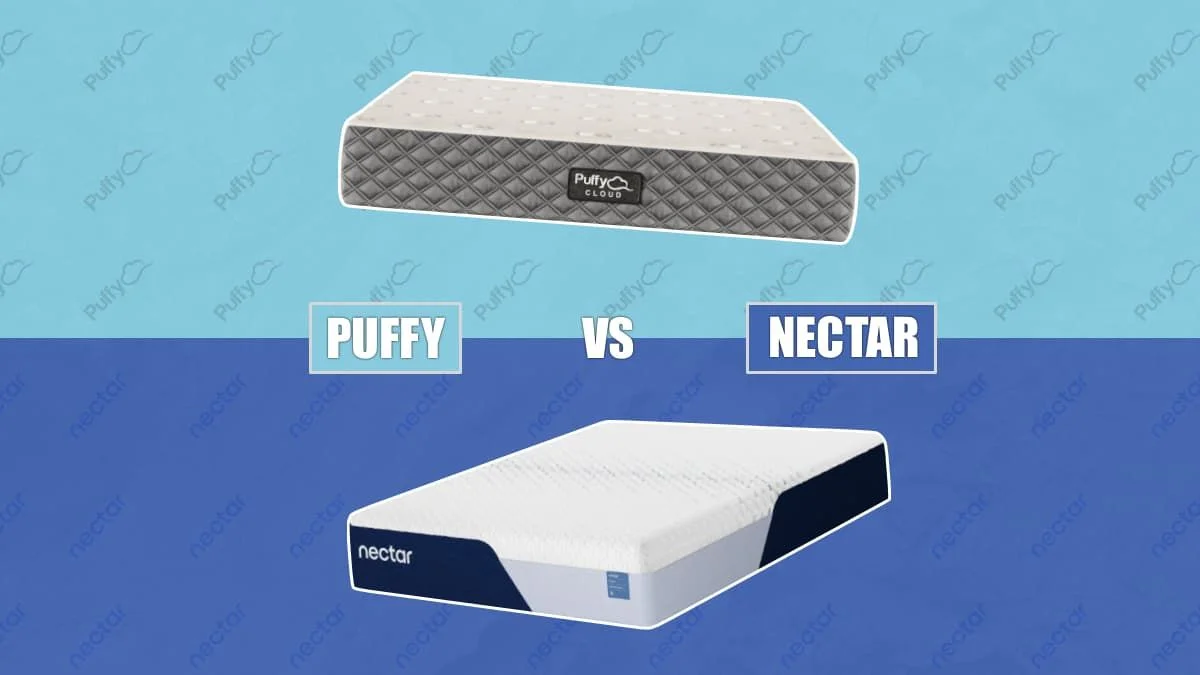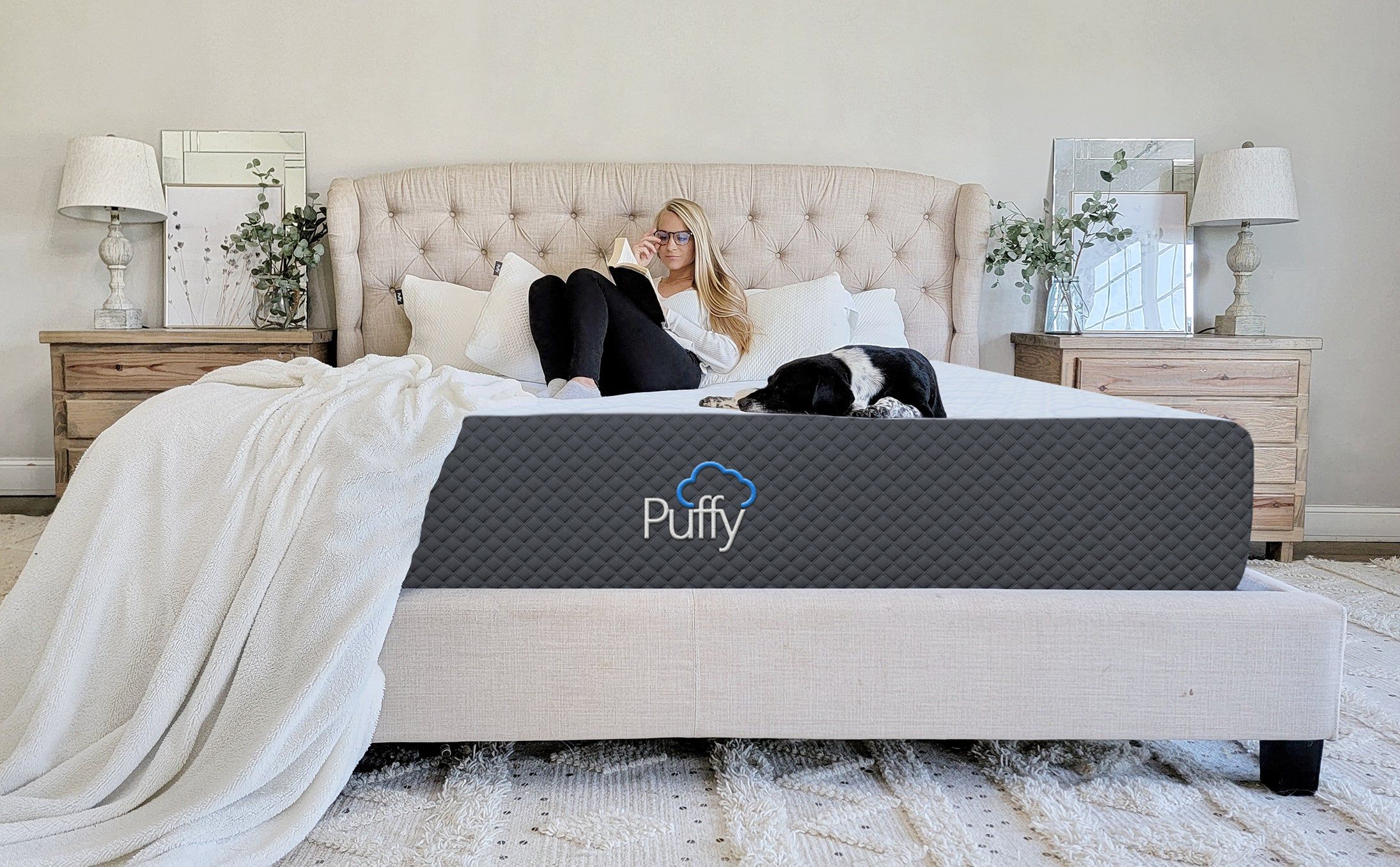
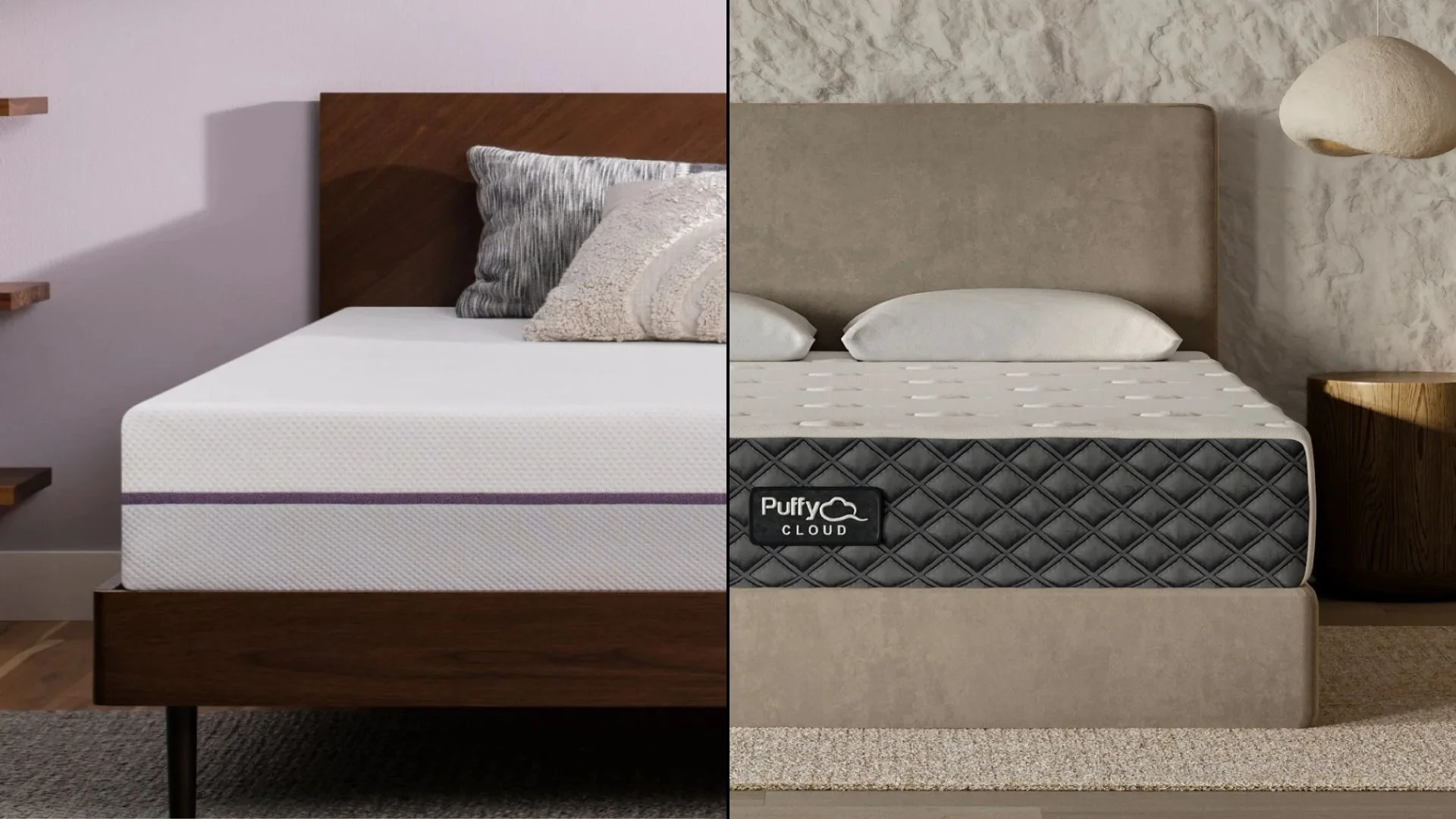
The Puffy and the Purple are two of the most popular bed-in-a-box mattresses you can buy, and they are built to feel completely different. The Puffy is an all-foam bed with a soft, cradling memory foam feel that suits couples, side sleepers, and lightweight back sleepers. The Purple uses a proprietary gel grid that gives it a responsive, temperature-neutral feel that leans toward combination, back, and hot sleepers.
So which one is right for you? Below we compare the Puffy and Purple side by side on firmness, support, construction, cooling, pricing, and trials so you can match the bed to how you actually sleep.
Puffy vs Purple at a glance
| Puffy is best for... | Purple is best for... |
|---|---|
| Couples | Combination sleepers |
| Side sleepers | Hot sleepers |
| Lightweight back sleepers | Side and back sleepers |
The Puffy is a good pick if you want a softer, more cushioning surface and you sleep with a partner, since it cuts down on motion transfer. The Purple is the better choice if you change positions through the night, run warm, or want a slightly firmer, more responsive feel. Both are foam-based beds in a box, so neither has the springy bounce of a true coil hybrid.
Top similarities and differences
The two beds share more than you might expect, but the way they feel is where they split apart.
What they have in common:
- Both have good motion isolation, which makes them workable for couples.
- Both can suit some side sleepers who want cradling comfort.
- Both are foam-based beds in a box with similar base support foam.
Where they differ:
- The Puffy has a medium feel, while the Purple is a touch firmer and can even support some lightweight stomach sleepers.
- The Puffy uses traditional gel-infused memory foam, while the Purple uses a proprietary hyper-elastic polymer grid.
- The Puffy is the thicker bed at 10 inches, while the Purple sits lower at around 9.5 inches.
Firmness and feel
Firmness is rated on a scale of 1 to 10, where 1 is the softest and 10 is the firmest. Firmer beds tend to keep the spine aligned for back and stomach sleepers, while softer beds contour around the hips and shoulders for side sleepers.
How firm are the Puffy and Purple?
The Puffy lands around 5 to 6 out of 10, which puts it in medium-firm territory. The Purple is slightly firmer at about 6.5 out of 10, right at the industry standard for medium. Keep in mind that firmness is partly subjective, so your weight and body type can shift how either bed feels to you.
What do they feel like?
The Puffy has a balanced, responsive foam feel that is easy to move around on, with good body contouring that works well for side and combination sleepers. The Purple does not have a springy coil bounce. It feels like an even, sturdy surface, thanks to the firm foam underneath, while its gel grid top layer conforms around your shoulders and hips and helps you sleep cool. If you want the classic, slow-sinking memory foam hug, the Puffy delivers it; if you want to feel like you are sleeping on top of the bed rather than in it, the Purple is closer to that.
How they perform by body type
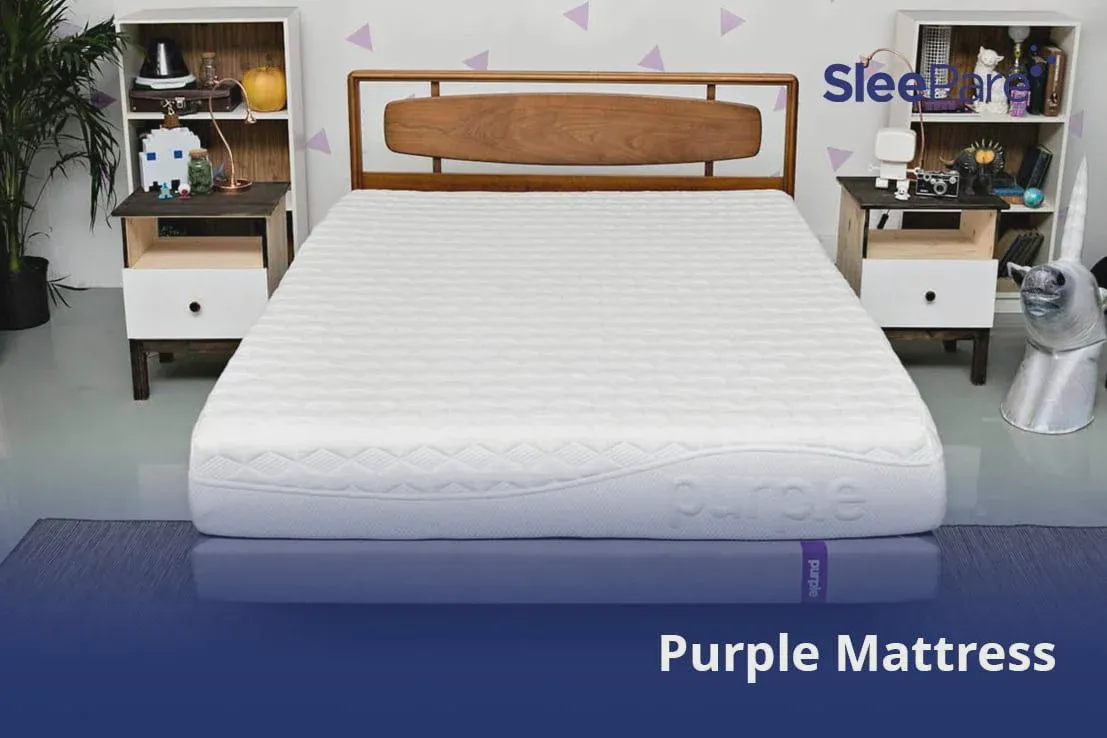
A mattress feels different depending on your weight, so here is how each one holds up across body types and positions. Ratings run 1 (very poor) to 5 (excellent).
Puffy by body type and sleeping position:
| Body type | Back | Stomach | Side |
|---|---|---|---|
| Lightweight (under 130 lbs) | 4 | 3 | 5 |
| Average (130-230 lbs) | 3 | 3 | 4 |
| Heavyweight (over 230 lbs) | 2 | 2 | 3 |
Purple by body type and sleeping position:
| Body type | Back | Stomach | Side |
|---|---|---|---|
| Lightweight (under 130 lbs) | 5 | 3 | 4 |
| Average (130-230 lbs) | 5 | 2 | 4 |
| Heavyweight (over 230 lbs) | 3 | 1 | 4 |
Average-weight back sleepers do well on either bed. Average-weight side sleepers will get more cushioning from the softer Puffy. Lightweight side sleepers also tend to prefer the Puffy for its softer feel and pressure relief, while lightweight stomach sleepers will be better supported by the firmer Purple. Heavier side sleepers are the exception worth calling out: they often need to be heavy enough to fully activate the Purple gel grid before it cradles their pressure points, whereas lighter sleepers can find the grid stays firm. Neither bed has the support that heavyweight back or stomach sleepers really need.
Inside each mattress
Readers comparing Purple's grid against a coil hybrid can also see our WinkBed versus Purple breakdown.
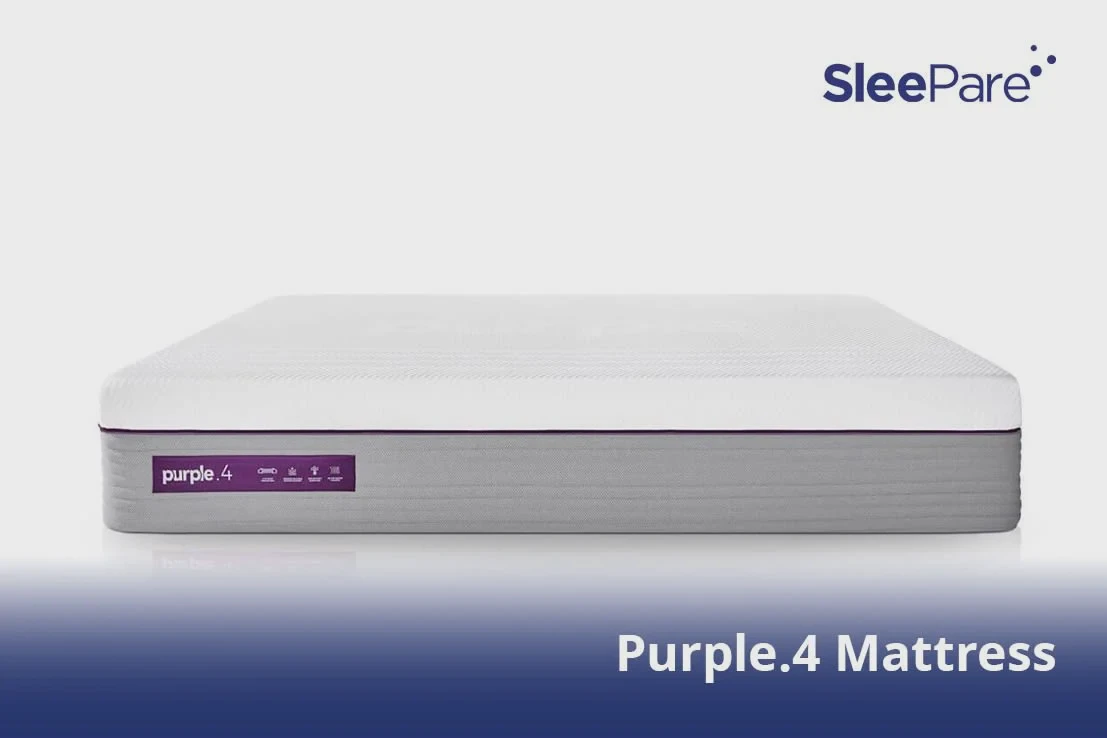
The Puffy is a 10-inch all-foam mattress built from three foam layers. The Purple is a roughly 9.5-inch bed that pairs polyfoam layers with its proprietary grid.
| Puffy materials | Purple materials |
|---|---|
| Polyester cover | Viscose, polyester, and Lycra blend cover |
| 2 inch Cooling Cloud foam | 2 inch Purple gel grid |
| 2 inch climate-adaptive foam | 3.5 inch soft polyfoam transition layer |
| 6 inch firm core support foam | 4 inch high-density polyfoam base |
Covers
The Puffy has a standard polyester cover with some stretch but limited breathability. The Purple cover blends polyester, viscose, and Lycra, so it is soft, flexible, and helps regulate temperature while moving with the grid underneath.
Comfort layers
The Puffy uses a gel-infused Cooling Cloud foam that wicks heat and promotes airflow. The Purple comfort layer is its hyper-elastic polymer grid, which stays bouncy and firm until you apply enough pressure, then collapses to relieve pressure at the shoulders and hips.
Support layers
Both beds rely on thick foam for stability, but the Puffy has the thicker support core at 6 inches, which is 2 inches more than the Purple's base.
Cooling, motion, and edge support
This is where the two beds separate in everyday use.
Temperature
The Puffy uses cooling gel-infused memory foam to stay comfortable, but the Purple ultimately sleeps cooler. The open channels in the Purple grid promote airflow and stop heat from getting trapped, which is why it reads as more breathable and temperature-neutral. Neither bed is built for extreme hot sleepers the way a hybrid is, but the Purple has the edge.
Motion transfer
Both beds isolate motion well, but the Puffy is the stronger pick for couples. Its memory foam absorbs movement and keeps a restless partner from waking you. The Purple is more responsive, so you may feel a little more movement across the bed, though that same responsiveness makes it easier to reposition.
Edge support
Neither bed is a standout here. Both sink noticeably when you sit on the edge, which is common for foam beds. The Purple offers slightly better edge support because of its firmer construction, something worth weighing if you sleep on a smaller full or queen.
Pressure relief
The Puffy gives better pressure relief for most side sleepers because it is the softer of the two. The Purple delivers strong pressure relief for average and heavier side sleepers who sink in enough to activate the grid. For lower back pain, the Purple tends to distribute weight better; for a soft, floating feel, the Puffy wins.
Pricing, trials, and warranties
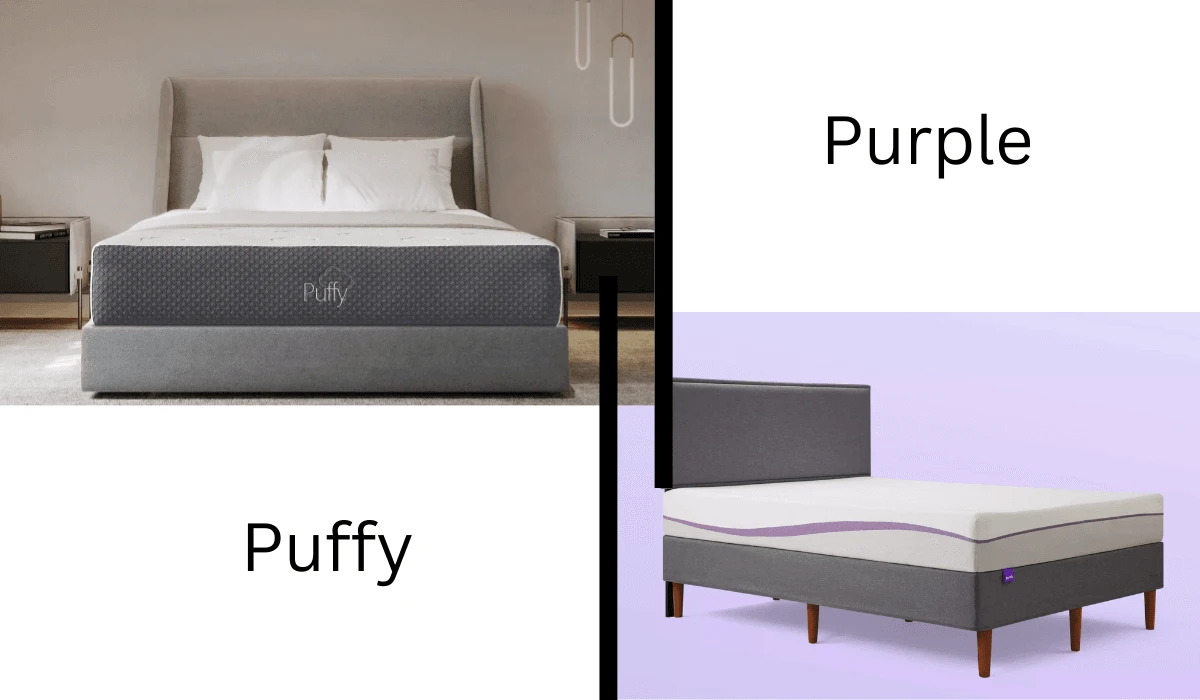
Pricing between the two is close at list, but sale behavior is what changes the math.
| Size | Puffy | Purple |
|---|---|---|
| Twin | $1,849 | $999 |
| Twin XL | $2,099 | $1,099 |
| Full | $2,249 | $1,399 |
| Queen | $2,399 | $1,499 |
| King | $2,599 | $1,999 |
| California King | $2,599 | $1,999 |
At full price the Puffy lists higher than the Purple, with a queen at $2,399 versus $1,499. Purple tends to add a free gift such as a sheet set rather than running an evergreen sale, so its best discounts land around major holidays like Labor Day, Black Friday, and Memorial Day. Puffy more often runs standing promotions and bundles, which can bring its real-world price down close to or below the Purple. If you want to dig into one brand on its own, our Puffy mattress review breaks down that bed in detail.
On trials and coverage:
- Puffy includes free shipping in the contiguous U.S., a 101-night sleep trial, and a lifetime warranty covering material and manufacturing defects.
- Purple includes free shipping in the contiguous U.S. (paid to Alaska, Hawaii, and Canada), a 100-night sleep trial, and a 10-year warranty.
Which one should you choose
Both beds are durable, pressure-relieving, and comfortable for the right sleeper, so the choice comes down to feel and how you sleep. If you are a side or back sleeper who wants a soft, cradling surface and sleeps with a partner, the Puffy is the safer bet. If you run hot, switch positions often, or want a firmer, more responsive bed that still relieves pressure, go with the Purple. Either way you get a generous trial and warranty, so you have months to decide whether the bed is right for you at home.
Puffy vs Purple FAQs
Is Puffy a good quality mattress?
Yes. The Puffy is a well-built all-foam bed with strong motion isolation and a soft, cradling feel that suits couples and side sleepers. You can expect it to last around six to seven years before it shows real wear, and regular care and rotation help it hold up. It is not the best match for strict stomach sleepers, who tend to need firmer support under the hips.
What are the downsides of the Purple mattress?
The most common complaints are sagging or indentations over time and occasional customer-service issues. The Purple is also heavy and can be awkward to move and set up compared with a typical foam bed. Lighter sleepers sometimes find the grid stays too firm because they do not weigh enough to fully activate it.
Which mattress is better than Purple?
Neither bed is inherently better; they suit different sleepers. The Puffy is the better choice if you want a softer memory foam feel and prioritize motion isolation for a partner. The Purple is the stronger pick if you sleep hot, change positions, or want firmer support. Compare them against how you sleep rather than looking for a single winner.