Short answer: Saatva's adult mattresses are built from materials most sleep researchers consider low-risk - GOTS-certified organic cotton, GOLS-certified natural latex, New Zealand wool as a flame barrier, and CertiPUR-US foams. There is no fiberglass. But "nontoxic" is a marketing word, not a regulated one, and Saatva is currently facing two lawsuits that question how far that label should stretch. This guide walks through what's actually inside a Saatva mattress, what the certifications do and don't cover, and what the active litigation says.
What Saatva says - and what's actually verifiable
Saatva's adult flagship lines (Classic, Latex Hybrid, Zenhaven, Loom & Leaf) are independently certified across three programs. Those certifications are issued by third-party auditors, not by Saatva, and they cover specific things:
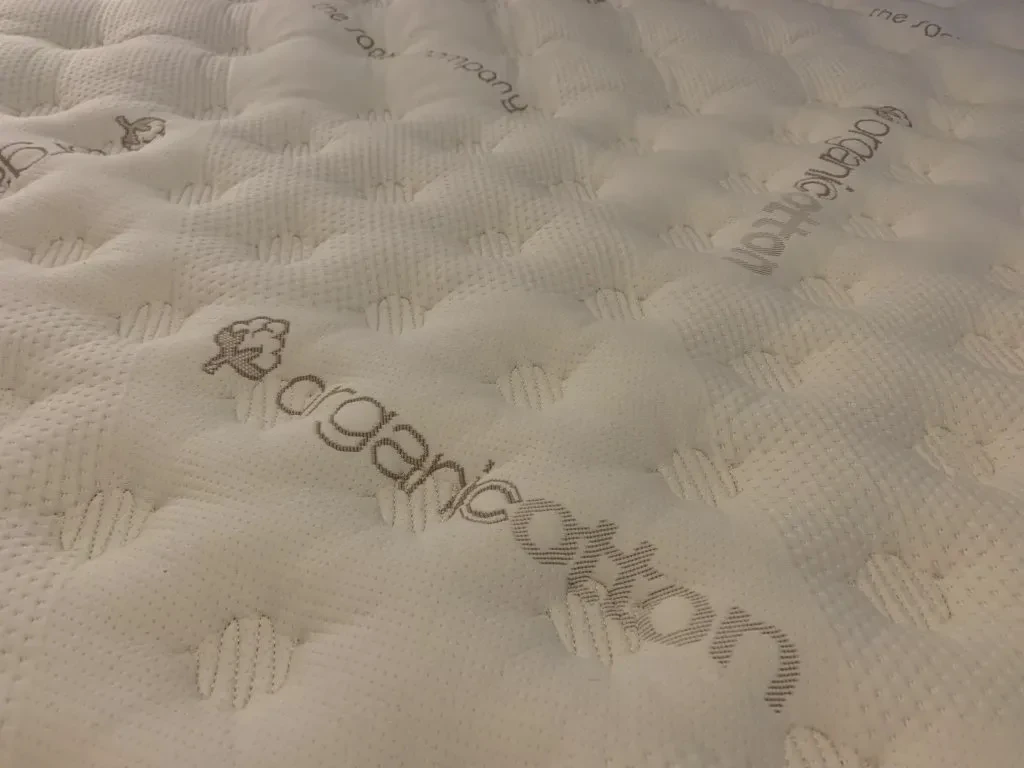
- GOTS (Global Organic Textile Standard) - covers the organic cotton cover. Bans chlorine bleaching, formaldehyde finishes, and most synthetic dyes.
- GOLS (Global Organic Latex Standard) - covers the natural latex layer in Latex Hybrid and Zenhaven. Caps allowable VOC emissions and requires ≥95% certified-organic raw latex.
- CertiPUR-US - covers the polyurethane and memory-foam layers. Certifies the foam was made without PBDE flame retardants, formaldehyde, mercury, and heavy metals, and tests finished foam for VOC emissions under 0.5 ppm.
These are real, audited certifications - not self-issued. They're the same standards used by Avocado, Birch, and most other premium organic-mattress brands.
Where the "toxic" question actually comes from
When shoppers Google whether a mattress is toxic, three concerns drive the search:
- Fiberglass in the fire-barrier sock (a recurring problem in budget bed-in-a-box brands).
- Off-gassing VOCs from polyurethane foam in the first weeks of use.
- PFAS ("forever chemicals") used in stain-resistant or waterproof finishes, especially on crib and waterproof mattresses.
Saatva's adult mattresses score well on the first two: there is no fiberglass (the fire barrier is thistle pulp and wool), and the foams are CertiPUR-US tested for low VOC emissions. The third - PFAS - is where the company's claims have been challenged in court.
The 2024 PFAS lawsuit (crib mattresses)
In August 2024, Toxin Free USA and Beyond Pesticides filed suit against Saatva in Washington, D.C. under the Consumer Protection Procedures Act. Independent lab testing of Saatva's crib mattress reportedly detected eight different PFAS compounds. The plaintiffs argue Saatva's "nontoxic," "natural," and "safe" claims are deceptive given that PFAS are linked in peer-reviewed studies to decreased fertility, developmental effects, and immune dysfunction - and a May 2024 study confirmed PFAS can be absorbed through human skin.
Important scope note: this case targets Saatva's crib mattress line, not the adult Classic or Latex Hybrid. As of mid-2026 the case is unresolved, and Saatva has not publicly disclosed reformulating the product. If you are shopping for an infant, this is worth following before you buy.
The 2025 class action (eco-friendly marketing)
On March 19, 2025, plaintiffs Melissa Williams and Helen Colby filed a class action in the U.S. District Court for the Eastern District of New York (Williams v. Whitestone Home Furnishings LLC, Case No. 1:25-cv-01527). The complaint alleges that Saatva's "nontoxic," "chemical-free," and "eco-friendly" labels mislead consumers because the mattresses still contain polyester fiber, viscoelastic polyurethane, and rayon - synthetic materials with documented health and environmental footprints, even when the cover is organic cotton.
The lawsuit doesn't claim Saatva mattresses are dangerous to sleep on. It argues the marketing oversells how "natural" the products are. That's an important distinction - and one buyers should make for themselves before paying a premium for the eco-positioning.
What Saatva does well
- GOTS-certified organic cotton cover (third-party audited)
- GOLS-certified natural latex in Latex Hybrid and Zenhaven
- CertiPUR-US foams - tested for low VOC emissions
- No fiberglass anywhere in the fire barrier
- Wool + thistle pulp used as natural flame retardant
- Mattresses ship pre-aired, so most off-gassing happens before delivery
Where Saatva's claims are contested
- Crib mattresses targeted in a 2024 PFAS lawsuit (eight PFAS compounds reportedly detected)
- 2025 class action argues "chemical-free" marketing oversells the product
- Adult mattresses still contain polyester, polyurethane, and rayon - not 100% natural
- "Nontoxic" is unregulated marketing language, not a certification
- Premium price reflects the eco-positioning that's now under legal scrutiny
How Saatva compares to fully-certified organic competitors
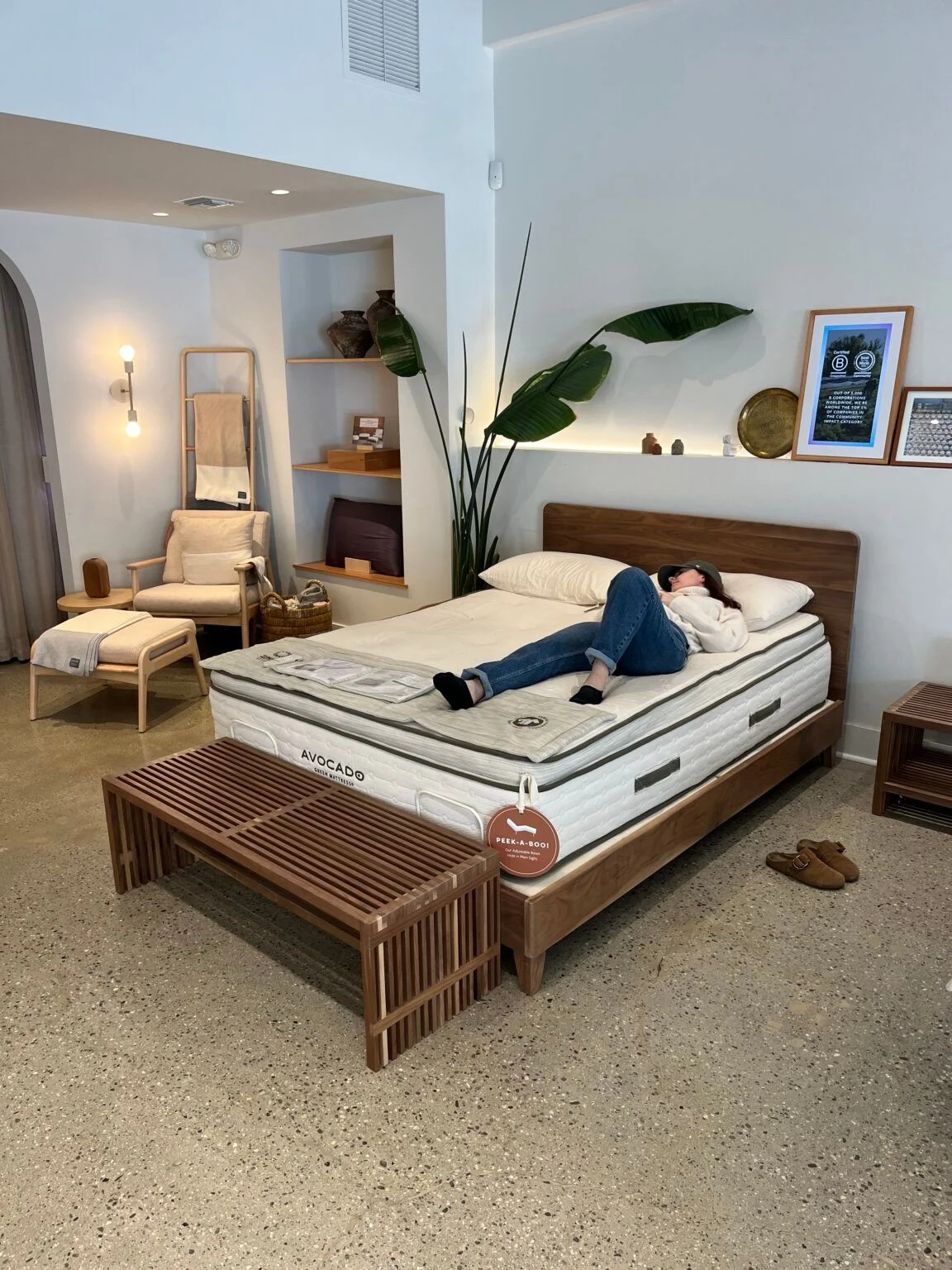
If your goal is the strictest organic certification possible, Saatva's adult lines sit one step below brands like Avocado Green and Naturepedic, both of which carry full MADE SAFE or GREENGUARD Gold certification on the finished product (not just on individual components). Saatva certifies its cover, latex, and foam separately, but the assembled mattress is not whole-product MADE SAFE certified.
That gap is small in practice but real if you're shopping for someone with multiple chemical sensitivity, an infant, or a young child. For an average adult buyer with no specific sensitivity, a Saatva Classic or Latex Hybrid sits well within the "low-risk mattress" tier.
If you're worried about off-gassing
Saatva ships its mattresses fully expanded on a white-glove delivery rather than vacuum-rolled in a box. That matters: bed-in-a-box mattresses do most of their off-gassing in the customer's bedroom over 1-3 weeks. Saatva's foams sit in a warehouse, expand there, and most VOC release happens before the mattress reaches you. If you're sensitive to new-foam smell, this is one of the strongest practical advantages over rolled competitors.
Frequently asked questions
Are Saatva mattresses really nontoxic?
Saatva's adult mattresses use GOTS organic cotton, GOLS natural latex, and CertiPUR-US foams - all third-party certified for low chemical emissions and the absence of common harmful additives. There is no fiberglass. However, "nontoxic" is a marketing term, not a legal one, and a 2025 class action argues Saatva's mattresses still contain polyester, polyurethane, and rayon - synthetic materials that don't fit a strict "chemical-free" definition.
Is there a lawsuit against Saatva?
Two active cases as of 2026. Toxin Free USA and Beyond Pesticides sued Saatva in August 2024 alleging eight PFAS compounds were found in Saatva crib mattresses. A separate class action (Williams v. Whitestone Home Furnishings, March 2025) alleges Saatva's "eco-friendly" and "chemical-free" marketing for its adult mattresses is misleading. Neither case has been resolved.
Do Saatva mattresses off-gas?
Less than typical bed-in-a-box mattresses. Saatva ships fully expanded via white-glove delivery, so the foam has aired in the warehouse before it arrives. The CertiPUR-US foams used are tested at under 0.5 ppm for VOC emissions. Most owners report little to no smell on day one.
Does Saatva use fiberglass?
No. Saatva uses thistle pulp and natural New Zealand wool as the flame barrier in its adult mattresses, not fiberglass. This is one area where Saatva's claims are clearly accurate and externally verifiable.
Should I buy a Saatva crib mattress?
Given the active 2024 PFAS lawsuit specifically targeting Saatva's crib line, we'd suggest waiting for the case to resolve or choosing a competitor with whole-product MADE SAFE or GREENGUARD Gold certification (e.g. Naturepedic) until Saatva publishes updated lab testing on its crib products.
Is Saatva a better choice than Avocado or Naturepedic for chemical sensitivity?
Avocado and Naturepedic carry MADE SAFE or GREENGUARD Gold certification on the finished assembled mattress; Saatva certifies components individually. For someone with multiple chemical sensitivity, the whole-product certification offered by Avocado or Naturepedic is the more conservative choice.
Shop mattresses with verified certifications at Banner Mattress
Visit a Banner Mattress showroom to see Saatva, Avocado, Naturepedic, and other low-VOC mattresses side by side - with the actual material specs and certification documents on hand.