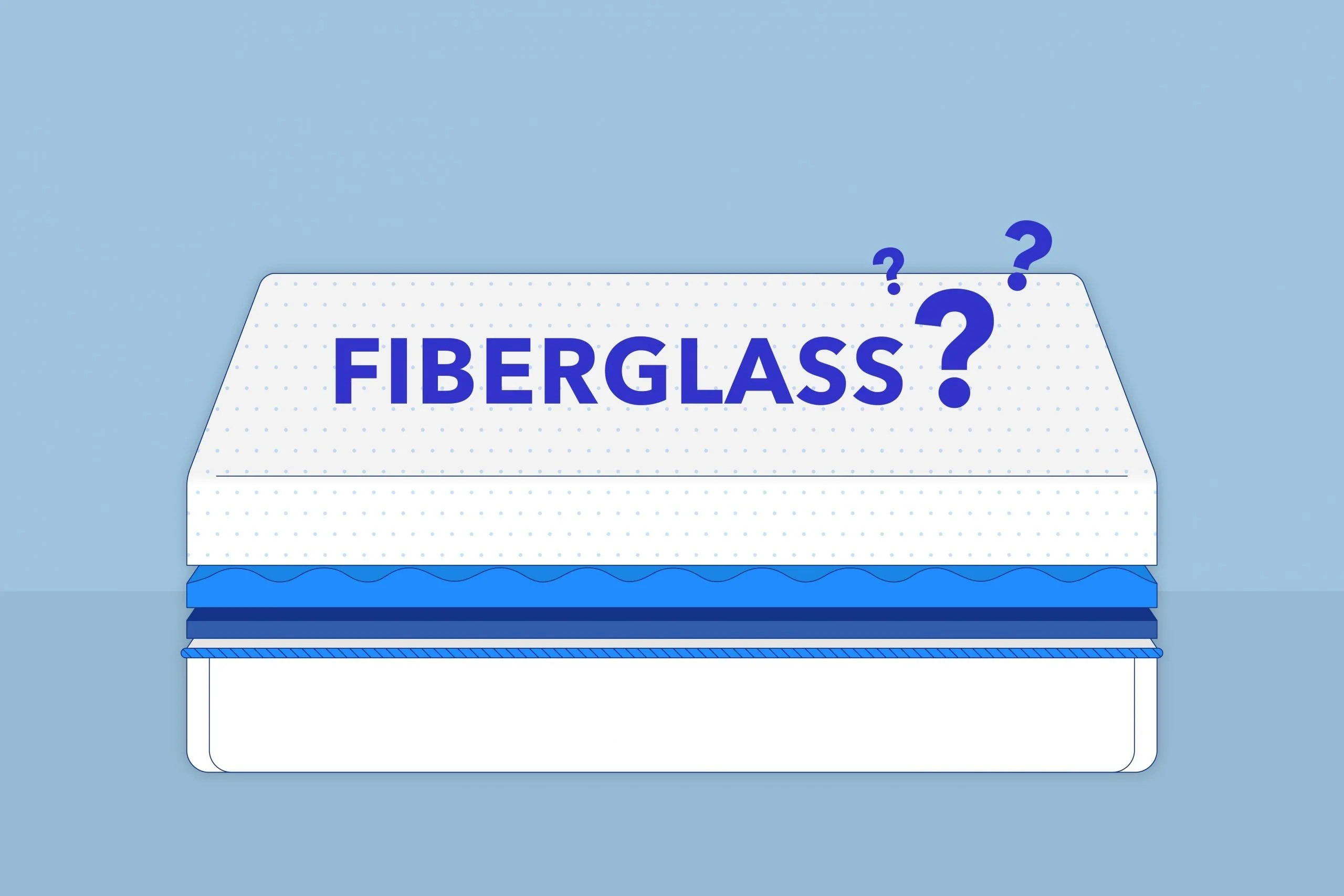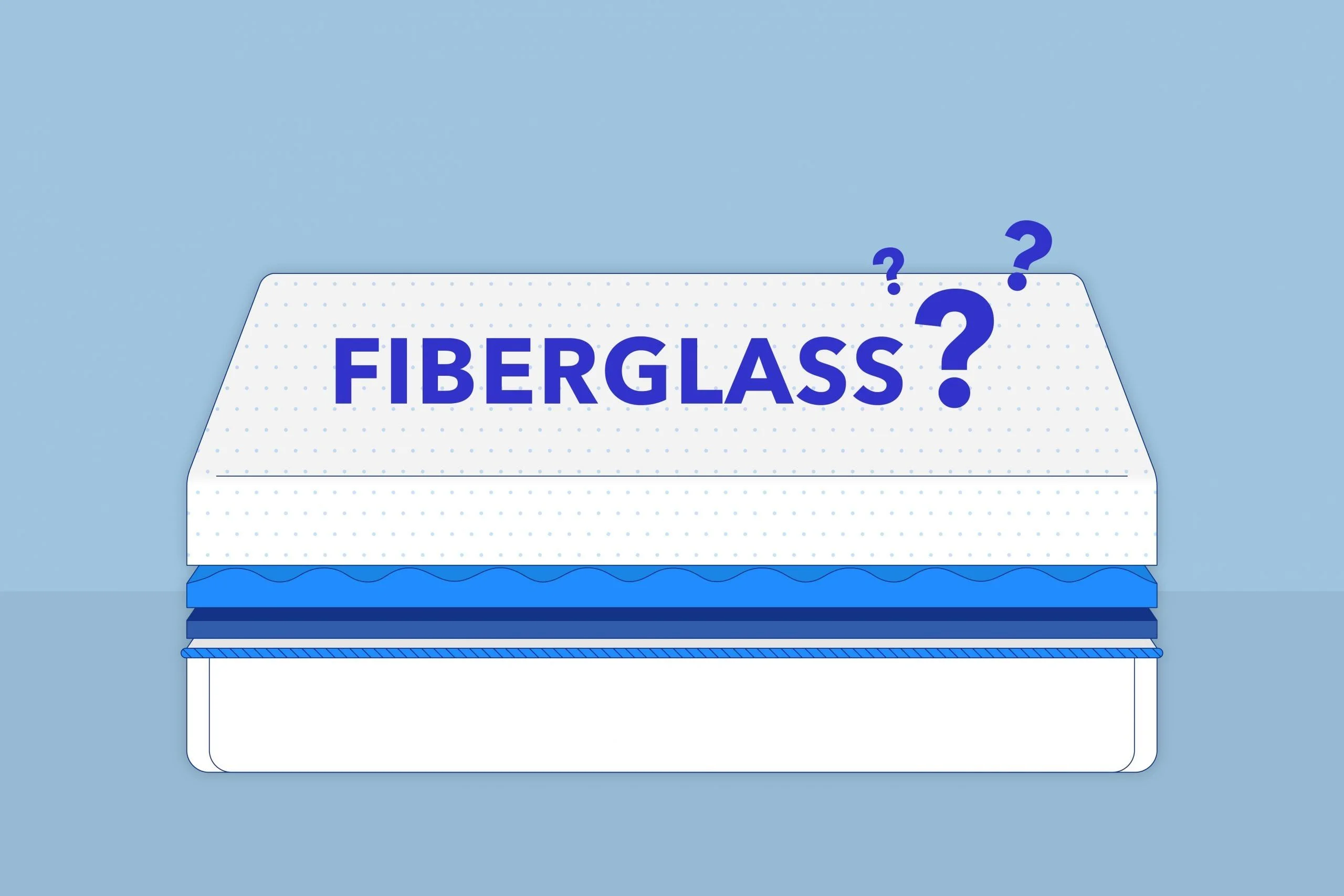
Most innerspring and spring-coil mattresses do not rely on fiberglass for their fire barrier - but plenty of budget hybrids and cheap coil-foam beds still do. The honest answer to "do spring mattresses have fiberglass?" is some do, most don't, and the price tag is a strong signal.
In NapLab's analysis of 395 mattresses, 89.1% were confirmed fiberglass-free and only 10.3% contained it - and the fiberglass cluster skews heavily toward sub-$500 all-foam and entry-level hybrids, not premium innersprings. Here's what's actually inside a 2026 spring mattress, why some still use glass fiber, and how to tell from the label before you buy.
Why mattresses use fiberglass at all - 16 CFR 1633
Federal law requires every mattress sold in the U.S. to pass an open-flame test under 16 CFR Part 1633, set by the Consumer Product Safety Commission. The mattress can't ignite within a 30-minute exposure to a propane burner.
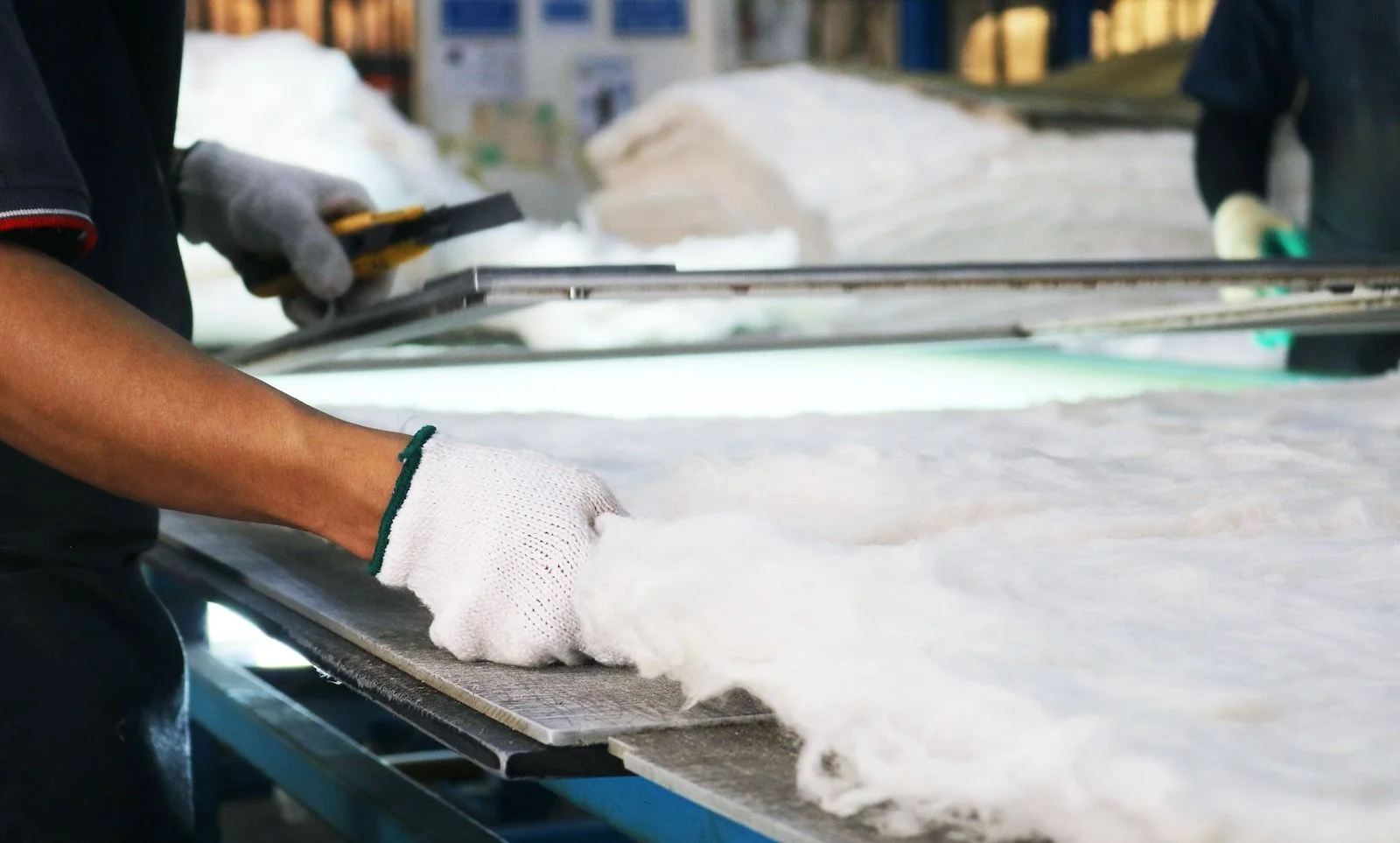
To pass that test cheaply, manufacturers wrap the foam core in a thin woven sleeve - a "fire sock." Fiberglass is the cheapest material that meets the standard: it melts instead of burning, starving the flame of fuel. That's why you see it in budget memory foam beds. Premium springs use the same principle but with a different fiber.
Innerspring vs hybrid vs all-foam: who actually uses fiberglass
The key distinction is what's flammable inside the cover, not the coils themselves.
Pure innerspring mattresses (steel coils + thin cotton or wool quilt) rarely contain fiberglass. Steel doesn't burn, and the small amount of fiber filling above the coils can be made flame-resistant with treated cotton, wool, or rayon. EGOHOME confirms "innerspring mattresses typically do not contain fiberglass, as they rely on steel coils for support and fire resistance."
Hybrid mattresses (coils + thick foam comfort layers) are the real risk category. The foam is flammable; something has to barrier it. Mid- and budget-tier hybrids - Allswell, older Casper Wave Hybrid, older Zinus and Tempurpedic hybrids - used fiberglass for years. Most premium hybrids (Saatva, Helix, Bear, Avocado, Brooklyn Bedding, DreamCloud, Nectar Hybrid) use chemical-free rayon, wool, or silica-treated rayon instead.
All-foam mattresses are the most likely to contain fiberglass at any price point because they have no metal at all to slow combustion. According to Mattress Firm, "some innerspring mattresses may still include a layer of fiberglass on the inner part of the cover as a fire barrier" - but it's the exception in spring beds, not the norm.
What premium spring mattresses use instead
Quality innerspring and hybrid brands moved off fiberglass between 2022 and 2025. Common alternatives:
- Wool fire barriers - naturally flame-resistant, used by Saatva, Avocado, Birch, Naturepedic, Awara, PlushBeds. Self-extinguishes and doesn't shed harmful particles.
- Rayon (viscose) blends - chemical-free cellulose fiber that chars rather than burns. Sealy uses a rayon-and-polyester blend across its current lineup. Leesa, Nectar, and DreamCloud also moved to rayon-based barriers.
- Silica-treated rayon - the "Celluloft-FR" sock used by Spring Air's glass-free line and many premium hybrids. Silica is mineral, not glass - it doesn't fragment.
- Kevlar / aramid threads - found in some luxury beds; expensive but airtight.
These barriers add roughly $30-$80 to manufacturing cost versus fiberglass, which is why you mostly see them above the $700-$800 price point.
Brands that historically used fiberglass - and current 2026 status
Based on NapLab's 2026 brand-by-brand analysis:
- Tempurpedic - Yes, currently. Uses "core-spun amorphous glass" inside a flexible sheath in TEMPUR-Adapt, Cloud, Breeze, Pro Adapt, and Supreme lines.
- Zinus - Most 2024-and-earlier models contained fiberglass. Switched to a carbon-rayon sleeve in early 2025; current models are fiberglass-free.
- Puffy - U.S.-manufactured Puffy mattresses are fiberglass-free as of 2025; Canadian-made Puffy mattresses still contain it.
- Novaform (Costco) - historically yes; current models confirmed fiberglass-free as of December 2024. Older purchases may still contain it.
- Leesa - switched to a rayon barrier in September 2023; all current models fiberglass-free.
- Casper - older Wave Hybrid, Original, Select, and Nova Hybrid contained fiberglass; current Snow, Original Hybrid, and One are fiberglass-free.
- Allswell (Walmart) - older Cool model contained fiberglass.
- IKEA - Amsosen contained fiberglass (discontinued); Asvang, Hasvag, Haugsvar, Myrbacka, Vatnestrom are fiberglass-free.
- Sealy / Stearns & Foster / Beautyrest / Saatva / Helix / Bear / Avocado / Birch / Nest Bedding / Brooklyn Bedding / Nolah / Plank / Winkbed - fiberglass-free across current lineups.
If your bed isn't on that list, NapLab's full table covers 395 models - search by name there.
How to tell from the label before you buy
You don't need to dissect a mattress. Five tells from the law tag and product page:
- Read the law tag. Federal law requires mattresses to disclose fiber composition by percentage. Look for "glass fiber," "fiberglass," or simply a high "% other" or "% rayon" mixed with "% glass." A tag listing only wool, cotton, rayon, polyester is a good sign. (Cheap memory-foam beds sometimes hide it as "modacrylic blend" - verify in the product spec sheet.)
- Check the cover-care instructions. A red-flag warning like "DO NOT REMOVE COVER" or "Do not unzip" almost always means there's a fiberglass sock underneath the cover that the manufacturer doesn't want exposed. Beds with washable, removable covers are virtually always fiberglass-free.
- Look for an explicit "fiberglass-free" badge. Saatva, Helix, Bear, Avocado, Nest, Birch, Brooklyn Bedding, and Spring Air all advertise this on product pages. Absence of the badge isn't proof of presence, but its presence is reliable.
- Check certifications. CertiPUR-US and OEKO-TEX Standard 100 certify the foam itself, not the fire barrier - so they're a partial signal. GOTS (Global Organic Textile Standard) certified beds are always fiberglass-free.
- Watch the price floor. Coil and hybrid beds under about $400 queen at retail are the highest-risk tier. Above $800, fiberglass is rare; above $1,500, it's almost unheard of outside specific Tempurpedic lines.
What if my mattress already has fiberglass?
If the cover is intact and you don't unzip it, the risk is low - fiberglass particles can't escape an undamaged sock. Reasonable precautions:
- Use a zippered, total-encasement mattress protector (not just a fitted-sheet pad). This adds a second sealed barrier.
- Never remove or wash the outer cover, even if a stain happens. Spot-clean only.
- If you see white or silver hairline particles around the bed frame or in laundry, that's escaped fiberglass - replace the mattress and follow HEPA-vacuum cleanup guidance for the room.
The short version
Most modern spring (innerspring) mattresses don't use fiberglass - they don't need to, because steel coils plus a wool or rayon barrier already pass 16 CFR 1633. Fiberglass concentrates in two pockets: cheap all-foam beds under $400, and a few specific premium foam lines (notably Tempurpedic). When in doubt, read the law tag, look for the "fiberglass-free" callout, and prefer a mattress whose cover you're allowed to unzip.
Spring mattress fiberglass FAQ
Do all innerspring mattresses contain fiberglass?
No. Pure innerspring beds with steel coils and wool, cotton, or rayon quilting almost never use fiberglass - the steel coils provide most of the fire resistance the federal standard requires. Fiberglass shows up mainly in budget hybrids and cheap all-foam mattresses where the foam needs an extra fire barrier.
How can I tell if my spring mattress has fiberglass?
Check the law tag for terms like "glass fiber" or "% glass." A "DO NOT REMOVE COVER" warning is a strong signal of a fiberglass fire sock. Removable, washable covers and an explicit "fiberglass-free" badge on the product page are reliable signs the mattress doesn't use it.
Why is fiberglass even allowed in mattresses?
Federal regulation 16 CFR Part 1633 requires every mattress to pass an open-flame test. Fiberglass is the cheapest material that passes - it melts instead of burning. It's legal because it works as a fire barrier, but it's only safe while sealed inside the cover.
What do premium spring mattresses use instead of fiberglass?
Most premium hybrid and innerspring brands use wool, rayon (viscose), silica-treated rayon, or kevlar. Saatva, Avocado, Birch, and Naturepedic use wool. Sealy, Leesa, Nectar, and DreamCloud moved to rayon-based barriers. Spring Air uses a Celluloft-FR or IQFit glass-free sock.
Is sleeping on a fiberglass mattress dangerous?
Not while the cover is fully intact and zipped - the particles cannot escape. Risk arises only if the cover tears, is unzipped, or wears through. Use a total-encasement mattress protector and never remove the outer cover to keep exposure near zero.
Shopping for a fiberglass-free spring mattress?
Browse our guide to the best fiberglass-free hybrid and innerspring mattresses available in 2026 - every pick uses wool or rayon fire barriers instead of glass fiber.