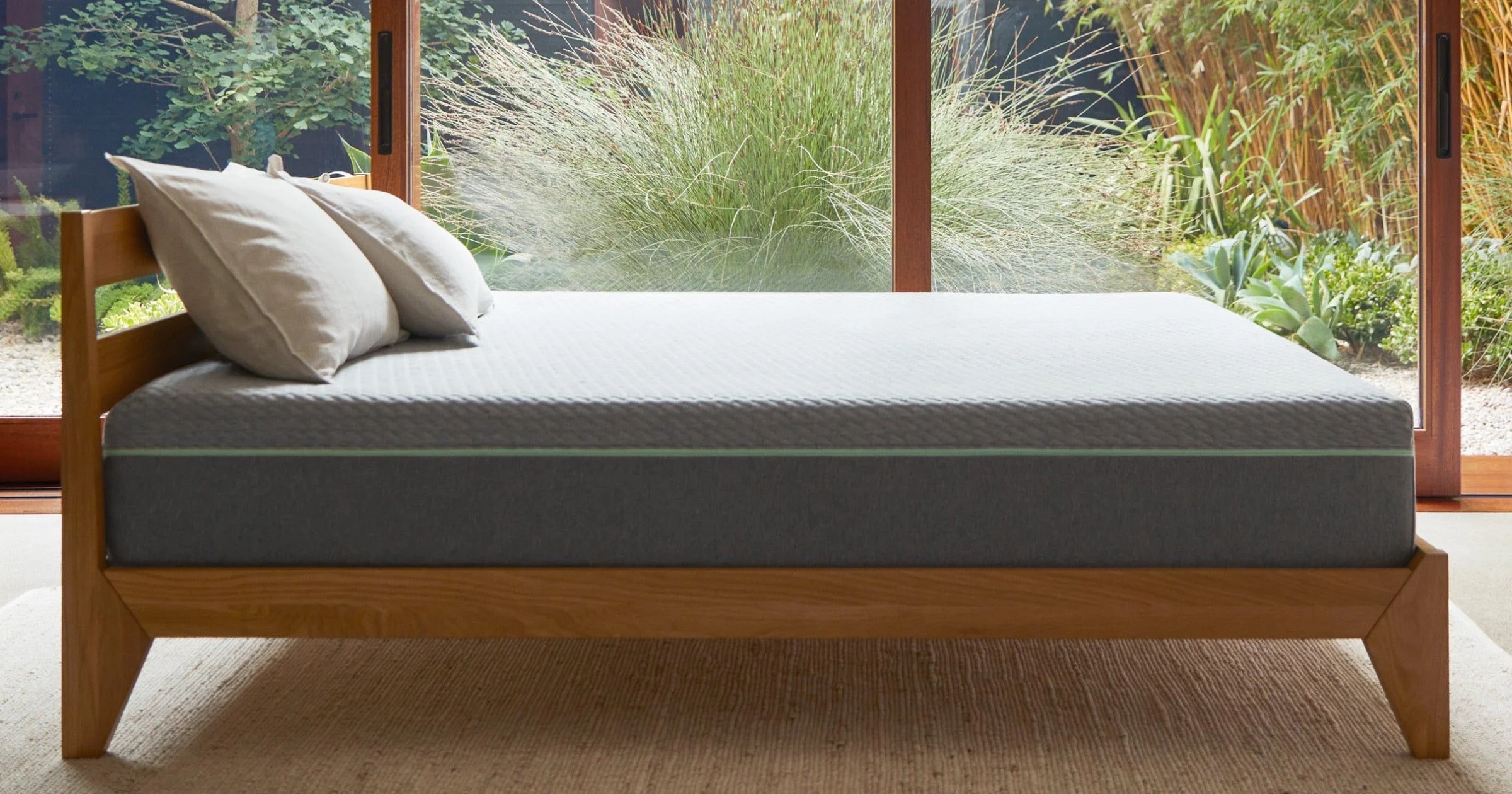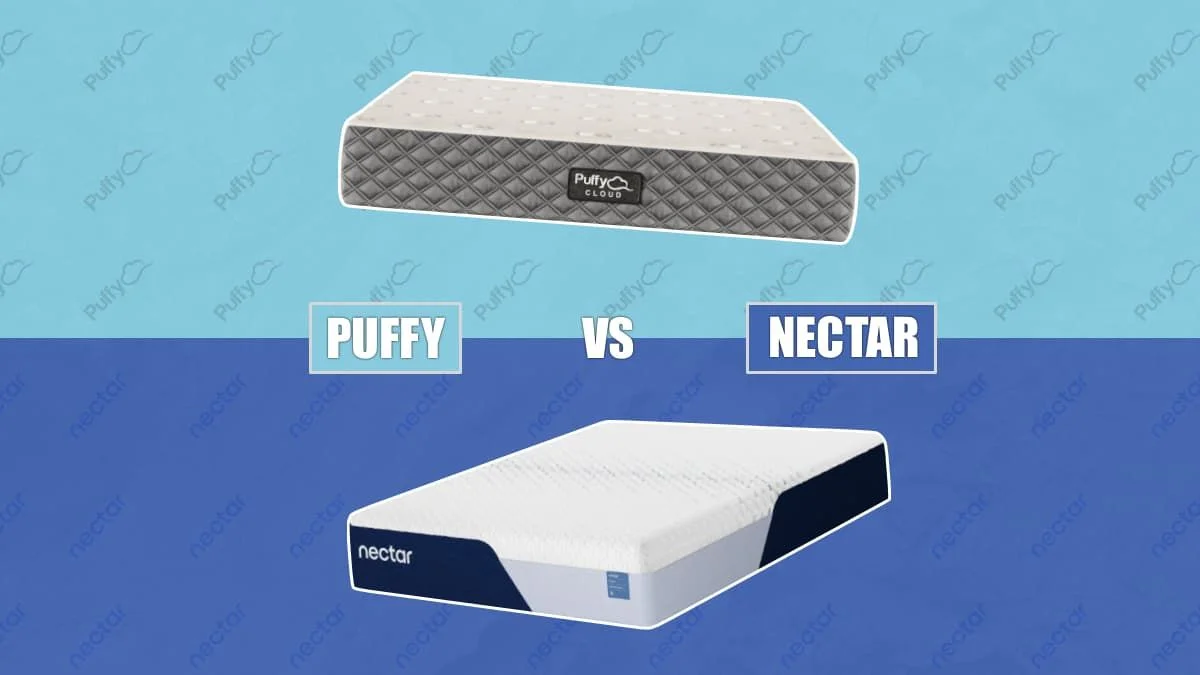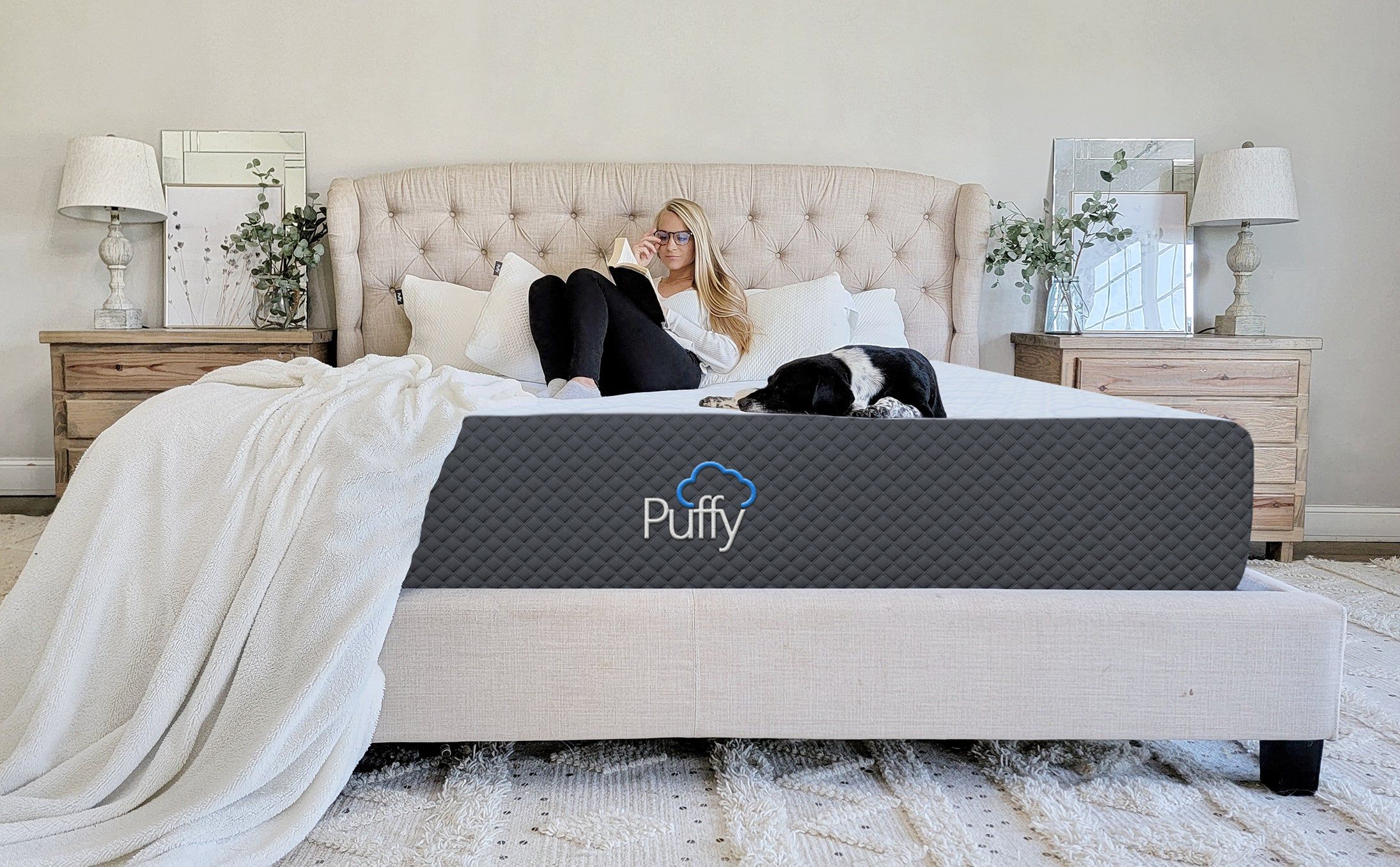
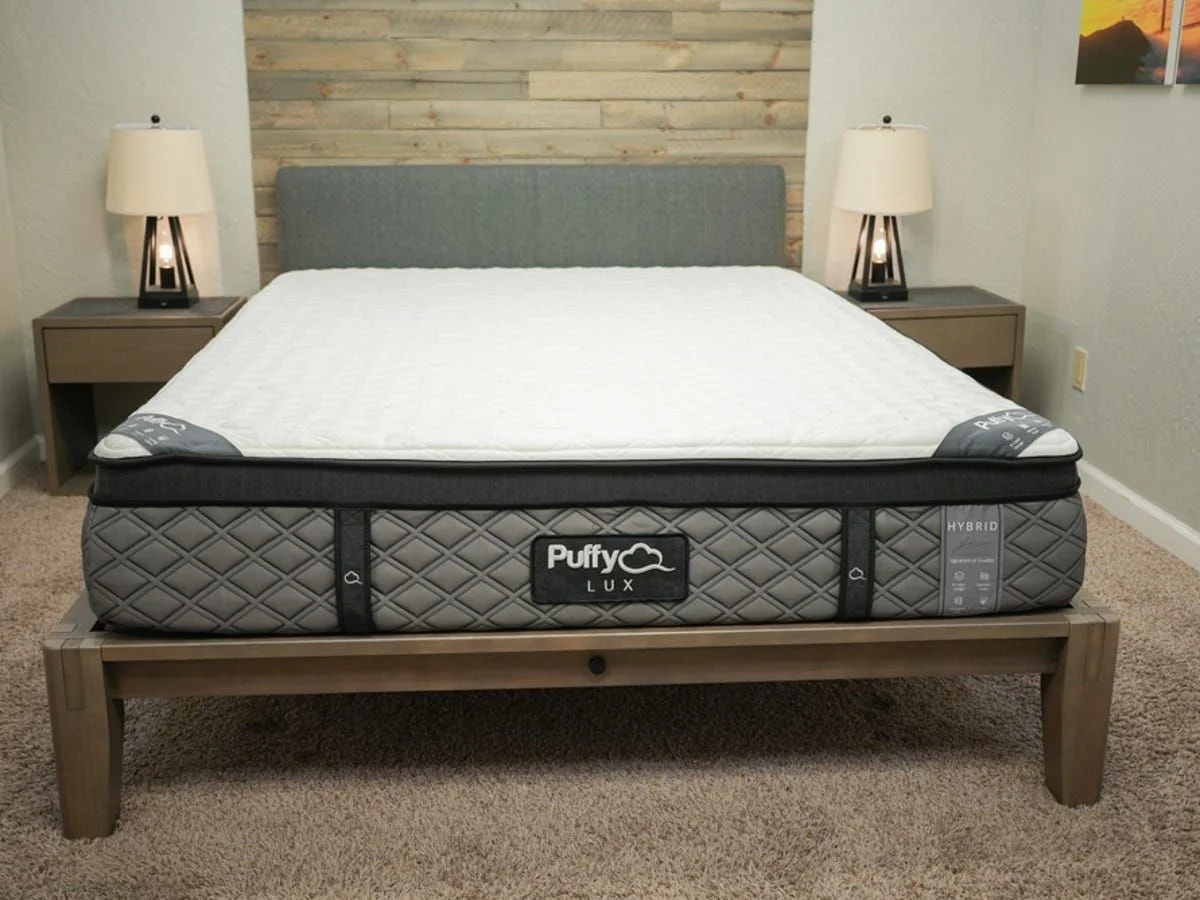
Tuft & Needle and Puffy are both medium-firm, all-foam beds that ship compressed in a box, but they were built around two very different ideas of comfort. The Tuft & Needle is topped with a buoyant, brand-exclusive comfort foam and anchored by high-density support foam, while the Puffy is topped with gel memory foam above two layers of support foam. In this comparison we highlight where these beds differ, where they overlap, and which sleeper each one suits.
Tuft & Needle vs Puffy: the quick verdict
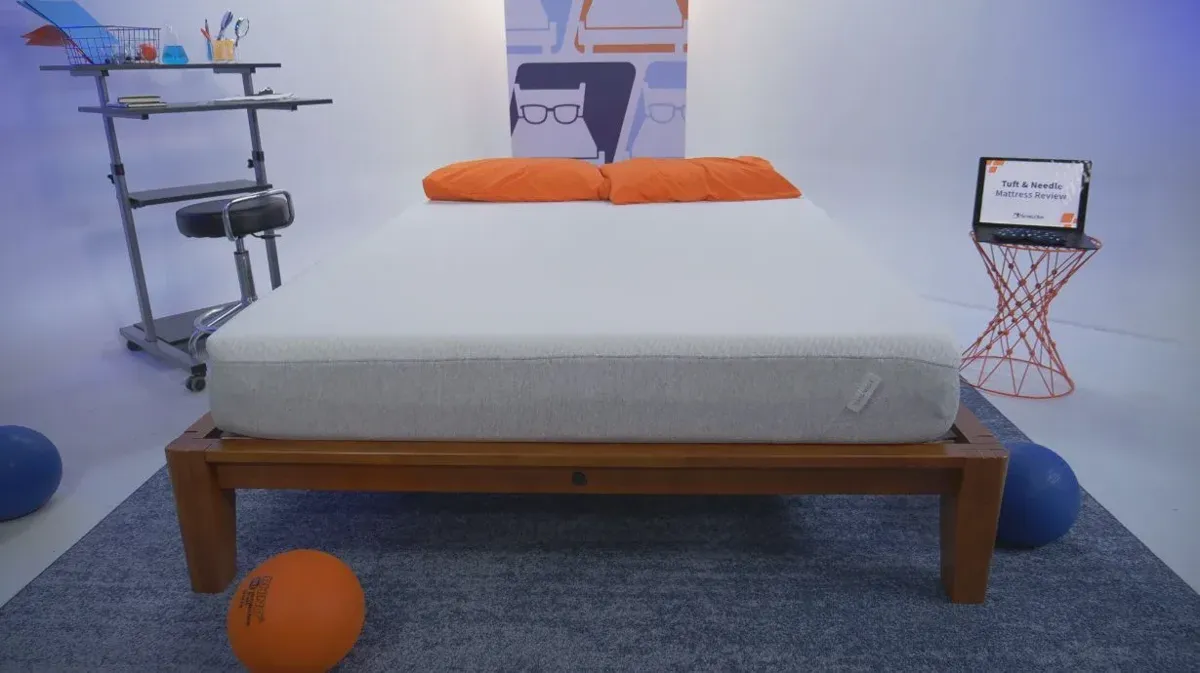
If you love the close, contouring feel of foam, you will not go far wrong with either of these mattresses. The Puffy is the better pick for side sleepers because it is slightly softer and offers more pressure relief around the shoulders and hips. The Tuft & Needle is a little firmer and more responsive, which makes it the easier bed to move around on, so it leans toward back sleepers and combination sleepers. Both stand 10 inches tall, which is best suited to lightweight and average-weight body types rather than heavier sleepers. Back sleepers could reasonably go either way, and stomach sleepers heavier than 130 pounds will want a firmer, more supportive bed than either offers.
Top similarities
- Motion isolation: As all-foam mattresses, the Puffy and Tuft & Needle both do a good job of minimizing motion transfer, so a restless partner is less likely to wake you.
- Average edge support: Both beds show a fair amount of sinkage along the edges, so neither earns more than an average score for edge support.
- Height: The Tuft & Needle and the Puffy are both 10 inches tall, a profile best suited to lightweight or average-weight sleepers.
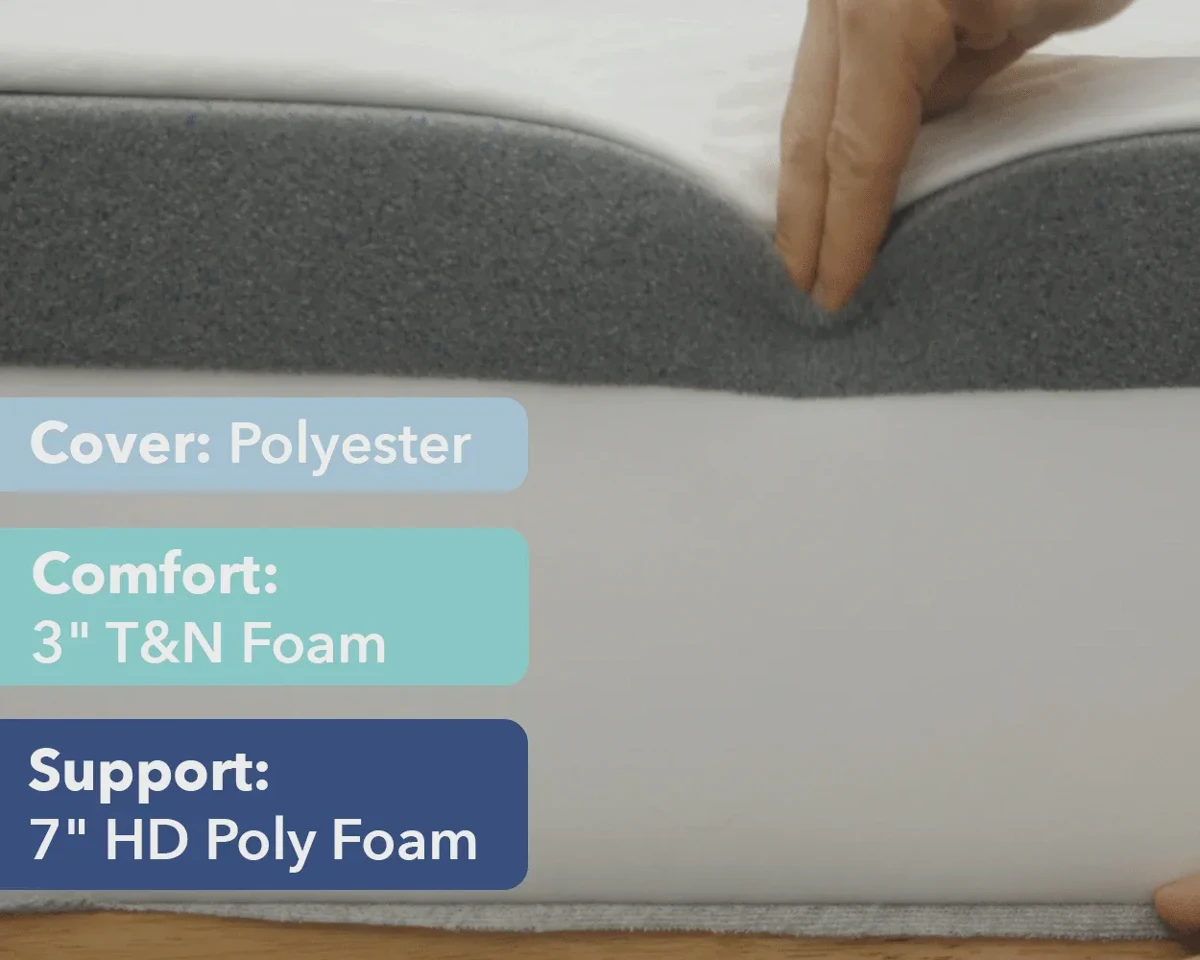
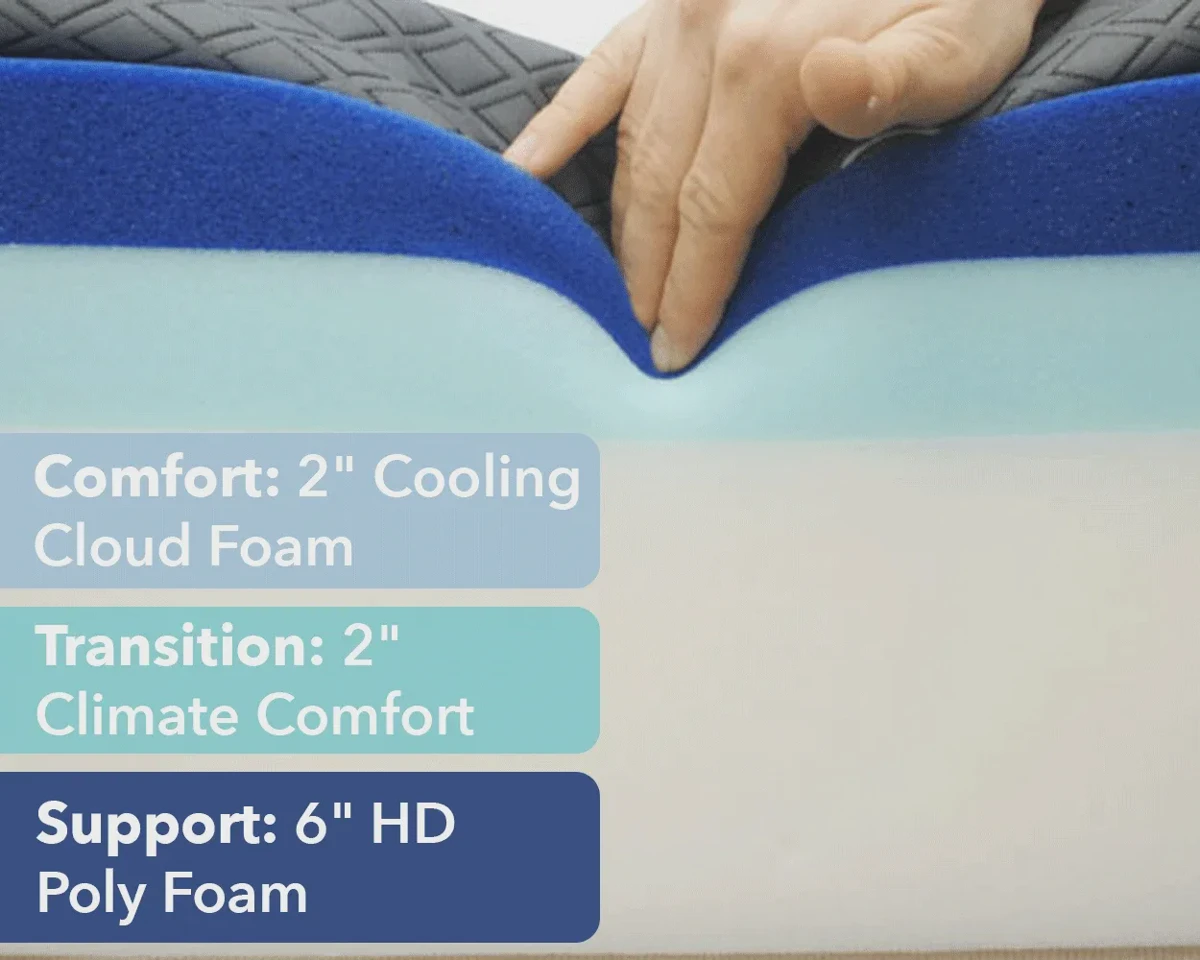
- Two-layer build: Each mattress uses a simple two-layer construction, a comfort layer over a high-density support base.
Top differences
- Pressure relief: The Puffy is a bit softer than the Tuft & Needle, so it provides a little more pressure relief around pressure points like the shoulders and hips.
- Feel: The Tuft & Needle has a buoyant, balanced foam feel, while the Puffy has more of a conforming memory foam feel.
- Responsiveness: In lab testing the Tuft & Needle scored higher than the Puffy for responsiveness, meaning it adapts more quickly when you change sleeping position.
- Temperature: The Tuft & Needle is the more breathable of the two and should sleep cooler, because its adaptive foam is more breathable than gel memory foam.
Firmness and feel
Mattress firmness is measured on a scale from 1 to 10, with 1 being softest and 10 being firmest. The Puffy and Tuft & Needle both land in the medium-firm range, but testers consistently rate the Puffy a touch softer, scoring it around a 6 out of 10 against roughly a 6.5 to 7 for the Tuft & Needle. Heavier sleepers may experience the Puffy as firmer than that, because they press through the soft top layer and engage the support foam beneath.
Because the Puffy is topped with memory foam, you notice a slower response time when you change position, along with the doughy, sink-in feel that memory foam is known for. It conforms to your body while you sleep, cushioning pressure points and contouring under your curves. The foam on top of the Tuft & Needle responds much faster, so you sit more on top of the bed than in it, and it is easier to roll over and switch positions. The trade-off is that the Tuft & Needle is less pressure-relieving than the Puffy, though it stays more temperature neutral.
Construction and materials
Both mattresses are made entirely of foam and stand 10 inches tall, but they use different comfort materials. The Tuft & Needle pairs a 3-inch layer of its proprietary adaptive foam, infused with cooling graphite and gel, over a 7-inch high-density polyfoam base. The Puffy stacks a 4-inch gel memory foam comfort layer over a 6-inch polyfoam base, so its comfort layer is slightly thicker than the Tuft & Needle's. The adaptive foam mimics the feel of memory foam with the springiness of latex, while the Puffy's gel memory foam is softer and slower to recover.
| Layer | Tuft & Needle | Puffy |
|---|---|---|
| Cover | Polyester-blend cover | Stain-resistant cloud cover |
| Comfort layer | 3" adaptive foam, graphite- and gel-infused | 4" gel memory foam |
| Support layer | 7" high-density polyfoam | 6" support polyfoam |
| Total height | 10" | 10" |
Performance: cooling, motion, edge, pressure
Temperature
Foam mattresses generally retain more heat than hybrid or innerspring beds, so neither of these sleeps especially cool. Both are built with temperature regulation in mind, the Puffy through a breathable cover and gel-infused memory foam, the Tuft & Needle through gel beads and graphite. Testers felt more temperature neutral on the Tuft & Needle, making it the better option for anyone worried about overheating at night.
Motion transfer
Motion transfer matters most if you share the bed. Both foam comfort layers keep movement to a minimum, but the Puffy handles it best thanks to its 4 inches of gel memory foam, which absorbs motion before it spreads. If you sleep with a partner who tosses and turns, the Puffy is the stronger choice.
Edge support
Neither mattress offers exceptional edge support, since all-foam beds tend to collapse near the perimeter. Testers felt more secure sitting and lying near the edge of the Puffy than the Tuft & Needle, whose adaptive foam gave way a little less gracefully under sit-and-roll loads. If using the full surface of the bed matters to you, a hybrid with reinforced edges is worth considering.
Pressure relief
Pressure relief is measured by lying in different positions on a pressure map and looking for high-pressure areas around sensitive joints. After testing both beds, reviewers found the Puffy provides a little more pressure relief than the Tuft & Needle, which makes it the better choice for strict side sleepers who load their shoulders and hips. Average-weight side and back sleepers should still get enough cushioning on the Tuft & Needle.
Which sleeper fits which bed
Choose the Tuft & Needle if you are:
- A back or stomach sleeper: The thinner comfort layer makes the Tuft & Needle the more supportive of the two, so you sink in less and stay better aligned.
- A hot sleeper: It is the more breathable bed and should offer the cooler night's sleep, so it suits anyone who struggles with overheating.
- A combination sleeper: The responsive top layer adjusts quickly as you move, so you will not feel stuck when you switch positions.
- A budget shopper: A queen Tuft & Needle original runs well under what the Puffy costs, so price-conscious buyers tend to land here.
Choose the Puffy if you are:
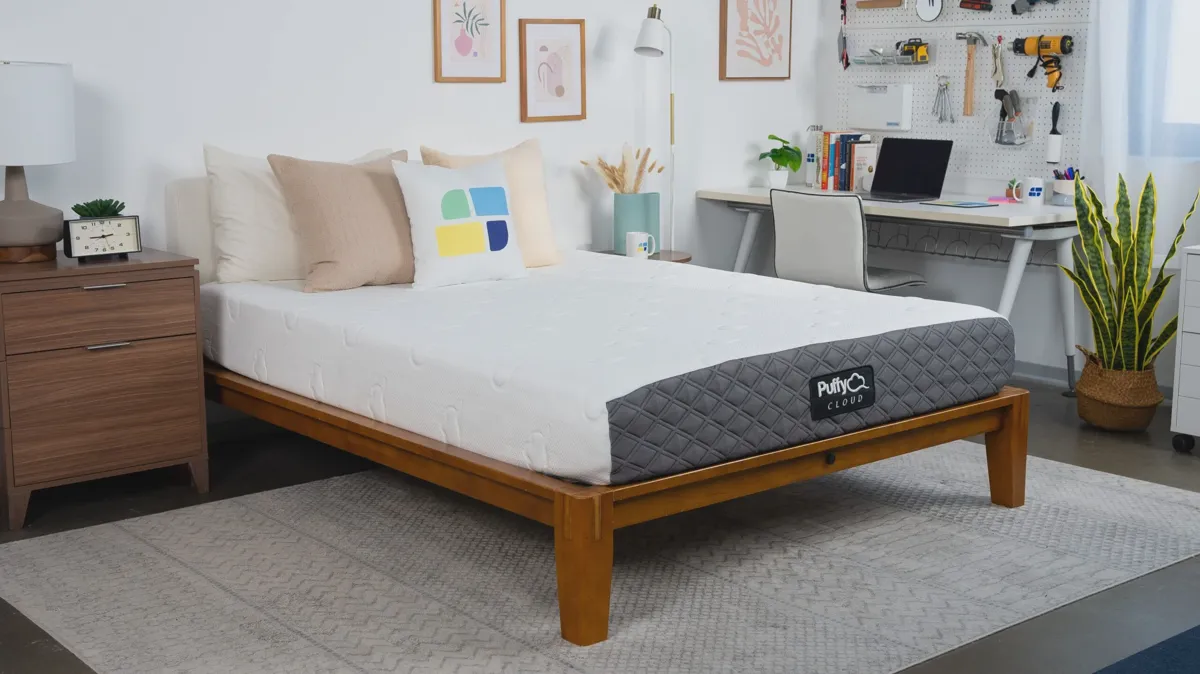
- A light- or medium-weight side sleeper: The 4 inches of memory foam let you sink in just enough to cushion the shoulders and hips with little pressure.
- Someone with lower back pain: The memory foam contours around the natural curves of the spine and supports the lumbar region.
- A fan of the classic memory foam feel: If you like to slowly sink into a bed and sleep in it rather than on it, the Puffy delivers that quicksand feel.
- Part of a couple: The Puffy absorbs most motion before it spreads, which makes it a good fit for partners sensitive to movement.
Pricing, trials, and warranties
Pricing is one of the clearest dividing lines between these two beds. The Tuft & Needle is positioned as a value mattress and undercuts the Puffy at every size, while the Puffy backs its higher price with a much longer warranty.
| Size | Puffy | Tuft & Needle |
|---|---|---|
| Twin | $1,849 | $645 |
| Twin XL | $2,099 | $695 |
| Full | $2,249 | $795 |
| Queen | $2,399 | $895 |
| King | $2,599 | $1,295 |
| Cal King | $2,599 | $1,295 |
Both brands offer free shipping in the contiguous United States, with extra fees for Alaska and Hawaii, and both include free returns during the trial period. The Tuft & Needle comes with a 100-night sleep trial and a 10-year limited warranty. The Puffy pairs a 101-night trial with a lifetime warranty, which covers manufacturing defects for as long as you own the mattress and is a notable step up from most online mattress brands. If you want a deeper look at the Puffy lineup before deciding, our full Puffy mattress review breaks down the Cloud, Lux Hybrid, and Royal Hybrid model by model.
Frequently asked questions
Are Tuft and Needle mattresses any good?
Yes, for the right sleeper. The Tuft & Needle is a well-regarded value mattress that delivers a balanced, responsive foam feel for back sleepers and combination sleepers, plus solid motion isolation. It is less pressure-relieving than a soft memory foam bed and is not the best pick for strict side sleepers or for stomach sleepers heavier than 130 pounds, who need firmer support.
What is the biggest difference between the Puffy and Tuft & Needle mattresses?
The main difference is the comfort material. The Puffy is built with gel memory foam, while the Tuft & Needle uses gel- and graphite-infused adaptive polyfoam. That means the Puffy is doughier, more pressure-relieving, and slower to respond to movement, while the Tuft & Needle sleeps cooler and responds faster.
What mattress is comparable to a Tuft and Needle?
Plenty of bed-in-a-box foam mattresses occupy the same balanced, value-focused space, and the Tuft & Needle is frequently cross-shopped against beds like Nectar, Casper, Leesa, and Layla. Within its own brand, the Tuft & Needle Mint adds graphite-infused adaptive foam layers, and the Tuft & Needle Hybrid swaps in coils for more bounce and edge support.