
Twin and California King sit at opposite ends of the mattress-size spectrum. A Twin is the smallest standard size in the U.S. - built for solo sleepers, kids' rooms, and tight spaces. A California King is the longest mainstream size, designed for tall adults and couples who want a roomy master-suite bed. Picking between them really comes down to three things: who is sleeping, how much room you have, and how much you want to spend.
Quick answer
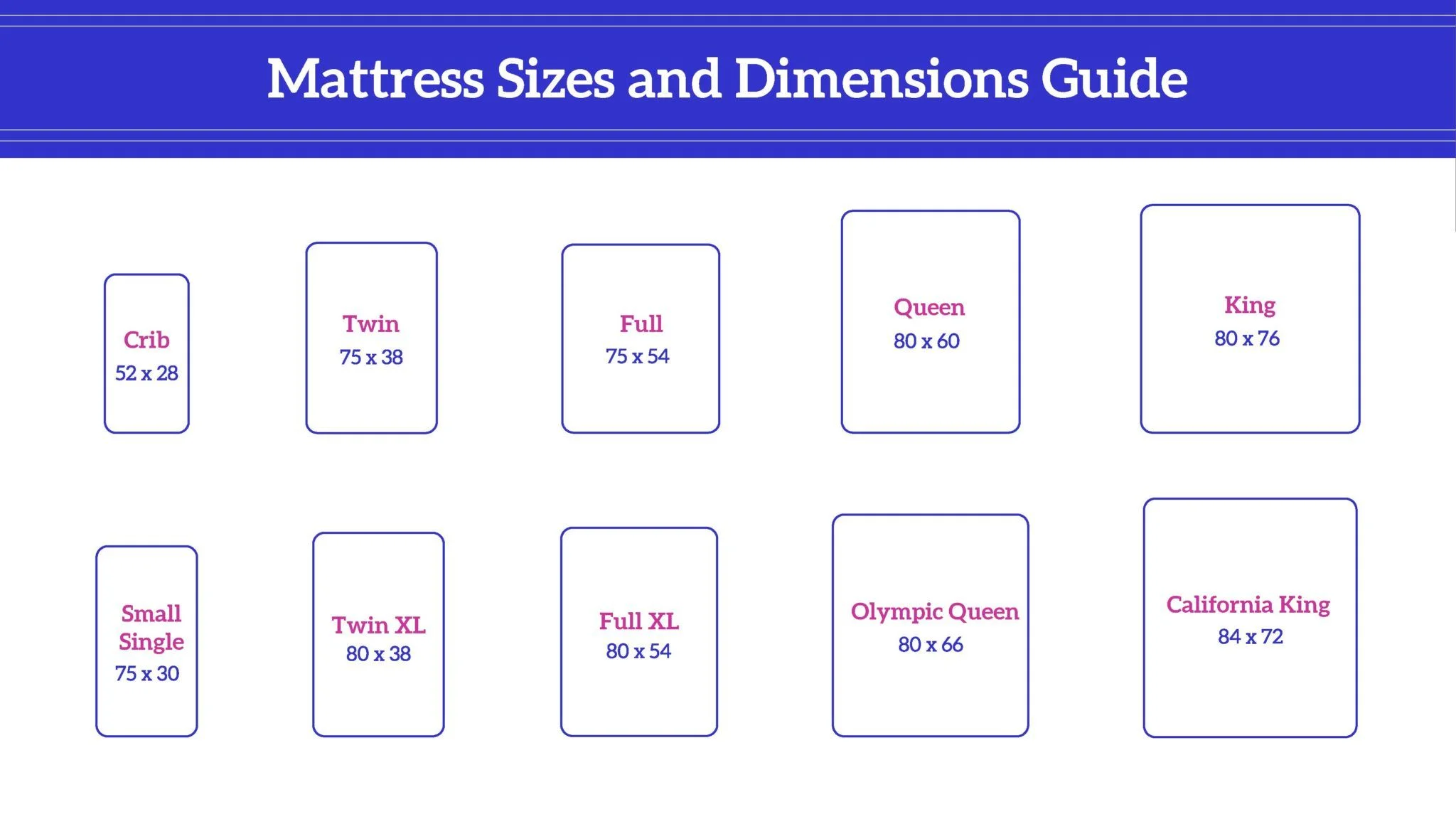
A Twin mattress measures 38" × 75", while a California King measures 72" × 84". The Cal King is nearly twice as wide and 9 inches longer, so it sleeps two adults comfortably and accommodates anyone over 6'2" - but it needs a bedroom of roughly 12' × 14' or larger. A Twin is ideal for one sleeper in a room as small as 7' × 10'.
Twin vs California King at a glance
Dimensions: Twin = 38" × 75" (96.5 × 190.5 cm). California King = 72" × 84" (183 × 213.5 cm).
Sleeps: Twin - one person (child, teen, single adult). California King - two adults plus pets, or a single tall sleeper who wants extra length.
Recommended room size: Twin works in a room as small as 7' × 10'. California King needs at least 12' × 14' to leave walking space and room for nightstands.
Typical 2026 price: Twin mattresses run $300-$700. California King mattresses run $1,200-$3,500 for quality models, with luxury hybrids and latex builds going higher.
Sheet & bedding fit: Twin sheets are inexpensive and stocked everywhere. California King sheets are a separate SKU from standard King - a standard King sheet will not fit a Cal King and vice versa.

Twin mattress: who it's for
At 38" × 75", a Twin gives a single sleeper enough surface area without dominating the room. It's the standard pick for:
- Children transitioning out of a toddler bed
- Teens and college students in dorm rooms
- Bunk beds and trundle setups
- Guest rooms where space is tight
- Studio apartments and small primary bedrooms
Caveat on length: at 75 inches, a Twin can feel short for adults taller than 6 feet. If you need the small footprint but more legroom, a Twin XL (38" × 80") is a better fit - it's the same width but five inches longer, and it shares its length with a Cal King.
California King mattress: who it's for
At 72" × 84", a Cal King is the longest standard mattress on the U.S. market. It earns its place in the bedroom when:
- One or both sleepers are taller than 6'2"
- The bedroom is long and narrow - Cal King's extra length and reduced width fit better than a standard King in that layout
- Couples want elbow room for kids or pets joining the bed
- You're outfitting a master suite where bed presence matters
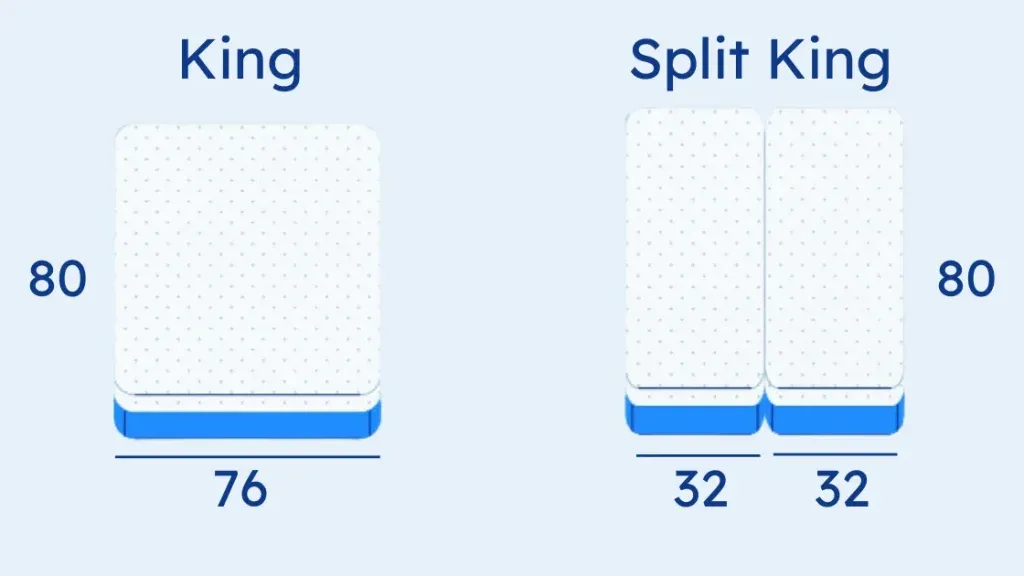
Important comparison: a standard King is 76" × 80" - four inches wider and four inches shorter than a Cal King. If width matters more than length (e.g., couples sharing with a child), standard King is usually the smarter choice.

Pros
- Twin: lowest price point in the lineup ($300-$700)
- Twin: fits small rooms, easy to move, easy to find sheets
- California King: extra length for tall sleepers (84 inches)
- California King: comfortable for couples plus pets/kids
- California King: works well in long, narrow bedrooms
Cons
- Twin: too short for many adults (only 75 inches long)
- Twin: cramped for two sleepers - single occupancy only
- California King: needs a 12' × 14' (or larger) bedroom
- California King: sheets and frames cost more and aren't interchangeable with standard King
- California King: significantly higher mattress cost ($1,200+)
Room size and layout: will it fit?
Before you buy, measure your bedroom. As a working rule, leave at least 24 inches of walking space on each side of the bed and 36 inches at the foot.
Twin minimum room: about 7' × 10'. The bed footprint plus a single nightstand and walkway.
California King minimum room: 12' × 14' is the comfortable floor. Anything smaller and the bed will visually swallow the room and limit furniture placement. For long, narrow rooms, the Cal King's 84-inch length aligns better than a 76-inch King.
Sheets, frames, and accessories
Bedding is one of the biggest practical differences between these two sizes. Twin sheet sets are everywhere, including budget retailers, and cost a fraction of larger sizes. California King is a specialty SKU - labeled 'Cal King' or 'CK' - and will not interchange with standard King. Buying online, double-check that the listing specifies California King, not King, before you click.
Bed frames work the same way. Most platform and adjustable frames offer both Twin and Cal King configurations, but Cal King frames are heavier, more expensive, and harder to maneuver up stairwells.
Price expectations in 2026
Pricing depends on construction (foam vs. hybrid vs. latex) and brand, but the working ranges in 2026 are:
- Twin: $300-$700 for quality memory foam or hybrid
- California King: $1,200-$3,500 for mainstream brands; $4,000+ for luxury hybrid and natural latex
Factor in the bedding premium too: Cal King sheet sets typically run 50-100% more than Twin sets, and a Cal King frame can add several hundred dollars over a Twin frame.
Which should you choose?
Choose a Twin if: the mattress is for one sleeper (especially a child or guest), the room is small, you're on a budget, or you need to move the bed up tight stairs.
Choose a California King if: you or your partner is taller than 6'2", you're outfitting a large or long-narrow master bedroom, and the higher mattress and bedding costs fit your budget.
Still on the fence? Two middle-ground options solve common edge cases. A Twin XL (38" × 80") gives solo sleepers Cal King-level length without the floor-space cost. A standard King (76" × 80") gives couples more shared width than a Cal King, with shorter length - the better pick for most bedrooms unless height is the deciding factor.
Twin vs California King FAQ
Are two Twin XL beds the same as a California King?
No. Two Twin XL mattresses pushed together measure 76" × 80" - that's the size of a standard King, not a California King. A California King is 72" × 84" (narrower and longer).
Can a 5'8" person comfortably fit on a Twin bed?
Yes. A Twin is 75 inches (6'3") long, which leaves comfortable head-and-foot clearance for sleepers up to about 6 feet tall. Above 6 feet, a Twin XL or larger size is more comfortable.
Is a California King wider than a King?
No - a California King is actually narrower than a standard King. Cal King: 72" wide × 84" long. Standard King: 76" wide × 80" long. Cal King trades 4 inches of width for 4 inches of length.
Will King sheets fit a California King?
No. California King sheets are a separate size and will not fit a standard King mattress (or vice versa). Always check the label for 'Cal King' or 'California King' specifically before buying bedding.
What's the smallest room a California King will fit in?
Roughly 12 feet by 14 feet, allowing about 24 inches of walking space on each side and 36 inches at the foot of the bed. Smaller rooms will fit the mattress, but the room will feel cramped and won't comfortably accommodate nightstands.