A tight top mattress has a flat, taut layer of upholstery fabric stitched directly to the side panel of the mattress - with no raised pillow layer or extra cushion sewn on top. The result is a firmer, more responsive surface that sleeps cooler and tends to develop fewer body impressions over time.
This guide explains how tight tops are built, how they compare to pillow and euro tops, who they suit best, and what to look for when shopping.
How a tight top mattress is built
On a tight top, the top panel of fabric is stitched to the side panel and there is a visible seam where the two meet. There is no second layer of foam or fiber sewn on top of the cover - the comfort and support layers live inside the mattress, beneath that taut surface. Sleep experts describe it as a tailored look with the top sitting directly on the core (Zinus).
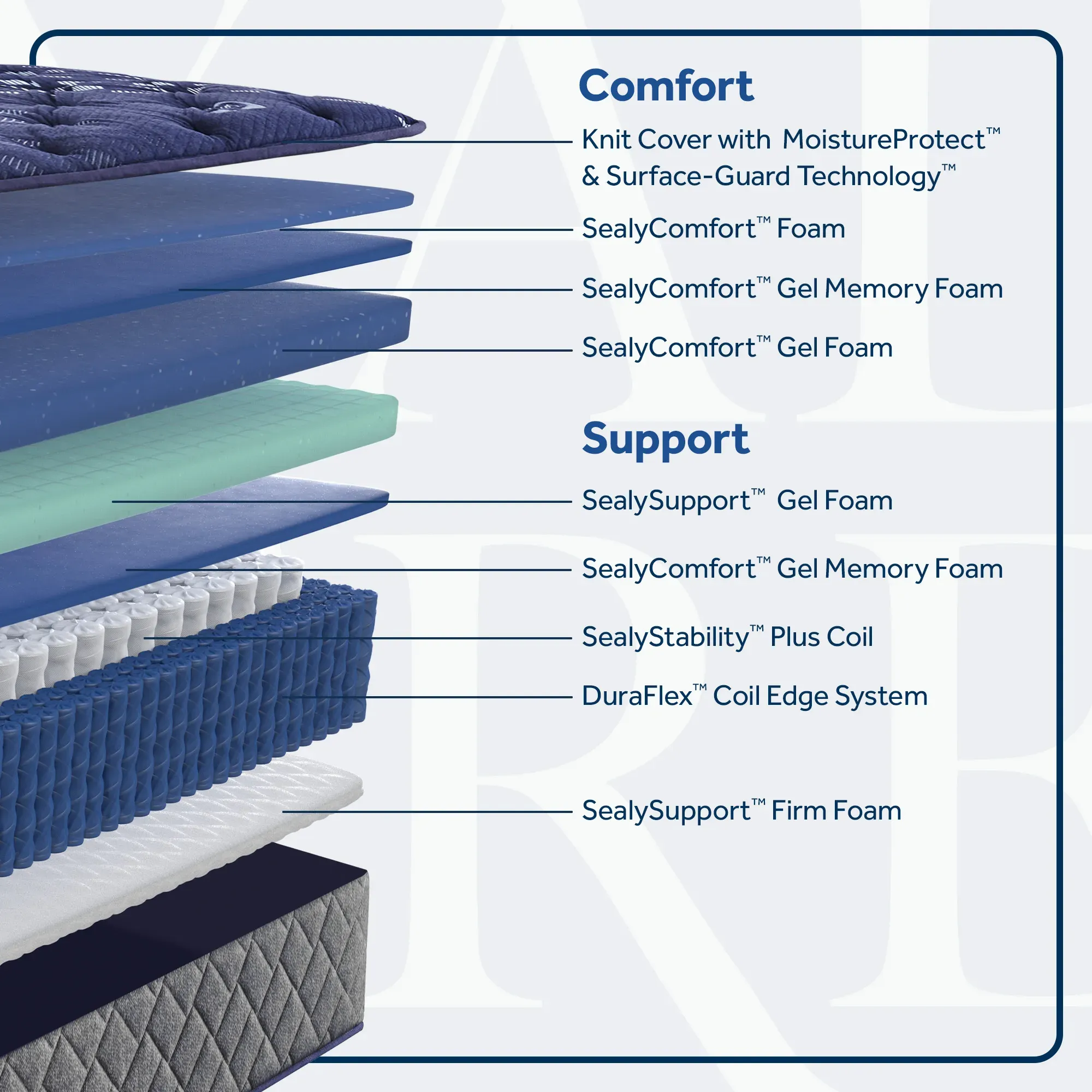
The fabric itself is typically cotton, polyester, or wool. Some tight tops are quilted - stitched in a pattern with a thin layer of fiber fill - which adds a hint of softness without changing the underlying tight-top construction.
How a tight top feels
Because there is less material buffering the surface, the comfort layers beneath make a more direct impression on your body. That gives a tight top its signature traits:
- Firmer, more responsive feel - you sleep on the bed rather than in it.
- Easier repositioning - minimal sinking makes it easier to change sides.
- Cooler sleep surface - no thick foam cushion to trap body heat.
- Fewer body impressions over time - less plush material to compress and break down (Avocado).
Tight tops are most commonly sold in medium-firm to firm tunings, though some manufacturers offer plusher versions with thicker internal comfort layers (Purple).
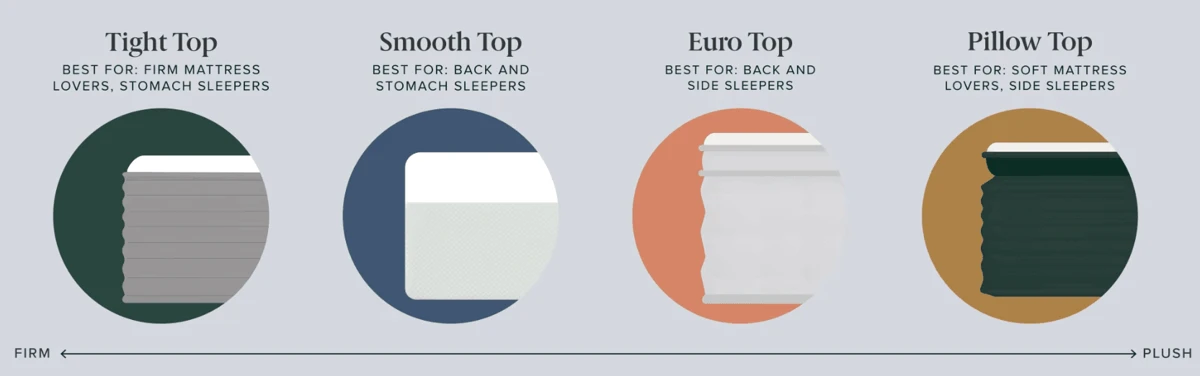
Tight top vs. pillow top vs. euro top
The difference between the three styles is the placement and amount of cushioning on the surface - not what is inside the core.
Tight top
Flat, taut fabric stitched to the side panel. No raised comfort layer. Firmest of the three on equivalent internals. Best for back and stomach sleepers, heavier sleepers, and anyone who prefers a supported feel.
Pillow top
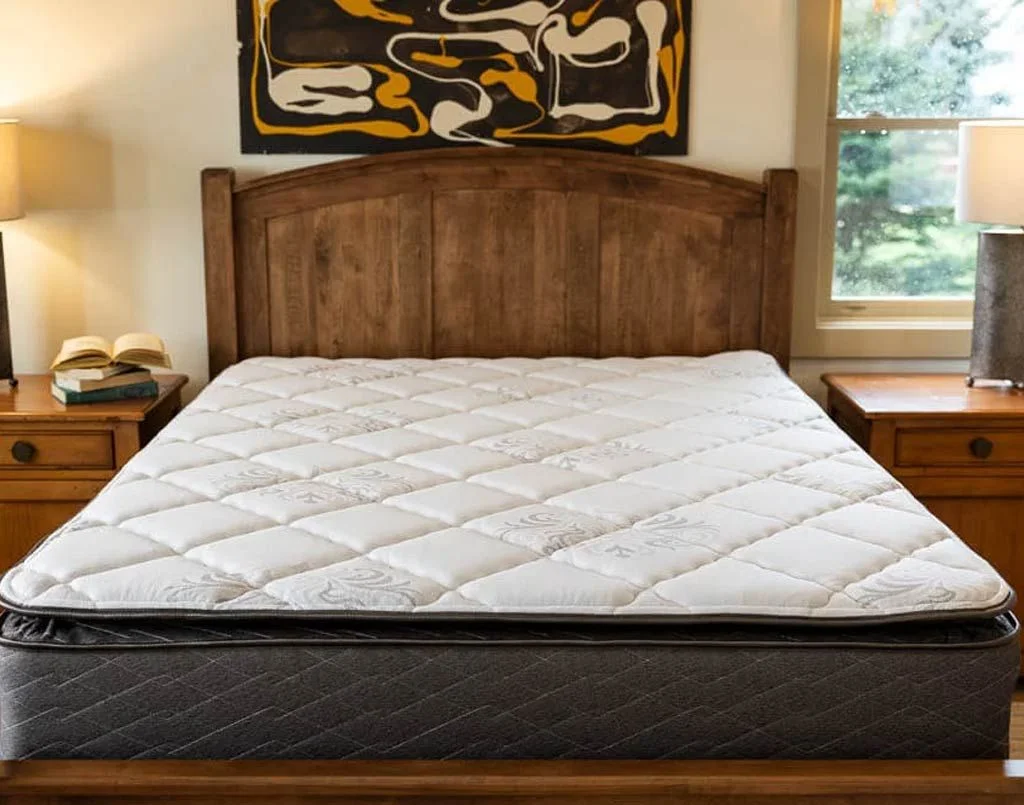
A distinct cushioned layer sewn on top of the mattress cover, with a visible indentation where it meets the surface. Softer and more conforming. Best for side sleepers and those needing pressure relief at the hip and shoulder.
Euro top (box top)
An extra padding layer sewn flush with the mattress edges, with no overhang. Visually cleaner than a pillow top, and the padding is less likely to shift because it sits directly on the core. Feels plush but more structured than a traditional pillow top.
Who should buy a tight top mattress?
Tight tops are a strong match if you fall into one or more of these groups:
- Back and stomach sleepers - a flatter, firmer surface helps keep the spine neutral and prevents the hips from sinking out of alignment.
- Heavier sleepers - firmer construction resists excessive sinking, which can cause spinal misalignment on overly plush beds.
- Hot sleepers - less foam at the surface means less trapped heat.
- Budget-minded shoppers - tight tops are among the most affordable innerspring constructions because they use less material at the top.
Side sleepers and combination sleepers who need significant pressure relief at the hip and shoulder will usually prefer a pillow top or euro top, which provide more surface cushioning.
What to check when shopping a tight top
The construction style tells you the shape of the mattress - not what is inside it. Two tight tops at the same price can have very different comfort layers underneath. Ask about:
- Core type - innerspring, hybrid, all-foam, or latex. Each behaves differently under a tight top.
- Comfort-layer material - polyurethane foam, memory foam, latex, or natural fiber. Natural materials typically last longer than budget polyfoam.
- Firmness level - tight tops are sold from soft to extra-firm; match the rating to your sleep position and body weight.
- Warranty and trial - a longer in-home trial matters more than the marketing label on the cover.
Care: flipping vs. rotating
Most modern tight top mattresses are one-sided and cannot be flipped - the support core and comfort layers are stacked in a single direction. Flipping a one-sided tight top puts the support layer on top and ruins the feel.
What you can do is rotate the mattress 180 degrees once or twice a year. That distributes wear evenly across the surface and helps prevent dips. Double-sided tight tops do exist and can be flipped - check the manufacturer label before assuming.
Tight top mattress FAQs
Is a tight top mattress firm or soft?
Tight tops are typically medium-firm to firm because there is no extra cushion layer on top of the cover. Some models add a thicker internal comfort layer to produce a plusher tight top, but on equivalent internals a tight top will feel firmer than a pillow top or euro top.
Can you flip a tight top mattress?
Only if it is explicitly double-sided. Most modern tight tops are one-sided and should not be flipped - flipping puts the support core on top and the comfort layer underneath. To extend life, rotate the mattress 180 degrees once or twice a year instead.
What is the difference between a tight top and a pillow top?
A pillow top has an extra cushioned layer sewn onto the top of the mattress cover, creating a raised, plush surface with a visible indentation along the edge. A tight top has no such added layer - the upholstery fabric is stitched flat to the side panel. Pillow tops feel softer; tight tops feel firmer and more responsive.
Is a tight top good for back pain?
For back and stomach sleepers with back pain, a medium-firm to firm tight top often helps by keeping the spine neutral and preventing the hips from sinking. Side sleepers with back pain usually need more pressure relief at the shoulder and hip, which a pillow top or euro top provides better. Talk to your doctor if pain persists.
How long does a tight top mattress last?
Most tight top mattresses last six to eight years with normal use, and quality models with natural materials can last longer. Because there is no plush top layer to compress and sag, tight tops often hold their shape longer than comparable pillow tops at the same price point.
Not sure which mattress style is right for you?
Visit a Banner Mattress showroom to compare tight top, pillow top, and euro top constructions side by side - and find the firmness that matches how you actually sleep.