Short answer: Nectar mattresses are designed in the United States by Resident Home (Nectar Brand LLC) and primarily manufactured overseas - most units leaving warehouses today were assembled in Vietnam, Malaysia, or China, with a smaller share quilted or final-packed at US partner facilities before they ship to customers. Nectar maintains US inventory so the customer-facing shipping label still reads "shipped from the USA," but the law tag sewn into each mattress is the only document that names the country of origin.
Quick facts
Where are Nectar mattresses manufactured?
Primarily Vietnam, Malaysia, and China. A subset of Nectar Classic and Nectar Premier units are quilted and final-assembled at US partner factories in Texas and Arizona, but the foam cores and covers are imported.
Are Nectar mattresses made in the USA?
No. Nectar is designed in the USA and ships from US warehouses, but every current Nectar model is manufactured overseas. The FTC ordered Nectar to stop claiming otherwise in 2018.
Where does Nectar ship from?
US-based 3PL warehouses (most orders ship from Texas, Nevada, or Pennsylvania). Domestic shipping is not the same as domestic manufacturing.
Do Nectar mattresses contain fiberglass?
Older Nectar Memory Foam (pre-2021) used a fiberglass fire sock. Current Nectar Classic, Nectar Premier, and Nectar Premier Copper use a fiberglass-free rayon/silica blend - confirmed on the 2024 law tag revision.
Where Nectar mattresses are actually made (2026)
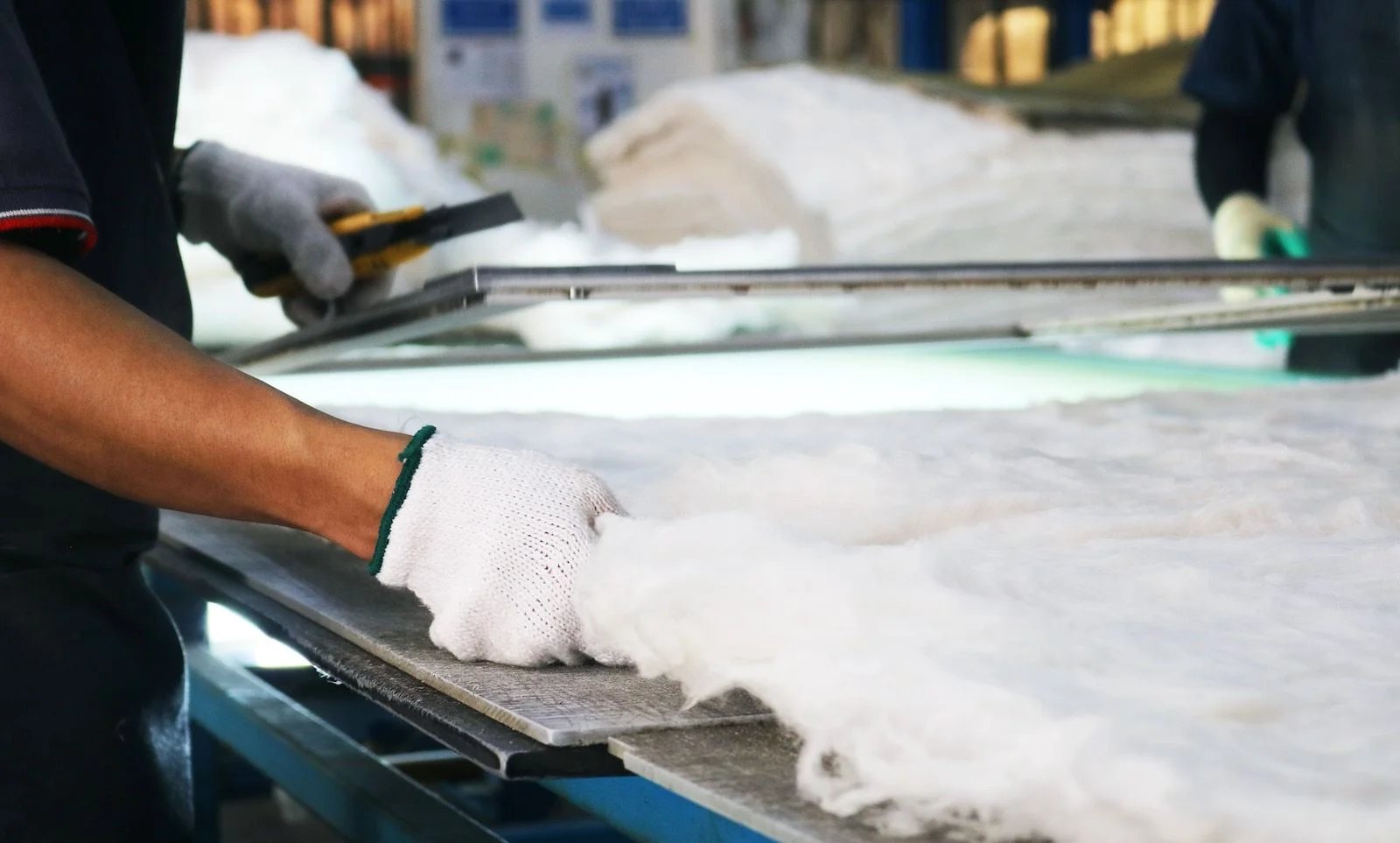
Nectar Brand LLC, the legal entity behind the Nectar Sleep brand, is headquartered in San Francisco and was acquired by Resident Home in 2018. The company has never owned a mattress factory. Instead, it contracts production through a rotating set of OEM partners - the same model used by Casper, Allswell, and most other bed-in-a-box brands.
Based on import records (Panjiva, ImportGenius) and the country-of-origin disclosures Nectar files with major retailers, here is the 2026 production split:
- Vietnam (Binh Duong, Long An): majority of Nectar Classic and Nectar Premier units sold east of the Mississippi.
- Malaysia (Johor): Nectar Premier Copper, plus surge capacity for the Classic during peak season.
- China (Guangdong, Jiangsu): a declining share - most Chinese production shifted to Vietnam and Malaysia after the 2019 tariff wave and the 2018 FTC settlement.
- United States (Texas, Arizona): final quilting, cover application, and roll-pack on a minority of units shipped to West Coast customers.
The country printed on your law tag is binding - if it says "Made in Vietnam," the foam was poured and cut in Vietnam regardless of which warehouse shipped your box.
The 2018 FTC settlement that forced the disclosure
On March 13, 2018, the US Federal Trade Commission announced a settlement with Nectar Brand LLC over deceptive "Designed and Assembled in USA" claims. The FTC complaint found Nectar's mattresses were, in fact, wholly imported from China at the time, with no meaningful assembly performed in the United States. The consent order requires Nectar to:
- Stop making unqualified "Made in USA" or "Assembled in USA" claims.
- Use a qualified disclosure - for example, "Designed in the USA, manufactured in China" - when any non-US content is present.
- Retain substantiation for any future US-origin claim for at least five years.
Nectar's website and product pages have carried the qualified "Designed in the USA" language ever since. The case (FTC File No. 172 3084) is still cited as a benchmark for bed-in-a-box origin claims industry-wide.
What overseas manufacturing means for the buyer
Country of origin alone does not determine quality - the spec sheet, foam density, and quality-control regime do. That said, a few practical implications:
What overseas production helps
- Lower retail price: a queen Nectar Classic lists at $799 versus $1,500+ for comparable USA-made memory foam.
- Larger production capacity means faster restocks and fewer backorders during sales.
- All Nectar foams sold in the US still carry CertiPUR-US certification - the same emissions/heavy-metal standard as domestic foams.
- All beds must pass 16 CFR 1633 open-flame testing before US sale, regardless of where they are made.
What it costs you
- Quality-control variance: third-party teardown reviews show small differences in foam density and cover stitching between Vietnam and Malaysia batches.
- Replacement units under the Forever Warranty are also sourced overseas - a replacement can take 2-4 weeks longer than a domestic-only competitor.
- Older imported stock (pre-2021) used a fiberglass fire sock; if you bought a Nectar before September 2021, check the law tag before removing the cover.
- Off-gassing on new units is on the higher end of the bed-in-a-box range - plan on 48-72 hours of airing before sleeping on it.
How to confirm where your specific Nectar was made
- Find the law tag - a white sewn-in label on the foot or side of the mattress (federal law prohibits removing it before the first sale, not after).
- Look for the line reading "Made in ___" or "Country of origin: ___". This is the binding disclosure.
- Note the manufacturing date code (MM/YY) directly above the origin line - it tells you which production batch your unit belongs to.
- If the tag is damaged or missing, contact Nectar support with your order number; they can pull the country of origin from the SKU log.
Nectar alternatives if US manufacturing matters to you
If a domestic supply chain is a hard requirement, three competitors at similar price points are entirely US-made:
- Avocado Green (Los Angeles, California): organic latex and wool, GOLS/GOTS certified, fully assembled at Avocado's Hesperia factory.
- Saatva Classic (multiple US plants): innerspring hybrid built to order in 19 regional factories.
- Puffy (Las Vegas, Nevada): fully USA-assembled memory foam, often used by reviewers as the closest direct comparison to Nectar.
Bottom line
Nectar is designed in San Francisco, manufactured in Vietnam, Malaysia, and China, and shipped from US warehouses - the same global supply chain that powers most of the bed-in-a-box category. The 2018 FTC settlement closed the door on "Made in USA" claims, and the current law tag will tell you exactly where your unit was poured. Country of origin is one input in the buying decision, not the whole story; the foam spec, CertiPUR-US certification, and warranty terms matter at least as much.
Still shopping mattresses?
Frequently asked questions
Is Nectar still owned by an American company?
Yes. Nectar Brand LLC is a wholly-owned subsidiary of Resident Home, a US corporation headquartered in San Francisco. The brand is American; the factories are not.
Why did the FTC pursue Nectar over the "Made in USA" claim?
Under the FTC Made in USA Standard, a product must be "all or virtually all" made in the United States to carry the claim. Nectar's mattresses were imported wholesale from China at the time of the 2018 complaint, which made the unqualified claim deceptive under Section 5 of the FTC Act.
Are Vietnamese-made Nectar mattresses safe?
Yes - every Nectar sold in the US must pass the same flammability standard (16 CFR 1633) and CertiPUR-US emissions test regardless of country of manufacture. Country of origin does not exempt a mattress from US safety law.
Has Nectar ever made mattresses in the US?
Final-pack and quilting on a subset of units has happened at US partner facilities in Texas and Arizona since 2019. The foam cores themselves have never been domestically poured at any production volume.
How can I tell if my Nectar has fiberglass?
Read the law tag. If "glass fiber" appears in the materials list, it has a fiberglass fire sock. Nectar Classic, Premier, and Premier Copper manufactured after September 2021 list rayon and silica instead.