A 10-inch mattress is firmer, lighter, and more affordable - best for back and stomach sleepers under 180 lbs. A 12-inch mattress is plusher with better motion isolation and pressure relief - best for side sleepers, couples, and sleepers over 180 lbs. The right pick depends on your sleep position, body weight, and bed setup.
At a Glance
Typical firmness: 10-inch is medium-firm to firm (6-8/10); 12-inch is medium to medium-soft (4-6/10).
Best for sleep position: 10-inch suits back and stomach sleepers; 12-inch suits side and combination sleepers.
Best for body weight: 10-inch under 180 lbs; 12-inch for 180+ lbs and couples.
Motion isolation: 10-inch is moderate; 12-inch is excellent.
Bed-frame fit: 10-inch fits bunks, trundles, low-platform beds; 12-inch fits standard platform and adjustable frames.
What's the Difference?
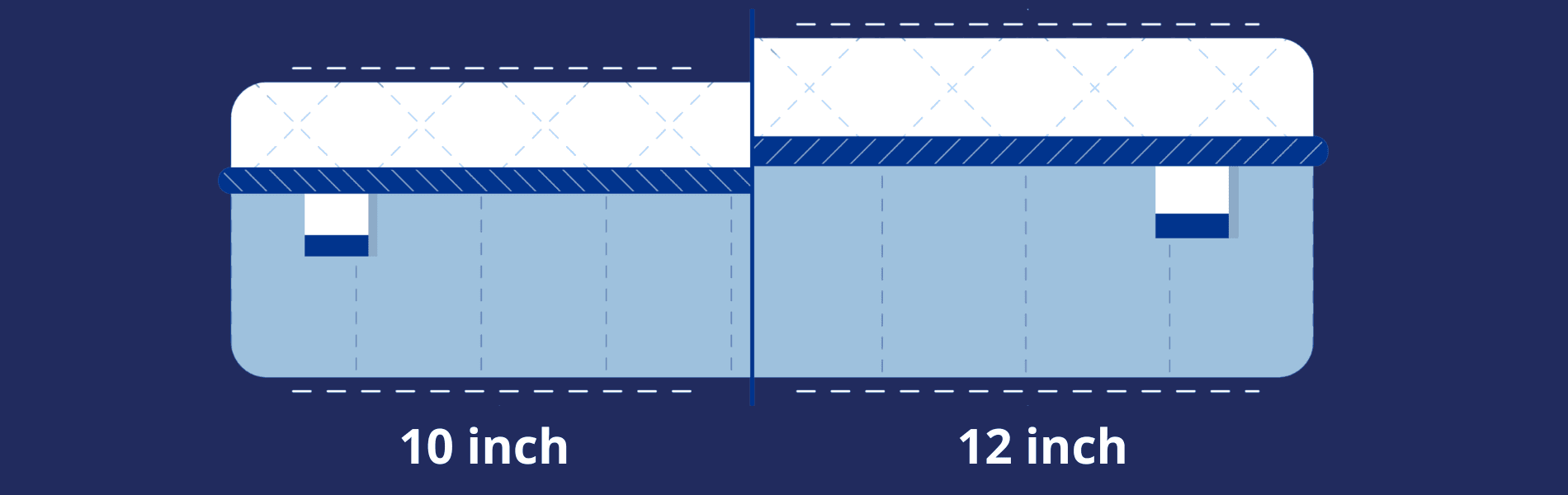
Both 10-inch and 12-inch mattresses share the same core construction - comfort layer on top, transition layer in the middle, support core at the base - but the 12-inch profile gets you 2 extra inches of cushioning, almost always added to the comfort and transition layers.
That extra cushioning is what changes the feel. A thinner mattress puts you closer to the support core, so it sleeps firmer. A thicker mattress lets your shoulders and hips sink farther before they hit the support layer, so it sleeps plusher and isolates motion better.
When a 10-Inch Mattress Wins
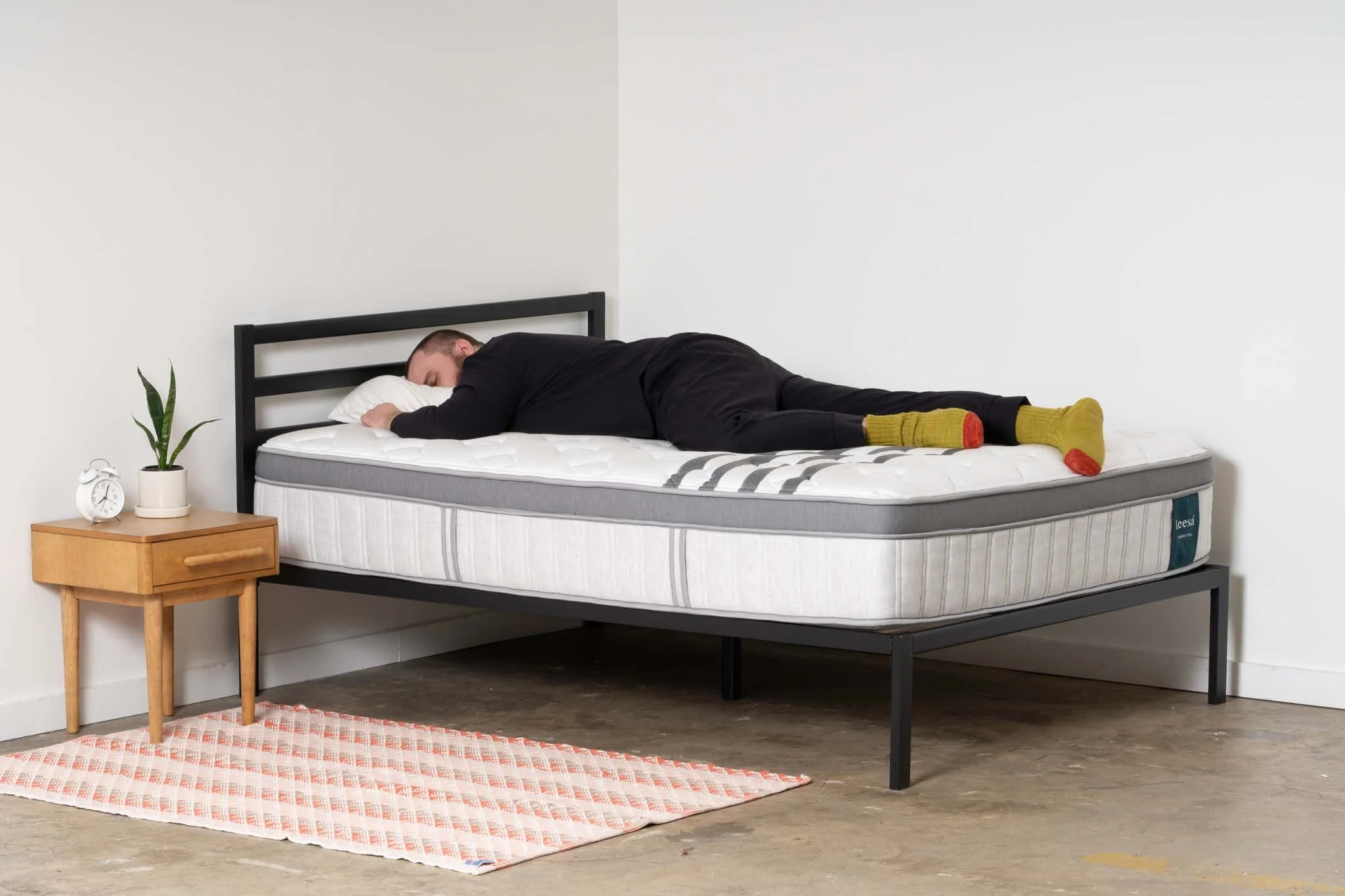
- You sleep on your back or stomach - a thinner profile keeps your spine flatter
- You weigh under 180 lbs - extra cushioning isn't doing much for you
- You're outfitting a guest room, kids' room, bunk bed, trundle, or RV
- You want a mattress that's easier to flip and move
- Your budget is tight - 10-inch options are typically more affordable
When a 12-Inch Mattress Wins
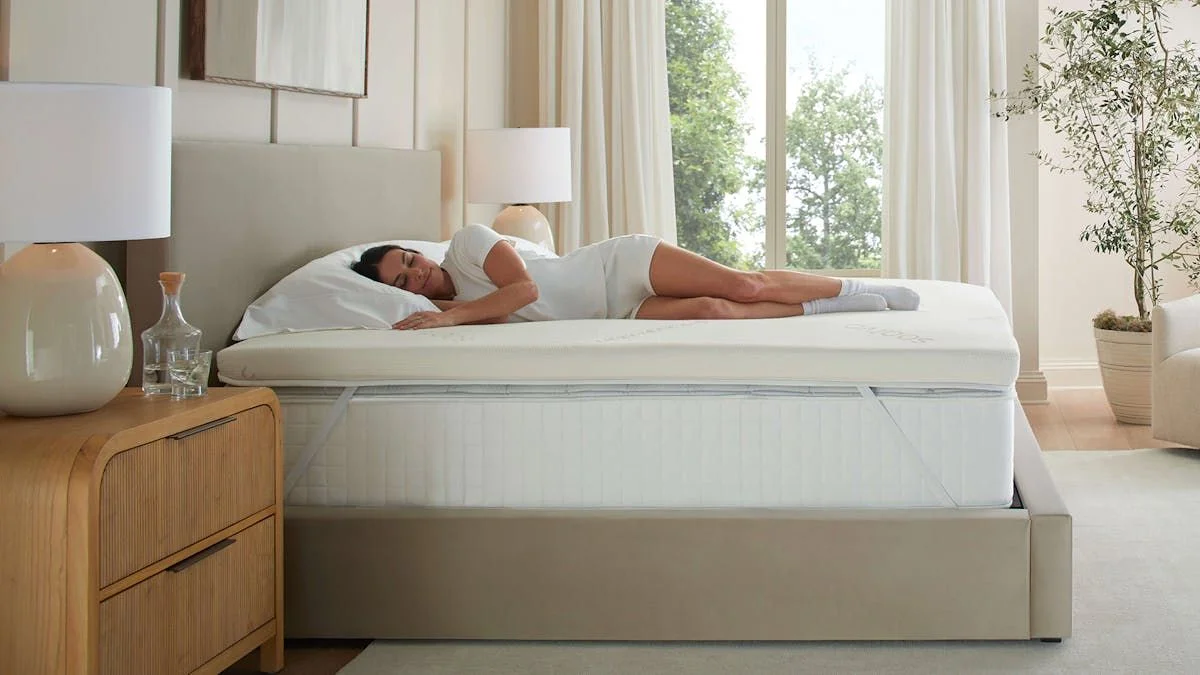
- You sleep on your side - extra cushioning relieves shoulder and hip pressure
- You sleep with a partner - thicker mattresses isolate motion better
- You weigh more than 180 lbs - you'll compress through a thinner mattress
- You have back, hip, or joint pain - the plusher feel reduces pressure points
- Your platform bed is low and you want more total bed height
How to Decide
Run through these factors in order. The first one that gives you a clear answer is your answer.
1. Sleep position
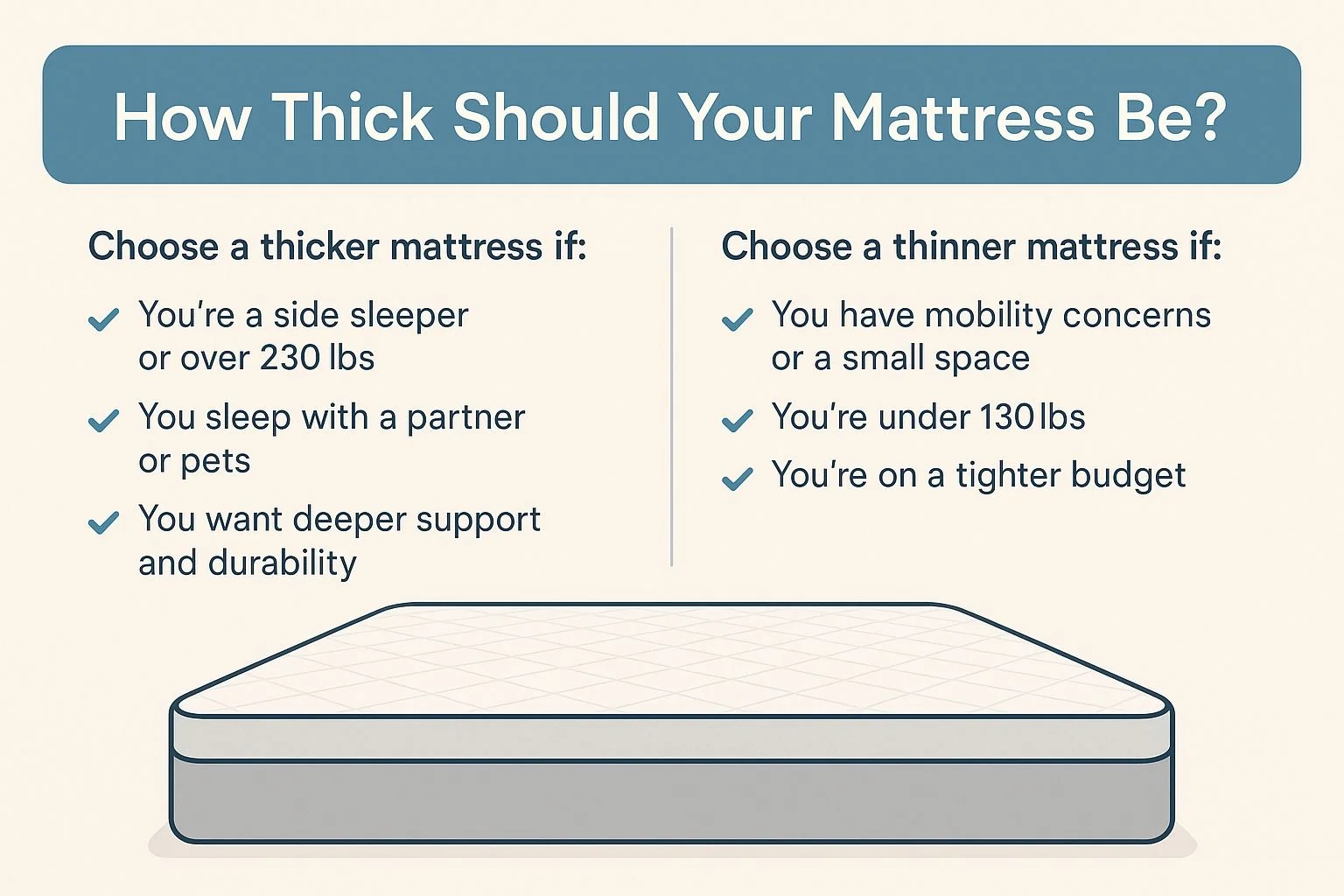
Side sleepers benefit most from a 12-inch profile because shoulders and hips need somewhere to sink. Back and stomach sleepers do fine - often better - on a 10-inch.
2. Body weight
Mattress thickness scales with sleeper weight:
- Under 130 lbs: 10-inch is plenty
- 130-230 lbs: either works; pick by sleep position
- Over 230 lbs: 12-inch (or thicker) is the safer choice for support and durability
3. Number of sleepers
Couples lean toward 12-inch for the better motion isolation. Solo sleepers can comfortably go either way.
4. Bed setup
A 10-inch mattress on a tall platform bed can sit too high to comfortably sit on the edge. A 12-inch mattress on a low platform looks intentional. Add the frame height to the mattress height when planning - you want the top of the mattress at roughly knee-cap level when standing.
5. Budget
10-inch tends to cost less because there's literally less material in it. If two otherwise-comparable mattresses come in both heights, expect the 12-inch to run a few hundred dollars more.
Frequently asked questions
What's better, a 10-inch or 12-inch mattress?
Neither is universally better. A 10-inch is firmer and works for back and stomach sleepers; a 12-inch is plusher and works for side sleepers, couples, and heavier individuals.
Is a 12-inch mattress too tall?
Not on its own - but combined with a tall bed frame, the total height can become hard to get in and out of. If you weigh under 130 lbs, a 12-inch may feel like overkill; if you weigh over 230 lbs, it's typically the right starting height.
Will a 10-inch mattress last as long as a 12-inch?
A 12-inch mattress generally lasts longer - there's more material to fatigue before sagging shows. But build quality and density matter more than thickness alone; a high-density 10-inch can outlast a low-density 12-inch.
Can I make a 10-inch feel more like a 12-inch?
A 2-inch mattress topper closes most of the gap. It won't fully replicate a 12-inch's motion isolation, but it adds the cushioning a 10-inch lacks for side sleepers.
Do thicker mattresses sleep hotter?
Sometimes - more foam can mean more heat retention. But modern 12-inch mattresses with gel-infused or open-cell foams generally sleep no warmer than a 10-inch with the same materials.
Bottom Line
Pick by sleep position and body weight first, bed setup and budget second. A 10-inch mattress is the right call for back and stomach sleepers under 180 lbs and for guest-room, RV, or kids'-bed setups. A 12-inch mattress is the right call for side sleepers, couples, and anyone over 180 lbs who wants real pressure relief.