The short answer
If you are an adult of average weight, sleep with a partner, or sleep on your side, buy the 10-inch mattress. The extra two inches almost always add a true transition layer between the comfort foam and the support core, which is the layer that prevents you from "bottoming out" against the firm base. That single layer is the reason a 10-inch mattress feels meaningfully better night after night, not just thicker on the box.
Pick the 8-inch mattress only when one of these is true: it is for a child, a bunk bed, a low-profile platform, a guest room used a few nights a year, or you weigh under roughly 150 lbs and sleep mostly on your back or stomach. In those cases the firmer feel works for you and the lower price is real money saved. For everyone else the 10-inch model is the safer long-term buy.
Why two inches matters more than it sounds
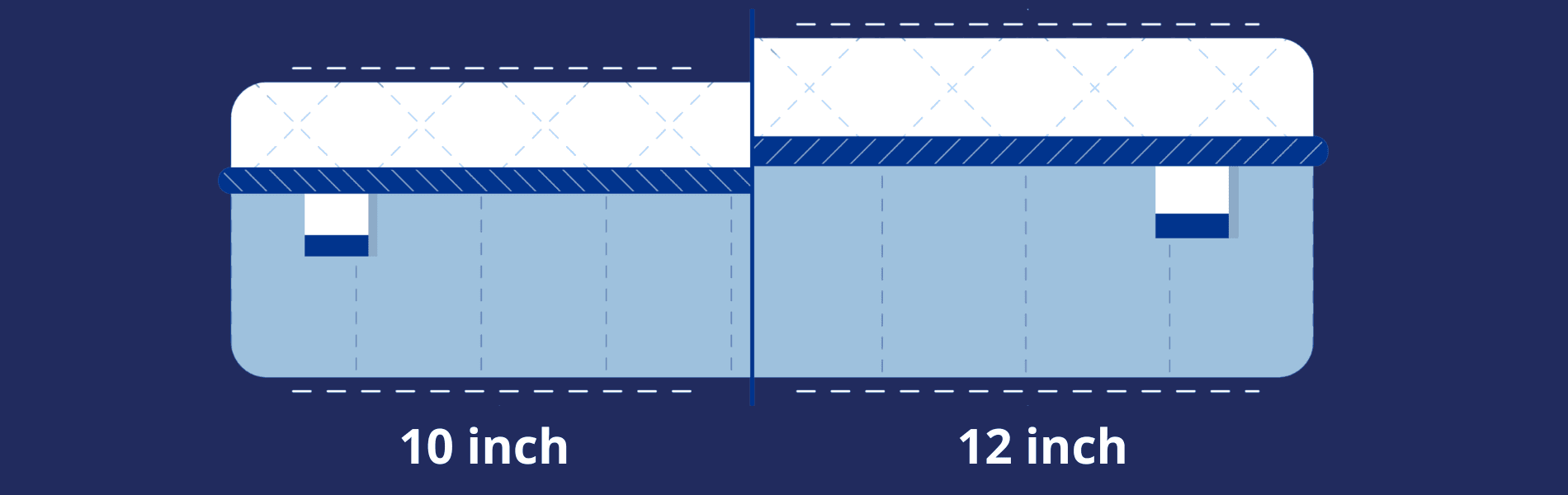
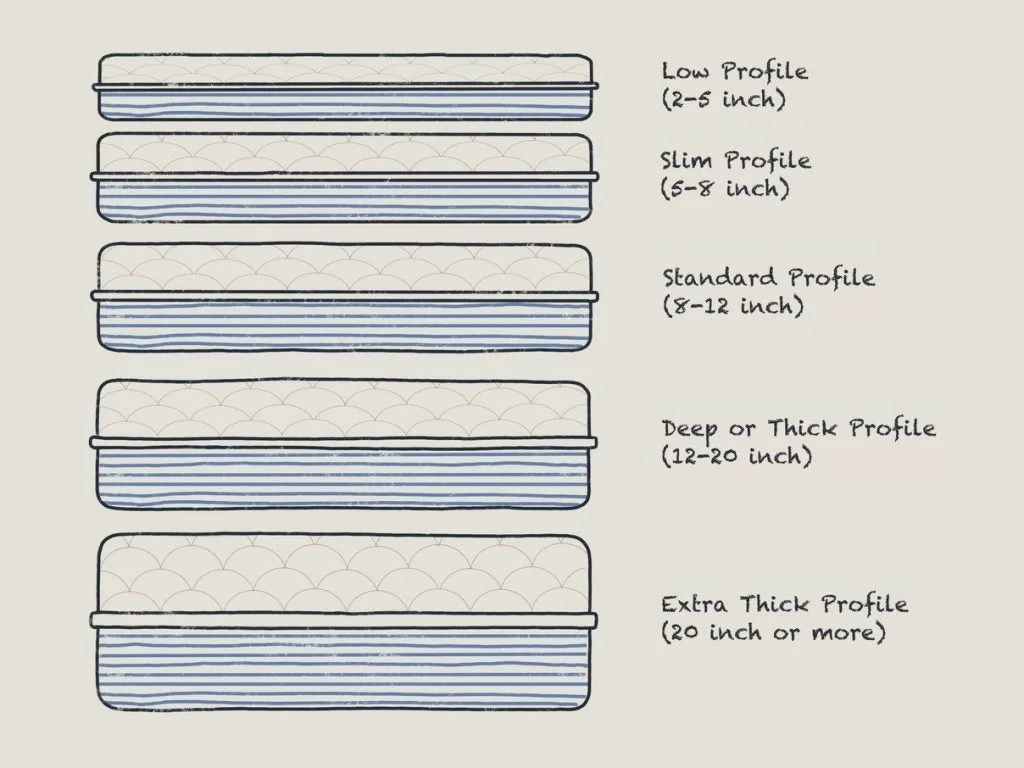
An 8-inch mattress is almost always built in two layers: a thin comfort layer (1.5 to 2 inches of memory foam, latex, or quilted fiber) sitting directly on a 6 to 6.5 inch support core. There is no room for a transition layer. When you press into the comfort layer, you feel the harder base underneath fairly quickly. That is why 8-inch mattresses are described as "firmer" even when the comfort foam itself is medium.
A 10-inch mattress almost always adds a 2-inch transition layer (medium-density polyfoam or a thin micro-coil) between the comfort foam and the support core. That layer is doing the work most people think the comfort layer is doing: it spreads weight, slows the sink, and stops the support core from broadcasting through. It is also why 10-inch mattresses feel cooler under the hips and shoulders for heavier sleepers, and why edge support tends to be noticeably better.
Match thickness to body weight
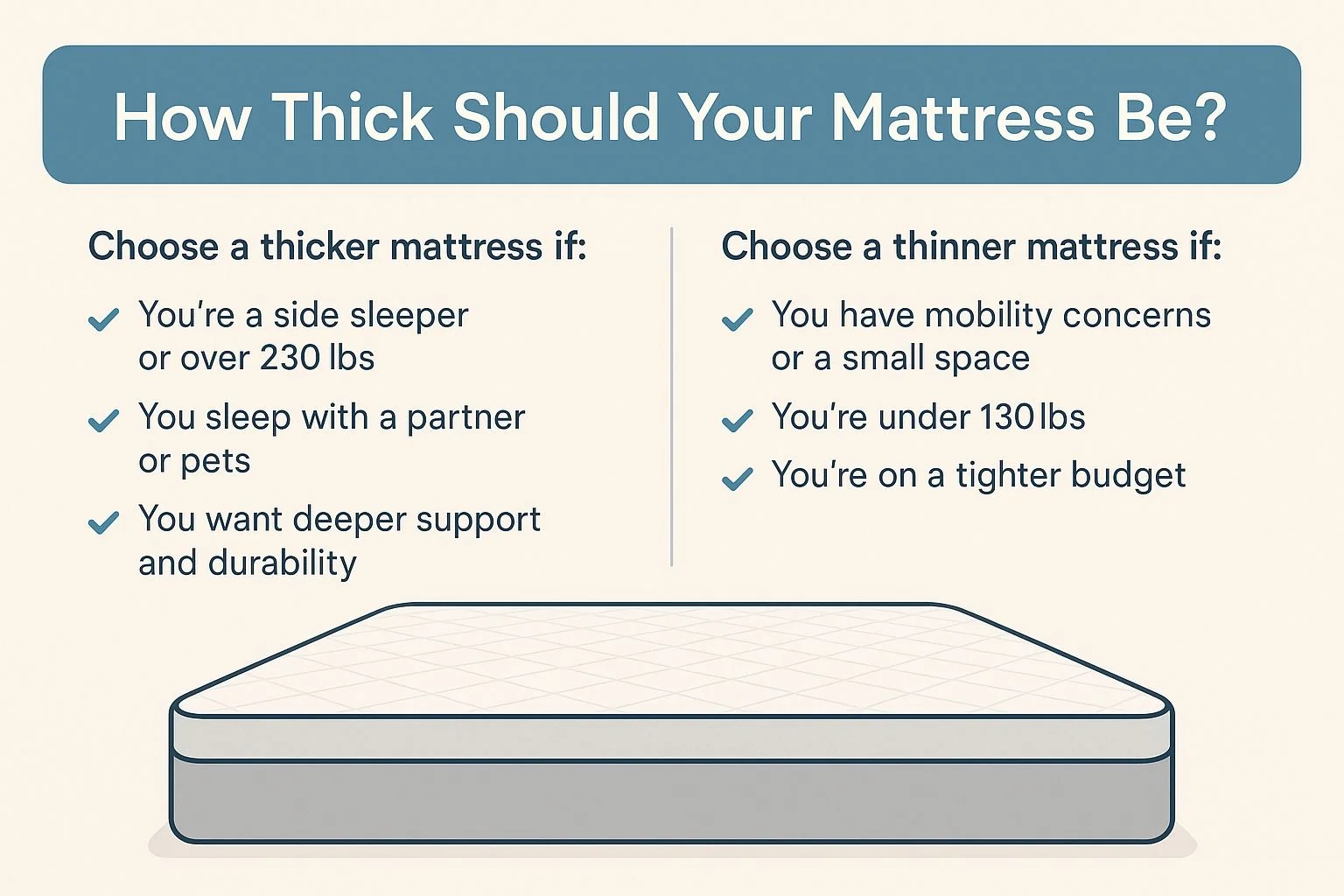
Body weight is the single biggest factor in this decision. Heavier bodies compress comfort foam faster and need a deeper support stack to keep the spine neutral.
- Under 150 lbs: Either thickness works. An 8-inch mattress will feel supportive and last a reasonable time. Side sleepers in this range may still prefer a 10-inch for shoulder pressure relief.
- 150 to 230 lbs: Choose 10 inches. An 8-inch model will compress past the comfort layer within a year or two and start feeling like sleeping on the support core.
- Over 230 lbs: Skip both. Look at 12 to 14 inch hybrids with a coil support core. An 8 or 10-inch all-foam mattress will sag at the hips within months.
Match thickness to sleep position
- Side sleepers: 10 inches. Side sleeping concentrates weight on the shoulder and hip; you need the contour the transition layer provides to avoid pressure points.
- Back sleepers: Either, with a slight edge to 10 inches for spine support. An 8-inch firm model is fine if you like a flatter feel.
- Stomach sleepers: 8 inches works well. Stomach sleeping needs a firmer surface to stop the hips dropping below the shoulders, which is exactly what an 8-inch build delivers.
- Combination sleepers: 10 inches. Easier to roll on, less likely to feel "stuck" in any one position.
When 8 inches is the right call
- Kids' rooms, bunk beds, and trundles where height matters
- Guest rooms used fewer than 30 nights a year
- Stomach sleepers who want a firm, flat surface
- Adjustable bases with low height clearance
- Shoppers under ~150 lbs working a tight budget
- Fits standard sheet pockets without strap fights
When 8 inches will let you down
- Two-layer build offers limited pressure relief for side sleepers
- Couples feel partner motion more than on a 10-inch
- Edge support degrades faster, so sitting on the side sags
- Memory foam compresses sooner under heavier bodies
- Shorter useful lifespan, often 5 to 6 years vs 7 to 10
Real-world price difference
Across most online brands the 10-inch upgrade runs about 20 to 30 percent more than the 8-inch version of the same line. In dollar terms, that is usually $100 to $250 at queen size. If you keep the mattress 7+ years (typical for a 10-inch hybrid) the cost-per-year is actually lower than buying an 8-inch and replacing it after 5 years.
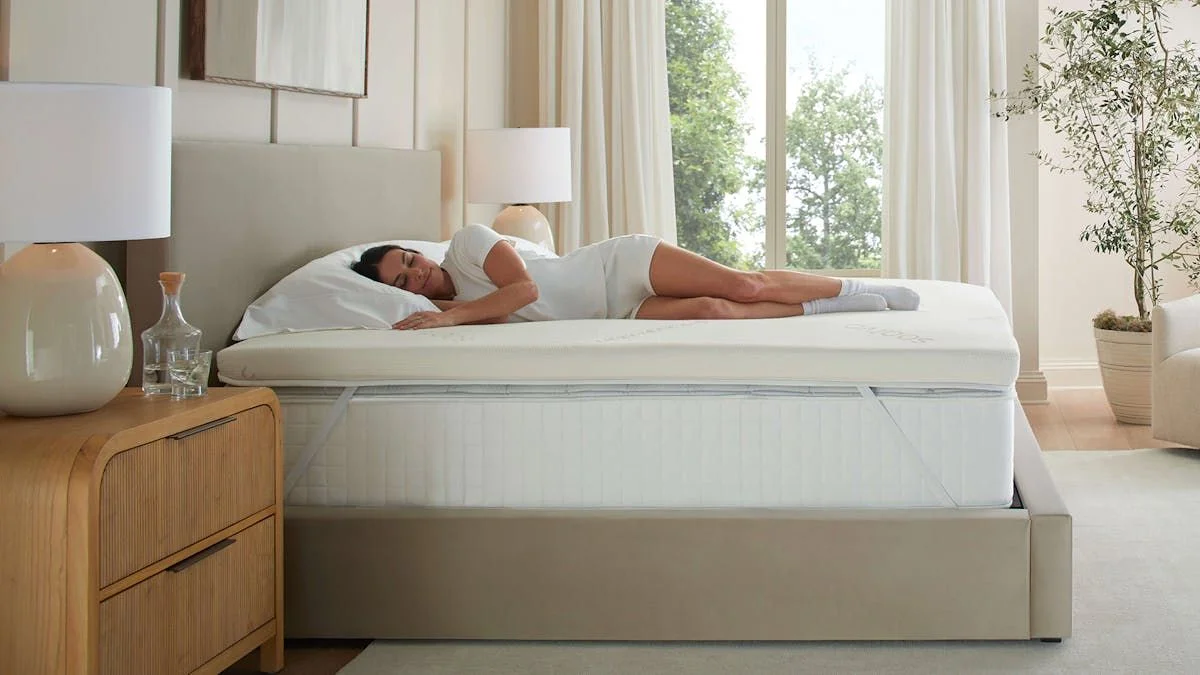
What you should not do is buy a deeply discounted 8-inch and try to fix it with a 3-inch topper. The combined stack ends up taller than a 10-inch but feels worse, sheet pockets stop working, and edge support is still bad because nothing has changed about the support core. If you are tempted to add a topper at purchase time, just buy the 10-inch in the first place.
Durability and warranty notes
Pay attention to the body-impression clause in the warranty rather than the headline coverage length. Most 8-inch and 10-inch mattresses ship with a 10-year limited warranty, but the indentation depth that counts as a defect is usually 1.5 inches on a 10-inch model and only 1 inch on an 8-inch model. Translation: the thinner mattress has to sag a smaller amount before the warranty kicks in, which is the manufacturer admitting an 8-inch will sag faster.
Sleep trials are similar across thicknesses (typically 100 nights), as is shipping (usually free in a box). The real durability gap is in the foam itself: a 10-inch with a 1.8 lb/cu-ft polyfoam base will outlast an 8-inch with the same density base, simply because there is more material to absorb compression.
Bed frame and sheet compatibility
Standard fitted sheets are sized for 9 to 14 inch mattresses, so a 10-inch fits without strap-down hassle. An 8-inch mattress works fine with the same sheets but you may notice slack at the corners. Both thicknesses sit happily on a slatted platform with slats spaced 3 inches apart or less, on standard box springs, and on most adjustable bases. Check your bed frame's interior height before buying: if the rails are short, an 8-inch may give you the bed-height you actually want.
Frequently asked questions
Is an 8-inch mattress good for everyday adult use?
It can be, if you weigh under about 150 lbs and sleep on your back or stomach. For most adults though, especially side sleepers and couples, a 10-inch will hold up better and feel more comfortable over the long run.
Is a 10-inch mattress thick enough for back pain?
Yes, 10 inches is the most common thickness recommended for back pain because the transition layer keeps the spine neutral without making the surface so plush that you sink. If you weigh over 230 lbs or have severe pain, look at 12-inch hybrids instead.
Can I put an 8-inch mattress on a bunk bed?
Yes, and that is actually one of its best uses. Bunk beds usually have a maximum mattress height (often 8 inches) for the safety rail to function. A 10-inch mattress on a bunk can leave the rail too short.
Will an 8-inch mattress sag faster than a 10-inch?
Generally yes. There is less foam to distribute body weight, so the comfort layer compresses sooner. Expect 5 to 6 years of useful life from an 8-inch all-foam mattress versus 7 to 10 years for a comparable 10-inch.
Does adding a topper to an 8-inch mattress make it equal to a 10-inch?
No. A topper changes the surface feel but does not add a transition layer or improve the support core. You also create a new problem: the combined stack is too tall for standard sheets, and edge support is still weak. If you want 10-inch performance, buy a 10-inch mattress.
Which is better for couples, 8-inch or 10-inch?
10-inch, by a clear margin. Motion isolation is better, the sleeping surface stays even when one partner shifts, and edge support holds up so neither partner rolls toward the middle over time.
The bottom line
The 10-inch mattress is the default recommendation for adult bedrooms because the transition layer it adds genuinely changes how the bed feels under your body. The 8-inch mattress is a specialist tool: ideal for kids, guest rooms, bunks, low-clearance frames, and lightweight stomach sleepers. Match the thickness to who is using the bed and how often, not to the price tag, and you will end up with the right mattress on the first try.