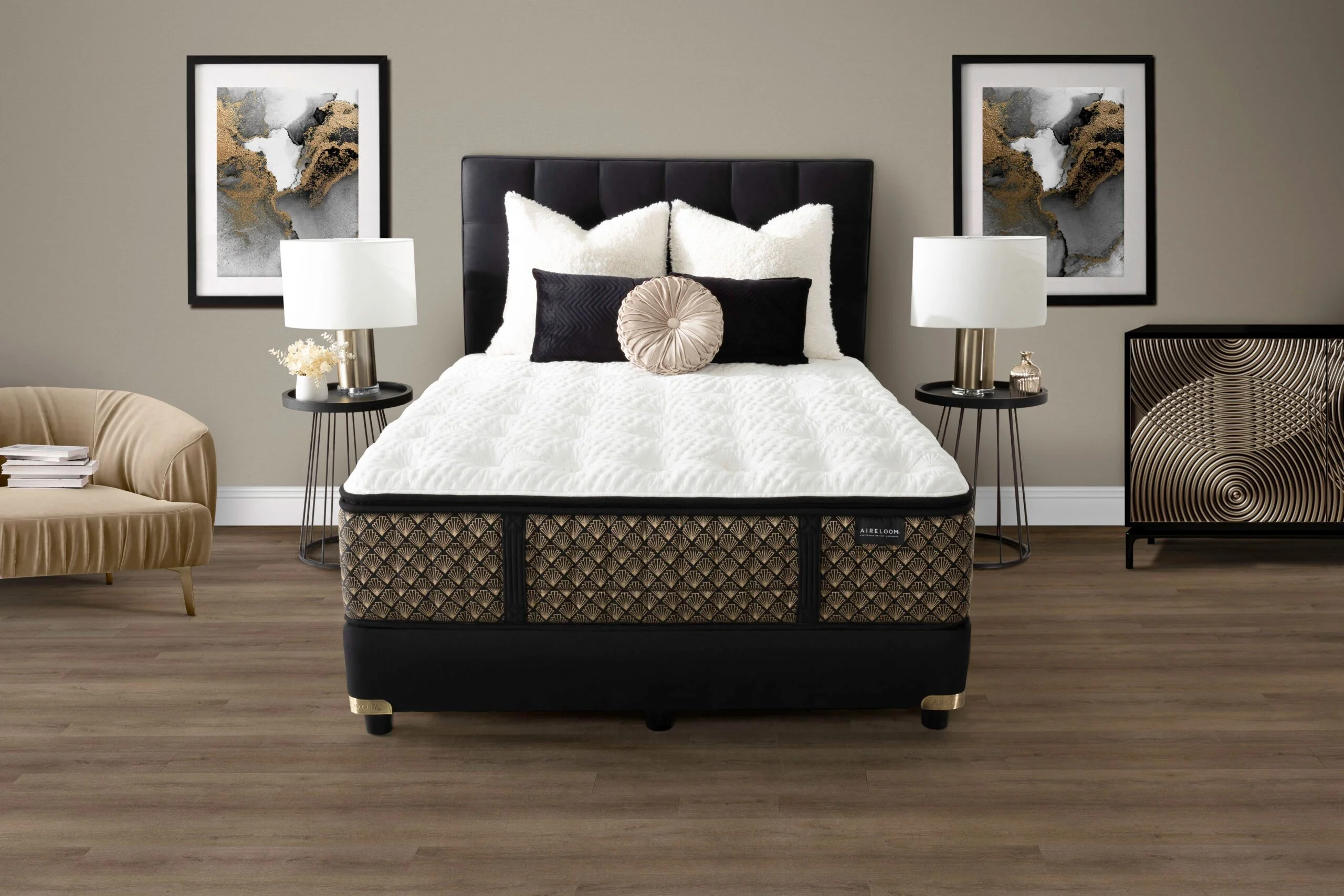
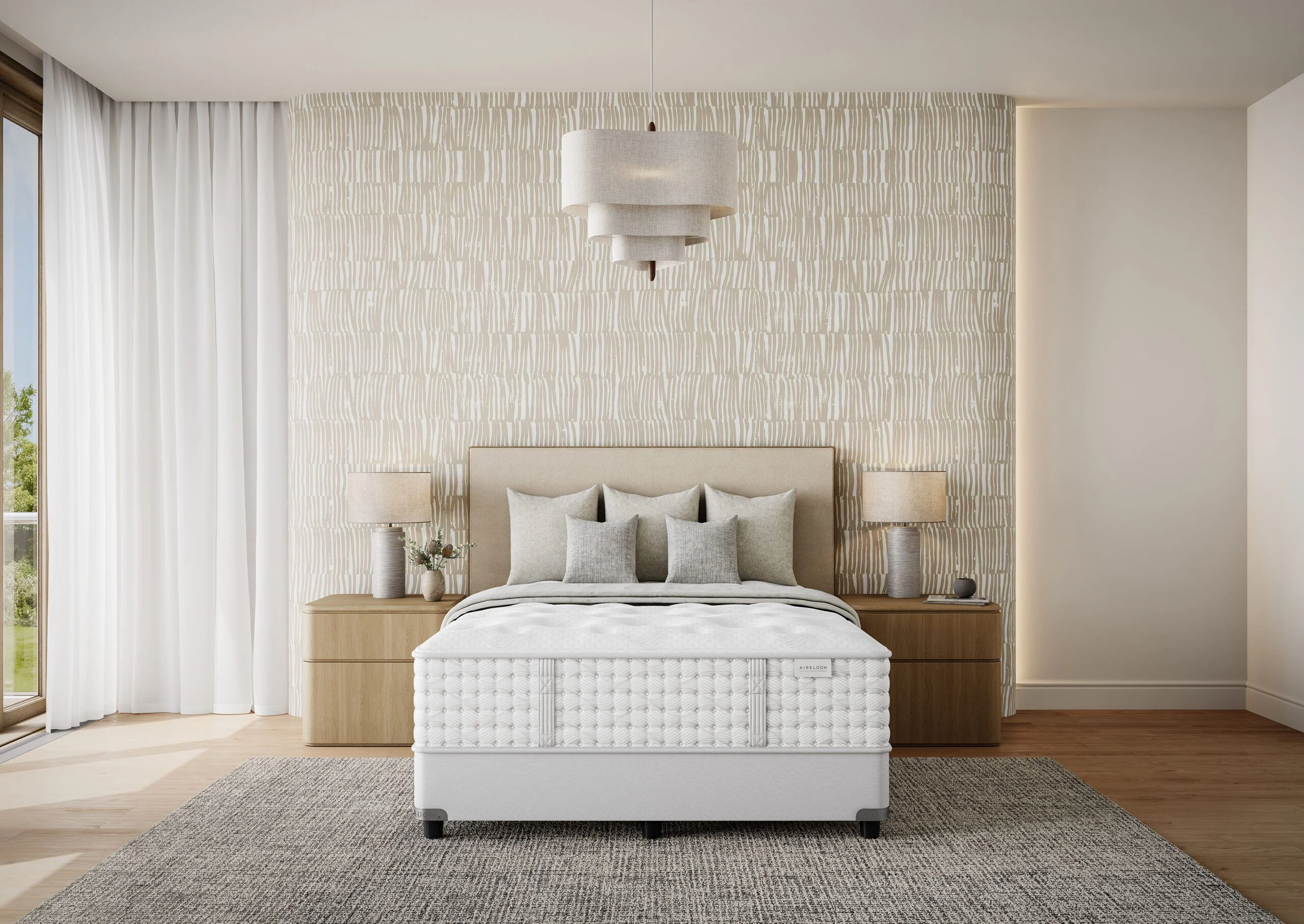
Short answer: no, Aireloom mattresses are not considered toxic. Every foam Aireloom uses is CertiPUR-US certified - meaning the foam is tested and made without formaldehyde, mercury, lead, ozone depleters, or prohibited phthalates, and emits low VOCs. Aireloom also uses wool as its flame barrier instead of fiberglass, and many models add OEKO-TEX-certified textiles like silk, cashmere, and organic cotton.
That said, Aireloom is not a fully organic brand. Most models still contain conventional polyurethane foam in their comfort layers. If your goal is a 100% organic, GOTS- and GOLS-certified mattress, Aireloom isn't it - but if your goal is a low-emission, fiberglass-free luxury bed, the safety profile holds up.
What's actually inside an Aireloom mattress
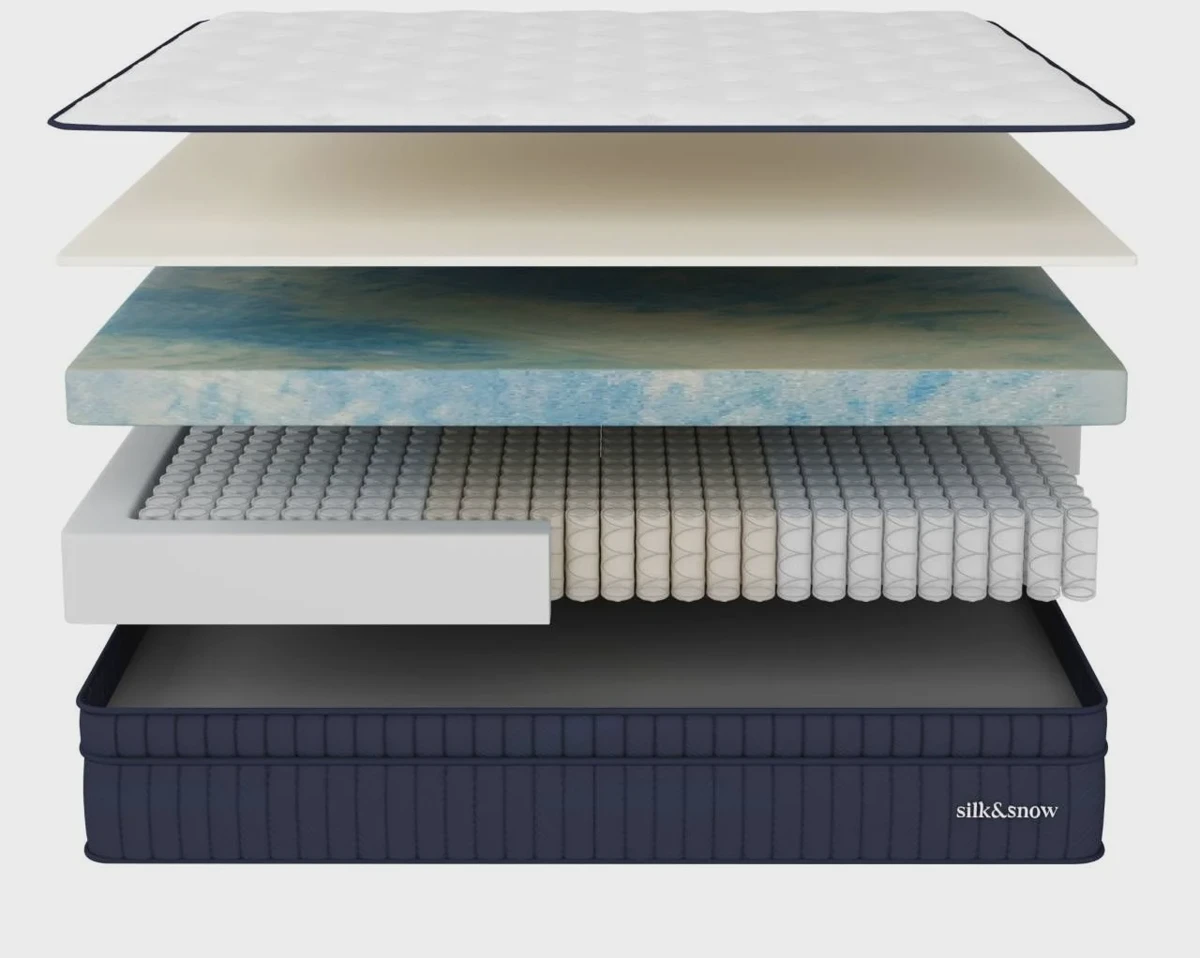
Aireloom is the consumer-facing line from E.S. Kluft & Company, hand-built in Southern California. Most models share the same general construction: a cover of natural fibers, comfort layers of foam and/or latex, a wool flame barrier, and a pocketed innerspring core.
- Cover: Joma wool, cashmere, silk, alpaca, or organic cotton blends, depending on collection.
- Comfort layers: Talalay latex and CertiPUR-US polyurethane / memory foam - the exact mix varies by model.
- Fire barrier: Natural wool. Wool meets the federal 1633 open-flame standard without fiberglass or chemical retardants.
- Support core: Individually wrapped (pocketed) coils, often in multiple zones for targeted support.
Aireloom is upfront that it does not make a 100% organic mattress; the brand explicitly says it uses upholstery-grade polyurethane foam alongside its natural materials.
The certifications that matter - and what they actually mean
- CertiPUR-US: Tests polyurethane foam for restricted substances and low VOC emissions (under 0.5 parts per million). It is a foam-only certification - it doesn't cover the cover fabric or fillings.
- OEKO-TEX Standard 100: Tests finished textiles (the cover, ticking, and quilting) for harmful substances. Aireloom advertises OEKO-TEX-certified components on several premium models.
- What's missing: Aireloom does not currently hold GOTS (organic textile) or GOLS (organic latex) certifications, and it isn't MADE SAFE certified. If those matter to you, look at brands like Naturepedic, Avocado, or Birch instead.
Off-gassing: what to expect the first week
Any mattress with polyurethane foam will release some odor when first unboxed - that's the volatile organic compound (VOC) release commonly called off-gassing. Because Aireloom's foams are CertiPUR-US certified for low emissions, the smell is generally mild and fades within a few days to a week of airing the bed out in a ventilated room. Owner reports on r/Mattress describe a moderate, short-lived smell - not the chemical-solvent reek associated with cheaper imported foam.
If you're chemically sensitive, asthmatic, or pregnant, set up the bed in a spare room with windows open for 48-72 hours before sleeping on it.
Strengths
- Fiberglass-free - wool flame barrier on every model
- All foams are CertiPUR-US certified for low VOCs
- OEKO-TEX-certified textiles on premium collections
- Hand-built in California with natural cover materials
- 10-15 year typical lifespan with proper rotation
Watch-outs
- Not 100% organic - still uses polyurethane foam
- No GOTS, GOLS, or MADE SAFE certifications
- Premium pricing relative to all-foam direct-to-consumer brands
- Brief, mild off-gassing period typical of foam mattresses
Who should buy Aireloom - and who shouldn't
Aireloom makes the most sense for shoppers who want a luxury, made-in-USA hybrid with strong third-party safety testing and natural cover materials, but who are comfortable with CertiPUR-US foam in the comfort layers. It's a reasonable upgrade from mainstream polyfoam beds and a step short of fully organic.
Look elsewhere if you're trying to eliminate polyurethane foam entirely. Naturepedic, Avocado, Saatva Zenhaven (all-latex), and Birch are commonly cited in editorial roundups as fully organic or all-natural alternatives.
How to lower exposure further regardless of brand
- Air the mattress out in a ventilated room for 2-3 days before first use.
- Use an OEKO-TEX or GOTS-certified mattress protector and sheets - they sit between you and the foam.
- Vacuum the surface monthly and rotate the mattress every six months.
- Never remove the cover. The wool fire barrier is sewn into the cover layer; cutting it open exposes raw foam and voids the warranty.
Aireloom safety FAQ
Do Aireloom mattresses off-gas?
Yes, briefly. Like any mattress with polyurethane foam, an Aireloom releases some VOCs when first unwrapped. Because the foam is CertiPUR-US certified for low emissions, the smell is typically mild and dissipates within a few days of airing out in a ventilated room.
Is an Aireloom mattress non-toxic?
By the working definition most safety-focused shoppers use - fiberglass-free, low-VOC foam, OEKO-TEX-certified textiles - yes. Aireloom's foams carry CertiPUR-US certification, every model uses wool (not fiberglass) as the fire barrier, and premium collections add OEKO-TEX-certified covers. It is not, however, a fully organic mattress.
Do Aireloom mattresses contain fiberglass?
No. Aireloom uses natural wool as its federal flame-resistance barrier on every model. That avoids the fiberglass leak failures that have affected some budget memory-foam beds.
Are Aireloom mattresses organic?
Not fully. Aireloom incorporates natural materials such as wool, cotton, silk, cashmere, and Talalay latex, but the brand explicitly states it does not make a 100% organic mattress and continues to use upholstery-grade polyurethane foam. It does not hold GOTS or GOLS organic certifications.
Where are Aireloom mattresses made?
Aireloom mattresses are hand-built in Southern California by E.S. Kluft & Company, using domestic and imported components.
How long does an Aireloom mattress last?
With normal use, rotation, and proper support, Aireloom mattresses typically last 10 to 15 years - in line with other premium hybrid mattresses.