Allswell mattresses are not toxic for normal household use. The foams are CertiPUR-US certified, which means they are made without formaldehyde, mercury, lead, ozone depleters, banned phthalates, or 'Tris' flame retardants, and they emit low levels of volatile organic compounds (VOCs). The wrinkle most older articles miss is fiberglass: several Allswell models use a fiberglass-based fire barrier under the cover. That barrier is safe inside a sealed cover, but it is the single most important thing to understand before you buy.
The short answer
Allswell's foams meet the CertiPUR-US standard, the mattresses comply with the federal 16 CFR 1633 open-flame regulation, and the brand discloses no banned chemicals in its construction. There is no published evidence that an Allswell mattress, used as intended with the cover on, exposes a sleeper to toxic levels of any chemical.
Two practical caveats keep this from being a clean 'no':
- Off-gassing odor is real for the first 1 to 6 days. It is not the same as toxicity, but sensitive sleepers should air the mattress out in a ventilated room before sleeping on it.
- The fiberglass fire sock used in some Allswell models can shed glass fibers if the outer cover is unzipped or torn. Keep the cover on at all times.
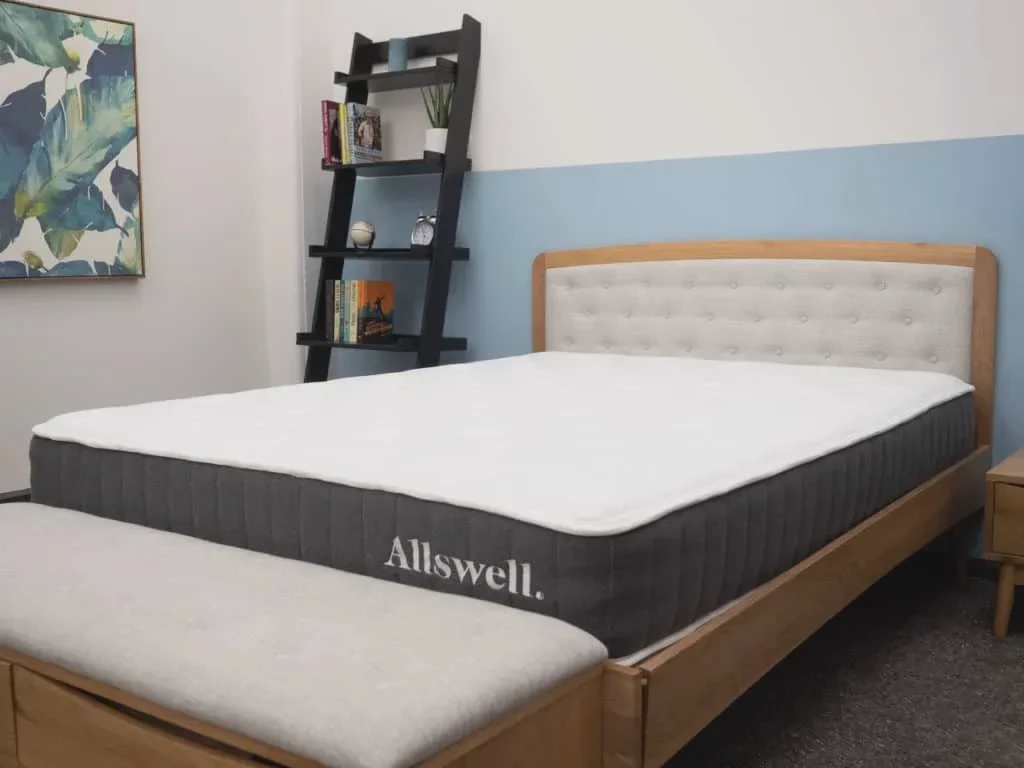
What is actually inside an Allswell mattress
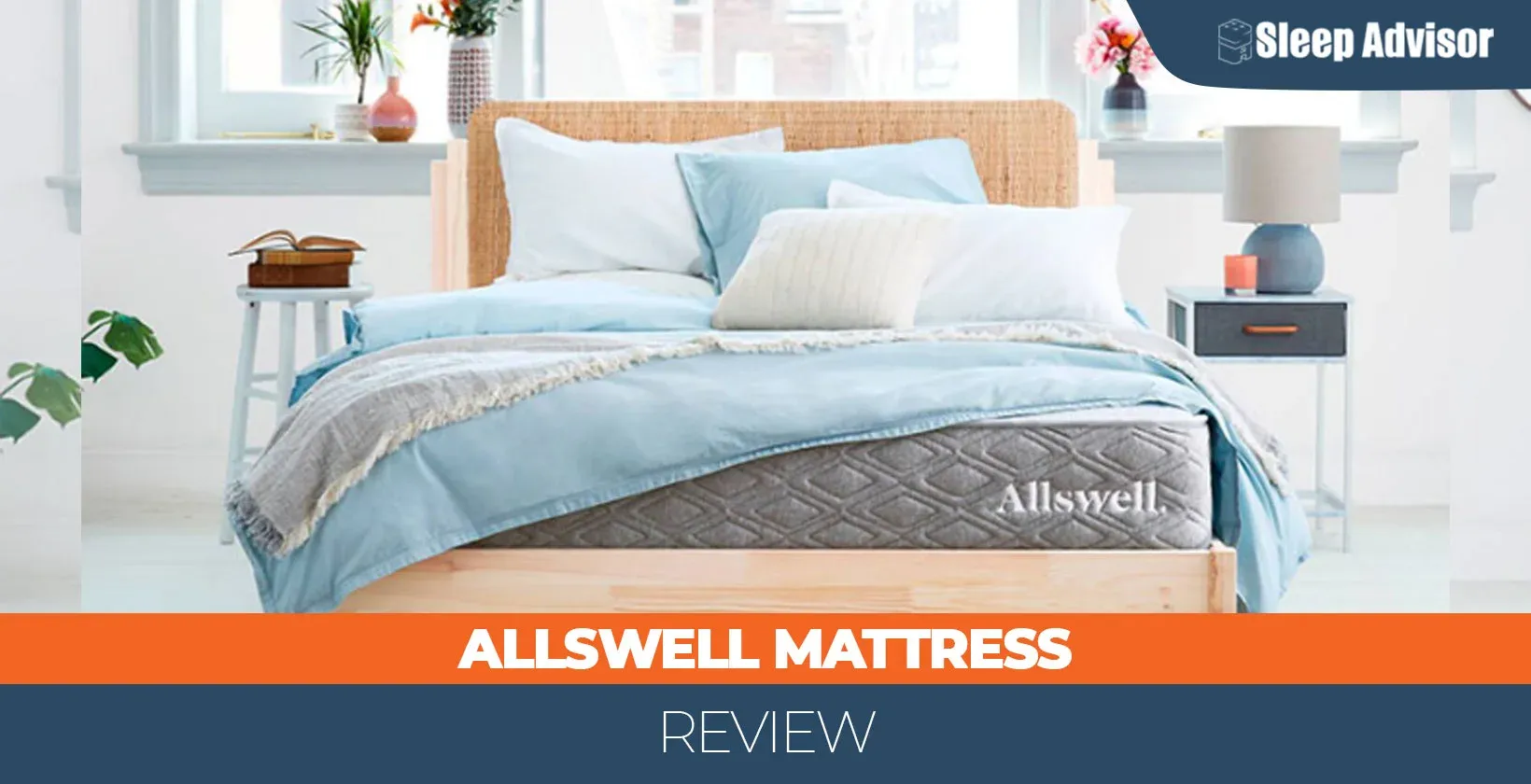
Allswell sells hybrid mattresses (the original 10-inch Allswell, the Luxe 12-inch, the Supreme 14-inch, and the Brick) plus an Allswell Organic latex model. The hybrids share a common build:
- A quilted polyester / poly-blend cover.
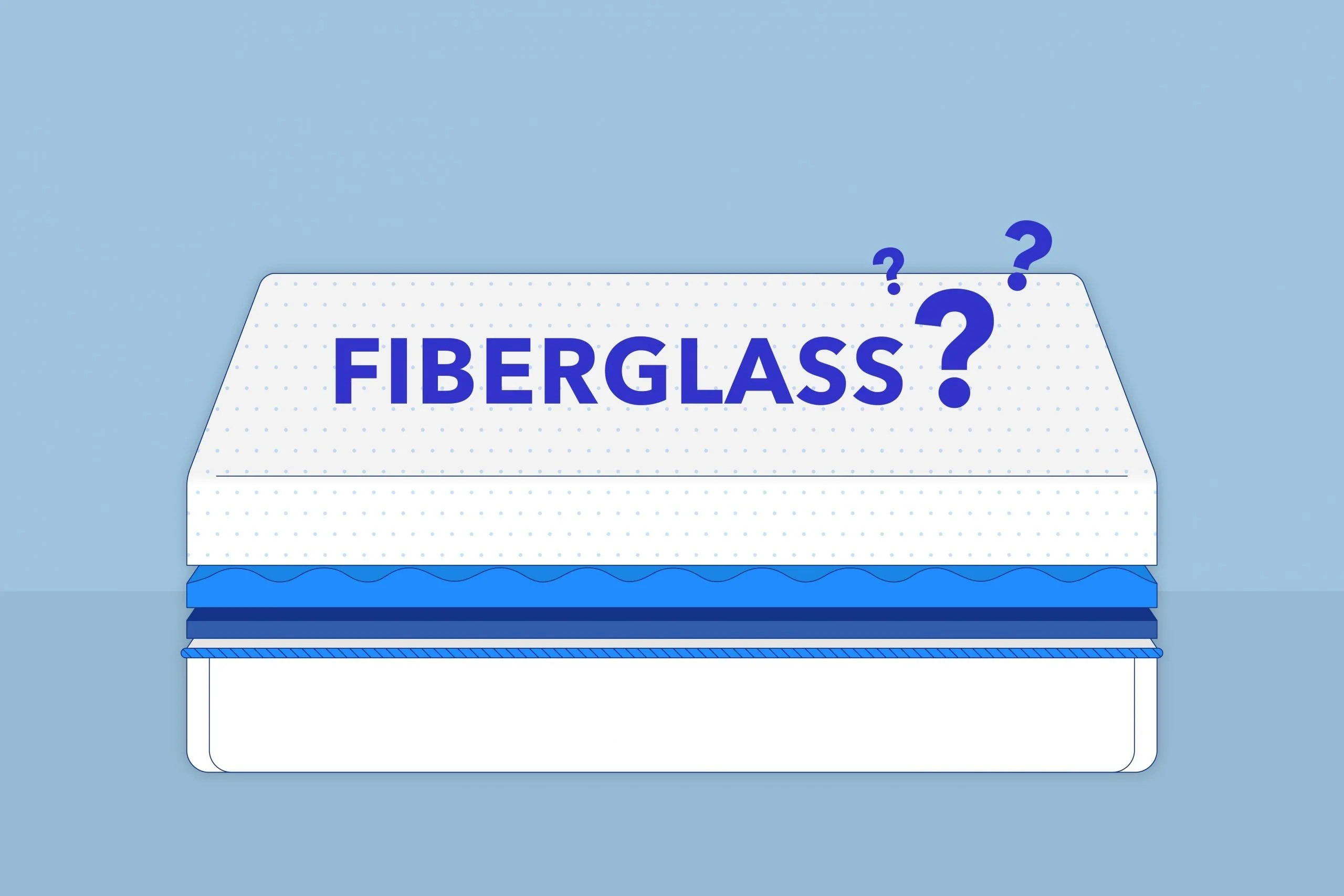
- A fire barrier layer (this is where fiberglass shows up on most non-organic models).
- Memory foam, often infused with copper gel or graphite for heat transfer.
- Transition foam.
- Individually wrapped (pocketed) coils for support and motion isolation.
- A high-density foam base.
Every foam layer in that stack falls under Allswell's CertiPUR-US certification. The metals in the coils are standard tempered steel. Nothing in the structural materials is unusual or unsafe by mainstream U.S. mattress-industry standards.
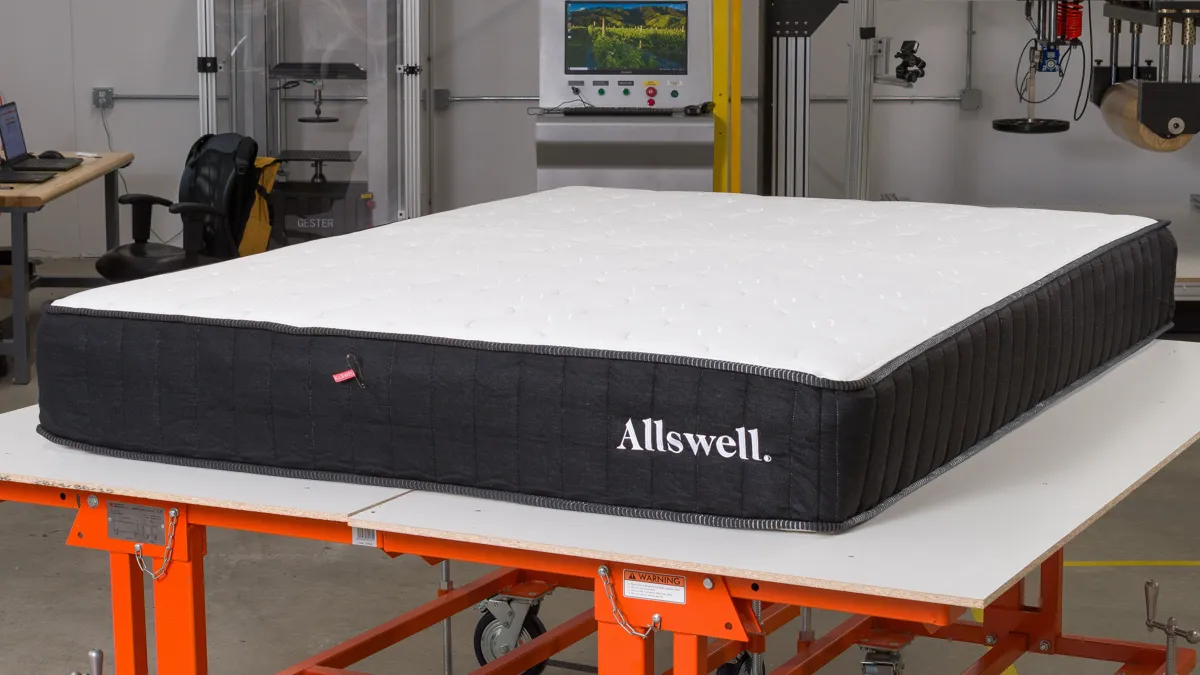
What CertiPUR-US actually certifies
CertiPUR-US is a third-party foam certification. A CertiPUR-US foam has been tested and verified to be made without:
- Mercury, lead, and other heavy metals.
- Formaldehyde.
- Phthalates regulated by the U.S. Consumer Product Safety Commission.
- PBDEs, TDCPP, or TCEP ('Tris') flame retardants.
- Ozone-depleting substances like CFCs.
It also caps total VOC emissions at 0.5 parts per million. CertiPUR-US does not certify the cover fabric, the fire barrier, or the coils - only the polyurethane foams. That is why the fiberglass discussion below is a separate question.
The fiberglass question, answered honestly
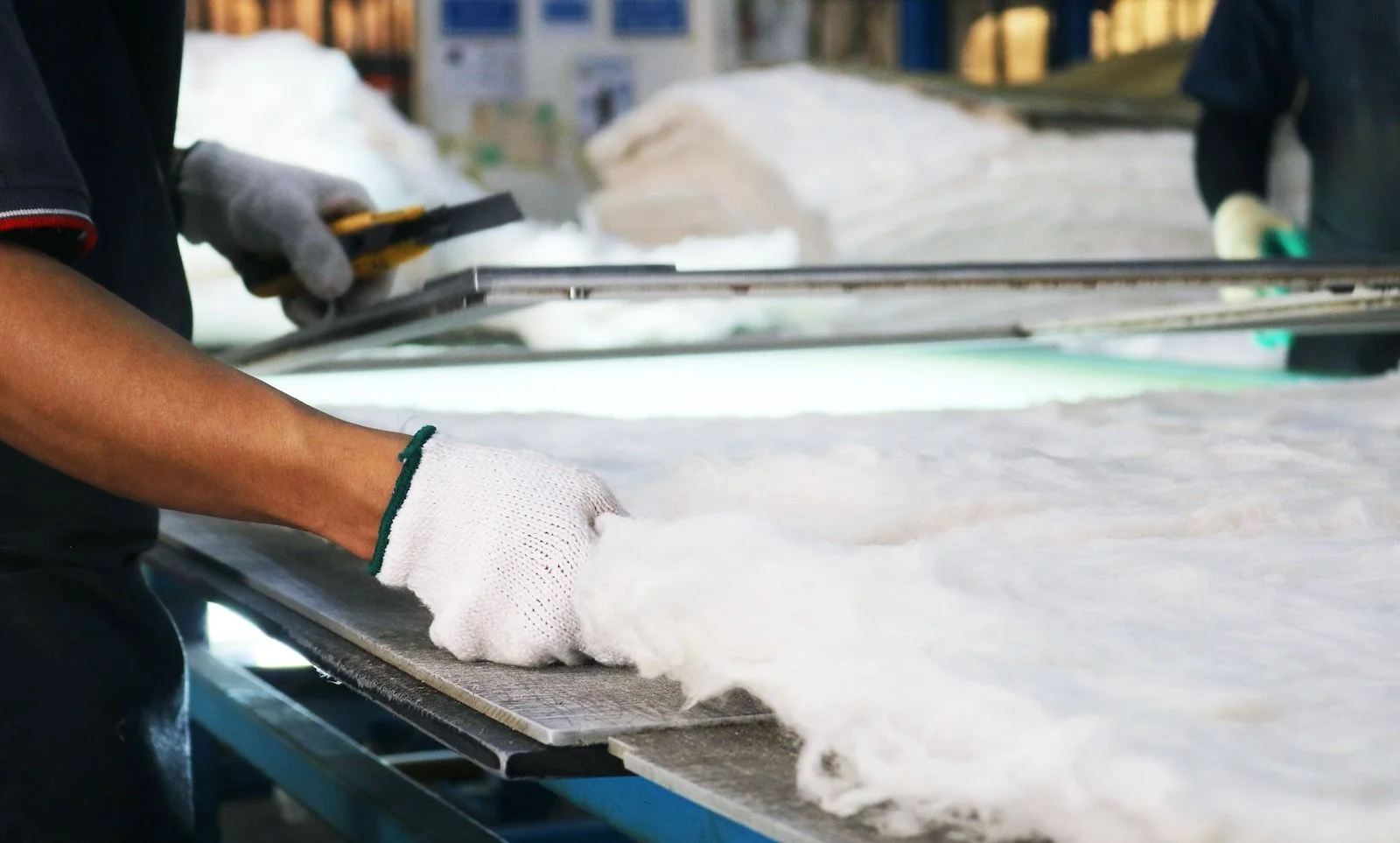
U.S. mattresses must pass the federal open-flame test 16 CFR 1633. Manufacturers can pass it with chemical flame retardants, with natural barriers like wool, or with a thin sleeve of glass fibers. Fiberglass is the cheapest path, which is why most budget bed-in-a-box brands - Allswell included on most models - use it.
While the cover stays on, fiberglass is sealed inside the mattress and does not migrate into the sleep surface. Real-world incidents you may have seen on social media all share the same root cause: someone unzipped or removed the cover for cleaning. Once the cover is off, fibers can drift onto bedding, into HVAC, and through the room, and they are very hard to clean up.
Two rules keep you safe:
- Never unzip the mattress cover, even if the law tag implies you can wash it.
- Use a zippered, washable mattress protector. Wash that, not the mattress itself.
If the idea of fiberglass anywhere in the build is a non-starter, skip the standard hybrids and choose the Allswell Organic, which uses wool as its fire barrier instead.
Off-gassing: what to expect the first week
All compressed foam mattresses release a chemical smell when they decompress - a mix of trapped manufacturing gases and trace VOCs from the foam. With Allswell, expect a noticeable odor for 1 to 3 days and a faint odor for up to a week. The smell is not the same as toxicity (the VOCs themselves are within CertiPUR-US limits), but it is unpleasant and can trigger headaches in people sensitive to chemical fragrances.
To speed it up: unbox the mattress in a ventilated room, run a fan or open a window for 24 to 48 hours, and avoid sleeping on it the first night if you are sensitive. Heat helps - sunlight on the cover for a few hours accelerates VOC release.
Who Allswell is - and is not - a fit for
Where Allswell holds up
- CertiPUR-US foams across every model - no banned flame retardants, formaldehyde, or heavy metals.
- Hybrid coil-over-foam build delivers better edge support and breathability than all-foam beds at the same price.
- 100-night trial and 10-year limited warranty are competitive for the budget tier.
- The Allswell Organic uses wool instead of fiberglass for fire compliance.
Where Allswell falls short
- Most models use a fiberglass fire barrier - safe in use, hazardous if the cover is removed.
- Off-gassing odor is stronger than premium memory-foam brands and lasts up to a week.
- No firmness customization - you pick the model, not the feel.
- Limited transparency about exact foam densities and coil counts compared with mid-tier hybrids.
Best fit by sleeper profile
- Average-weight back and side sleepers (130 to 250 lbs) get the most balanced experience.
- Couples benefit from the pocketed coils, which limit motion transfer.
- Hot sleepers do better on the Luxe or Supreme, which add copper or graphite gel infusions.
- Chemical-sensitive sleepers, allergy sufferers, and parents shopping for a kids' room should choose the Allswell Organic to avoid both fiberglass and synthetic foam.
- Heavyweight sleepers (over 250 lbs) will want the Supreme 14 or a sturdier mid-tier hybrid - the original 10-inch Allswell does not have enough support core.
How Allswell compares to other budget hybrids
On safety claims, Allswell is on par with Zinus, Linenspa, and Nectar - all CertiPUR-US, all federal-flammability compliant, all using fiberglass on at least some models. Where Allswell separates is build: a 10-inch hybrid at the Allswell price typically beats foam-only competitors on edge support and pressure relief. Where it loses is brand transparency. Saatva and Helix publish more detailed material disclosures and run their own factories; Allswell ships through Walmart's supply chain with less public sourcing detail.
Allswell mattress safety: quick answers
Is the Allswell mattress non-toxic?
Yes for normal use. The foams are CertiPUR-US certified, which rules out formaldehyde, heavy metals, banned phthalates, and 'Tris' flame retardants. Total VOC emissions are capped at 0.5 ppm. The mattress is safe to sleep on as long as the cover stays on.
Does the Allswell mattress contain fiberglass?
Most non-organic Allswell models use a fiberglass fire barrier sleeve under the outer cover to meet 16 CFR 1633 federal flammability law. The fiberglass is sealed and inert during normal use. The Allswell Organic uses wool as its fire barrier instead.
Can I wash or remove the Allswell cover?
No. Even if a tag suggests you can unzip and wash the cover, doing so risks releasing fiberglass fibers into your bedroom. Use a zippered mattress protector and wash that instead.
How long does Allswell off-gassing last?
Most odor dissipates in 1 to 3 days with a window open or a fan running. A faint smell can linger up to a week. Off-gassing odor is unpleasant but not the same as toxic VOC exposure - the foams test well within CertiPUR-US limits.
Is Allswell safe for kids and people with allergies?
The standard hybrids are safe for typical users, but allergy-prone or chemical-sensitive sleepers should consider the Allswell Organic. It uses certified organic latex and wool, with no synthetic foam and no fiberglass.
What if the Allswell cover gets torn?
If the inner fire barrier is exposed, stop using the mattress, isolate the room, and contact Allswell customer service for a replacement. Do not vacuum loose fibers with a household vacuum - it spreads them through the air.
Need help choosing a non-toxic mattress?
Our editorial team hands-tests every brand we recommend. Browse our latest non-toxic mattress picks and buying guides.
Bottom line
Allswell mattresses are not toxic. The foams clear the strictest mainstream chemical-emissions standard in the U.S. mattress industry, and the brand complies with federal flammability law. The one rule that turns Allswell from 'safe' into 'sketchy' is removing the cover - so don't. If you want a chemical-free build with no fiberglass at all, the Allswell Organic is the model to pick. For everyone else, the standard hybrids are a defensible budget choice as long as you treat the cover as permanently sealed and give the mattress a few days to air out before you sleep on it.
Sources
- CertiPUR-US program standard, certipur.us
- 16 CFR Part 1633 - Standard for the Flammability (Open Flame) of Mattress Sets, U.S. Consumer Product Safety Commission
- Sleep Foundation, Allswell Mattress Review (Oct 2025)
- NapLab, Is The Allswell Mattress Toxic? (Feb 2026)