The short answer
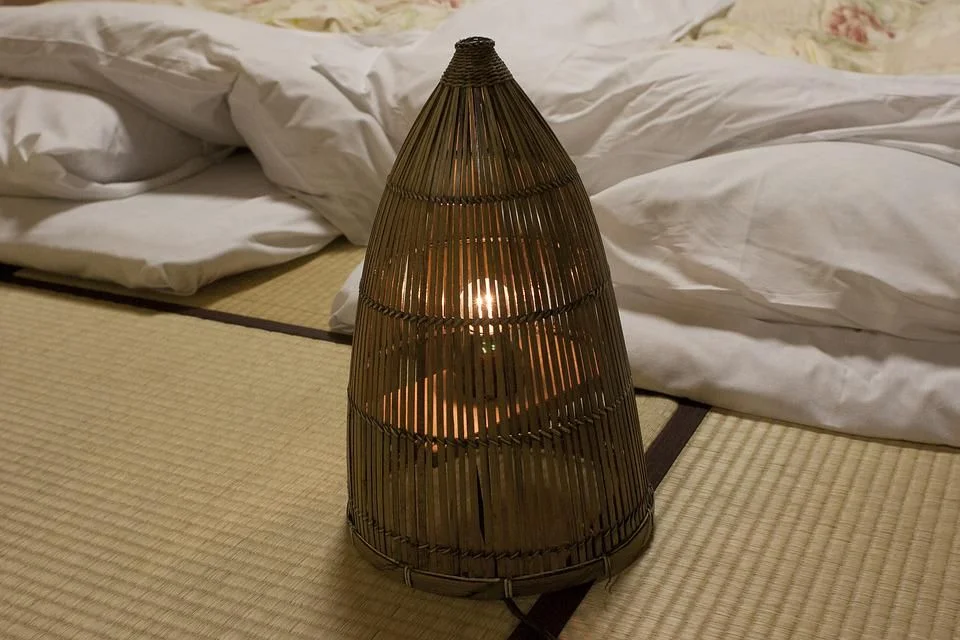
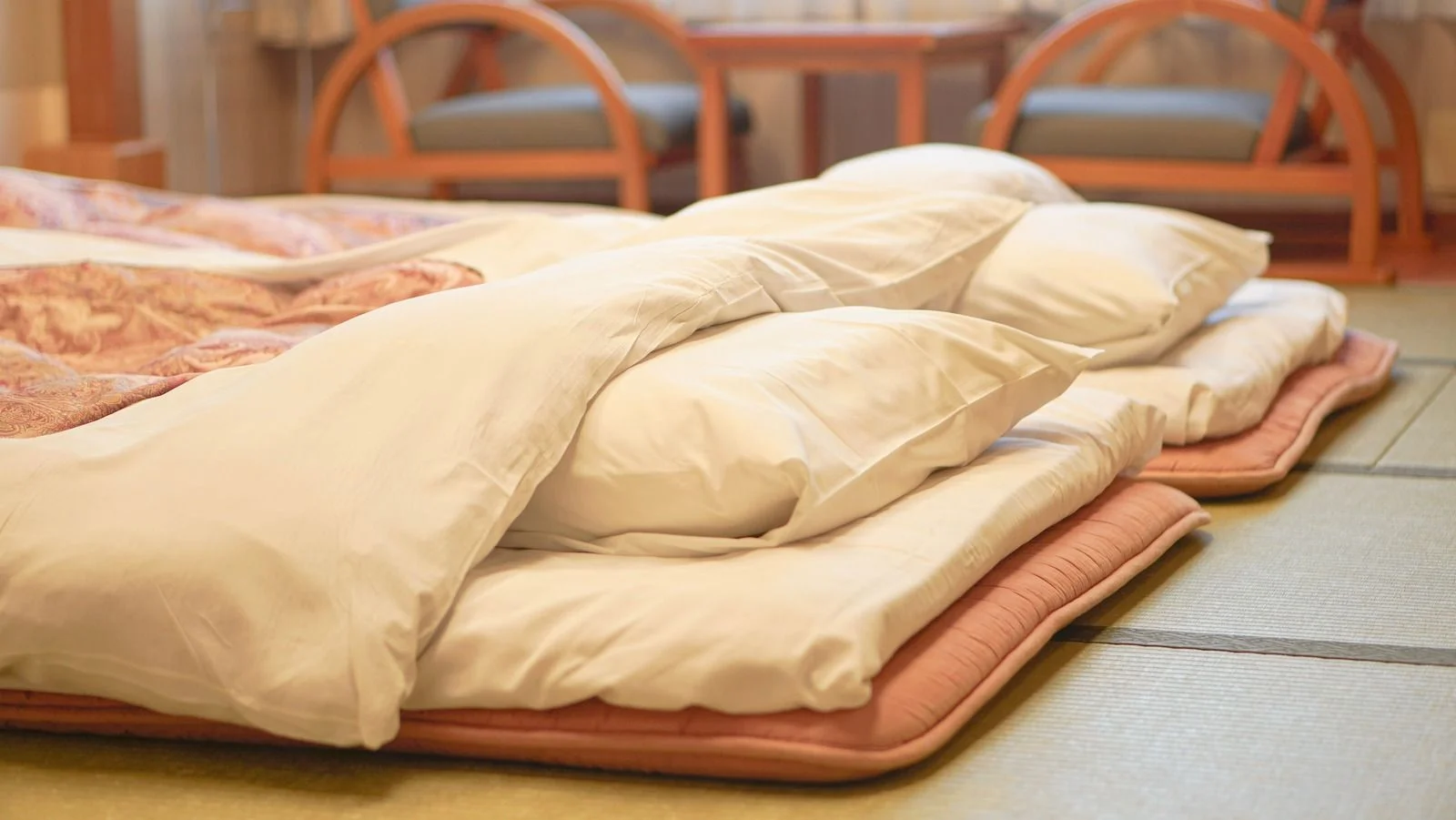
A good-quality Japanese shikibuton - the thin, firm, cotton-stuffed mat used directly on the floor or a tatami - can be good for your back, especially if you sleep on your back or stomach and currently sink too deeply into a soft mattress. The firm, flat surface keeps the spine in a more neutral line and stops the lower back from arching over a sagging zone. Healthline notes that a firm shikibuton "allows for natural alignment in the spine without the development of uncomfortable points of pressure."
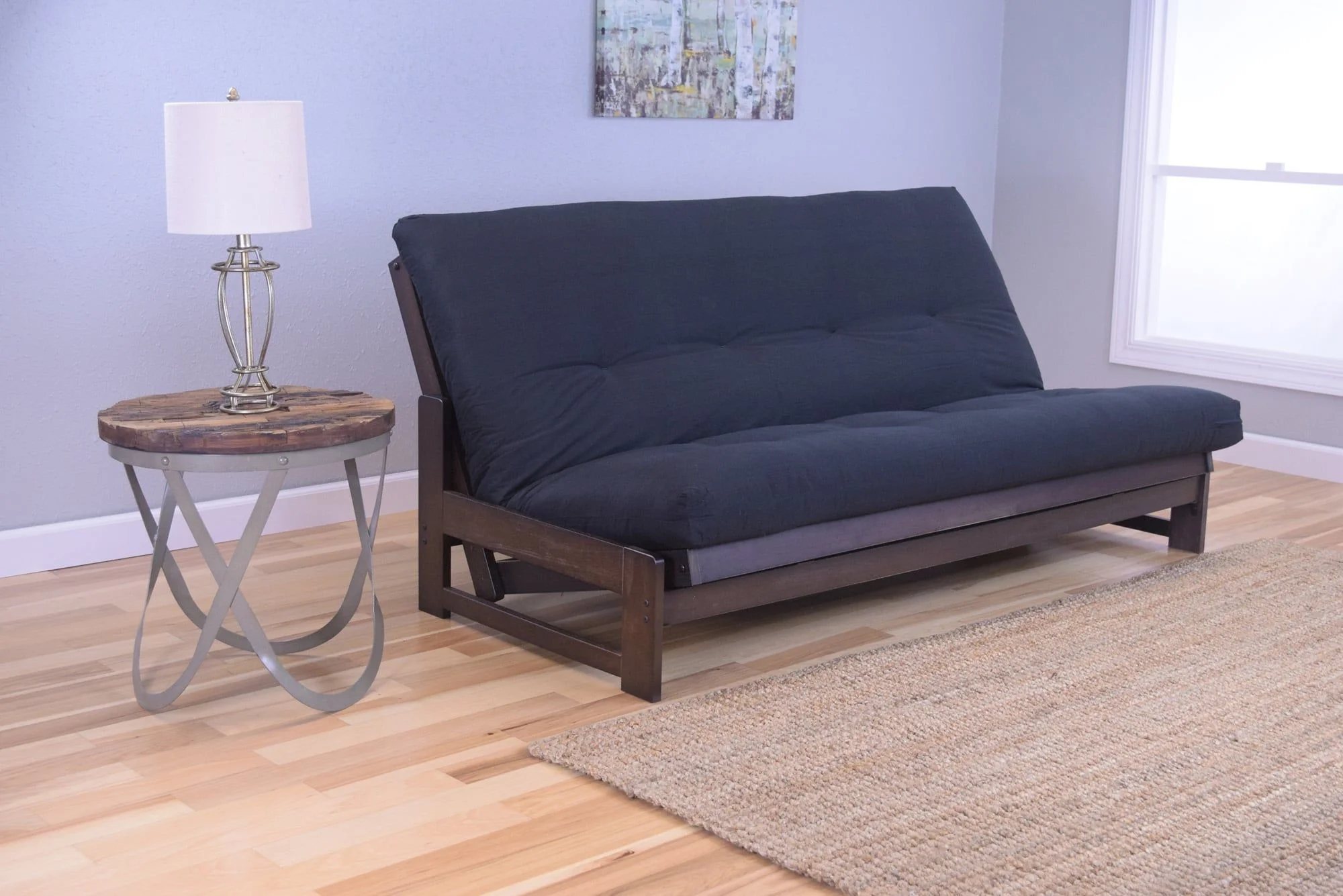
A Western platform-style futon - the convertible sofa-bed with a thin pad over a slatted frame - is usually the opposite. The pads are too thin to absorb pressure at the shoulder and hip, and the frame creates pressure points along the slats. If you have existing back pain, that style of futon will most likely make it worse.
Throughout this guide, "futon" means the Japanese shikibuton unless we say otherwise.
Why a firm, flat futon can help your back
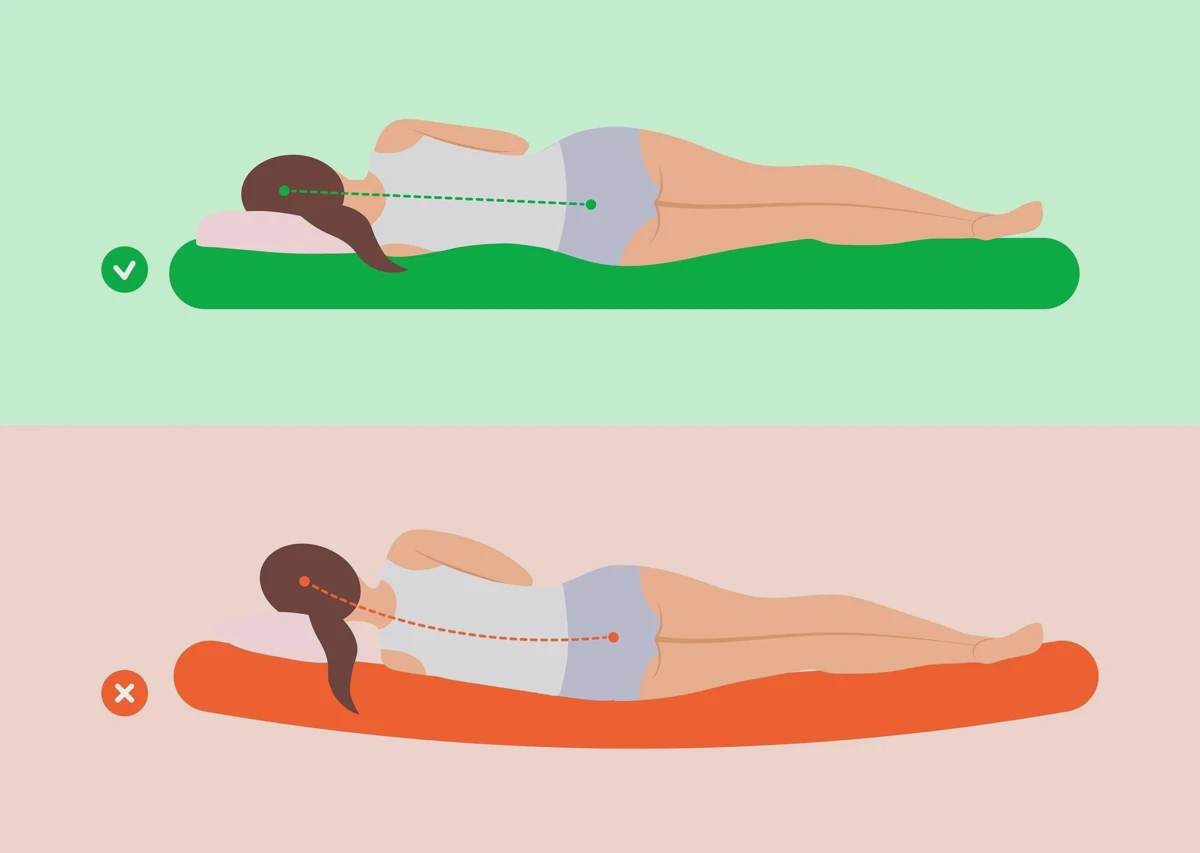
Back pain on a too-soft mattress is usually a posture problem. The hips drop into the foam and the lumbar spine gets pulled into an exaggerated curve all night. A shikibuton is firm enough that the hips don't sink, so the spine sits closer to the same line it has when you stand naturally. The Futon Shop makes the same point: "the best mattresses or futons for back pain are those that provide natural support and alignment of the spine, while in any position."
- Spinal alignment: the flat surface stops the lower back from arching into a sag.
- Even pressure distribution: weight is spread across the floor or tatami rather than focused on a soft "dip."
- Muscle relaxation: the supporting muscles don't have to work all night to compensate for instability.
- Cooler sleep: natural cotton/wool fillings breathe better than thick foam, which matters if heat aggravates your discomfort.
Reddit's r/backpain has multiple long-term anecdotes from people who switched off thick foam mattresses and reported less morning stiffness within a week or two - useful as signal, not as evidence. The peer-reviewed picture is mixed, but the existing research (e.g. the 2003 Lancet trial on medium-firm vs firm mattresses) consistently lands on "medium-firm beats very soft for chronic low-back pain." A shikibuton sits at the firm end of that range.
Pros for back health
- Firm, flat surface promotes neutral spine alignment
- No sagging "hammock" effect at the hips
- Encourages back- and stomach-sleeper posture
- Natural fillings sleep cooler than thick foam
- Easy to rotate or air out, so support stays consistent
Cons for back health
- Often too firm for side sleepers - shoulder/hip pressure
- Adjustment period of 1-2 weeks is common
- Low to the ground; hard for limited mobility
- Thin shikibutons (under ~3 inches) can bottom out
- Not interchangeable with a Western convertible futon
Who should and shouldn't sleep on a futon
Likely a good fit
- Back sleepers and stomach sleepers with low-back stiffness on a soft mattress.
- People who currently sleep on a sagging memory-foam bed and wake up worse than they went to sleep.
- Light- to mid-weight sleepers (under ~200 lb) who don't need extra cushioning to relieve pressure.
- Anyone tight on space - a shikibuton rolls up and stores in a closet during the day.
Probably not a good fit
- Strict side sleepers with broad shoulders or wide hips - the firmness creates pressure points that disrupt sleep.
- People with hip bursitis, shoulder impingement, or other diagnosed pressure-sensitive conditions.
- Heavier sleepers (250 lb+), where a thin futon will bottom out and push pressure into the floor.
- Anyone with mobility issues - getting up from floor level repeatedly is hard on knees and hips.
If you fall in the "probably not" group but still want a floor-style setup, a thicker tri-fold floor mattress (4+ inches with foam layers) is a more forgiving compromise than a traditional 3-inch cotton shikibuton.
Japanese shikibuton vs. Western convertible futon
These are completely different products that share a name.
Japanese shikibuton: 3-6 inches of cotton, wool, or sometimes a thin foam core, used flat on the floor or on a tatami mat. No frame. Designed to be the actual sleeping surface.
Western convertible futon: a thin folding pad on a wood or metal frame that converts between sofa and bed. Designed primarily as a couch with occasional bed duty.
For back health, only the shikibuton is in the conversation. The convertible style is a guest-room or studio-space solution; using it as a primary bed for years is the most common origin story we hear for new back pain, not the cure.
How to set up a futon for back support
If you want the spinal benefits without the side effects, the setup matters more than the price tag.
- Pick the right thickness. For most adults, target 3-4 inches. Heavier sleepers should look at 4-6 inches to avoid bottoming out.
- Use a tatami mat or breathable base. Tatami adds gentle give and improves airflow under the futon, which prevents moisture build-up and mildew.
- Rotate weekly. Cotton compresses where you sleep. Rotating head-to-foot each week keeps support even.
- Air it out. Once or twice a month, hang the futon over a chair or balcony rail in dry air for a few hours. This is part of the maintenance, not optional.
- Layer for side-sleeping nights. If you switch to your side, add a wool topper or a thin foam pad and a body pillow between your knees to keep the hips stacked.
- Replace at year ~5-7. A flattened, lumpy futon stops giving even support and starts causing the pain it was supposed to fix.
Common futon sizes
- Twin: 38" × 75" - solo sleepers, kids, small rooms.
- Full / Double: 54" × 75" - the most common size, fits one adult comfortably.
- Queen: 60" × 80" - couples; check the room can fit two laid out.
- King: 76" × 80" - rare in shikibutons; usually two queens side by side.
- Loveseat (Western frame): 54" × 54" - sofa duty only, not a back-friendly sleep size.
What to expect in the first two weeks
Most people who switch from a soft mattress to a firm shikibuton describe an adjustment window of three to seven days where the body re-learns the surface. Healthline's first-person account - "I threw out my bed" - and Reddit threads on r/backpain and r/minimalism converge on the same number: roughly a week of mild stiffness, then noticeably better mornings if it's the right fit.
If you're still worse two weeks in - sharper pain, numbness, or a new pattern of pain that wasn't there before - the futon is the wrong tool for your body. That's a signal to switch back, not to push through.
Futons and back pain - FAQ
Is sleeping on a futon every night safe long-term?
Yes, for many people. A traditional shikibuton is designed as the primary sleeping surface in Japan and is used nightly for years. The keys to making it sustainable are rotating it weekly, airing it out monthly, replacing it every 5-7 years once it flattens, and listening to your body during the first two-week adjustment.
Are futons better than firm mattresses for back pain?
Not necessarily. The surface that helps your back is one that keeps your spine in a neutral line - that can be a shikibuton, a medium-firm hybrid, or a high-density foam mattress. The 2003 Lancet trial on chronic low-back pain found medium-firm beat very firm for most sleepers. The futon advantage comes from removing sag, not from being maximally hard.
Are futons good for side sleepers?
Usually not on their own. Side sleeping concentrates body weight at the shoulder and hip, and a thin firm futon can't absorb that pressure. Side sleepers who want a futon should add a wool or 1-2 inch foam topper and use a knee pillow to keep the hips stacked. If pressure pain persists, a softer mattress (medium-soft hybrid) is a better tool.
Can a Western convertible futon ruin my back?
It can certainly aggravate it. Convertible-frame futons use thin pads over slatted bases that often sag through the middle and create pressure ridges along the slats. They're fine as occasional guest beds but a poor choice as a primary nightly sleeping surface, especially if you already have back pain.
Should I sleep on a futon if I have a herniated disc or sciatica?
Talk to your physician or physical therapist before you switch. People with disc-related pain often do better on a medium-firm surface that allows the lumbar curve to be supported rather than flattened against a hard floor. A shikibuton placed directly on a hard floor is usually too firm; a tatami underlay or topper softens it enough to be worth a trial.
How do I make a futon more comfortable without losing the back benefits?
The order matters. Start with a tatami or wool underlay for breathability and a small amount of give. Then a fitted cotton cover for hygiene. Add a thin (under 2 inch) wool or natural-latex topper only if you need extra pressure relief - anything thicker undoes the firm-and-flat benefit you bought the futon for. Rotate weekly.