Why Are Futon Mattresses So Low? 5 Reasons Explained
The low profile of a futon mattress isn't a quirk - it's the inheritance of a Japanese sleep tradition built around floor rest, tatami matting, and rooms that flex through the day.
Futon mattresses look strikingly low compared with Western beds - and that low profile isn't a design accident. It's the deliberate inheritance of a Japanese sleep tradition built around floor-level rest, tatami matting, and rooms that have to flex through the day.
Below: the five reasons traditional futons sit close to the ground, how the modern convertible futon evolved from that idea, and what the low profile actually means for sleep quality today.
Quick answer
A futon mattress is low because it was designed to be unrolled directly on a tatami floor, then folded and stored during the day. The low height supports back alignment, prevents heat retention in humid summers, and frees up living space - all priorities baked into Japanese home life for centuries. Modern convertible "futon sofas" inherit the same low silhouette even when set on a frame.
5 reasons futon mattresses sit low to the ground
1. Spine alignment and back support
Sleeping on a firm, low surface keeps the spine in a neutral position rather than letting hips sink into deep foam. For back and stomach sleepers, this is generally easier on the lumbar region than a plush, tall mattress. If you've already tried softer options and still wake up sore, our back pain mattress guides walk through the trade-offs.
2. Heat and humidity management
Japanese summers are hot and humid. A thin futon laid on a breathable tatami mat lets air move under and around the sleeper, while a tall pillow-top mattress traps body heat. Low + thin = cooler - the same physics that make a thin mattress topper sleep cooler than a pillowy hybrid.
3. Space-saving for small rooms
The defining feature of a traditional futon is that it gets put away. Roll it up in the morning, stash it in a closet, and the bedroom becomes a living room. This only works because the mattress is thin and low - a 12-inch hybrid can't be folded by hand.
4. Easier hygiene and airing
Lightweight futons can be carried outside and hung over a railing to air in sunlight, a regular Japanese household routine that helps dry out moisture and discourage dust mites. Low mattresses are also easier to flip, beat, and vacuum than a heavy boxed bed.
5. Cultural authenticity
Even modern futon manufacturers - especially those exporting to Western markets - preserve the low silhouette because it's part of the product's identity. A futon that sat as high as a standard mattress would feel like a sofa bed, not a futon.
How a traditional Japanese futon is built
A Japanese floor-sleeping setup is a three-piece system, not a single mattress:
- Shikibuton - the actual sleeping mattress. Usually three layers of cotton batting, foldable, 3-4 inches thick.
- Kakebuton - the comforter on top.
- Makura - the pillow, traditionally filled with buckwheat hulls or beans.
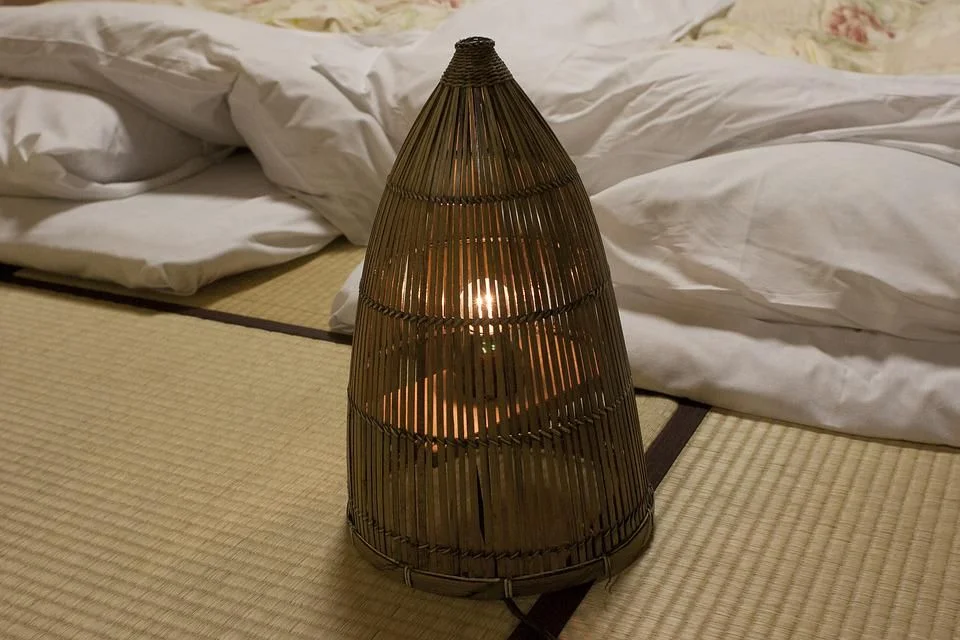
The shikibuton is laid on a tatami mat - a rush-woven floor covering that provides cushioning, breathability, and a small amount of give. That tatami is what makes sleeping directly at floor level workable; placing the same mattress on bare hardwood or concrete is a different experience.
How modern "futons" differ
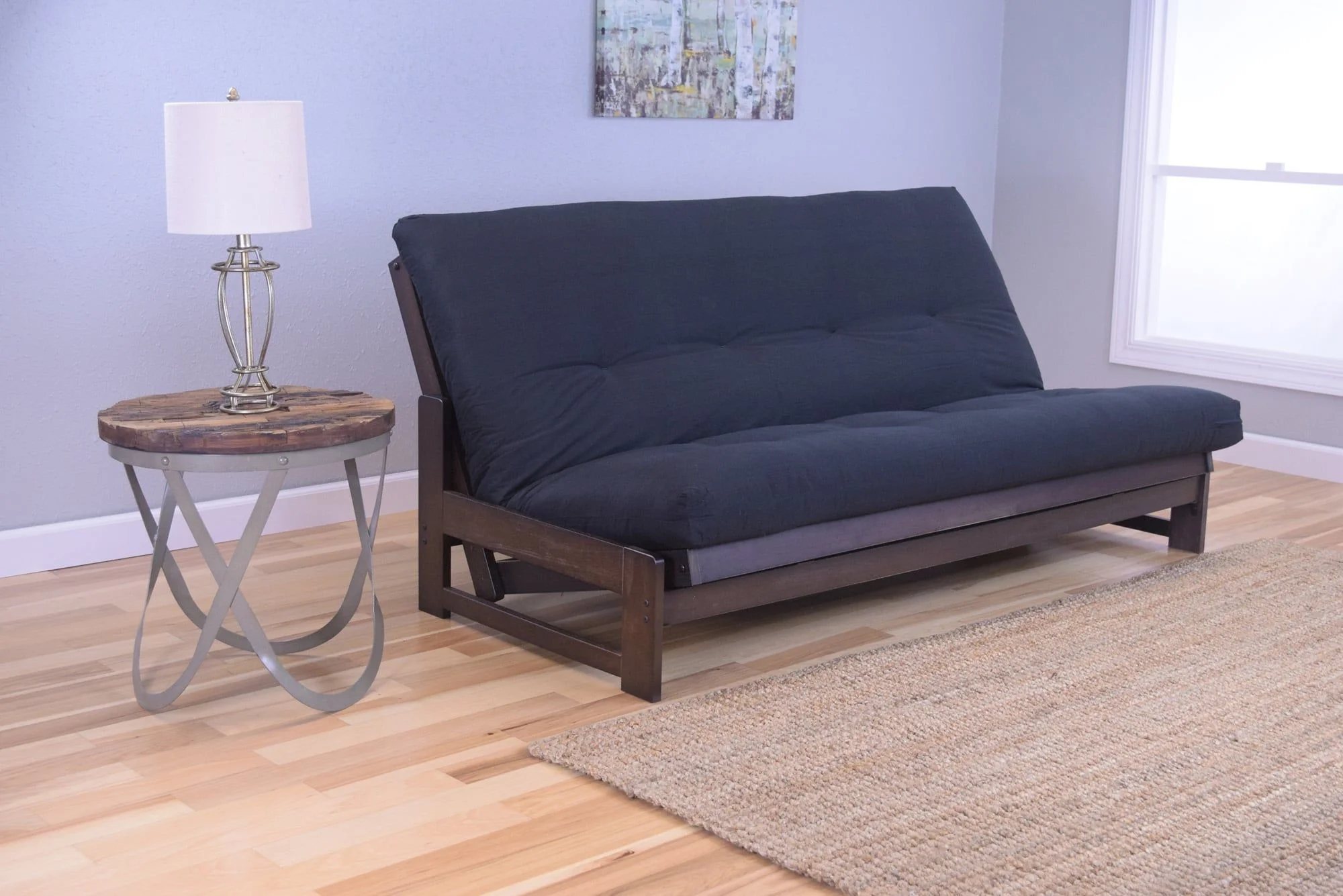
Most Western futons are convertible sofa-beds: a mattress mounted on a metal or wood frame with a hinge or slider mechanism that lets the seat fold flat. They're firmer and thicker than a shikibuton (usually 6-8 inches) but still sit lower than a typical sofa or bed because they inherit the low Japanese silhouette.
The trade-offs:
- Pros - affordable, doubles as guest bed, easy to move, fits small apartments.
- Cons - firmer than a dedicated mattress, mechanism wears over time, less support for side sleepers who need pressure relief at the shoulders and hips.
If you're using a futon as a primary bed every night, side sleepers especially should consider a mattress topper to add 2-3 inches of pressure relief.
Before you shop a Western convertible, it helps to know what are futon mattress sizes.
Is sleeping on a low futon actually good for you?
For most healthy adults, yes - provided two conditions:
- The surface underneath is forgiving. Tatami, a rug, or a low slatted frame works. A bare cold floor doesn't.
- You can get up and down. Floor sleeping is harder on knees and hips than getting out of a tall bed. People with mobility limits or recovering from surgery should pick a regular bed height.
Pregnancy, severe back pain, and joint conditions are all reasons to favor a standard-height mattress over a futon for nightly sleep.
Bottom line
Futons are low because they were never meant to be a permanent piece of furniture - they're a sleep surface that gets unrolled, used, and put away, on a floor designed to be slept on. The five reasons (back support, cool sleep, space-saving, hygiene, authenticity) all reinforce that one core idea. Modern convertible futons inherit the low height because it's still useful for the same reasons, even if your floor is hardwood instead of tatami.
If a true futon doesn't fit your life, a thin, firm mattress on a low platform frame captures most of the same benefits with less daily maintenance.
Frequently Asked Questions
Why are futons so low to the ground?
Futons sit low because they were designed to be unrolled directly on a tatami floor, then folded and stored during the day. The low profile supports spinal alignment, vents body heat in humid weather, and frees up living space - the three priorities Japanese homes have always balanced.
Are futon mattresses good for your back?
For back and stomach sleepers, a firm, low futon can actually be easier on the lumbar spine than a plush mattress that lets the hips sink. Side sleepers usually need more pressure relief at the shoulders and hips, so a 2-3 inch topper helps.
How thick is a traditional Japanese futon?
A traditional shikibuton is about 3 to 4 inches thick - three layers of cotton batting that compress underfoot but recover when aired. Western convertible futons are thicker, typically 6 to 8 inches.
Why do Japanese people sleep on the floor?
Tatami-floored rooms in traditional Japanese homes are designed to flex between sleeping, eating, and living. Rolling a futon out at night and storing it in the morning lets one room serve multiple purposes - useful in small spaces and central to washitsu-style architecture.
Can you put a futon mattress on a regular bed frame?
You can, but a thin futon on a tall frame defeats the point. If you want futon-style firmness with bed height, use a low platform frame with slats no more than 3 inches apart.