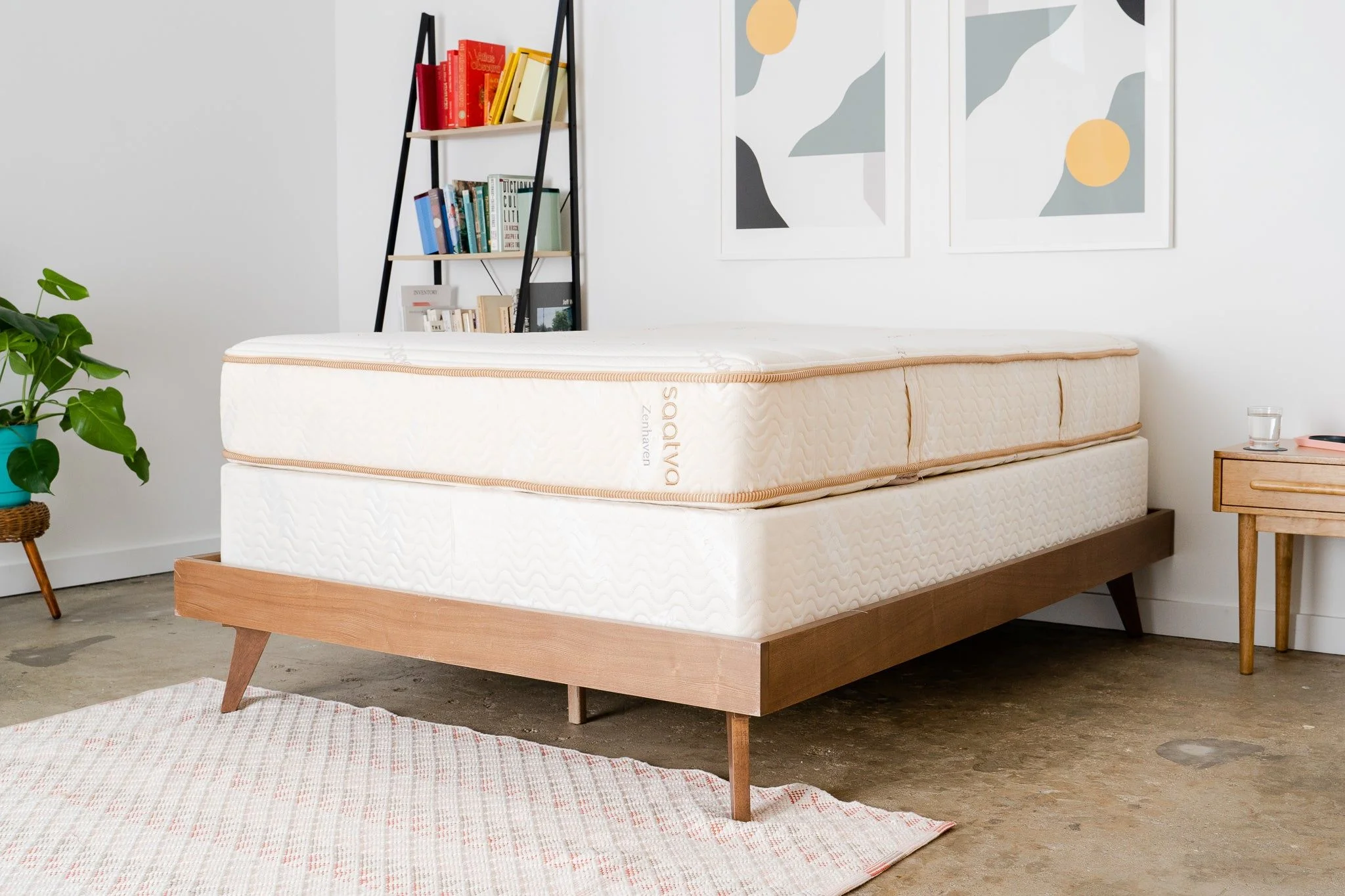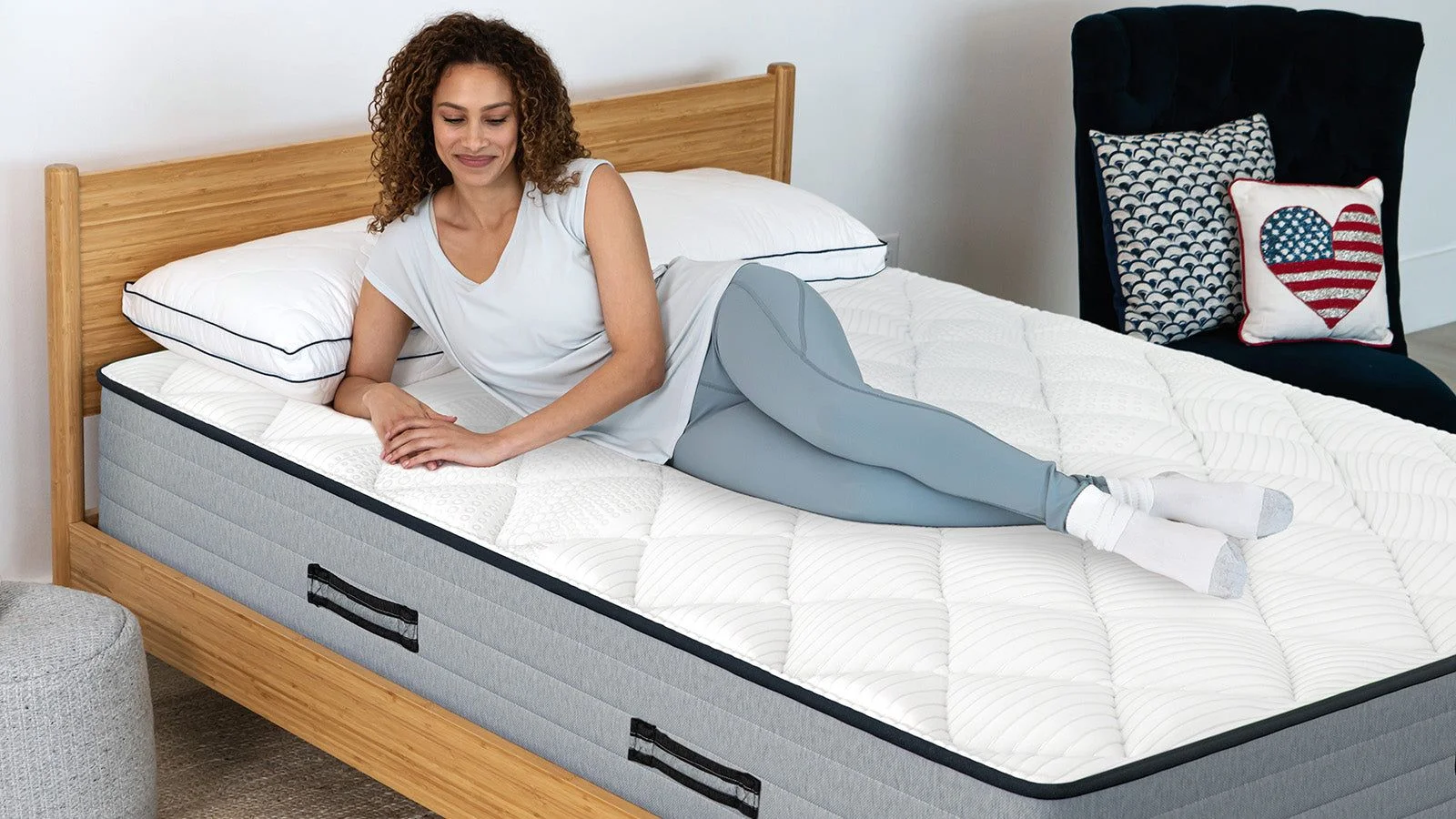
Back pain after sleeping on a memory foam mattress is one of the most common complaints we hear in our review lab. The good news: in most cases, memory foam itself is not the problem. The problem is a mismatch - wrong firmness for your body, foam that has lost its support, or a foundation that is sabotaging an otherwise good mattress.
A 2021 randomized trial published in Journal of Chiropractic Medicine found that medium-firm mattresses produced significantly better back-pain outcomes than firm mattresses for adults with chronic low-back pain. Memory foam beds in the 6 to 7 out of 10 firmness range tend to hit that sweet spot. If yours doesn't, the six causes below explain why - and what to do about each one without throwing the mattress away.
Why memory foam can cause back pain
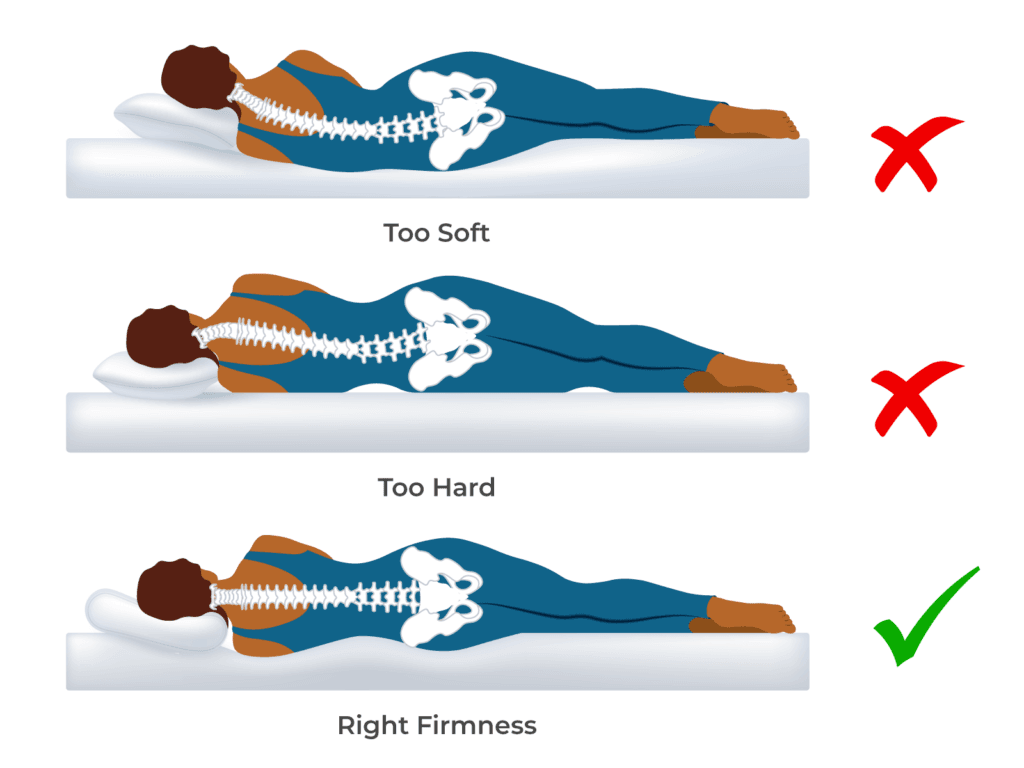
Memory foam works by softening under heat and pressure, then cradling the contours of your body. When the cradle is right, your spine stays in neutral alignment - the same gentle S-curve it has when you stand. When the cradle is wrong, your hips drop too far, your shoulders bunch up, or your lumbar arch loses contact with the surface entirely. That misalignment is what your back is feeling at 3 a.m.
There are six common reasons the cradle goes wrong.
1. The mattress is too soft for your weight
Symptom: You wake with lower-back ache; the bed feels like a hammock under your hips.
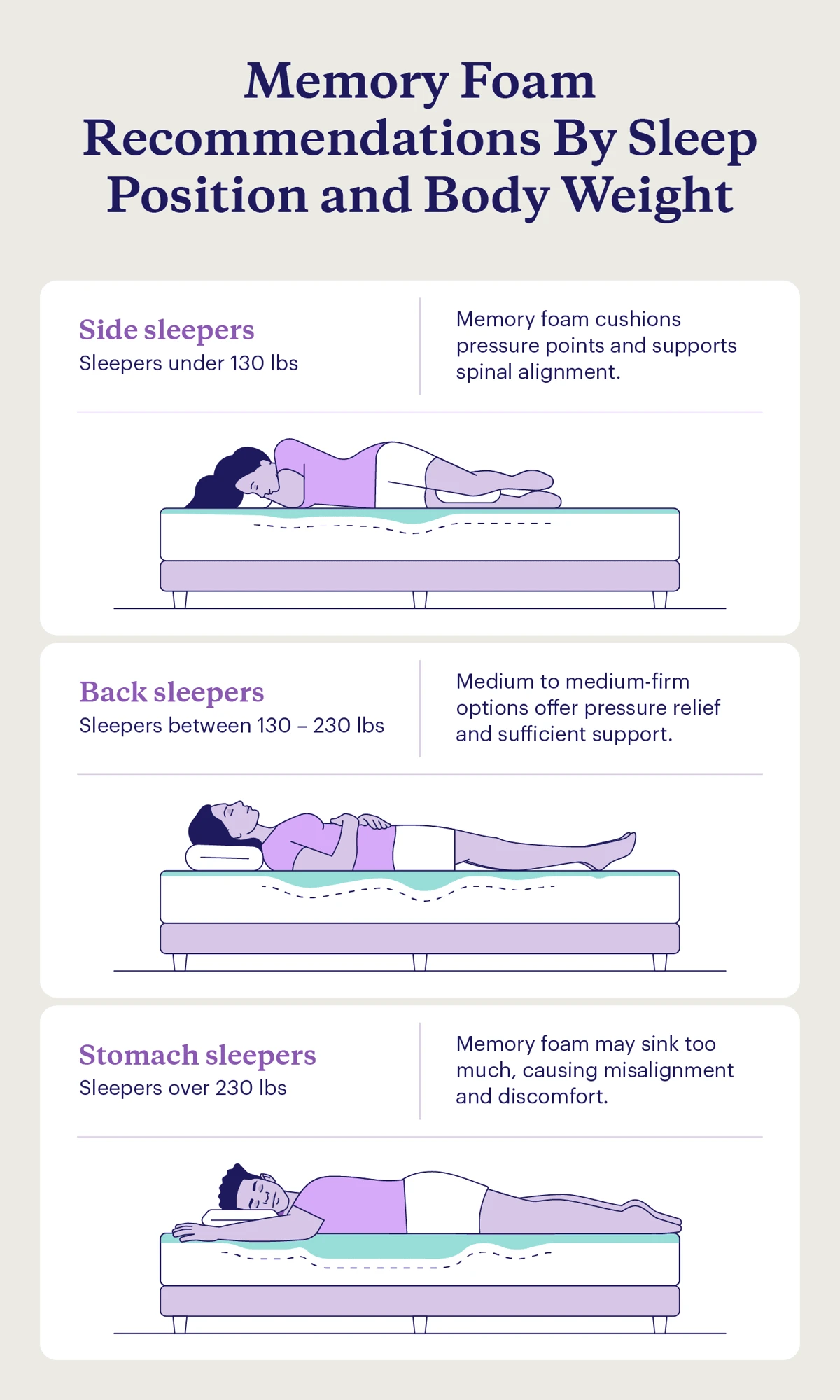
A mattress rated 3 to 4 out of 10 in firmness will let heavier sleepers - especially anyone over about 230 lb - sink so far that the lumbar spine bends out of neutral. Side sleepers tolerate softer beds because the shoulder and hip can sink while the waist still stays supported, but back and stomach sleepers above average weight almost always need a 6+ firmness rating.
Fix: A 2 to 3-inch firm latex or high-density polyfoam topper raises perceived firmness by roughly one full point on the 1-10 scale. It's the cheapest test before replacing the bed.
2. The mattress is too firm
Symptom: You wake with shoulder pain, hip pain, or a sore lower back; the bed feels like sleeping on a board.
Firm memory foam (8+ on 1-10) refuses to contour to the lumbar curve, so the lower back is suspended in the air with no support beneath it. Stomach sleepers can tolerate this; back sleepers sometimes can; side sleepers almost never can.
Fix: Add a 3-inch plush memory foam or wool topper. If the mattress is less than a few months old, give the foam another 30 days to break in before judging - most foams soften 5-10% in the first month of nightly use.
3. The mattress is brand-new
Symptom: You bought the bed a week ago and your back hurts for the first time in years.
Fresh memory foam is denser and stiffer than the same foam after it has been compressed and warmed by your body for 30 to 60 nights. This break-in period is real and well-documented; manufacturers like Tempur-Pedic, Nectar, and Saatva publish 30 to 90-day adjustment windows for a reason.
Fix: Sleep on it for 30 days before deciding. Walk on it. Keep the room above 65°F so the foam stays responsive. If pain persists past 60 nights, escalate to a topper or a return.
4. The mattress is old and sagging
Symptom: You can see a body-shaped impression deeper than 1.5 inches when the bed is unmade.
Memory foam loses density and resilience over time. Most mattress warranties consider sag deeper than 1 to 1.5 inches a defect, and that's the threshold where spinal alignment fails. Average lifespan is 7 years for budget memory foam (under $800) and 10-12 years for high-density beds like Tempur-Pedic.
Fix: A topper is a band-aid here, not a cure - once the support core has failed, no surface layer fixes it. Replace the bed.
5. The foundation is wrong
Symptom: New mattress, no break-in issues, but the bed still feels saggy or uneven.
Most memory foam mattresses require a solid platform or slats spaced no more than 3 inches apart. Wider slats (common on older bed frames built for innerspring) let the foam droop between them, killing support and voiding most warranties.
Fix: Add a bunkie board or plywood sheet on top of wide slats, or replace the foundation. Box springs designed for innerspring beds are not a good match for memory foam - they flex where the foam needs rigidity.
6. The mattress is low-density, low-quality foam
Symptom: Bed is under two years old but already feels saggy or hot; price was under $400 for a queen.
Foam density (measured in pounds per cubic foot) is the single biggest predictor of how long memory foam holds its shape. Low-density foams (under 3 lb/ft³) lose support fast. High-density memory foam runs 5 to 7 lb/ft³ and lasts roughly twice as long.
Fix: This is the one case where replacement is usually the only real answer - a topper masks the symptom for a few months but the core will keep degrading.
Quick fixes before you buy a new mattress
Most back-pain complaints can be solved without replacing the bed. Try these in order, cheapest first:
- Switch sleep position for a week. If a too-firm bed bothers your shoulders, try sleeping on your back; if a too-soft bed sinks your hips, try side sleeping with a knee pillow. The mattress feel changes drastically by position.
- Add a topper. A 2 to 3-inch high-density topper costs $80 to $250 and shifts firmness by about a full point. Plush toppers (memory foam, wool) soften firm beds; firm latex toppers stiffen soft beds.
- Check your foundation. Confirm slat spacing under 3 inches and zero broken slats. A $40 bunkie board fixes most slat-spacing issues.
- Rotate the mattress 180°. If your bed is one-sided (no flip), rotating head-to-foot every 3 months distributes wear and can revive a slightly sagging bed for another year or two.
- Wait out the break-in. Anything under 60 nights old gets the benefit of the doubt.
If none of those move the needle after two weeks, the mattress is the problem.
How to choose a memory foam mattress that won't cause back pain
For adults dealing with back pain, four specs matter more than the marketing copy on the box.
Firmness: Aim for medium-firm, roughly 6 to 7 on a 1-10 scale. The 2021 Journal of Chiropractic Medicine trial cited above and a 2015 Lancet-affiliated review both found medium-firm beds outperformed firm beds for back pain across body types. Side sleepers under 150 lb can drop to 5; back/stomach sleepers over 230 lb may want 7.
Foam density: 4 lb/ft³ minimum for the comfort layer; 1.8 lb/ft³ minimum for the high-resilience polyfoam support core. High-density beds (Tempur-Pedic, Saatva Loom & Leaf, Nectar Premier) are heavier and more expensive but last twice as long as 3 lb/ft³ budget foams.
Zoned support: Look for beds with reinforced lumbar zones - the Helix Midnight Luxe with the ErgoAlign layer, the Saatva Rx, and the WinkBed all firm up under the hips and lower back specifically. Zoning is the single most under-rated feature for back-pain sleepers.
Hybrid construction (optional but recommended): A memory foam comfort layer over a pocketed-coil base gives you the cradle of foam plus the rigidity coils provide. Hybrids tend to sleep cooler and sag less than all-foam at the same price.
Trial period is non-negotiable: never buy a mattress without at least 100 nights of in-home trial. Nectar offers 365 nights, Saatva 365, Helix 100, Tempur-Pedic 90. If a brand won't let you sleep on it for at least three months, that tells you what they think will happen on night 91.
When to see a doctor
A mattress is only one variable in back pain. See a physician or physical therapist if:
- Pain wakes you up multiple times a night for more than two weeks
- Pain radiates down a leg or causes numbness
- Pain persists 30+ days after switching mattresses
- You have a history of disc problems, scoliosis, or recent injury
A mattress can aggravate back pain or relieve it, but it almost never causes structural pain on its own. If a new, properly-matched mattress doesn't fix things in a month, the issue is probably not the bed.
Bottom line
Memory foam isn't bad for your back - the wrong memory foam is. Match firmness to your weight and sleep position, insist on at least 4 lb/ft³ comfort-layer density, put it on a solid or close-slatted foundation, and give a new bed 30 to 60 nights to break in. If you do all four and still wake up sore, the bed has failed and it's time to replace it. If you can only afford one fix, a high-density firm topper is the most effective single change for under $200.