You spend roughly a third of your life on your mattress, and a tired one quietly steals sleep long before it looks obviously broken. Most mattresses are designed to last 7 to 10 years, but the calendar is the least reliable signal. Your body, your sleep tracker, and the surface itself usually speak up first.
Below are the nine signs we look for in our review lab - pulled from over a thousand hands-on mattress evaluations - plus expected lifespans by material so you can plan the next replacement instead of being surprised by it.
Quick answer: how often should you replace a mattress?
Replace your mattress every 7 to 10 years for most types - sooner if support has visibly failed or sleep quality has dropped. The right window depends heavily on what's inside the bed:
- Innerspring: 5-7 years (coils fatigue first)
- Memory foam: 7-10 years
- Hybrid: 7-10 years
- Latex: 12-15 years (longest-lived mainstream type)
- Pillow-top: 5-7 years (the comfort layer breaks down before the support core)
- Waterbed: 10-12 years
Heavier sleepers, two-person beds, and mattresses without a protector all sit toward the shorter end of these ranges. Solo sleepers under 150 lbs on a high-quality bed in a stable climate can sometimes stretch beyond them.
9 signs it's time to replace your mattress
1. You wake up sore, stiff, or in more pain than you went to bed with
Healthy mattresses keep your spine roughly neutral - hips and shoulders supported, lumbar curve filled in. As foams soften and coils lose tension, that alignment slips. The result is morning back pain, hip stiffness, or a sore neck that fades within an hour of getting up. If that pattern is new and persistent, the mattress is the most likely culprit before age, posture, or your pillow.
2. You can see (or feel) a body impression
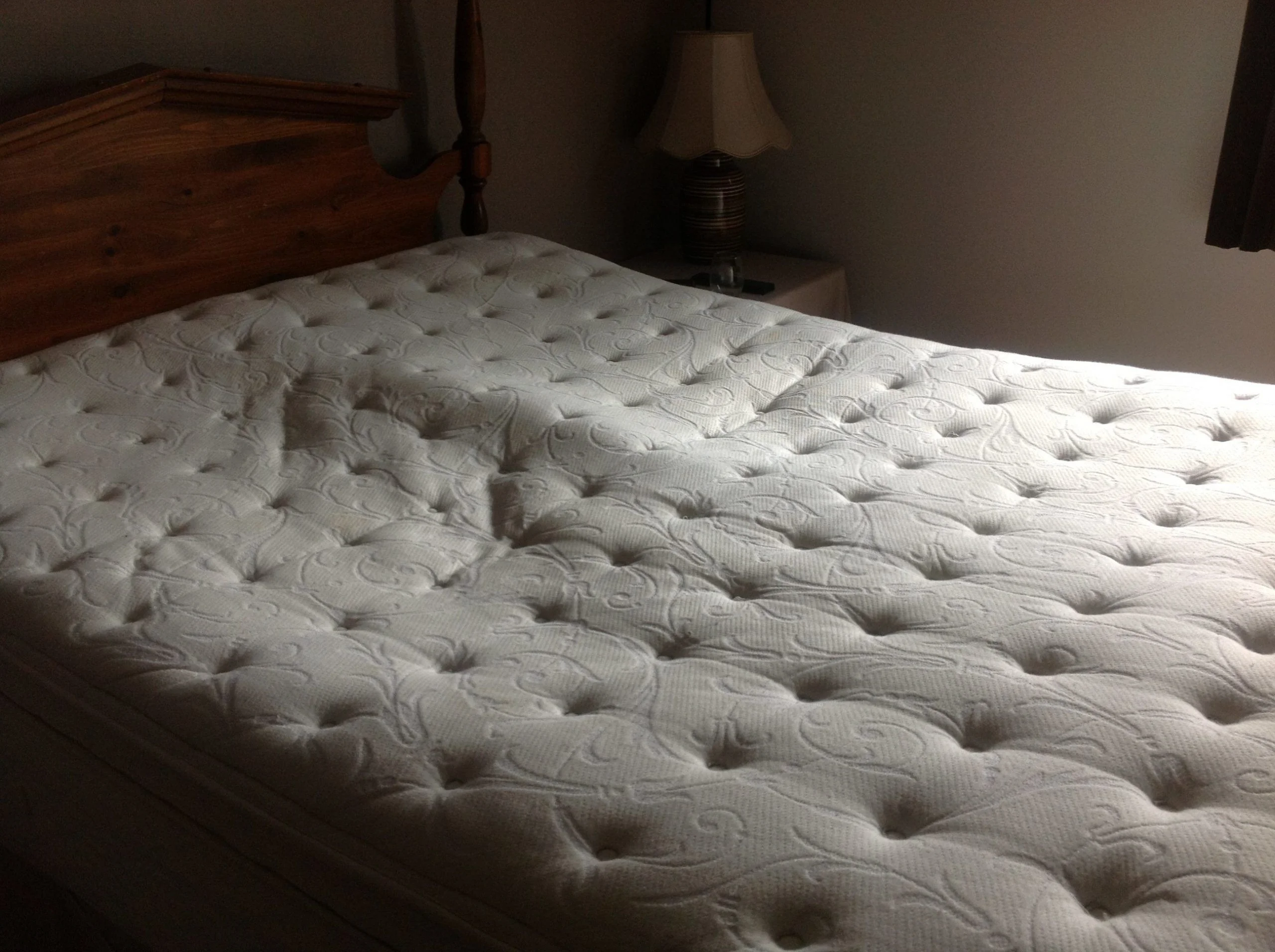
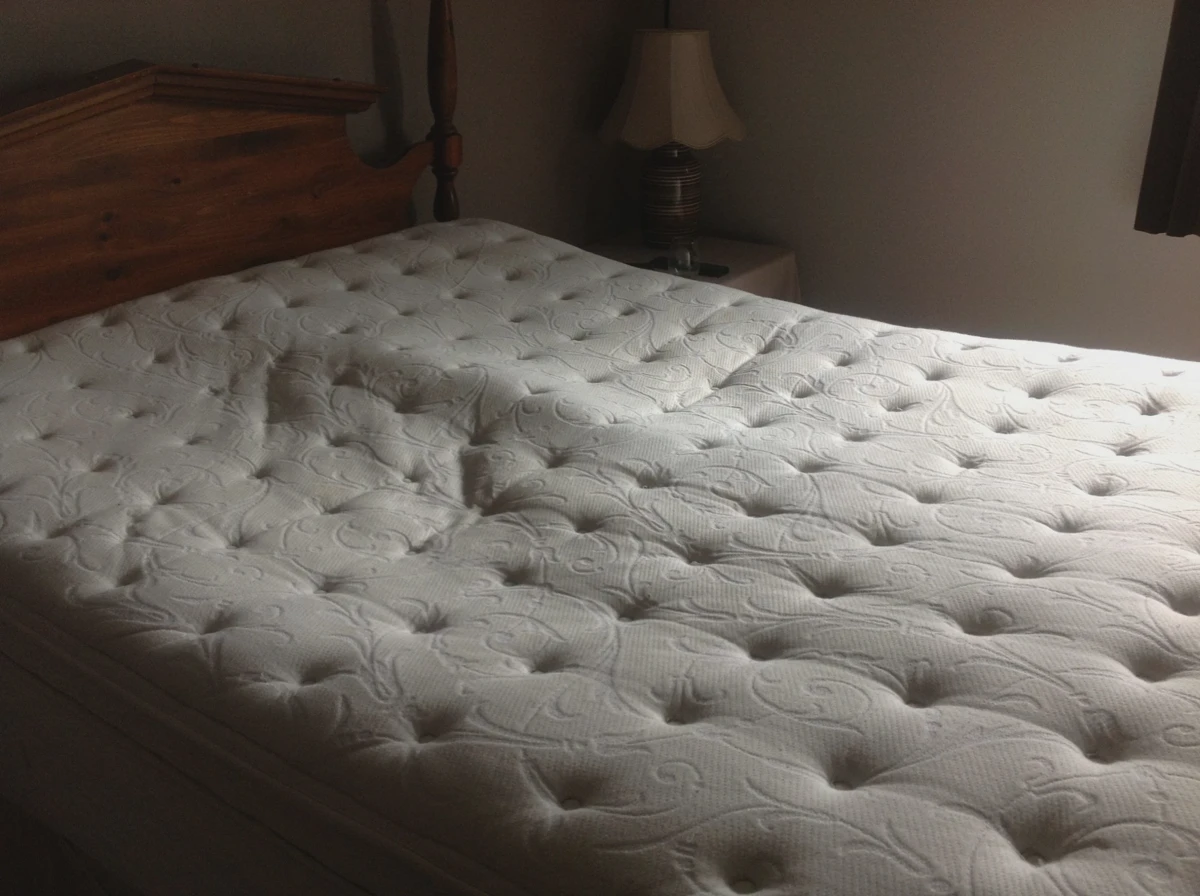
Run your hand across the surface in the morning. A new mattress recovers within seconds. A failing one keeps a dent where you slept, sometimes deep enough to roll into. Most manufacturer warranties only cover sagging deeper than 1 to 1.5 inches with the bed unloaded - but functionally, anything past about half an inch is already affecting your spine.
3. You sleep noticeably better somewhere else
Hotels, guest rooms, even a friend's couch - if you consistently wake up more rested on other surfaces, that's your body telling you the mattress at home is the problem, not your sleep schedule. This is one of the strongest single signals because it controls for everything except the bed itself.
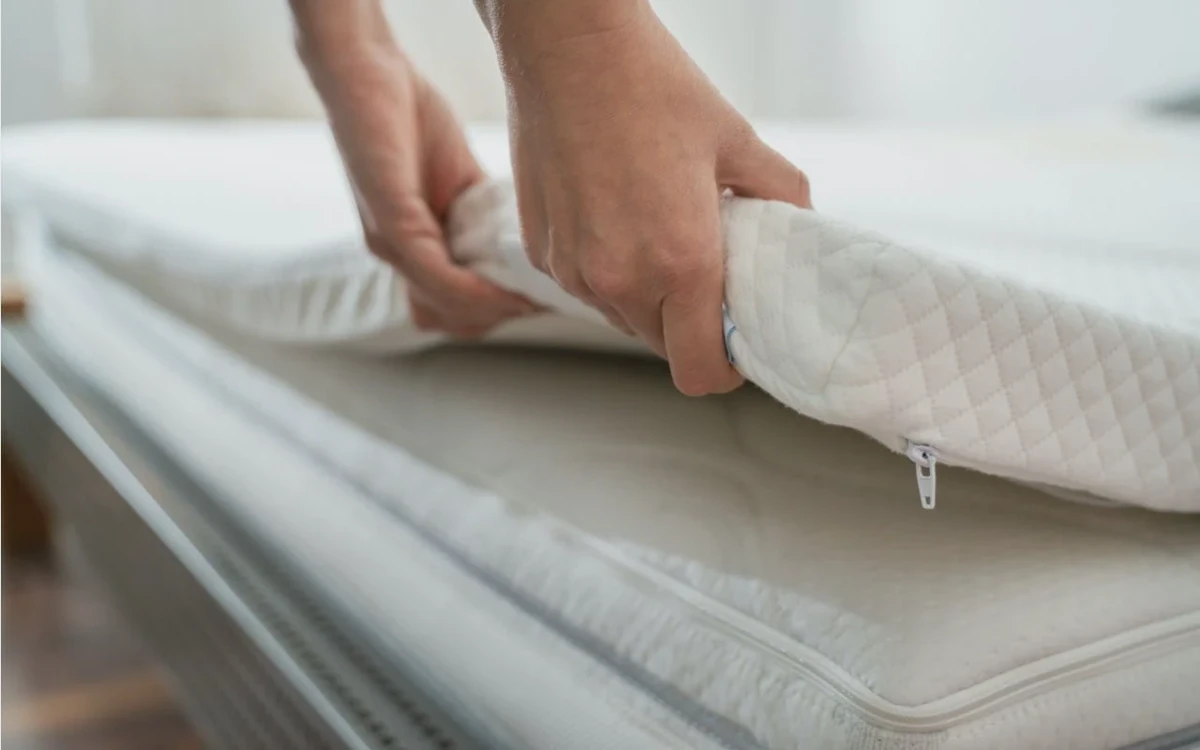
4. You toss and turn more than you used to
If you used to fall asleep quickly and now shift positions all night, the comfort layer has probably collapsed. Once pressure points stop being absorbed, your body keeps trying to find a position that doesn't hurt - and never quite gets there. Sleep trackers often pick this up before you consciously notice it.
5. The mattress has visible wear: sagging, lumps, exposed coils, or stains
Look for sagging at the edges and center, lumps where foam has clumped, fabric tears, exposed coils, or large stains that have soaked through the cover. Any of these mean the protective and structural layers have failed, and a topper won't fix it - toppers add comfort, not support.
6. You're sleeping hot when you didn't before
Foam and fiber comfort layers densify as they age, which restricts airflow. If you've started waking up sweating in the same bedroom that used to be comfortable - and your bedding hasn't changed - heat retention is a real symptom of mattress wear, not just summer.
7. Allergies or asthma have gotten worse overnight
Older mattresses accumulate dust mites, dander, and skin cells. Their droppings are a known asthma and rhinitis trigger. If you wake up congested or sneezing and symptoms ease once you're out of the bedroom, the mattress (and the pillow) are top suspects. A washable mattress protector slows this down, but it doesn't reverse a decade of buildup.
8. The bed is noisy
Squeaks and creaks on innerspring and hybrid mattresses point to fatigued coils or a broken-in foundation. Either way, the support system isn't doing its job evenly anymore. Check the foundation first (a sagging box spring will kill a new mattress in two years) - but if the noise is in the mattress itself, it's done.
9. It's been 7-10 years (or 5-7 for innerspring/pillow-top)
Age alone isn't a verdict - a well-cared-for latex bed at 12 years can still be excellent - but if your mattress is past the lifespan range for its material and any of the eight signs above are showing up, stop debating and start shopping. The cost of bad sleep compounds in ways a new bed won't.

Can you extend a mattress's life instead of replacing it?
If your mattress is showing one minor sign and is still inside its expected lifespan, there are real things you can do before buying a new one:
- Use a washable mattress protector. It blocks sweat, skin cells, and allergens - the same things that age the bed from the top down.
- Rotate every 3-6 months. Most modern mattresses are one-sided, but rotating head-to-foot evens out wear in the lumbar zone.
- Check the foundation. Slats wider than 3 inches apart, broken center support, or a sagging box spring will void warranties and accelerate sagging.
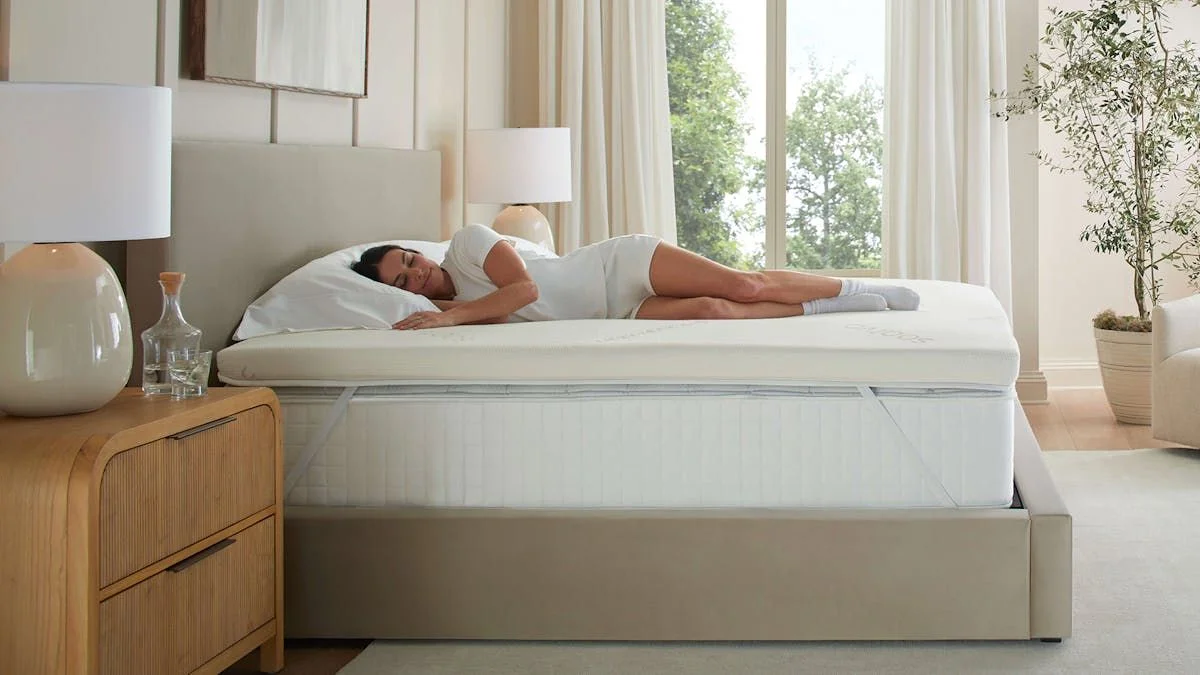
- Add a topper for comfort, not support. A 2-3 inch latex or memory foam topper can buy you a year or two on a slightly firm or worn comfort layer. It will not save a mattress that has structurally failed.
If two or more of the nine signs are present, none of these will fix it - they'll just delay the obvious.
Frequently asked questions
Is a 10-year-old mattress still good?
Sometimes. A latex mattress with a protector and a healthy foundation can be fine at 10 years. A pillow-top innerspring almost never is. Use the nine signs above, not the calendar.
Should I replace a 20-year-old mattress?
Yes. Twenty years is past the lifespan of every mainstream mattress material, and the support layers are almost certainly compressed. Even if it feels okay, the dust mite and allergen load alone is a strong reason to replace it.
How often should I replace a memory foam mattress?
Every 7-10 years for most quality memory foam beds. Cheaper foams compress faster - closer to 5-7 years - especially under heavier sleepers.
Will a mattress topper fix a sagging mattress?
No. A topper masks surface discomfort but cannot rebuild lost support. If the support core has sagged, the topper sags with it. Use toppers to fine-tune comfort on a structurally sound mattress, not to delay replacement.
The bottom line
Trust your body before the calendar. If you're waking up sore, sleeping better elsewhere, can see a body impression, or any combination of the nine signs above is showing up, your mattress is telling you it's done. Match the replacement to your sleep position and weight, protect it from day one, and you'll be back on this article in 7-10 years instead of next summer.