For decades, doctors and grandparents alike have repeated the same advice: if your back hurts, sleep on a firm mattress. It sounds intuitive - a hard surface keeps the spine straight, right? But the largest clinical trials on the question tell a different story. The mattress most likely to relieve back pain isn't the firmest one in the showroom. It's the one in the middle.
After 1,000+ mattresses tested in our review lab and hundreds of hours reading the underlying sleep-medicine literature, here's what we've learned about firmness and back pain - and how to choose a bed that actually fits your spine.
The short answer: medium-firm beats firm for most people
The single most cited study on this question is a 2003 randomized controlled trial published in The Lancet by Kovacs and colleagues. Researchers assigned 313 adults with chronic low back pain to either a firm mattress (rated 2.3 on the European EN 1957 scale) or a medium-firm one (5.6 on the same scale) for 90 days. The medium-firm group reported significantly less pain in bed, less pain on rising, and less daytime disability. They were also twice as likely to report meaningful pain improvement as the firm-mattress group.
Harvard Health reviewed the same evidence and reached a similar conclusion: a 2021 article on their pain channel reported that people sleeping on very hard mattresses had the worst sleep quality of any group surveyed. A 2015 systematic review in Sleep Health that pooled 24 controlled trials concluded that medium-firm surfaces (rated 5-7 on the standard 1-10 firmness scale) deliver the most consistent improvement for spine pain, sleep quality, and pressure distribution.
In other words: the old advice - "go as firm as you can stand" - is wrong. It made sense in an era when most consumer mattresses were soft, sagging innerspring beds, and firming things up genuinely helped. Today's market skews the other way, and the same advice now points people toward beds that are too hard.
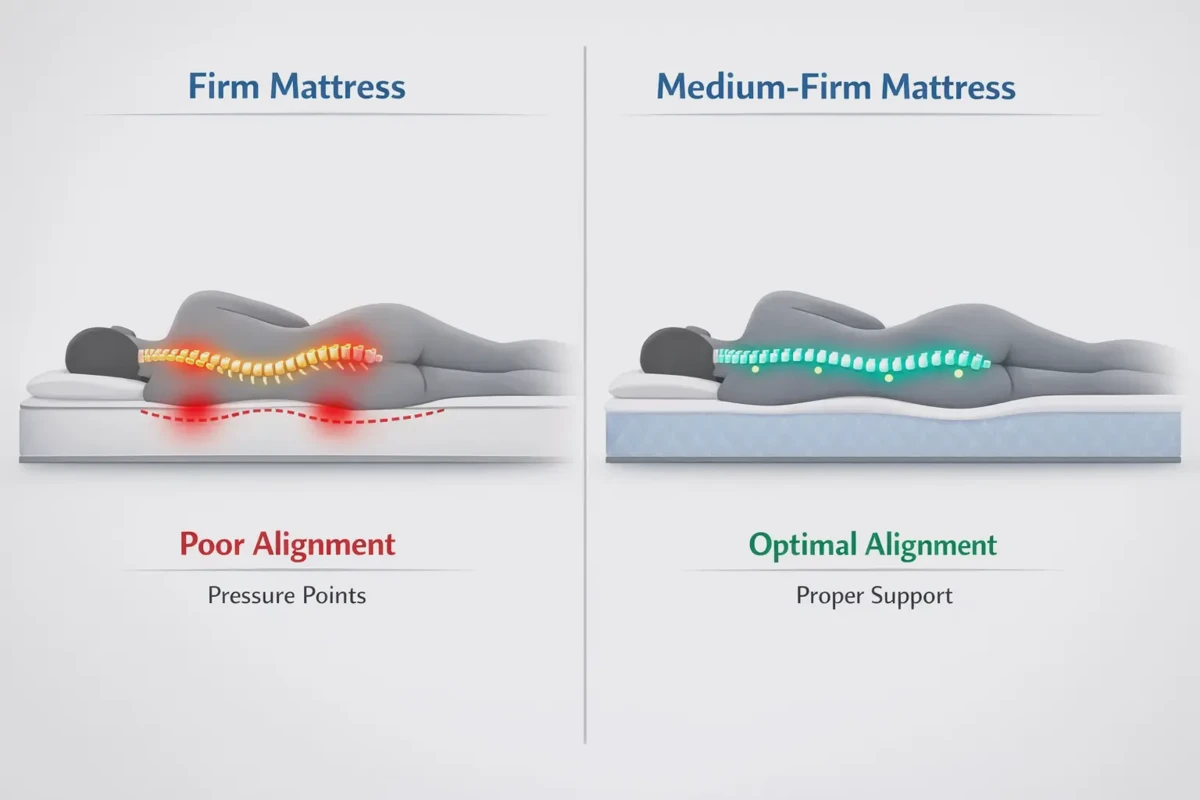
Why "too firm" hurts your back
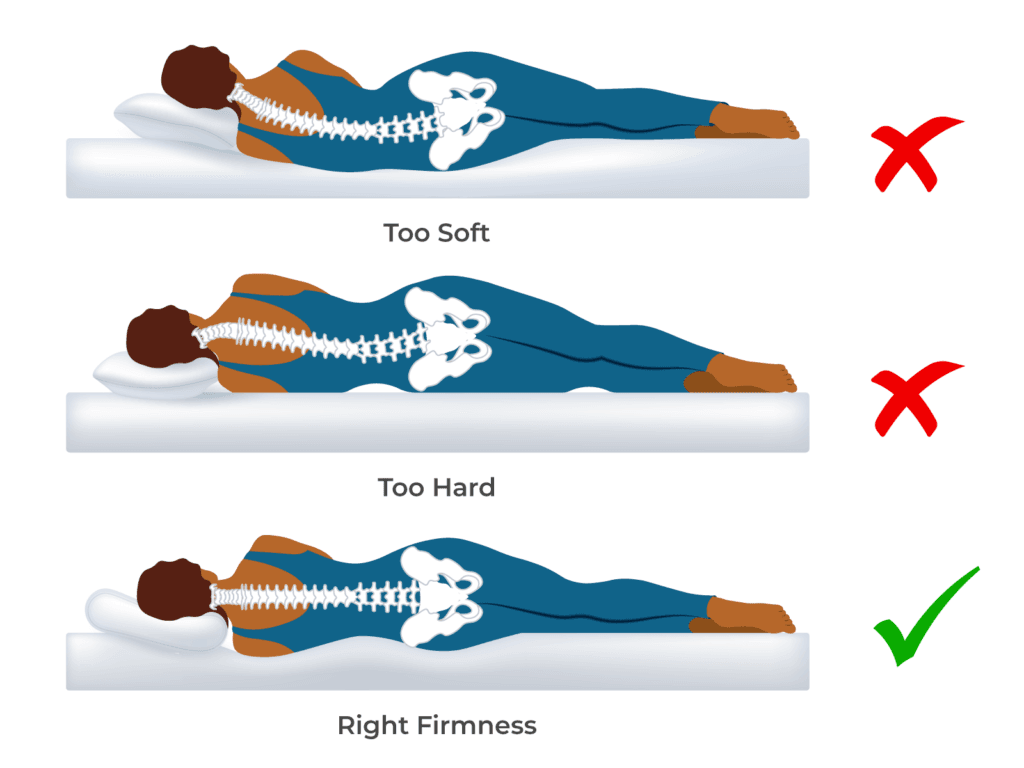
A healthy spine isn't ramrod straight. It carries three natural curves - cervical (neck), thoracic (mid-back), and lumbar (lower back) - and a good mattress preserves all three. When the surface is too hard, two things go wrong:
- Shoulders and hips don't sink. The widest parts of your body stay propped up, leaving a hollow gap under the lumbar curve. That gap forces the small muscles around your lower spine to work all night to bridge it - they wake up tight and sore.
- Pressure points concentrate. On a too-firm surface, your weight rests on a few bony contact points (shoulder, hip, heel). Blood flow drops, the tissues complain, and you toss to relieve them - disrupting the deep-sleep stages where the disc tissue actually rehydrates.
A medium-firm bed lets the heavy parts of your body settle into the surface just enough to fill that lumbar gap, while still resisting hip-sag for back and stomach sleepers. That's the geometry research keeps converging on.
When firm is actually the right call
"Medium-firm wins on average" is not the same as "medium-firm wins for everyone." Three groups generally do better on the firmer end of the scale (7-8 out of 10):
- Heavier sleepers (230+ lb). More body weight compresses any mattress further, so a 6/10 surface for a 130-lb sleeper feels like a 4/10 to a 250-lb sleeper. Heavier bodies need more underlying resistance to keep the hips from sagging into a U-shape.
- Stomach sleepers. This position is already hard on the lumbar spine; a softer bed makes it worse by letting the pelvis dive. A firmer surface keeps the hips level with the rib cage.
- People with diagnosed spondylolisthesis or unstable lumbar segments. For these conditions, surgeons and physical therapists often prescribe firmer surfaces specifically to limit spinal motion during sleep. Take this advice from your clinician, not a mattress brand.
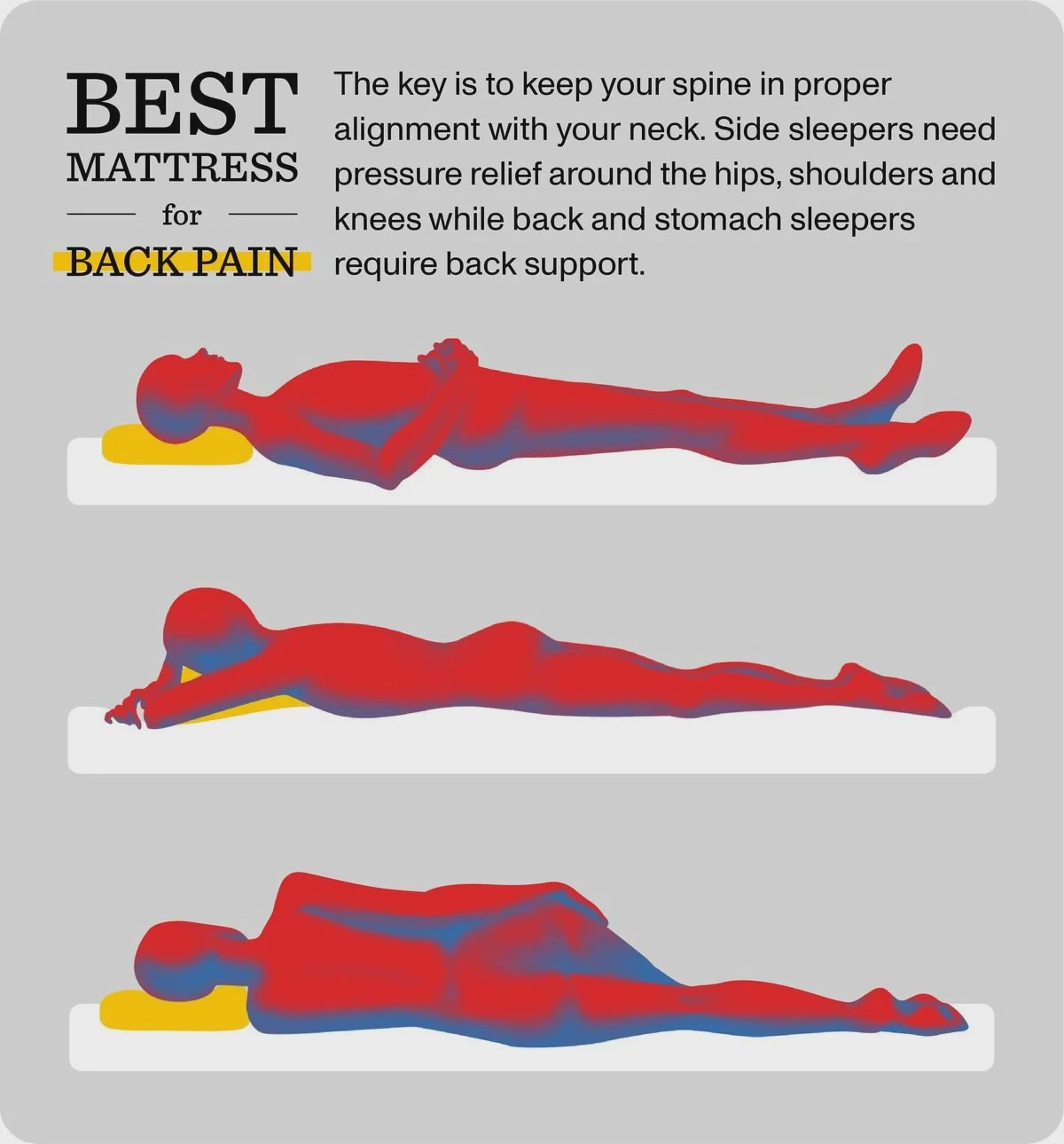
Side sleepers and lighter back sleepers, by contrast, almost always do better on medium-firm or even medium (5-6 out of 10), because they need the shoulder and hip to settle in to keep the spine level.
How to pick the right firmness in four steps
Mattress retailers love firmness ratings, but "medium-firm" varies wildly between brands - one company's 6 is another's 7.5. Use this short framework instead of trusting the label:
- Start with weight. Under 130 lb → look at 4-5/10. 130-230 lb → 5-7/10. Over 230 lb → 6.5-8/10. Couples should optimize for the heavier partner or pick a split-firmness model.
- Adjust for sleep position. Side sleepers shift one notch softer; stomach sleepers shift one notch firmer; back sleepers stay put.
- Lie down for 10 minutes minimum. Showroom "flop tests" are useless. Spend at least 10 minutes in your normal sleep position and watch for two failure signs: a hand sliding easily into the lumbar gap (too firm) or the hips sinking visibly below the shoulders and knees (too soft).
- Use the trial period. Reputable online brands offer 100+ night trials for a reason - your back takes 2-3 weeks to adapt. If pain isn't trending down by week three, exchange or return.
Materials matter as much as the number
Two beds rated 6.5/10 can feel completely different depending on what's underneath. For back pain specifically, three constructions consistently perform best in our lab and in published trials:
- Hybrid (coils + foam top). The pocketed coils give zoned support - firmer under the hips and lumbar, softer at the shoulders - while the foam comfort layer fills the lumbar gap. Most clinically tested mattresses for back pain are hybrids.
- Medium-firm memory foam. Contours well to the lumbar curve, but check density: foams under 4 lb/ft³ tend to break down in 3-4 years and re-introduce sag. High-density foams (4-5 lb/ft³) hold their shape longer.
- Latex (natural Talalay or Dunlop). Springier than memory foam, more contouring than innerspring. Holds its shape for 10+ years and runs cooler than synthetic foam - useful for hot sleepers with back pain who can't afford to overheat themselves out of deep sleep.
Pure innerspring (no foam comfort layer) tends to underperform for back pain because it can't contour to the lumbar curve. If you love the bouncy feel of springs, look at a hybrid - same support, much better contouring.
Signs your current mattress is the cause (not the cure)
Before you buy anything, run this 60-second diagnostic on your existing bed:
- Pain is worst in the morning and eases within 30 minutes of getting up. Classic mattress-related pattern - the bed isn't supporting the spine, and the muscles spend the night compensating.
- You sleep noticeably better in hotels, on a guest bed, or on a couch.
- Visible body impressions deeper than 1.5 inches when you strip the sheets.
- The mattress is over 8 years old (foam) or 10 years old (innerspring/hybrid).
If you're hitting two or more of these, the mattress is part of the problem - and "just go firmer" probably isn't the answer.
The bottom line
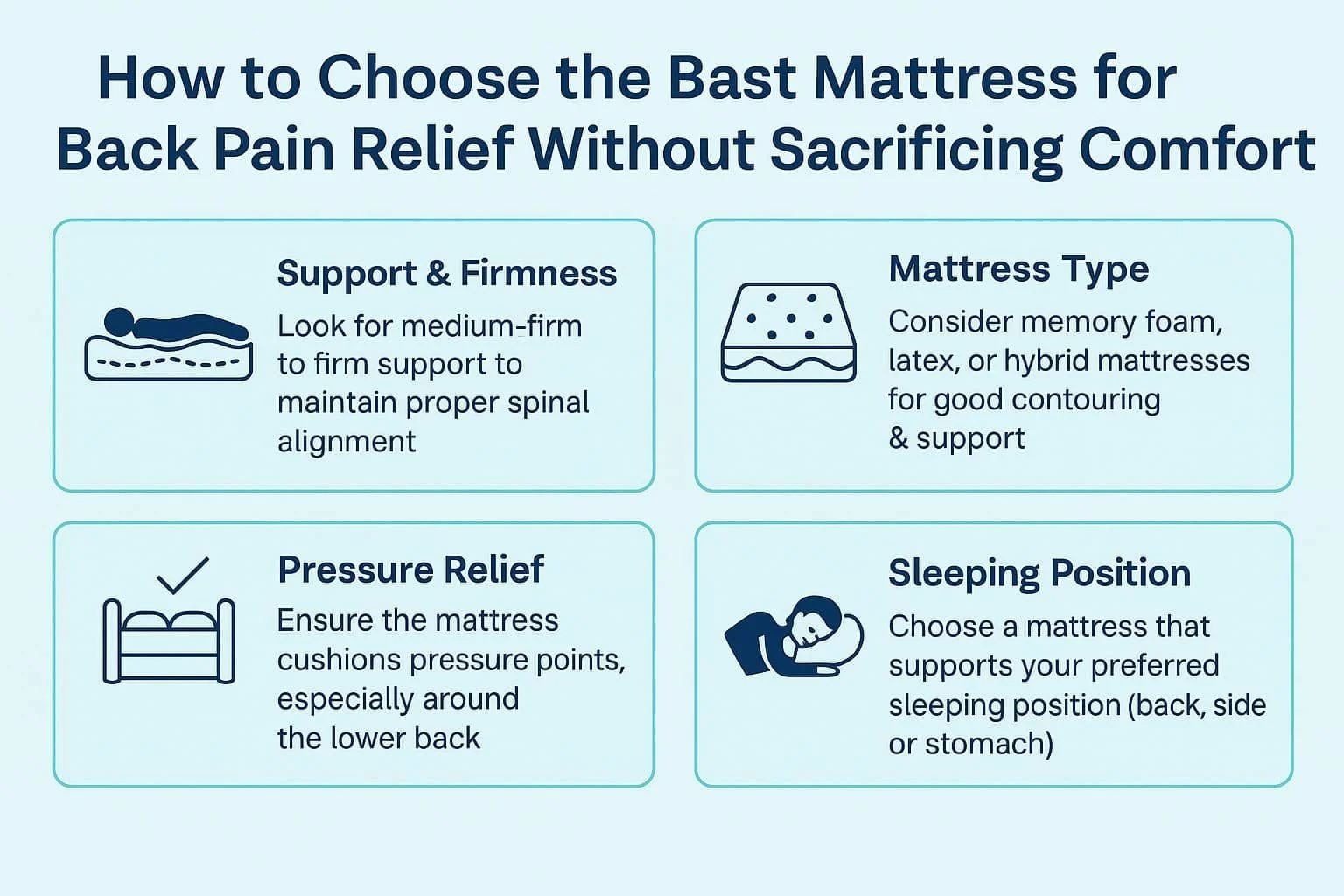
Is a firm mattress better for your back? For most people, the honest answer is no - medium-firm is. A bed in the 5-7 out of 10 range, built on a hybrid, latex, or high-density foam core, gives the lumbar spine the contouring it needs without letting the hips sag. Heavier sleepers, stomach sleepers, and people with specific spinal diagnoses are the genuine exceptions.
If you remember nothing else: ignore marketing labels, use the trial period, and judge the bed by whether your morning pain is dropping by week three. That's the only test that matters.