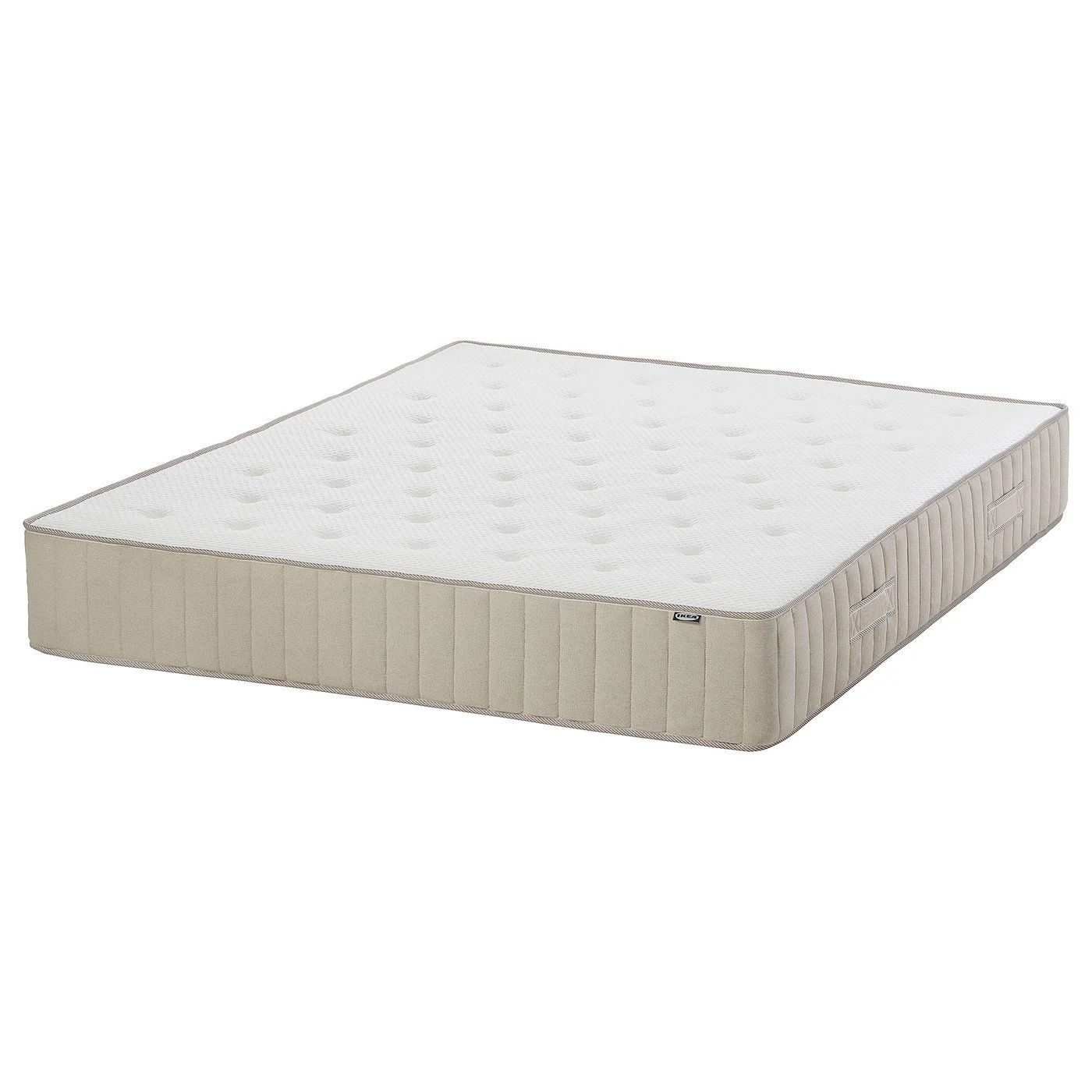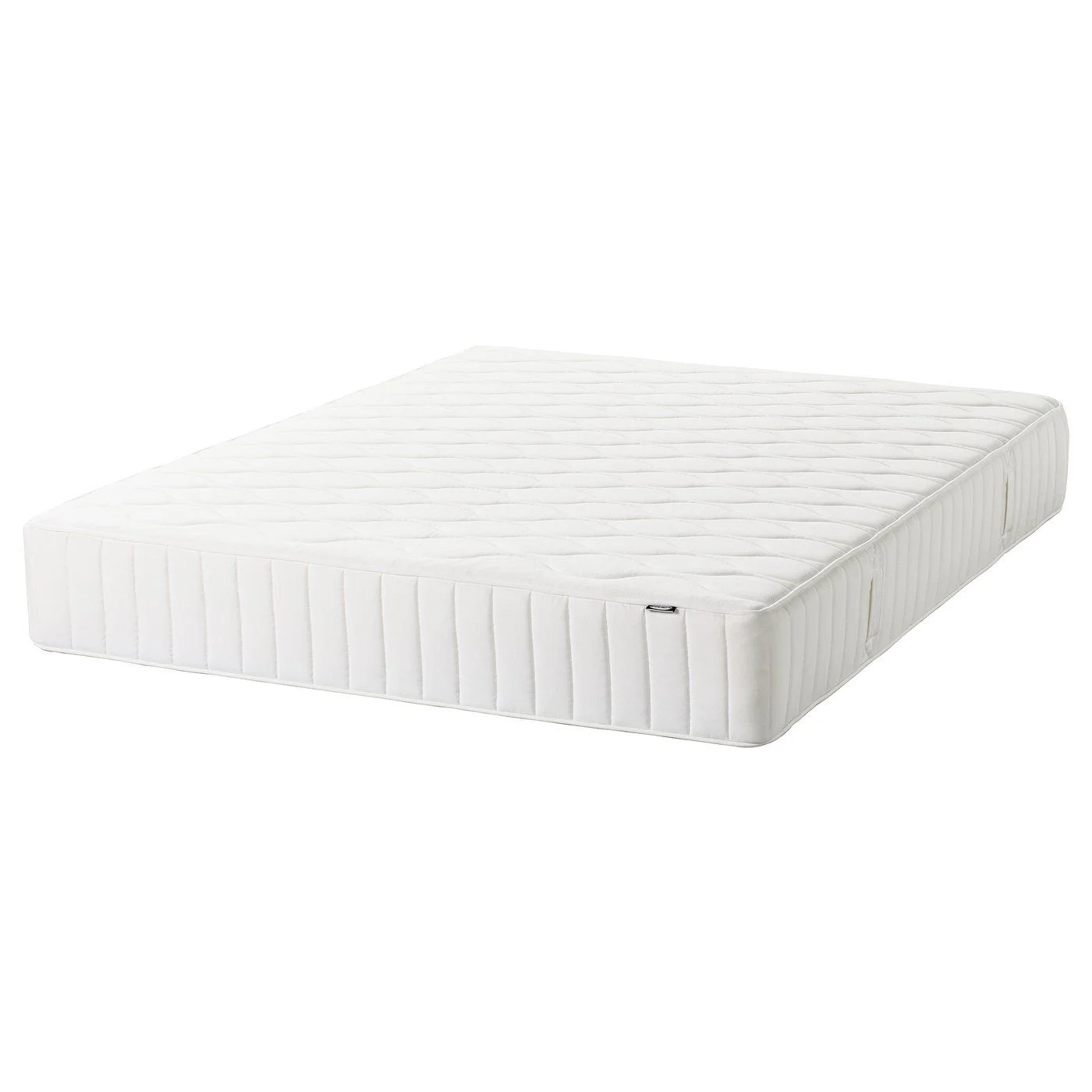
IKEA mattresses are not toxic by mainstream standards. The brand phased out brominated flame retardants (PBDEs) in 1998, does not use fiberglass in its US sleep products, and meets the same CertiPUR-US foam standards that virtually every budget brand sold in the United States meets. That said, most IKEA mattresses are still made from polyurethane foam and synthetic fibers - they're low-toxicity for a conventional mattress, not a certified-organic option.
If you want the safest pick in IKEA's US lineup, the answer is VATNESTRÖM - a hybrid that swaps most of the foam for natural latex, cotton, and wool. Everything below explains why, with sourcing from IKEA's own chemical-policy page and independent reviewers like My Chemical-Free House and Interior Medicine.
Are IKEA mattresses safe? The short answer
For the vast majority of shoppers - yes. IKEA's published chemical policy bans flame-retardant chemicals wherever it can, restricts formaldehyde inputs, and meets EU REACH standards that are generally stricter than US baselines. Independent reviewers consistently rank IKEA at the top of polyurethane-foam mattresses for chemical safety.
Where IKEA falls short of the "non-toxic" label is third-party certification. Most models are not GOTS- or GREENGUARD-certified, and most use polyurethane foam that off-gases volatile organic compounds (VOCs) when new. That's not unique to IKEA - it's true of nearly every mattress under $800 - but it's why we say "low-toxicity," not "non-toxic."
Why IKEA scores well on safety
- No brominated flame retardants (PBDEs banned brand-wide since 1998)
- No fiberglass - IKEA uses rayon/polyester fiber fire barriers in the US
- Foams meet CertiPUR-US standards (low VOC, no heavy metals, no ozone depleters)
- Complies with EU REACH chemical regulations, generally stricter than US rules
- VATNESTRÖM offers an organic latex/cotton/wool option below specialty-brand prices
Where IKEA still falls short
- Most models still use polyurethane foam, which off-gases VOCs when new
- Few models carry GOTS, GREENGUARD Gold, or other third-party non-toxic certifications
- Some stitch-bond and zipper components may contain phosphorous-based flame retardants
- No comprehensive ingredient disclosure for every fabric/adhesive layer
- If you want zero-foam, only VATNESTRÖM truly qualifies
What's actually inside an IKEA mattress?
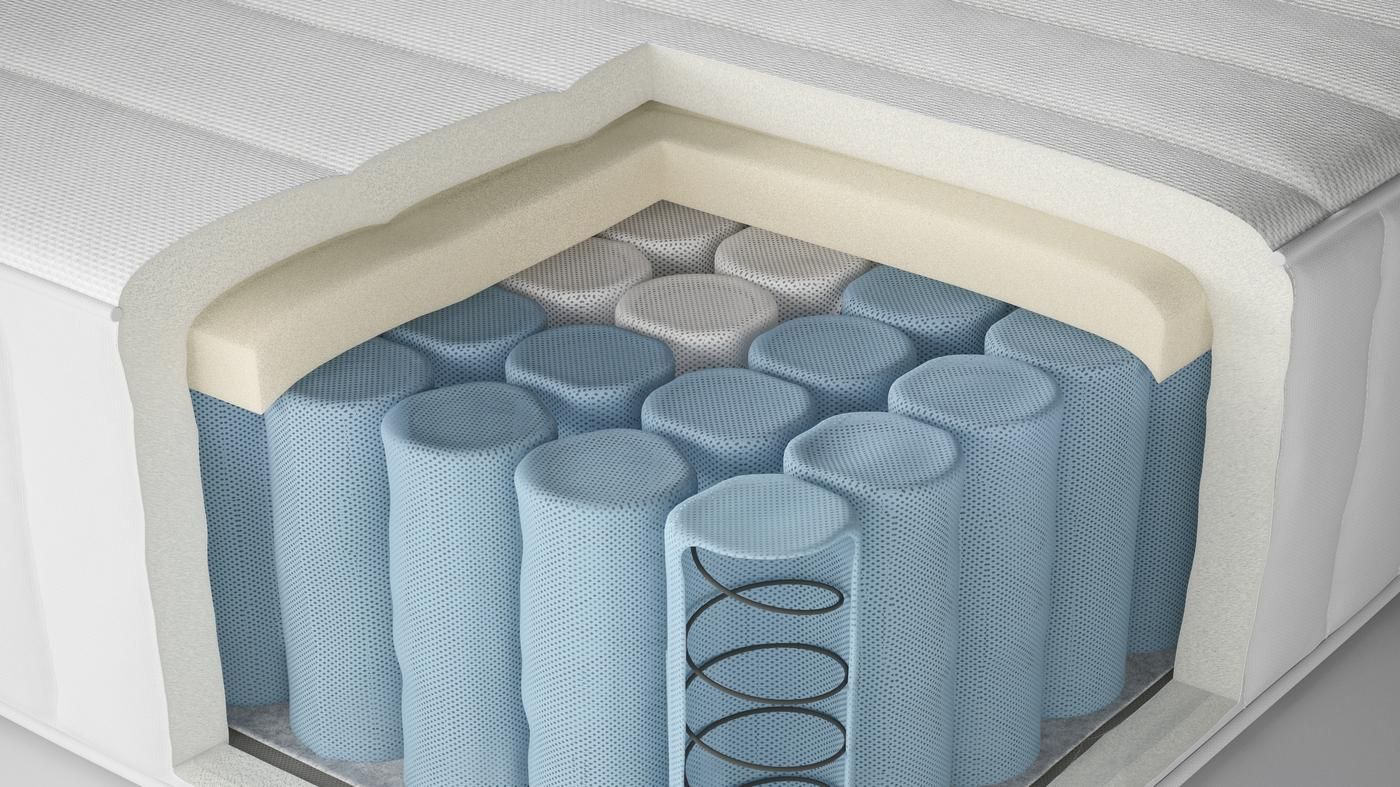
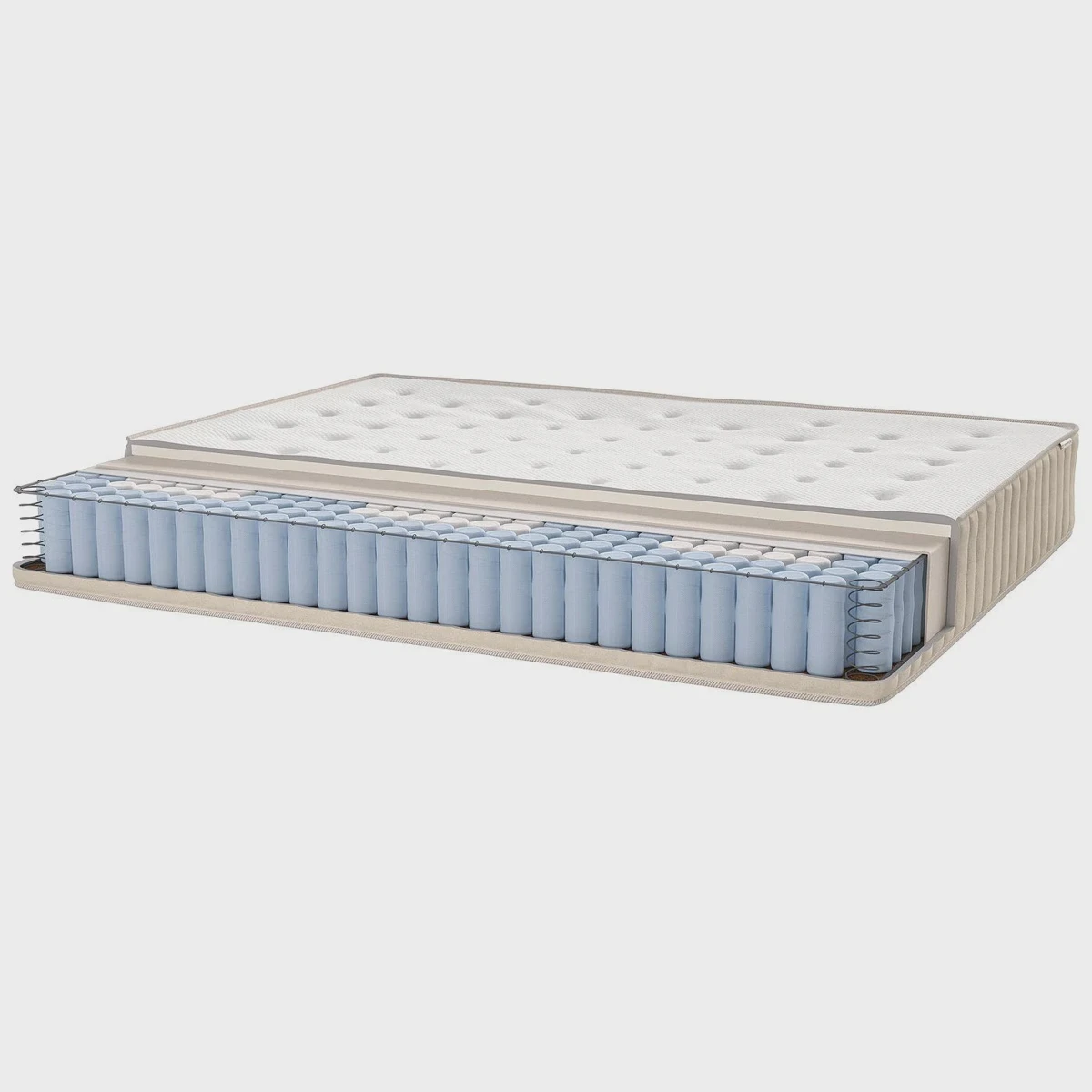
A typical IKEA US mattress is built from four layers: a polyester or polyester/cotton-blend cover, a top comfort layer of polyurethane foam (sometimes gel-infused for cooling), a support core of either pocket springs or denser polyurethane foam, and a base layer of high-density foam or felt. Fire resistance comes from a knit rayon/polyester barrier - not a chemical spray.
VATNESTRÖM is the exception. Its core is a pocket-spring unit wrapped in natural latex, organic cotton, and wool. The wool itself is the fire barrier - no synthetic FR layer needed. That's why it's the only IKEA mattress most non-toxic mattress reviewers recommend without caveats.
If you're cross-shopping brands and wondering about certifications elsewhere, see our breakdown of whether are purple mattresses non toxic.
Flame retardants: what IKEA does and doesn't do
IKEA's official statement is that the company "strives to completely refrain from the use of chemical flame retardants", and uses materials with inherent flame-retardant properties instead. In the US, that means a rayon/polyester fiber barrier rather than a chemical spray. Brominated flame retardants (PBDEs) were banned brand-wide in 1998, well before California Prop-65 forced the rest of the industry to do the same.
There's one honest caveat: IKEA acknowledges that phosphorous-based inorganic salts are sometimes applied to stitch-bond fabric and zippers in regulated markets. These aren't the bioaccumulative halogenated chemicals that gave flame retardants their bad reputation, but if you want a fully chemical-free mattress, this is the line item to know about.
Does IKEA use fiberglass?
No. Fiberglass became a notorious mattress-industry shortcut on cheap online brands like Zinus, where the glass-fiber inner sock could escape a torn cover and contaminate a bedroom. IKEA does not use fiberglass in any US-sold sleep product. The fire barrier is a woven rayon/polyester knit that stays inside the cover and won't shed fibers if the cover tears.
Off-gassing: how long, how strong, and is it dangerous?
Polyurethane foam mattresses release VOCs when first unboxed. IKEA's own guidance is to air the mattress out for up to 72 hours in a well-ventilated room before sleeping on it. Most users report the smell mostly fades within 24-48 hours; some sensitive sleepers notice it longer.
The VOC profile of an IKEA mattress is typical of CertiPUR-US-certified foam - well below the levels regulators consider harmful for occupied homes. If you're sensitive to chemical smells, three things help: unbox in a garage or spare room, run a HEPA-plus-carbon air purifier near the bed, and skip the all-foam models in favor of a hybrid like VESTERÖY (mostly springs, less foam).
Are IKEA mattresses GREENGUARD or GOTS certified?
Most are not. Third-party certifications like GREENGUARD Gold, GOTS (organic textiles), and GOLS (organic latex) carry per-model audit costs that IKEA generally doesn't pursue across its mainstream lineup. The exception is VATNESTRÖM and IKEA's other natural-fiber mattresses, which use materials that would qualify for organic certification even though IKEA doesn't always badge them.
Worth noting: "not certified" doesn't equal "unsafe." Certifications are paid third-party audits - a real signal of trust, but not the only signal. IKEA's internal IOS-MAT chemical specification covers many of the same restricted substances and applies to every supplier brand-wide.
What about formaldehyde?
IKEA states that trace formaldehyde can occur naturally in wood and textile inputs, but the company does not add formaldehyde to mattresses or bedding, and has been phasing out high-formaldehyde inputs ahead of legal requirements. If you've ever slept on the average new sofa or particle-board nightstand, you've encountered higher formaldehyde levels than an IKEA mattress will produce.
Which IKEA mattress is the safest pick?
Ranked from safest to most-conventional, with the trade-offs:
- VATNESTROM - pocket springs + natural latex, organic cotton, and wool. The cleanest IKEA option; competes with Avocado and Naturepedic at half the price.
- VESTEROY - pocket-spring hybrid with a thin polyfoam comfort layer. Much less foam than the all-foam models, faster to off-gas.
- VALEVAG - firm pocket-spring with poly-foam comfort. Same logic as VESTEROY: spring core means less foam total.
- VAGSTRANDA / ANNELAND - all-foam memory foam models. Comply with all the same standards but produce the strongest unboxing smell. Air them out longer.
If you're shopping IKEA specifically because you want a non-toxic mattress, buy VATNESTRÖM. If you're shopping IKEA because you want something cheap that won't poison you, any of the spring models is a defensible pick - just give them 48-72 hours to air out.
How IKEA compares to dedicated non-toxic brands
Brands like Avocado, Naturepedic, Happsy, My Green Mattress, and Birch are built around third-party-certified organic materials, GOTS or GOLS certification, and full ingredient transparency. They cost two to four times more than the equivalent IKEA model.
If your goal is a certified-organic mattress with documented GOTS/GREENGUARD/GOLS audits, IKEA isn't the right shelf - go with a specialty brand. If your goal is safer than the average online foam mattress for under $800, IKEA is one of the best mainstream options on the market, and VATNESTRÖM in particular is a credible alternative to a $2,000 organic hybrid.
For a model-by-model breakdown of the current US lineup with lab-test data, see our IKEA mattress review.
IKEA mattress safety FAQ
Are IKEA mattresses toxic?
No. IKEA mattresses meet CertiPUR-US foam standards, contain no PBDE flame retardants (banned brand-wide since 1998), and use no fiberglass in US-sold sleep products. They are low-toxicity by mainstream standards, though most are not certified-organic.
Do IKEA mattresses contain fiberglass?
No. IKEA uses a knit rayon/polyester fiber barrier for fire resistance instead of fiberglass. The barrier stays inside the cover and won't shed fibers if the cover tears, unlike some cheap fiberglass-using brands.
How long does an IKEA mattress off-gas?
IKEA's official guidance is to air the mattress out for up to 72 hours in a well-ventilated room before sleeping on it. Most users report the smell mostly fades within 24-48 hours; sensitive sleepers may notice it longer. Hybrid/spring models off-gas less than all-foam models because they contain less foam.
Are IKEA mattresses GREENGUARD or GOTS certified?
Most are not - IKEA generally relies on its internal IOS-MAT chemical specification rather than per-model third-party audits. The natural-fiber VATNESTROM uses materials that would meet organic standards. "Not certified" doesn't mean unsafe; it means IKEA doesn't pay for the third-party badge on most models.
Which IKEA mattress is the safest non-toxic option?
VATNESTROM - a pocket-spring hybrid with natural latex, organic cotton, and wool. It's the only IKEA mattress most non-toxic-mattress reviewers recommend without caveats, and it's significantly cheaper than equivalent specialty brands like Avocado or Naturepedic.
Do IKEA mattresses contain formaldehyde?
IKEA states it does not add formaldehyde to mattresses; trace amounts may occur naturally in wood or textile inputs. The company has phased out high-formaldehyde processes ahead of regulatory requirements, and levels in IKEA mattresses are typically well below those found in many particle-board furniture pieces.
Looking for the right IKEA mattress for your bed?
Our model-by-model review of IKEA's current US lineup covers VATNESTROM, VESTEROY, VALEVAG, and the all-foam options with lab-test data and per-model pros/cons.