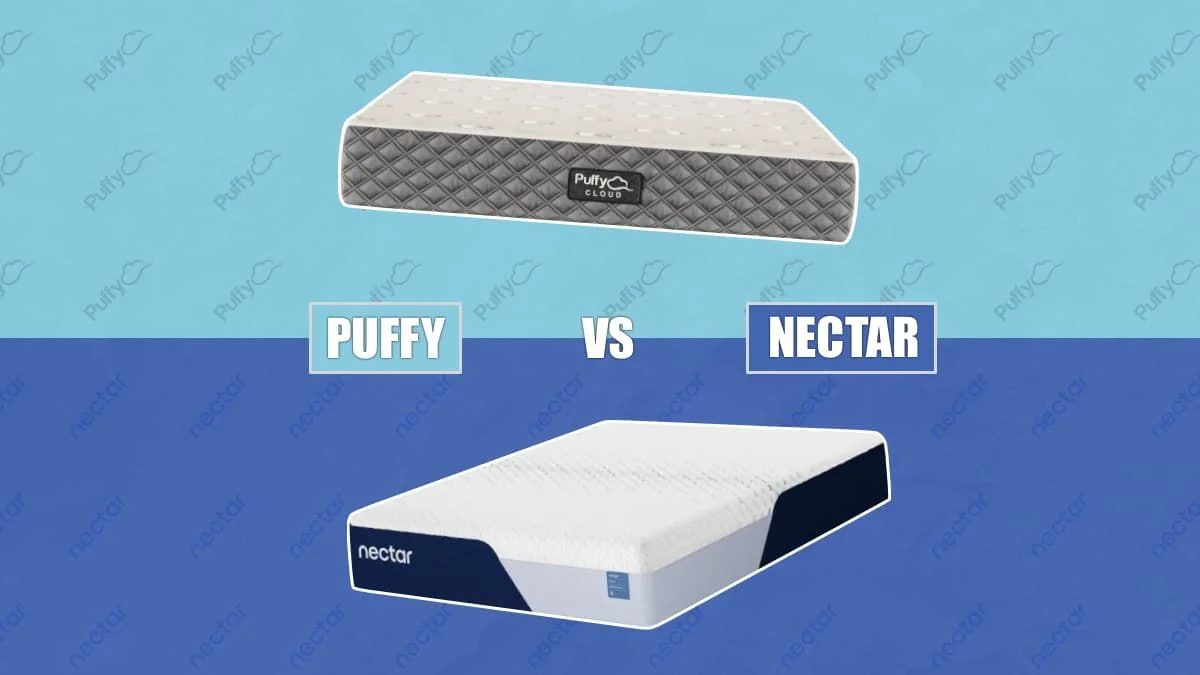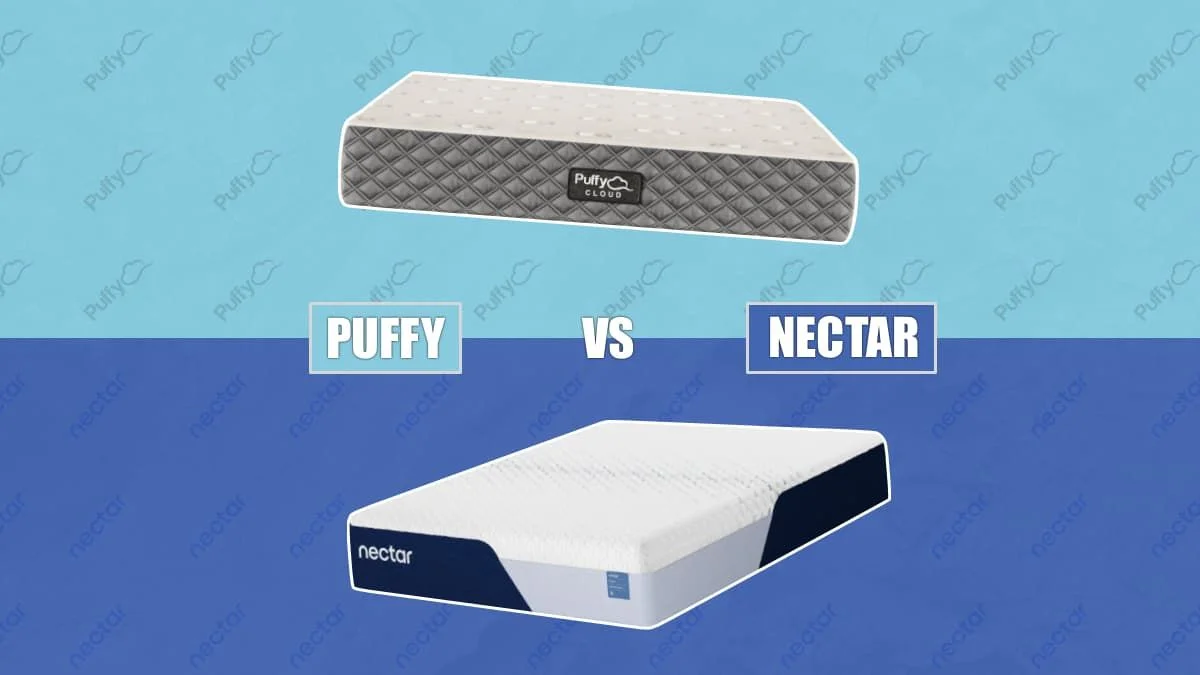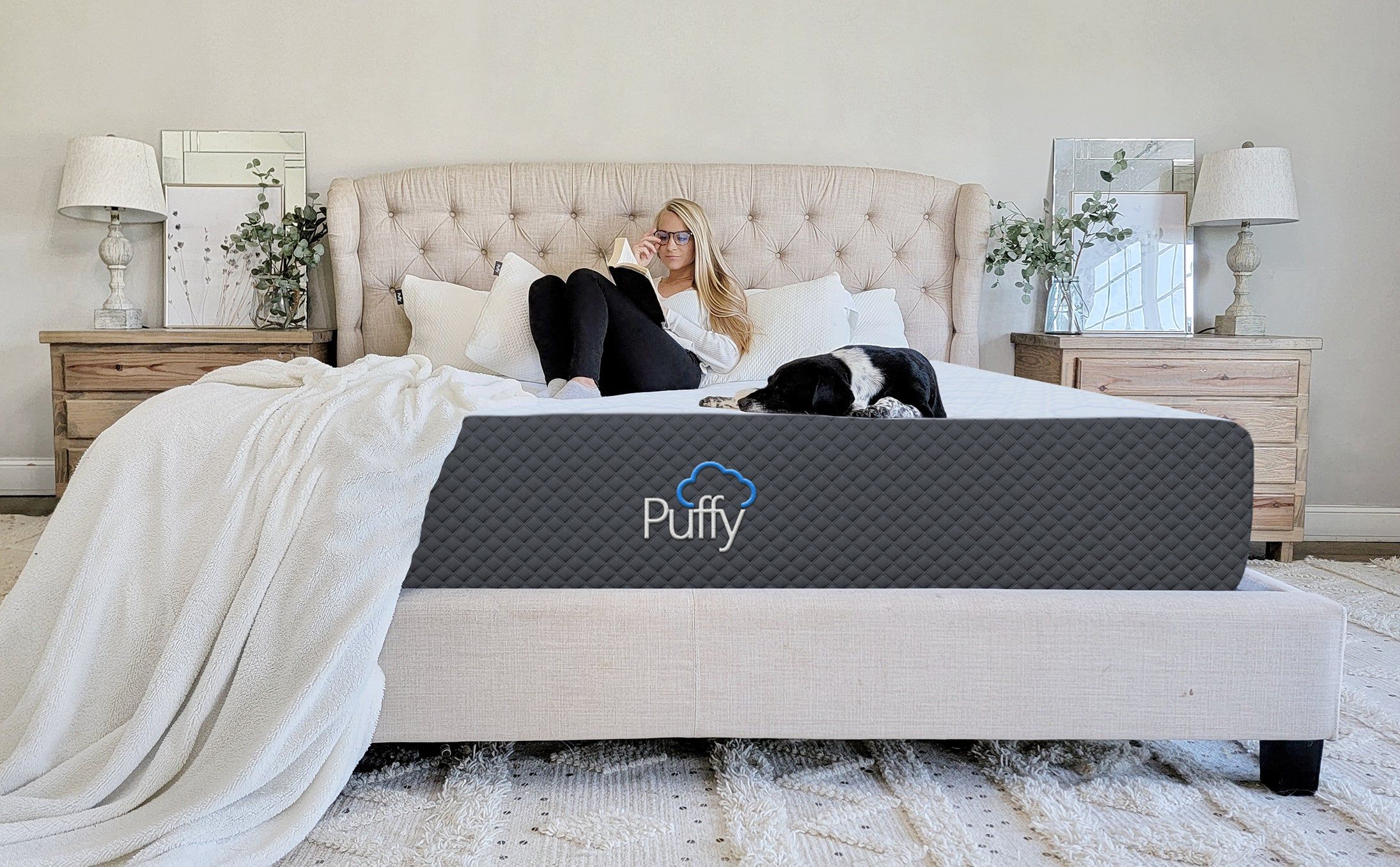
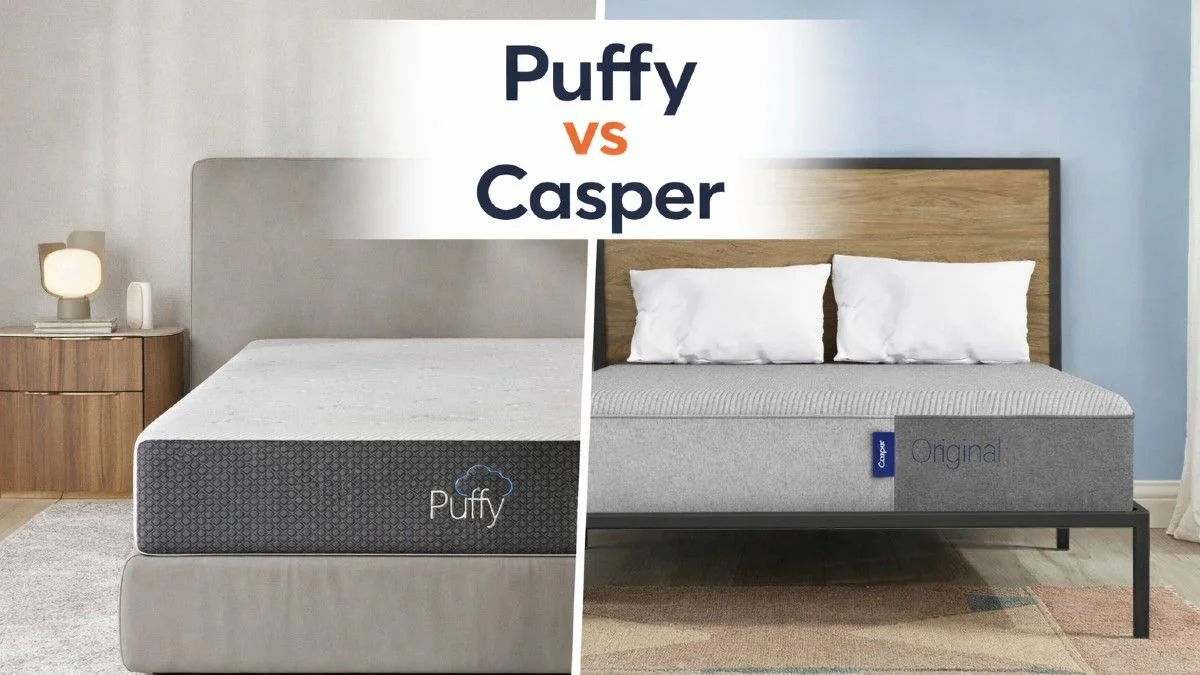
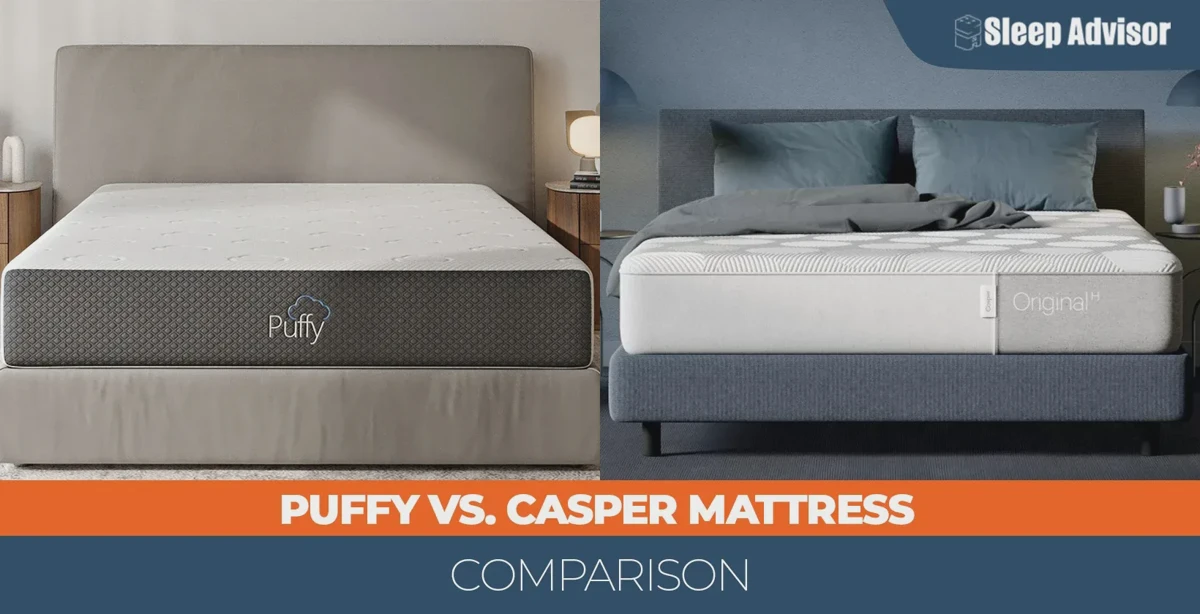
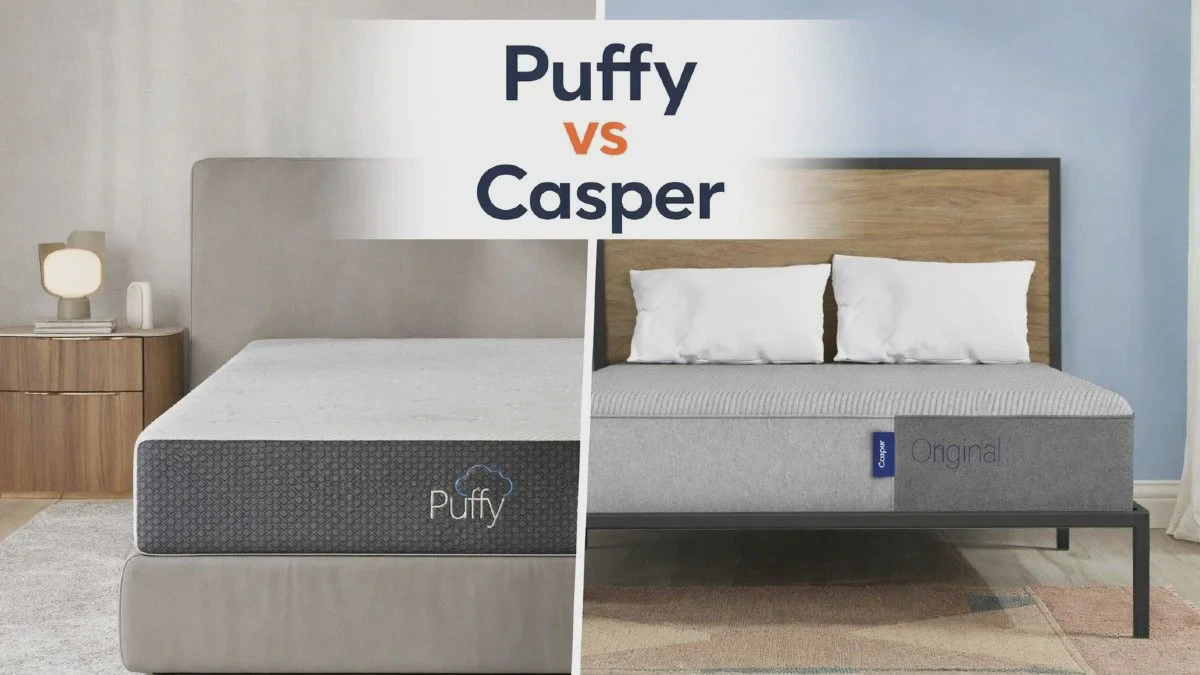
The Casper helped start the bed-in-a-box trend, and the Puffy Cloud has grown into one of its biggest rivals. Both are all-foam mattresses sold online, both land around a medium-firm feel, and both cost roughly the same for a queen at list price. So how do you pick between them? We slept on each bed, ran them through our usual tests, and pulled the construction apart layer by layer. Here is how the Casper and the Puffy Cloud compare, and which one fits which kind of sleeper.
Casper and Puffy Cloud overview
The Casper and the Puffy Cloud are both all-foam beds that earned their popularity online. The Casper uses a proprietary Zoned Support system that blends comfort and support, while the Puffy Cloud is an all-foam bed with a balanced foam feel and a layer of memory foam on top.
The Casper tends to suit:
- Combo sleepers who need a balance of comfort and support across positions
- Back sleepers who want more lumbar support
- Sleepers who like a foam mattress with a bouncier, more responsive feel
- Stomach sleepers, since the Casper is firmer than the Puffy Cloud
The Puffy Cloud tends to suit:
- Light- and medium-weight side sleepers who want pressure relief
- Back sleepers who do not need as much concentrated lumbar support
- Memory foam fans who want a deep, plush hug without as much heat buildup
- Couples who value strong motion isolation
Similarities between the Casper and Puffy Cloud
Both beds are all-foam mattresses sold online, and the overlap goes further than that. A few things the Casper and the Puffy Cloud share:
- Both are all-foam constructions with no innerspring unit.
- Both land at a similar firmness, close to medium-firm.
- Both cost around $1,100 for a queen at list price.
- Both isolate motion well, which is normal for all-foam beds.
- Both fight heat with cooling components rather than coils.
Key differences between the Casper and Puffy Cloud
The two beds have a lot in common, but the differences are where the choice gets made:
- The Casper is about an inch thicker, at 11 inches versus the Puffy Cloud's 10 inches.
- The beds use different foams in their top layers.
- The Casper has a Zoned Support system; the Puffy Cloud does not.
- The Casper feels bouncier and more responsive, while the Puffy Cloud responds slowly to pressure.
- The Casper uses perforated AirScape foam for breathability, while the Puffy Cloud uses a gel infusion in its memory foam to sleep cooler.
- The Puffy Cloud's cover is stain-resistant and removable; the Casper's is not.
Firmness and feel
Both beds sit in medium-firm territory, but they feel different once you lie down. We ranked the Casper and the Puffy Cloud around a 7 out of 10 on the firmness scale. The industry standard for medium-firm is about 6.5, so both beds are a touch firmer than medium-firm. Keep in mind that body weight and size change how firm a bed feels, so your own rating may differ.
How each bed feels
The Casper has a bouncy, responsive foam feel. During our bounce tests the ball popped up fairly high, which means it should be easy to move around on the Casper without feeling stuck. The Puffy Cloud has a balanced foam feel with a classic memory foam layer on top. That memory foam makes the Puffy a bit slower-moving than the Casper, though it is not hard to reposition on it.
Sleeping by position
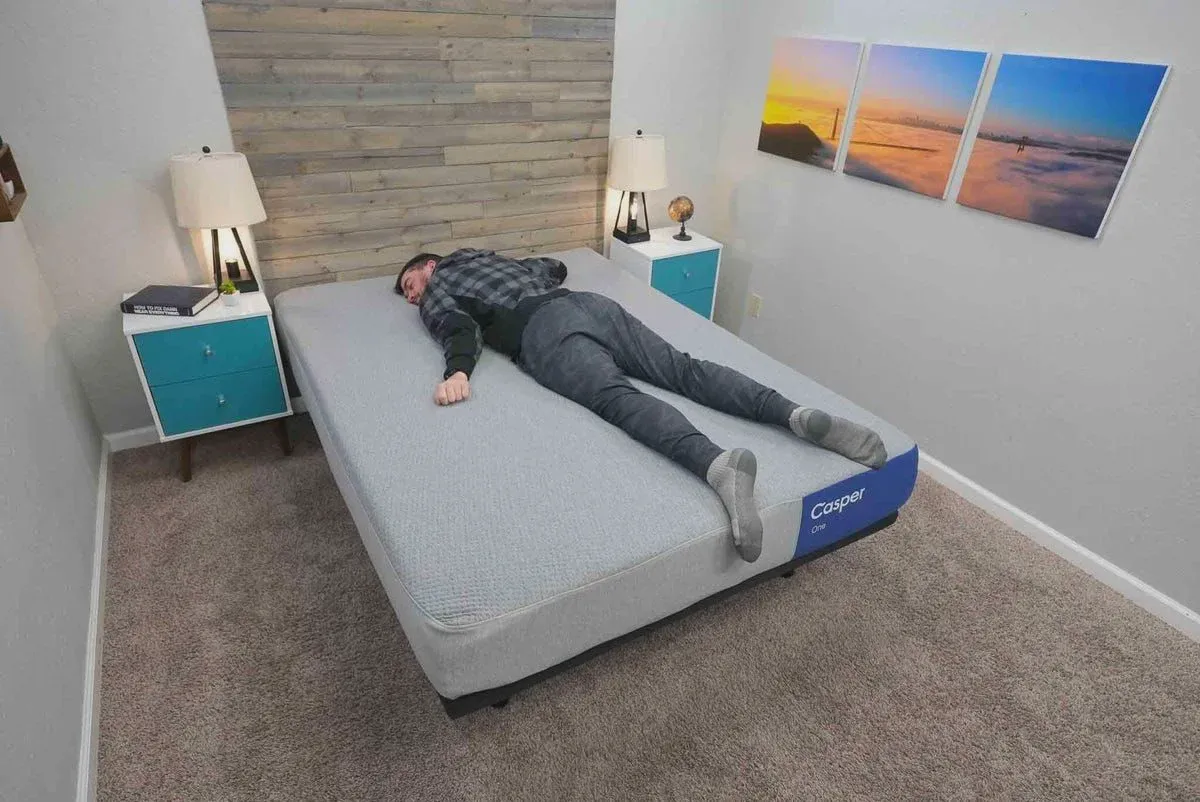
On the Casper, we felt great while back sleeping. The bed let our hips sink in for pressure relief without giving up spinal support, and lumbar support was a clear strength. Side sleeping felt only okay, with limited pressure relief, though lighter-weight side sleepers should fare better. On our stomach, the Casper gave decent support, but strict stomach sleepers may want something firmer.
On the Puffy Cloud, back sleeping gave a comfortable balance of comfort and support, which suits back sleepers who do not need a lot of lumbar reinforcement. Side sleeping brought some pressure around the shoulder and hip, but lighter-weight people should get better relief thanks to the memory foam. Stomach sleeping felt too soft, with hips bowing into the bed and throwing the spine out of alignment.
By body weight
For average-weight sleepers, the Casper is a nice fit for back sleepers because of its blend of comfort and lumbar support, while the Puffy Cloud gives lighter side sleepers decent relief but is not supportive enough for average-weight stomach sleepers. For heavyweight sleepers over 230 pounds, neither all-foam bed offers enough pressure relief for side sleeping, and both fall short for heavy stomach sleepers, who should look at a coil construction instead. For lightweight sleepers under 130 pounds, the Casper offers strong lumbar support for back and stomach sleeping, and the Puffy Cloud's soft top lets lightweight side sleepers enjoy decent pressure relief.
Mattress construction differences
Both beds are all-foam, but the layers underneath behave differently. Here is what is inside each one.
Cover
The Casper's cover is made of recycled bottles and is very breathable. The Puffy Cloud uses a thin, stretchy cover that is also breathable, plus it is stain-resistant and removable so you can wash it.
Comfort layers
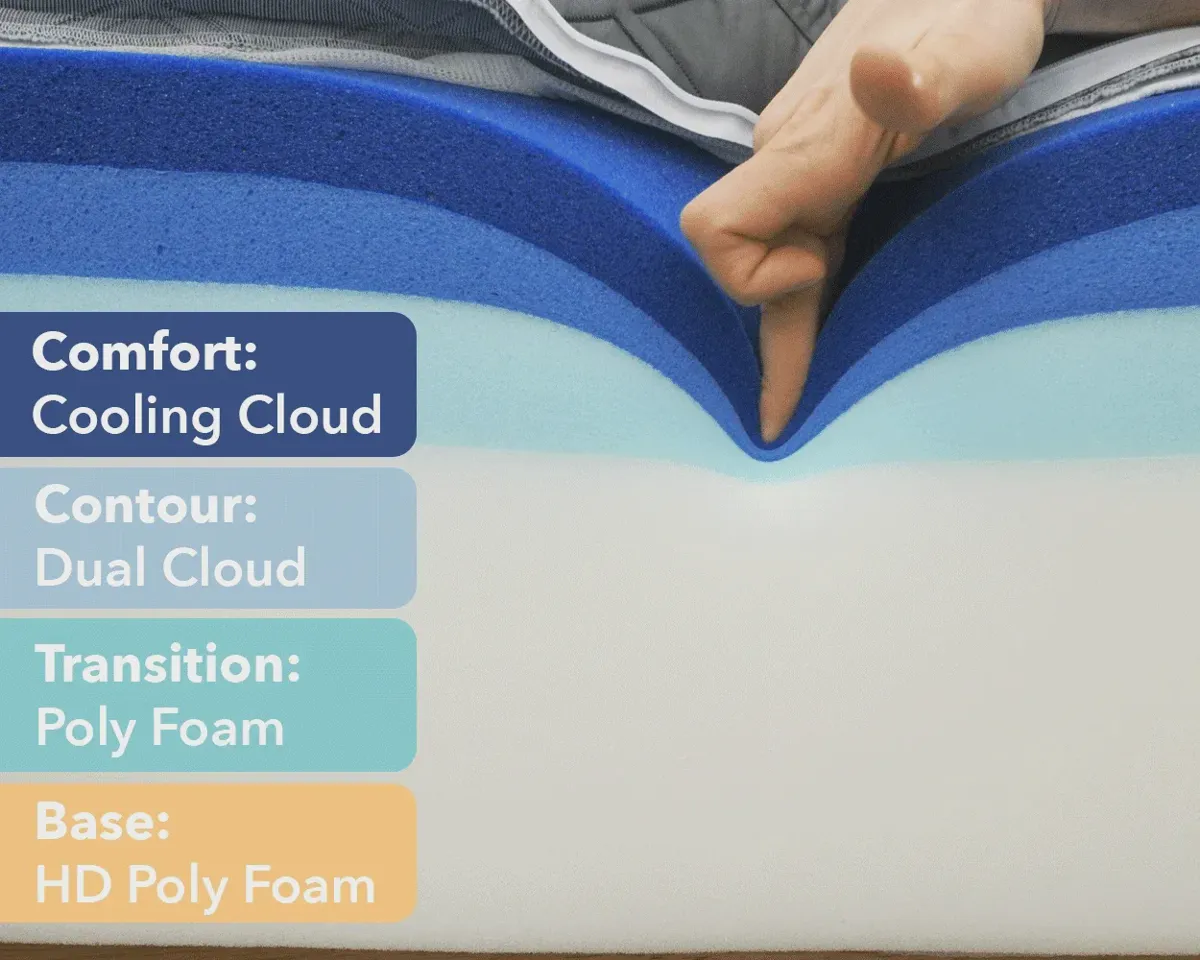
The Casper's top layer is AirScape foam, a plush, responsive, breathable foam perforated to keep air moving. Below it sits the Zoned Support system, firmer near the center to support the spine while back and stomach sleeping, and softer near the head and foot to relieve pressure at the shoulders. The Puffy Cloud's primary comfort layer is Cooling Cloud memory foam, which moves slowly and is gel-infused for cooling, over a firmer Climate Comfort layer that adds bounce and helps regulate temperature.
Support layer
The Casper uses a sturdy base poly foam that gives the whole mattress its structure. The Puffy Cloud uses a Firm Core Support base that is firmer than many foam bases, adding durability and stability.
Size options and price
Both beds run around $1,100 for a queen, though the two brands price their lineups differently and both run frequent promotions. Here are the current list prices.
Casper
| Size | Dimensions | Price |
|---|---|---|
| Twin | 38" x 75" | $895 |
| Twin XL | 38" x 80" | $995 |
| Full | 54" x 75" | $1,195 |
| Queen | 60" x 80" | $1,295 |
| King | 76" x 80" | $1,695 |
| California King | 72" x 84" | $1,695 |
Puffy Cloud
| Size | Dimensions | Price |
|---|---|---|
| Twin | 38" x 75" | $1,849 |
| Twin XL | 38" x 80" | $2,099 |
| Full | 54" x 75" | $2,249 |
| Queen | 60" x 80" | $2,399 |
| King | 76" x 80" | $2,599 |
| California King | 72" x 84" | $2,599 |
Performance differences
We put both beds through our usual battery of tests for cooling, motion, edge support, and more. Here is how they stack up.
Cooling
Both are all-foam beds with cooling components, so we called this a tie. The Casper relies on breathable AirScape foam to promote airflow, while the Puffy Cloud's gel infusion helps prevent overheating.
Motion transfer
This was close, but the win goes to the Puffy Cloud. Its memory foam layer absorbs movement and keeps it from crossing the bed. The Casper's bouncier feel held it back here, though it still performed well.
Edge support
The win goes to the Casper. Its Zoned Support system and firm base create a sturdier feel when you sit or stand near the edge. The Puffy Cloud's edge support is more modest.
Durability and noise
Both are all-foam beds that should last for a similar amount of time, around 7 years. Neither bed made much noise in our tests, and couples should not feel stuck on either one.
Casper and Puffy mattress FAQs
Which mattress is better, Casper or Puffy?
Neither is better outright, but each fits different sleepers. The Casper suits combo sleepers, back sleepers who need plenty of lumbar support, and people who like a bouncier foam feel. The Puffy Cloud suits light- and medium-weight side sleepers, back sleepers who need less lumbar support, and memory foam fans who want a deep, plush hug.
Are Puffy mattresses the best?
There is no single best mattress, since the right pick depends on your weight and sleeping position. The Puffy Cloud stands out for side sleepers and memory foam fans thanks to its slow-responding, pressure-relieving top layer, but back and stomach sleepers who want firmer support may prefer the Casper. Both earned high marks in our testing.
Which mattress is better for side sleepers?
The Puffy Cloud is better for light- and medium-weight side sleepers because its memory foam comfort layer offers a touch more pressure relief than the Casper. Neither bed is a great fit for heavyweight side sleepers.
How long will the Casper and Puffy mattresses last?
All else being equal, both all-foam beds should last roughly 7 years.
What are the warranty and trial period?
The Casper comes with a 10-year warranty and a 100-night sleep trial. The Puffy Cloud comes with a lifetime warranty for the original owner and a 101-night sleep trial.