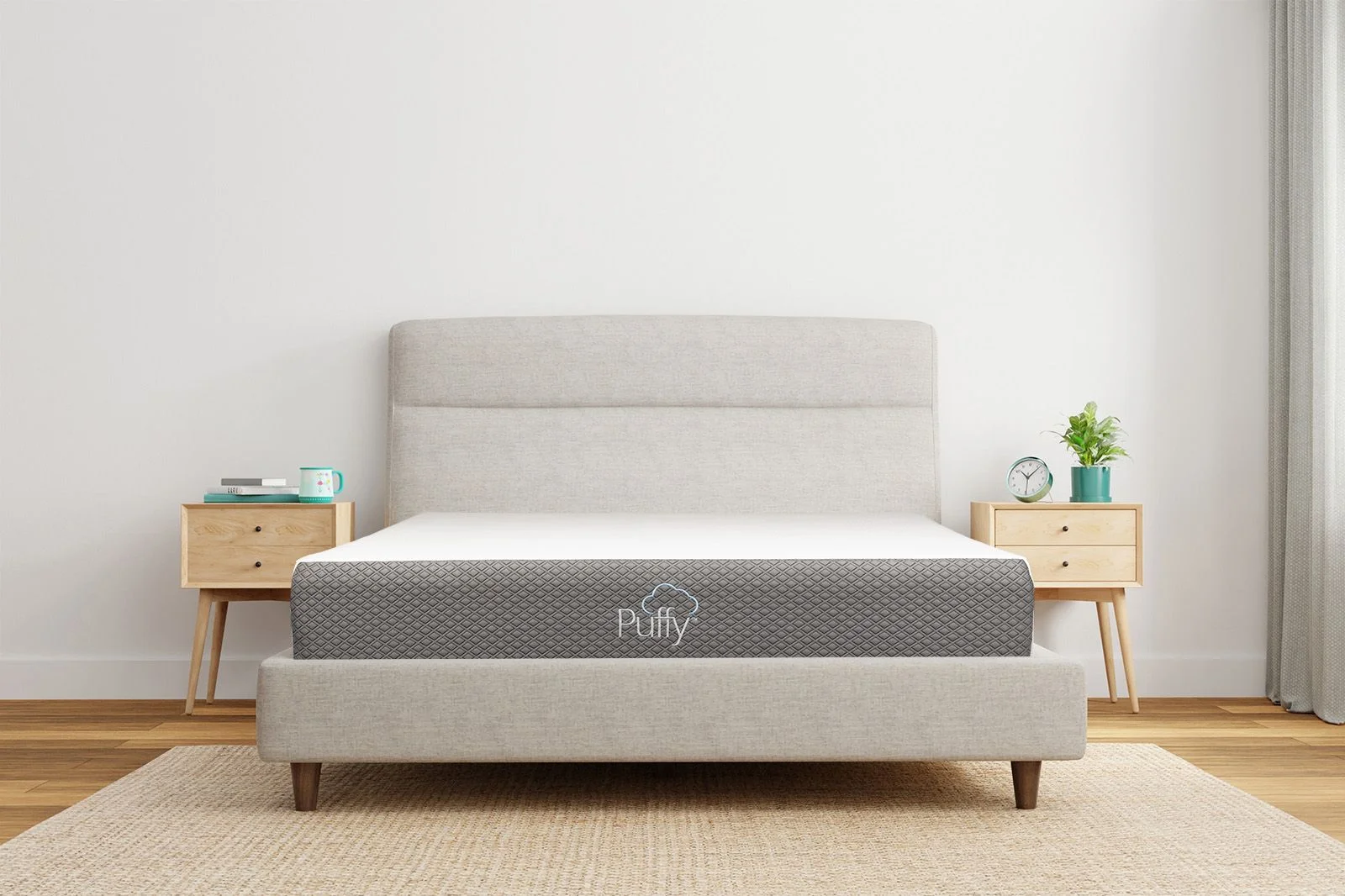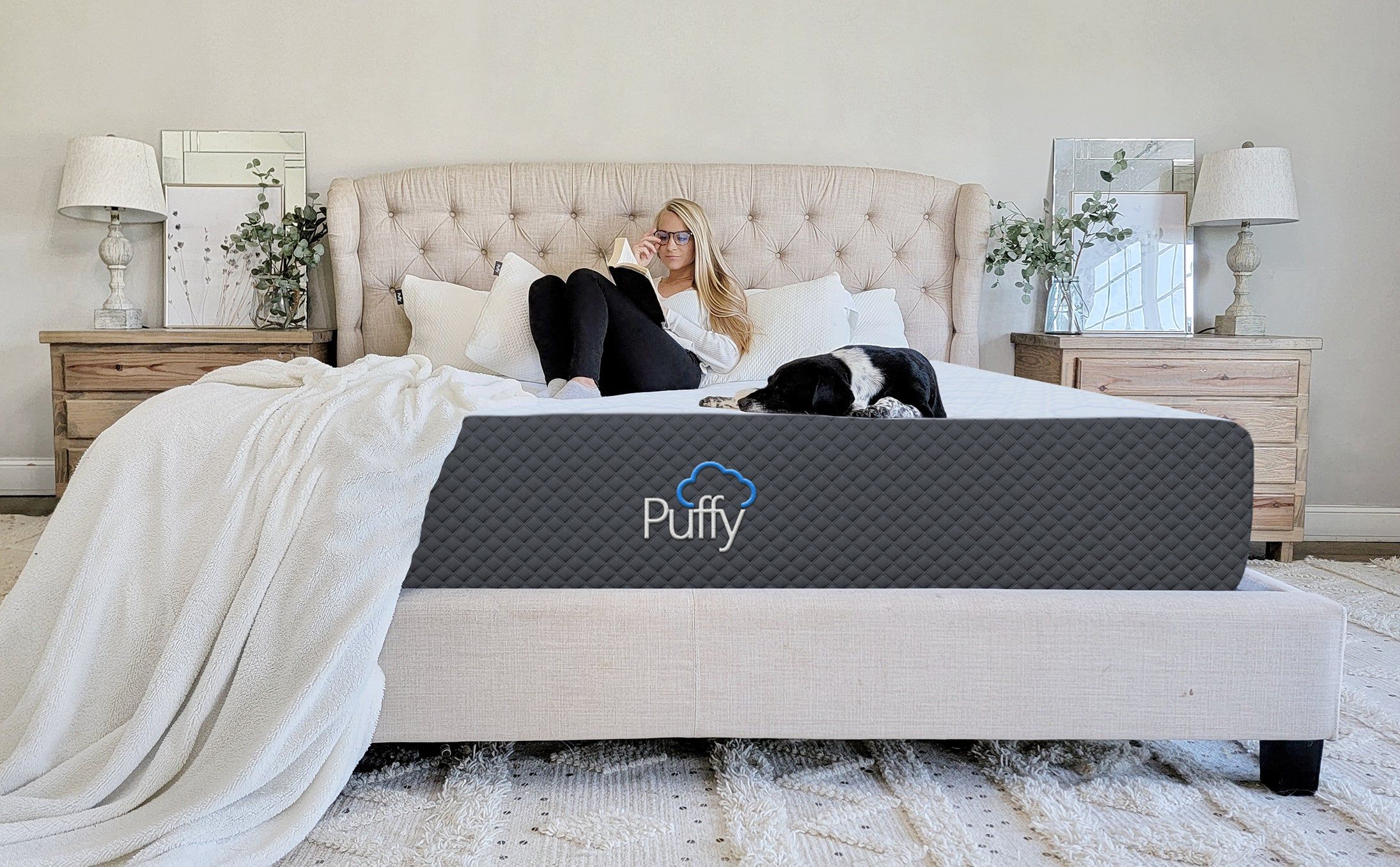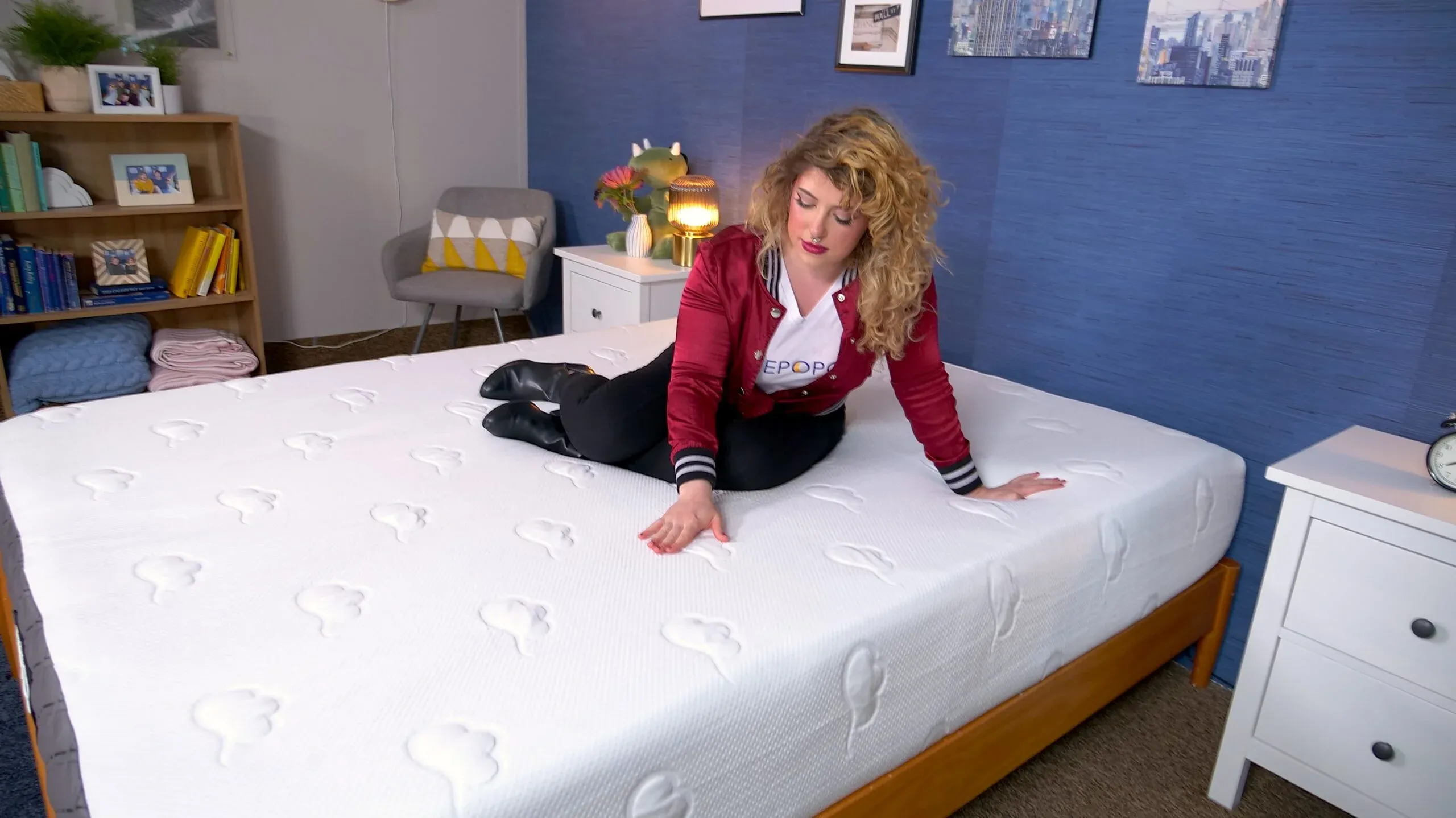
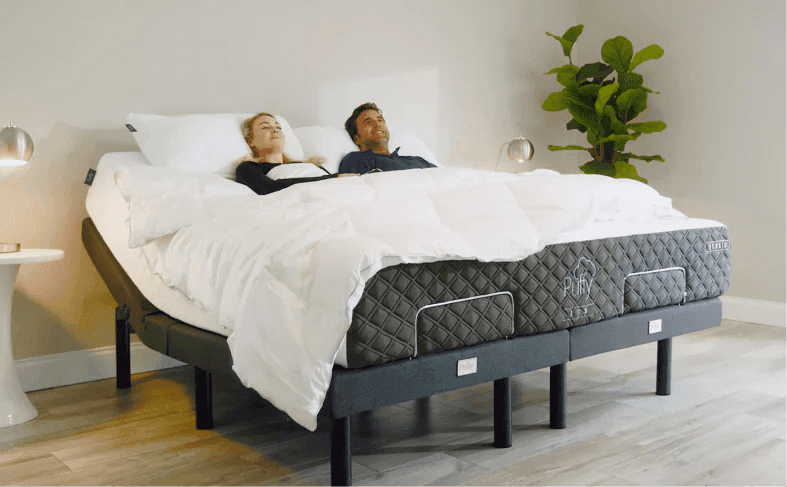
Short answer: Puffy mattresses sold in the United States do not contain fiberglass. The fire barrier is a knit "fire sock" made from silica and rayon, not woven glass fibers.
Longer answer worth reading: there is one important nuance that most fiberglass roundups miss. Per Google's AI Overview citing eachnight and NapLab, Puffy mattresses sold in Canada have been reported to use fiberglass in the fire barrier as of 2026. Same brand name, different sourcing. If you bought your mattress in the US, you're in the clear. If you bought it in Canada - or you're not sure - verify the model and country of manufacture before assuming.
Affiliate disclosure: links to retailers may earn Banner Mattress a commission. We recommend on the basis of what's actually inside the cover, not on commission rates.
What Puffy uses instead of fiberglass
All current US Puffy models - Puffy Cloud, Puffy Lux, Puffy Royal, and Puffy Monarch - meet federal flammability standards (16 CFR Part 1633) using a fire sock made from a blend of silica and rayon. Silica is the active flame-blocking material; rayon carries it in a soft, knitted form that doesn't shed sharp particles the way loose fiberglass does. Per NapLab and eachnight, that fire sock sits between the cover and the foam layers and is not designed to be removed.
Puffy's foams are CertiPUR-US certified, which independently confirms they're made without ozone depleters, the older brominated flame retardants (PBDEs, TDCP, TCEP), heavy metals (mercury, lead), formaldehyde, and regulated phthalates. CertiPUR-US is not a fiberglass certification on its own - but it's a useful trust signal that Puffy isn't quietly leaning on the chemical retardants that fiberglass-free brands sometimes substitute in.
The Canada caveat
This is the new bit since most older articles were written. Reports surfacing in 2026 indicate that Puffy mattresses manufactured for the Canadian market use a fiberglass-based fire barrier, not the silica/rayon sock used in US production. Puffy has not blanket-confirmed this in marketing copy, so the safe move if you bought your Puffy in Canada is to:
- Check the law tag on the side of the mattress for country of manufacture and the fiber content list (look for 'glass fiber', 'fiberglass', or 'glass yarn').
- Email Puffy customer support with your order number and ask, in writing, what the fire barrier is made of for that specific shipment.
- Do not unzip or remove the cover. That's the single action that turns a contained fire sock - fiberglass or otherwise - into airborne particles.
Why fiberglass is in mattresses at all
US federal law requires every mattress sold to pass an open-flame test. The cheapest way to pass that test is to wrap the foam in a sock made from glass fibers - fiberglass melts and forms a char layer that smothers the flame. It's effective, it's legal, and on a $300 mattress it adds maybe a few dollars to the bill of materials. The downside: if a consumer ever unzips the cover (to wash it, to inspect a stain, to fit a topper), the loose glass fibers can shed onto bedding, into HVAC, and into lungs. Cleanup is notoriously expensive.
Brands that use silica/rayon socks (Puffy US, Saatva, Avocado, Tuft & Needle, Bear, and Nectar among others) are paying more per unit for a barrier that does the same job without the shedding risk. That cost shows up in the price tag - fiberglass-free mattresses tend to start around $700-$900 for a queen, vs. $300 for the cheapest fiberglass-laden options on Amazon and Walmart.
How to tell if any mattress has fiberglass
- Read the law tag. Federal law requires the fiber content of the fire barrier to be disclosed. Look for 'glass fiber', 'fibreglass', 'glass yarn', or - more often - a generic 'modacrylic / glass blend' phrasing.
- Check the cover. If the cover is non-removable or carries an explicit 'do not remove' warning, the manufacturer is almost always covering a fiberglass sock. Removable, washable covers are a strong signal of a non-fiberglass barrier.
- Look up the brand's CertiPUR-US, GREENGUARD Gold, or OEKO-TEX Standard 100 status. These don't certify the fire barrier directly, but brands that hold them tend to disclose barrier materials more openly.
- Search the brand + 'fiberglass'. Consumer reports of contamination tend to surface fast on Reddit, BBB, and class-action filings.
The Puffy lineup at a glance
All four current US models use the same silica/rayon fire sock; they differ in foam construction and price.
Puffy Cloud - the entry model. All-foam, three layers (cooling cloud foam, climate comfort foam, base support). Medium feel. The cheapest way into the Puffy lineup; cover is stain-resistant and removable.
Puffy Lux / Lux Hybrid - adds a body-adapting dual cloud foam layer for deeper pressure relief at the shoulders and hips. The Hybrid version swaps the bottom support foam for individually wrapped coils, which improves edge support and airflow.
Puffy Royal / Royal Hybrid - five layers including a cooling-bead-infused contour cloud and a zoned support layer that firms up under the lumbar region. Aimed at side sleepers who want extra shoulder give without losing back support.
Puffy Monarch - the flagship hybrid. Seven layers, dual-feel (flippable firmness) on some configurations, the most edge support of any Puffy. Heaviest and most expensive of the four.
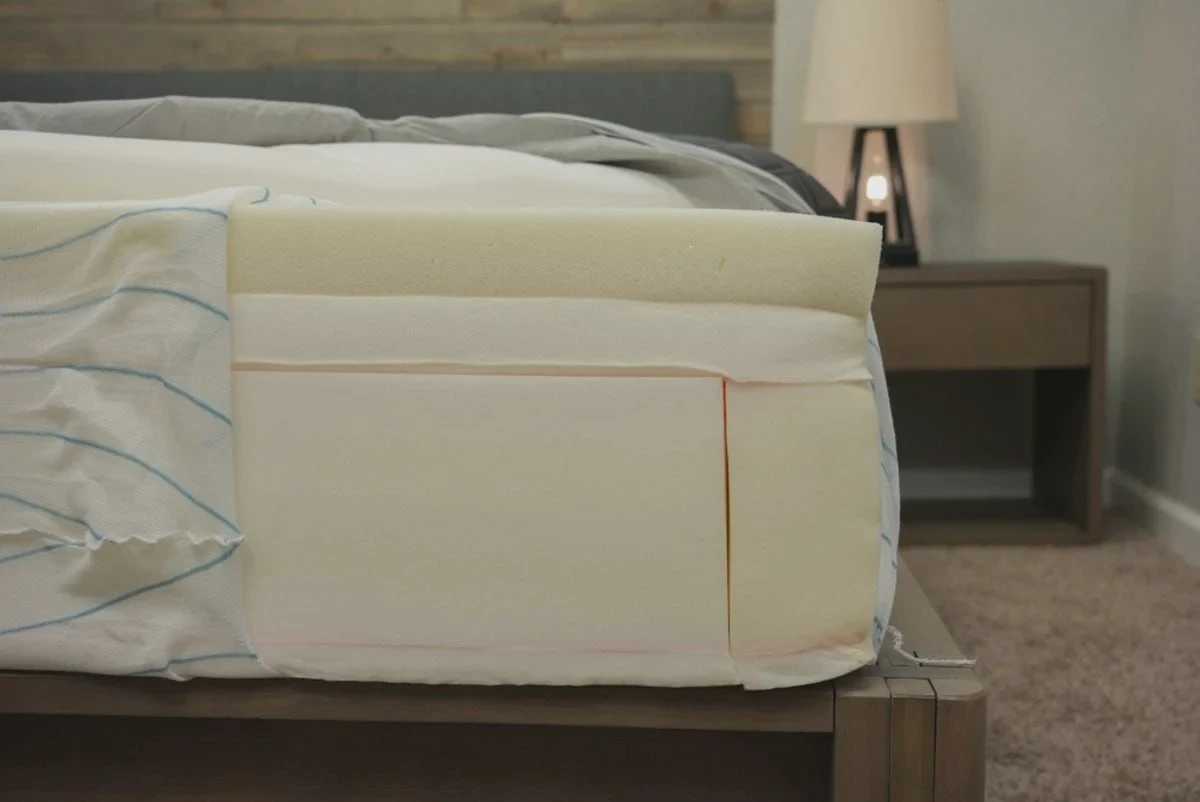
Puffy (US) - Fiberglass Picture
- Silica and rayon fire sock, not fiberglass
- All foams CertiPUR-US certified
- Removable, washable cover (no 'do not unzip' warning)
- Same barrier across Cloud, Lux, Royal, and Monarch
- 10-year warranty on all models
What to Watch For
- Canadian Puffy units have been reported to contain fiberglass - verify by country of manufacture
- Higher price than entry-level fiberglass-laden brands
- Synthetic foams may off-gas for several days after unboxing
Frequently Asked Questions
Does Puffy contain fiberglass?
Puffy mattresses sold in the United States do not contain fiberglass. They use a silica-and-rayon fire sock to meet federal flammability standards. Puffy mattresses sold in Canada have been reported in 2026 to use a fiberglass-based fire barrier - verify the country of manufacture on the law tag if you bought yours in Canada.
Is it safe to remove the cover on a Puffy mattress?
On US Puffy models the cover is designed to be removed and washed - the fire sock underneath is silica/rayon, not loose glass fiber. On any mattress where you are not 100% sure of the fire barrier material, do not unzip the cover. Removing a cover that's hiding a fiberglass sock is the single action that causes contamination.
What is a 'fire sock' and why do mattresses need one?
A fire sock is a knit barrier wrapped around the foam layers, between the cover and the comfort layers. It's required to pass the US federal open-flame test (16 CFR Part 1633). Cheaper mattresses use a fiberglass-based sock; mid- and premium-tier brands use a silica/rayon blend that achieves the same flame-blocking without shedding glass particles.
How can I be sure my specific Puffy is fiberglass-free?
Read the law tag stitched to the side of the mattress - it lists fiber content and country of manufacture. Look for silica and rayon; the absence of 'glass fiber' or 'fibreglass' confirms the safer barrier. If the law tag is ambiguous, email Puffy support with your order number and ask in writing.
What other fiberglass-free mattress brands compare to Puffy?
Saatva, Avocado, Tuft & Needle, Bear, and Nectar all use silica or rayon-based fire barriers in their US production. Most start in the $700-$1,200 range for a queen. Avoid the cheapest no-name brands on Amazon and Walmart - those are the listings most often associated with fiberglass complaints.
Shop fiberglass-safe Puffy models
All US Puffy models use a silica/rayon fire barrier. See current pricing and warranty details direct from Puffy.