
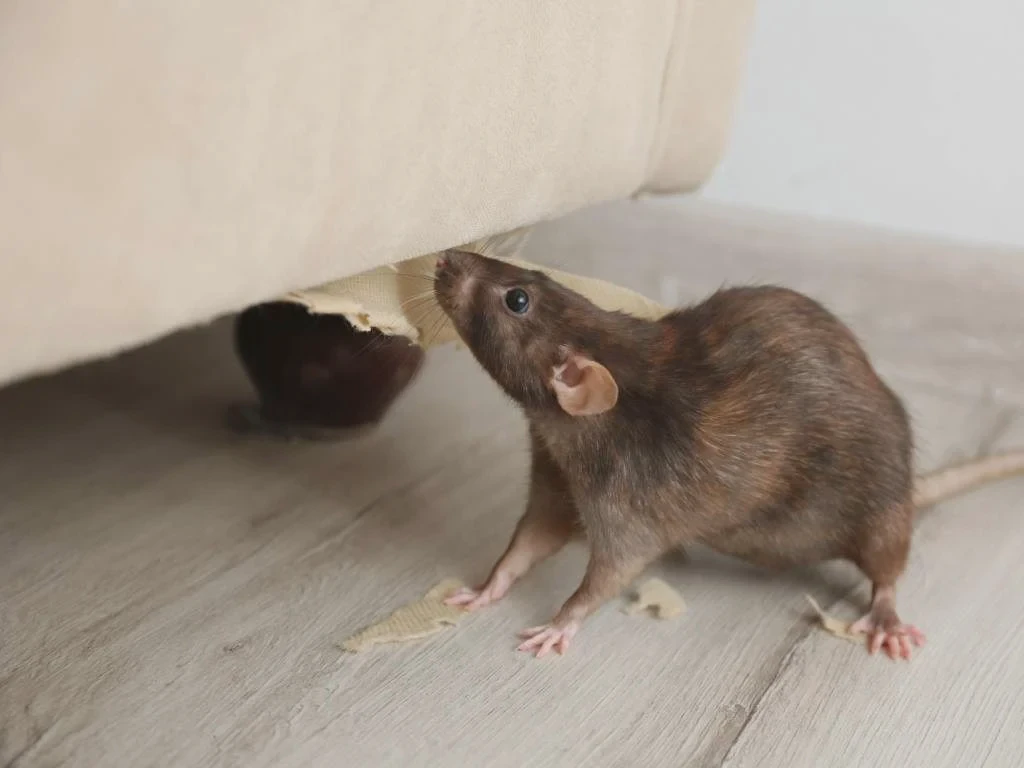
Yes - rats can climb beds, but the risk is much smaller than it sounds. Roof rats and Norway rats are agile climbers with sharp claws that grip wood, fabric, and even rough-painted metal. If a bed skirt or blanket touches the floor, a determined rat can absolutely make the jump up onto your mattress. That said, healthy rats avoid people; an actual encounter usually points to a heavy infestation, not casual curiosity.
Below is what a rat needs to physically reach your mattress, the early warning signs of a bedroom-adjacent infestation, and ten evidence-based prevention steps - including which folk remedies (peppermint oil, mothballs) the U.S. EPA explicitly says do not work as rodent control.
Important update from older versions of this guide: Mothballs and most "natural repellents" are no longer recommended. Mothballs (naphthalene/PDB) are an EPA-registered insecticide and using them outside their labeled use - including as a rodent repellent - is a federal violation under FIFRA, and the vapor is toxic to people and pets. We've removed that step.
How rats actually climb onto a bed
Rats reach a mattress one of three ways:
- Climbing a textured leg or footboard. Wood, upholstered fabric, and rattan all give claws enough purchase to scale a vertical bed leg.
- Walking up a "ladder" you provide. Bed skirts that touch the floor, dangling sheets, and storage boxes pushed under the frame all act as ramps.
- Dropping from above. Roof rats are arboreal - if they're already in a wall void or attic, they can travel along ceiling beams and drop onto the bed.
What rats cannot easily climb: smooth metal pipes wider than ~3 inches, polished glass, and slick painted plastic. A platform bed with thin metal legs and zero floor-touching bedding is a much harder target than a wooden frame with a draped duvet.
Why a rat would come near your bed in the first place
Rats are food-driven and warmth-driven, in that order. Bedrooms become attractive when:
- Crumbs in bed. Snacks, cereal, or pet treats eaten in bed leave traces a rat can smell from a wall void away.
- Pet food stored in the room. A bag of dry kibble in a bedroom is a rat magnet.
- Cluttered closets and under-bed storage. Cardboard boxes, old fabric, and paper give rats nesting material and cover.
- Cold-weather migration. Late fall and winter push outdoor rats indoors looking for warmth - bedrooms next to attics or garages are first stops.
Signs a rat has been (or is) in your bedroom
You usually hear or smell a rat before you see one. Check for:
- Droppings: dark, capsule-shaped, about 1/2 to 3/4 inch long (Norway rat) or smaller and pointed (roof rat). Look behind nightstands and inside closets.
- Gnaw marks on baseboards, door frames, or the legs of wooden furniture - rat incisors leave parallel grooves.
- Greasy "rub marks" along walls where rats run the same path nightly; their fur leaves a dark smear at about ankle height.
- Scratching or scurrying sounds in walls or above the ceiling, especially 30-60 minutes after lights-out.
- A musky, ammonia-like odor from urine pooling in nesting spots.
If you find any two of these together, treat it as a confirmed infestation and call a licensed pest professional - not a hardware-store fix.
Health risks worth taking seriously
Rats are vectors for several diseases the CDC tracks, including hantavirus pulmonary syndrome, leptospirosis, rat-bite fever, and salmonellosis. Transmission is rarely from a rat brushing past you - it's almost always from contact with droppings, urine, or contaminated dust. That's why droppings should be wet-wiped with a bleach solution, not swept or vacuumed (which aerosolizes pathogens).
If you've found droppings near your bed, replace the mattress protector and wash all bedding in hot water (≥130°F / 54°C). The mattress itself rarely needs replacing unless rats nested directly inside it.
10 evidence-based ways to keep rats away from your bed
These are ordered by impact. The first four solve roughly 80% of bedroom rat encounters; the rest are reinforcement.
1. Seal entry points with metal - not foam
Rats can squeeze through any gap a quarter-inch wide. Walk the room's perimeter and seal every opening with steel wool stuffed into the void plus a backing of hardware cloth or sheet metal. Foam and caulk alone are gnawed through in days. Pay special attention to: where pipes enter walls, around HVAC penetrations, and door sweeps with worn rubber.
2. Lift the bed off the floor - break the ladder
Move bed skirts, dust ruffles, and dangling blankets so nothing touches the floor. Pull the frame at least four inches away from any wall. Remove under-bed cardboard storage; switch to lidded plastic bins with no climbable fabric on top. This single change ends most casual climbing - there's no ramp.
3. No food in the bedroom - including pet food
Stop eating in bed. Move pet food bowls and bags out of bedrooms entirely; store dry kibble in a sealed metal or thick-walled plastic container in a kitchen pantry. Empty bedroom trash cans nightly if they hold any food wrappers.
4. Trap with snap traps, not glue or poison
Snap traps placed perpendicular to walls along observed runways are the CDC's recommended first-line method. Bait with peanut butter pressed into the trigger; chocolate, bacon grease, or dried fruit all work. Avoid:
- Glue boards - slow death, inhumane, banned in several states for vertebrate use.
- Anticoagulant rodenticides indoors - a poisoned rat dies in a wall and creates a worse smell-and-fly problem; pets and children also reach bait.
If you set traps and catch nothing for a week despite fresh droppings, you have a colony, not a stray - escalate to a professional.
5. Clean and tighten food storage everywhere, not just the bedroom
Bedrooms attract rats because the kitchen fed them first. Wipe counters nightly, store grains and cereals in glass or metal, and don't leave dirty dishes overnight. Rats forage 30-50 feet from a nest; a clean kitchen shrinks their range away from your bedroom.
6. Wash bedding hot, weekly, while there's any infestation pressure
Hot water (≥130°F / 54°C) kills mites, fleas, and bacteria that hitchhike on rodents. While you're actively dealing with a rat issue, wash sheets, pillowcases, and any blanket that touches the floor weekly. Skip mothballs in storage closets - see the next point.
7. Skip mothballs and "ultrasonic repellers"
Mothballs (naphthalene or paradichlorobenzene) are an EPA-registered pesticide labeled for fabric pests in sealed containers - using them as an open rodent repellent is a federal label violation, and the vapor is genuinely toxic to humans and pets in enclosed rooms. Ultrasonic plug-in repellers test poorly in independent trials; the FTC has issued warning letters to several manufacturers for unsupported claims.
8. Use peppermint oil only as a tie-breaker, not a primary defense
Peppermint oil makes the air less attractive in small rooms but does not deter a hungry rat that's already established. Treat it as a finishing touch after entry points are sealed and food is locked down - never as the main strategy.
9. A cat helps, but a cat is not pest control
Cats deter casual exploration and may catch the occasional juvenile rat, but adult Norway rats are too large and aggressive for most pet cats to take on. If you keep a cat, store its food in a sealed container too - open kibble bowls are themselves a rat attractant.
10. Call a licensed pest professional once you confirm an infestation
If you've found droppings in two locations, hear scratching after dark, or trapped one rat and still see signs a week later - stop DIYing. Licensed pros do exclusion work (sealing every entry to building code) plus monitored bait stations outside the structure where children and pets can't reach. The cost of one inspection is far less than a wall-cavity die-off cleanup.
Should you replace the mattress?
Almost never. A mattress only needs replacement if you find a nest inside it - chewed cover, nesting material, droppings deep in the fill. Surface contact (a rat ran across the duvet) is solved by hot-washing all bedding and replacing the mattress protector. If you're squeamish, a fully encased zippered protector adds a second barrier and is washable. Ants are the other pest that turns up in beds, and our step-by-step on how to get ants out of your bed walks through the same seal-and-protect playbook.
What works
- Sealing gaps with steel wool + hardware cloth (rats can't gnaw through metal)
- Lifting bedding off the floor so there's no ramp to the mattress
- Snap traps along walls baited with peanut butter
- Hot-washing all bedding (≥130°F) when infestation pressure is active
- Calling a licensed pro once you confirm signs in two locations
What doesn't
- Mothballs as a rodent repellent - federally label-violating and toxic indoors
- Ultrasonic plug-in repellers - FTC has flagged unsupported claims
- Indoor rodenticide poisons - dead rat in the wall, risk to pets and kids
- Glue boards - slow, inhumane, banned for vertebrate use in some states
- Peppermint oil as a primary defense (fine as a finishing touch only)
Frequently asked questions
Will a rat actually climb into bed with a sleeping person?
It's rare. Healthy rats avoid people and treat mattresses as exposed terrain. The reported cases almost always involve a heavy infestation, food crumbs in the bed, or a baby/young child too small to seem like a threat. Confirmed encounters are a signal to call a pest professional, not to panic over the mattress itself.
How do I know if a rat is in my bed versus just my walls?
Look for droppings on the bed itself, on the nightstand, or inside the closet - not just in the kitchen. Rub marks at ankle height along bedroom baseboards and gnaw marks on the bed frame's wooden legs are the strongest tells. Scratching sounds at night don't necessarily mean the rat is in the bedroom - voices carry through wall voids from the kitchen or attic.
Do mothballs keep rats away?
No. Mothballs (naphthalene or PDB) are EPA-registered as a fabric pest insecticide for sealed containers. Using them as an open rodent repellent is a federal FIFRA label violation, and the vapor is toxic to people and pets in enclosed rooms. Independent studies show no consistent rat-deterrent effect at safe concentrations. Skip them.
What surfaces can rats not climb?
Smooth metal pipes wider than about three inches, polished glass, and slick painted plastic are the hardest. Rats also struggle with thin, isolated metal poles where there's no nearby wall to brace against. A platform bed with thin metal legs and zero floor-touching bedding is meaningfully harder to scale than a wood frame with a draped duvet.
Should I throw out the mattress if a rat ran across it?
Almost never. Surface contact is solved by hot-washing every layer of bedding and replacing the mattress protector. Replace the mattress only if you find a nest inside it - chewed cover, droppings deep in the fill, or visible nesting material. A zippered fully-encased mattress protector adds a second barrier going forward.
Do peppermint oil and ultrasonic plug-ins work?
Peppermint oil makes the air less attractive in small spaces and may deter casual exploration, but it does not move an established rat colony. Ultrasonic repellers have tested poorly in independent trials and the FTC has warned several manufacturers about unsupported claims. Treat both as low-priority reinforcement, never as your primary defense.