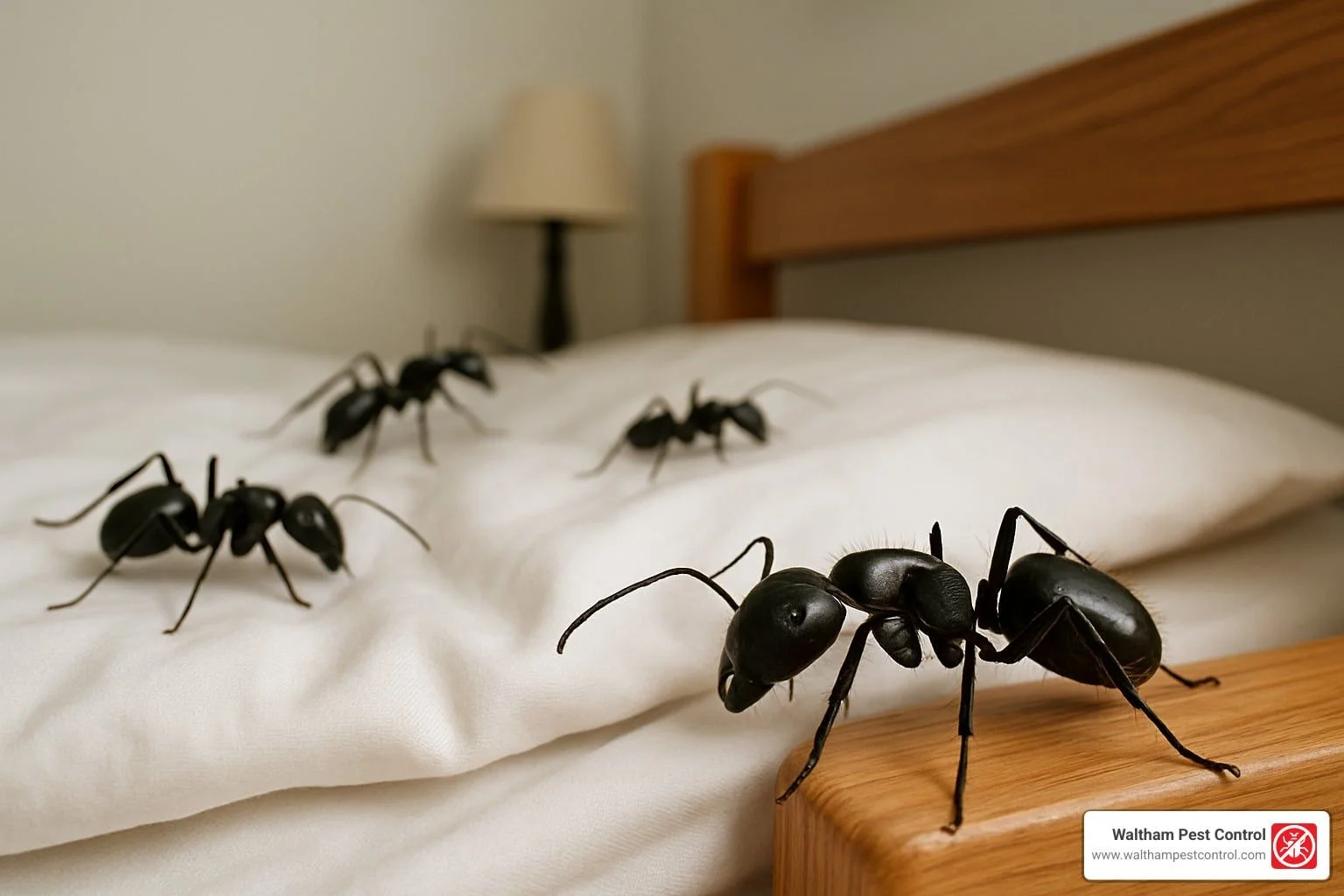
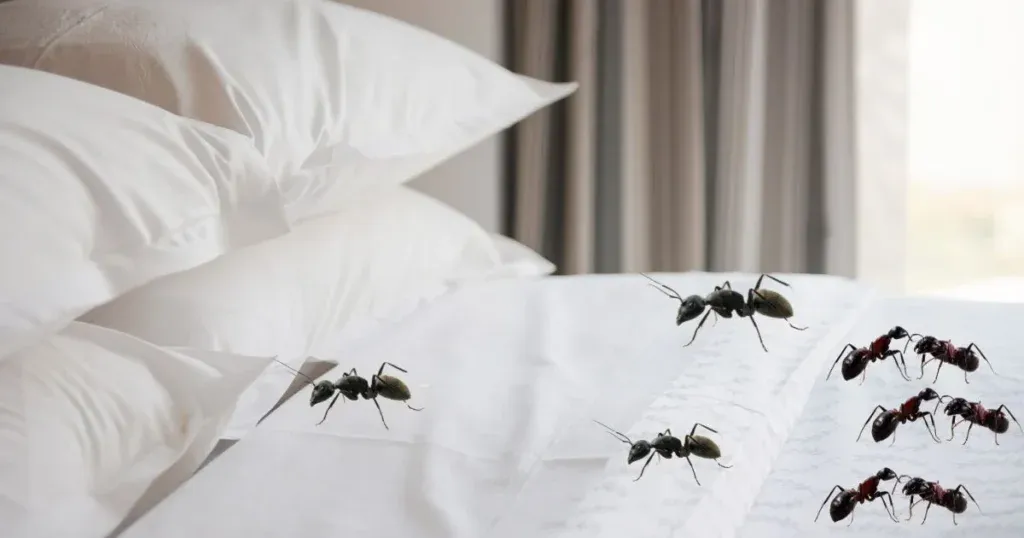
Finding ants in your bed is unsettling, but it almost always has a fixable cause: a scent trail leading to a food source, a moist hiding spot, or an entry point near the bedroom. The fastest way to fix it isn't a single spray - it's a short sequence of steps that disrupts the trail, removes the colony's draw, and seals the route so they don't come back the next night.
Below is the same plan most pest-control guides converge on, distilled into the order that actually works at home.
Why Ants End Up in Your Bed
Ants follow pheromone trails laid by scouts. Once a scout finds something worth foraging - crumbs, sugary residue, even pet food on a nearby floor - it leaves a chemical breadcrumb the rest of the colony reinforces every time they make the trip. If that trail crosses your bed, you have ants in your bed.
Common reasons the trail ends up on the mattress:
- Crumbs or sugary residue from snacking in bed - even invisible smears on sheets or hands.
- Moisture in the frame, headboard, or wall behind it. Damp wood is especially attractive to carpenter ants.
- An older wooden bed frame with soft joints - carpenter ants will tunnel into compromised wood.
- Cracks or open seams in the mattress or box spring that make a warm, dark cavity easy to nest in.
- Bedding pushed against a wall or window - the mattress effectively becomes a bridge from the colony's entry point straight to you.
If you can identify which of these applies to your room, the rest of this guide is faster - you'll know which step is doing the heavy lifting.
Step 1: Strip the Bed and Wash Everything in Hot Water
Pull off sheets, pillowcases, mattress protector, and any blankets. Wash them on the hottest setting the fabric tolerates and dry on high heat. Hot water plus a hot dryer cycle kills ants and any eggs they may have left, and it removes the food residue that pulled them in.
Don't shake bedding out indoors - that just relocates the ants and their pheromone-coated bodies. Take linens straight to the washing machine in a sealed bag if you can.
Step 2: Vacuum the Mattress, Box Spring, and Frame
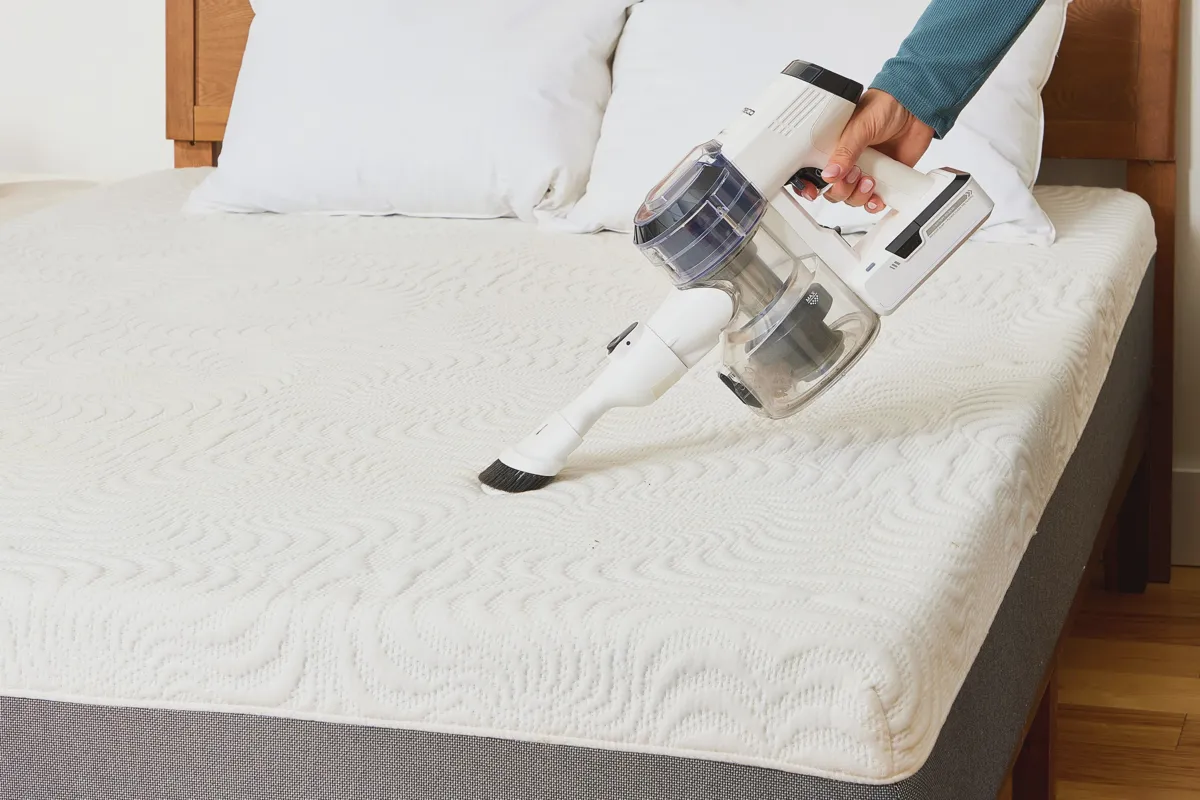
Use the crevice tool to vacuum every seam, tuft, and quilted indentation on the mattress, then move to the box spring, slats, and bed frame - especially joints and screw holes. The goal here isn't just removing live ants; it's pulling out crumbs, dust, and anything else that registers as food to a returning scout.
Empty the vacuum canister into a sealed bag and take it straight to the outside trash. A canister left full of live ants will simply leak them back into the room over the next few hours.
Step 3: Break the Scent Trail with Vinegar
This is the step most people skip, and it's the one that decides whether the ants come back tomorrow. Mix equal parts white vinegar and water in a spray bottle and wipe down the bed frame, headboard, baseboards, and the floor under the bed. Vinegar dissolves the pheromone trail, so even if a few scouts return, they can't lead the colony back.
Don't crush ants on the way to the trash - squashed ants release more pheromones, doubling down on the trail you're trying to erase. Pick them up with a damp microfiber cloth or a piece of tape.
Step 4: Set Bait Traps to Kill the Colony
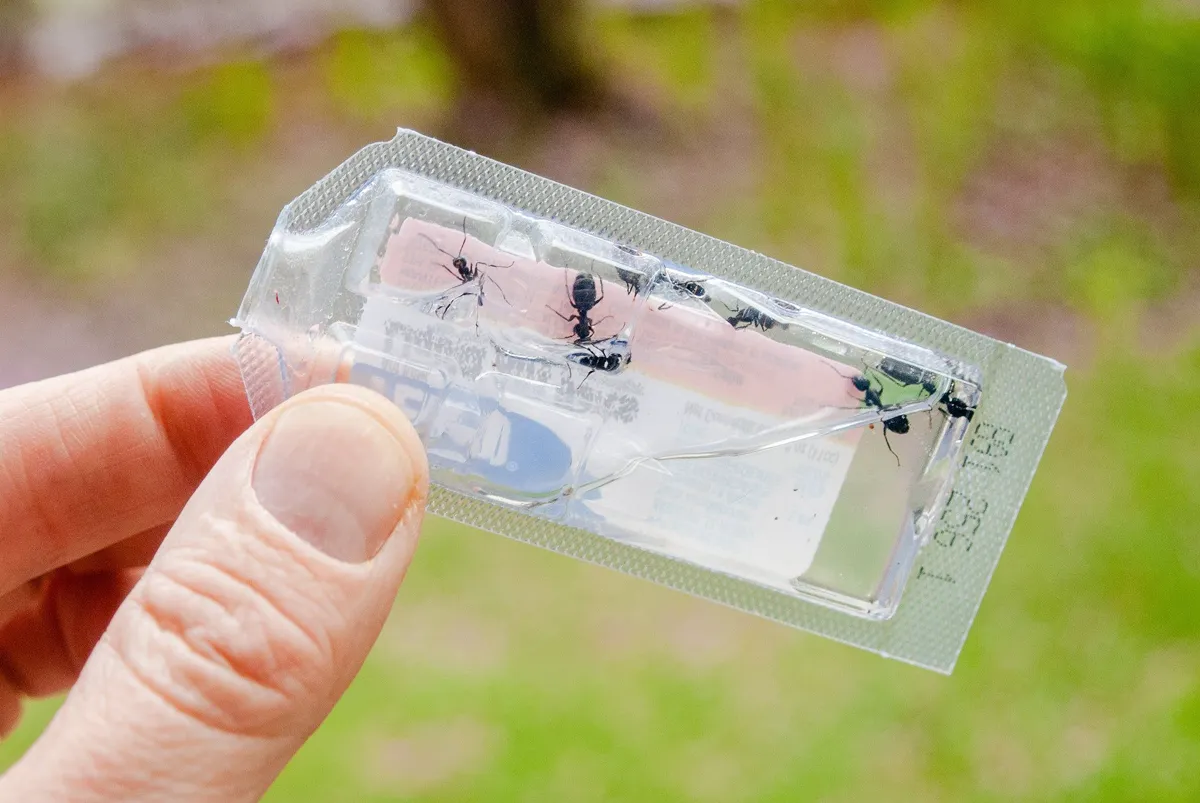
Sprays kill the ants you can see; baits kill the ones you can't. A slow-acting liquid bait (Terro and similar borax-based stations are the most-recommended drugstore options) lets workers carry the poison back to the nest, where it reaches the queen and the brood. That's the only way to end the infestation rather than thin it.
Place stations along the trail, near baseboards, and at suspected entry points - not directly on top of an active trail, which scares workers off. Leave them alone for several days. It's normal to see more ants at first, not fewer; that's the bait being shared.
Skip the bait if anyone is actively spraying the same area with insecticide. Spray repels workers from the bait, which is the opposite of what you want.
Step 5: Build a Barrier Around the Bed
While the bait does its work, make the bed itself unreachable:
- Pull the frame at least a few inches away from any wall and remove curtains or bedding that touches the floor - those are the bridges ants use to climb up.
- Wipe the bed legs and apply a thin band of petroleum jelly or talcum powder around each one. Both make the surface too slick or dusty to climb.
- For wooden beds, sprinkle a line of food-grade diatomaceous earth (DE) along the floor near the legs. DE dehydrates ants on contact; reapply after vacuuming. Don't inhale the dust.
- Optional repellents that ants dislike: peppermint oil diluted in water, cinnamon, ground black pepper, or coffee grounds along the perimeter. These don't kill the colony but they reinforce the barrier.
Step 6: Cut Off the Real Food Source
If the bedroom doubles as a snack space, that habit is the trail's anchor. The fix isn't dramatic - just consistent:
- Stop eating in bed, or at minimum reserve it for dry, non-sticky food and clean up immediately.
- Move pet food bowls out of the bedroom overnight, or set them inside a shallow tray of water.
- Empty bedroom trash bins daily, especially anything containing food wrappers or tissues.
- Seal any visible gaps where wires, pipes, or trim meet the wall - the most common entry points for indoor ant trails.
Knowing What You're Dealing With
A quick read on the ant in front of you helps decide whether bait alone is enough or you need outside help:
- Sugar ants / odorous house ants - small, dark brown, attracted to sweet residue. Bait traps are highly effective.
- Pavement ants - about 1/8 inch, brown to black, often nest near outdoor cracks and forage indoors. Bait plus sealing exterior entry points usually clears them.
- Carpenter ants - large (1/4 to 1/2 inch), often black. They don't eat wood, but they tunnel through damp wood to nest. If you see them indoors regularly, the wood somewhere has a moisture problem worth investigating.
- Flying ants - winged reproductives. A swarm indoors usually means an active nest is inside the structure, not outside. That's an exterminator call.
When to Call a Professional
If the trail keeps reappearing after a full week of baiting, if you find a swarm of flying ants indoors, or if you see frass (sawdust-like debris) near wooden furniture, the nest is likely inside a wall, the bed frame itself, or the structure of the home. At that point a licensed pest-control technician can find and treat the nest in a way over-the-counter products can't.
Frequently asked questions
Why are ants suddenly in my bed?
A scout ant found a food source - usually crumbs, sugary residue on sheets, or pet food nearby - and laid a pheromone trail the rest of the colony is now following. Moisture in the frame and a bed pushed against a wall make the route easier. Wash the bedding hot, vacuum the mattress, wipe everything down with a vinegar-water solution, and the trail breaks.
Will the ants go away on their own?
Sometimes, if the food source is removed and they can't find a replacement nearby. More often, breaking the pheromone trail and setting bait traps is what actually ends the visits. Doing nothing usually means they shift to a different room rather than leave the home.
What smell do ants hate the most?
White vinegar is the most effective at home because it both repels ants and dissolves the scent trail. Peppermint oil, cinnamon, black pepper, and coffee grounds also work as deterrents, though they don't break the trail the way vinegar does.
Do ants bite people in bed?
Most household ants (sugar, odorous house, pavement ants) don't bite humans in any meaningful way. Carpenter ants can pinch if provoked. Fire ants do sting and require a different approach - call pest control rather than handling them yourself.
Can ants live inside my mattress?
It's uncommon but possible if the mattress has open seams, cracks, or stays consistently damp. If you suspect a nest inside the mattress itself - visible trails coming from the seam, ants emerging when you press the surface - it's usually time to replace the mattress and treat the room before a new one arrives.
Are bait traps safe with kids and pets?
Most enclosed bait stations (Terro, Raid Ant Baits, etc.) are designed so the bait isn't directly accessible to pets or children, but they should still be placed out of reach where possible. Read the label for the specific product, and avoid loose-bait or DIY borax mixtures in homes with curious pets.