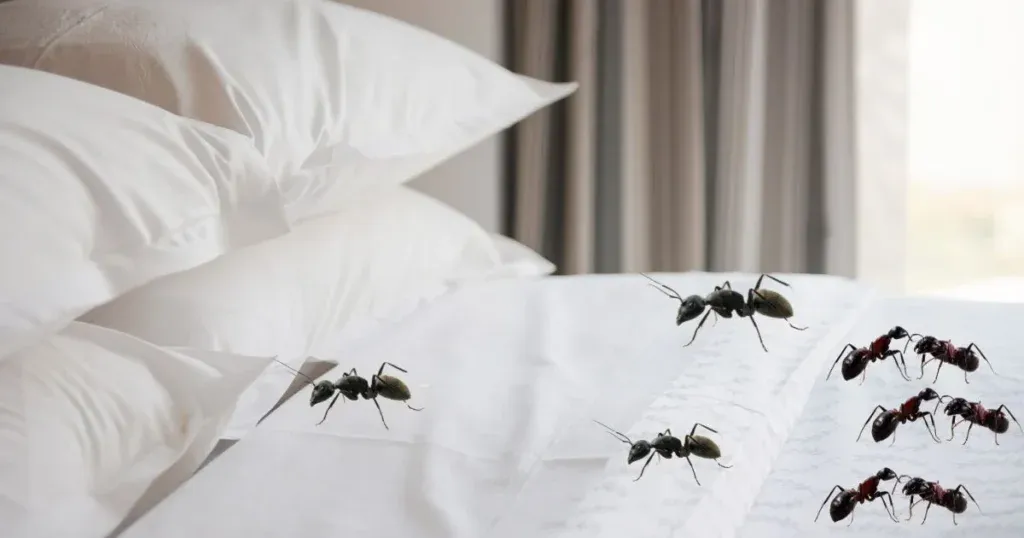
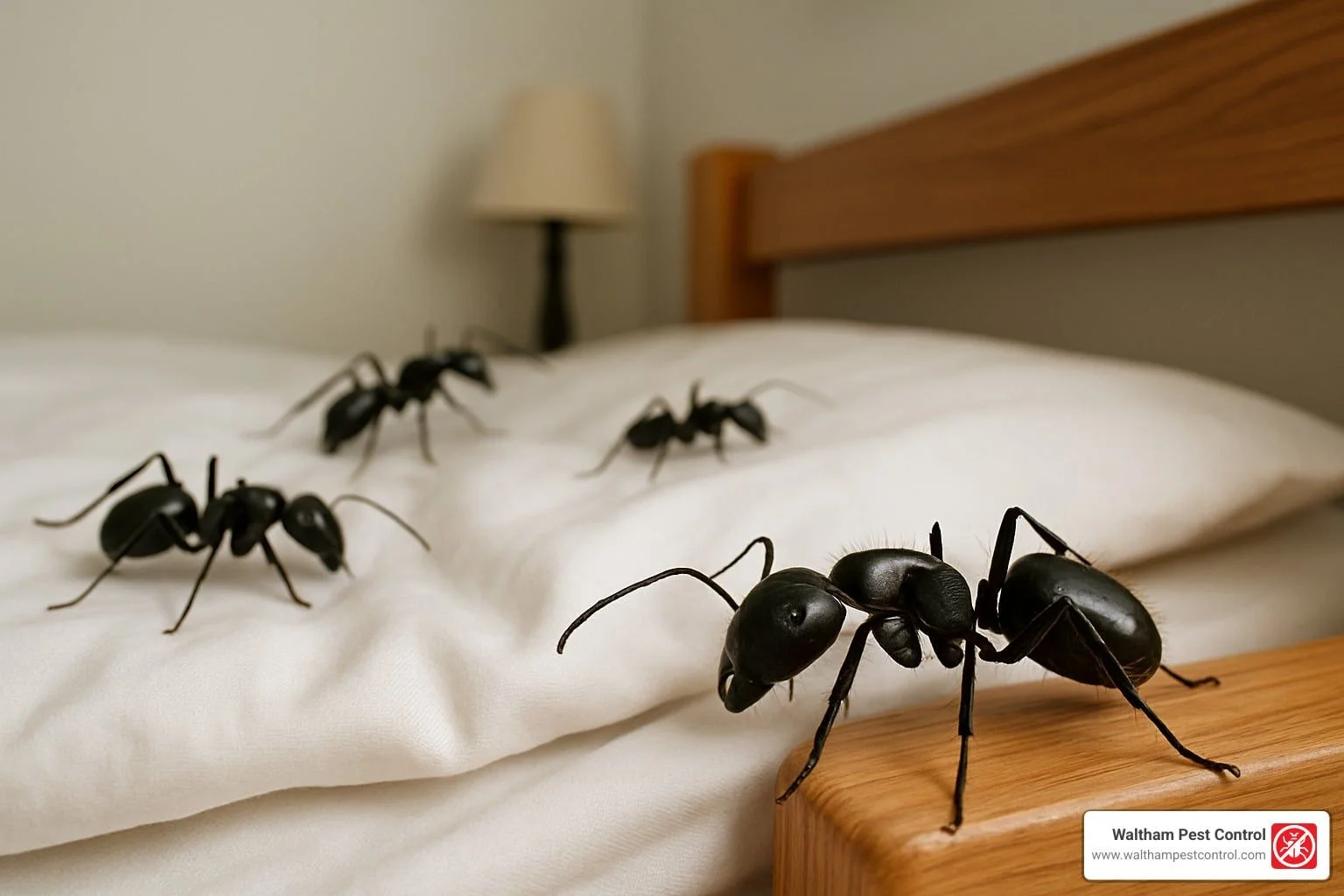
Waking up to ants crawling across your sheets is the kind of thing that ruins a week. The good news: in almost every case, you can get them out without throwing away the mattress. The bad news: spraying the bed with insecticide is one of the worst things you can do - it leaves residues you'll sleep on for years, and it doesn't kill the colony.
After 1,000+ mattresses tested in our review lab, we've worked through plenty of pest scares with mattress owners. This guide walks through what actually works, in the order it needs to happen - immediate triage today, colony elimination this week, and the cleanup habits that keep them gone.
Why there are ants in your bed (it's almost never the bed itself)
Ants don't move into a bed for the bedding. They follow a scent trail to something - and beds are usually a stop on the way, not the destination. Four causes account for most bedroom infestations:
- Food residue: crumbs from late-night snacks, sweet drinks spilled on a nightstand, even sugary cough syrup or kids' vitamins next to the bed.
- Moisture: a humid bedroom, a leaking AC line, or sweat-saturated sheets in summer attract pavement ants and odorous house ants looking for water.
- Wood damage: carpenter ants tunnel into damp or aging wooden bed frames, headboards, and box springs. If you see sawdust-like frass on the floor, that's the tell.
- Body warmth and CO₂: once a colony is established nearby, scout ants will follow heat and exhaled CO₂ to a sleeping body - especially in spring swarming season.
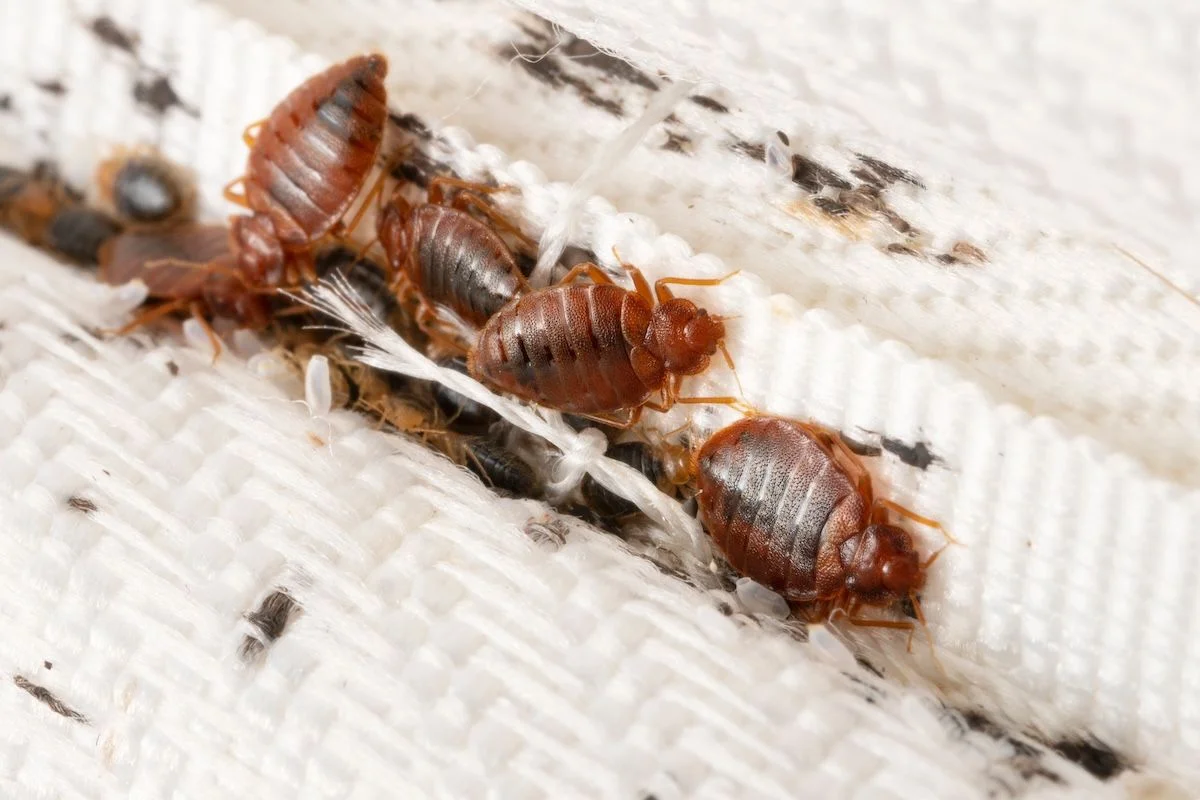
Quick check: are they ants, or bed bugs? Ants have a clearly segmented body with a narrow waist and bent antennae, and they move in trails. Bed bugs are flat, oval, reddish-brown, the size of an apple seed, and you'll find dark fecal spots on the seams of the mattress. The fixes are completely different - confirm before you treat.
Today: get the ants off the bed (in this order)
Don't crush ants on the mattress. Crushed ants release alarm pheromones that signal more workers to swarm the spot. Lift them off instead.
1. Strip the bed completely
Pull off sheets, pillowcases, mattress protector, and any blankets. Carry them straight to the washer - don't shake them out in the bedroom or you'll just relocate the ants. Wash hot (130°F / 54°C minimum) and tumble dry on high. Heat kills any ants and eggs hitching a ride.
2. Vacuum the mattress, frame, and floor
Use the upholstery attachment along every seam, tuft, piping channel, and label tag - those are the spots ants hide. Then vacuum the bed frame slats, headboard joints, the floor under the bed, and the baseboards along the nearest wall. When you're done, remove the vacuum bag (or empty the canister) into a sealed plastic bag and put it in an outside bin immediately. Otherwise the ants walk back out.
3. Break the pheromone trail
Mix one part white vinegar to one part water in a spray bottle. Wipe down the bed frame, headboard, baseboards, and any path you saw ants traveling. Vinegar dissolves the formic-acid scent trail that recruits more ants. Don't soak the mattress itself - moisture inside foam or innerspring causes mildew and voids most warranties. A lightly damp microfiber cloth on the mattress surface and seams is enough.
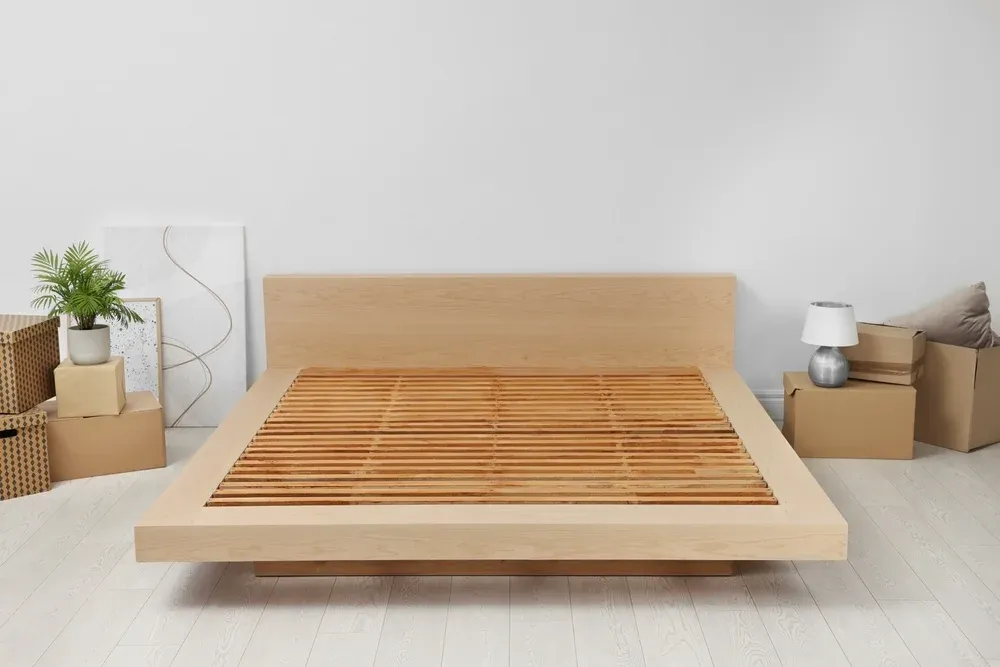
4. Pull the bed away from the wall
Move the frame at least six inches off any wall and make sure no bedding, curtains, or laundry touches the floor. You're cutting the bridges ants use to climb up. Most species can't get onto a bed that has no contact path.
This week: kill the colony, not just the workers
The ants on your bed are 5-10% of the colony at most. Killing them on sight feels productive but solves nothing - the queen keeps producing replacements faster than you can squash them. The only durable fix is bait that workers carry home.
Use slow-acting bait stations (not spray)
Liquid borax baits like Terro work because they're sweet enough to recruit foragers but slow enough that workers carry the poison back to feed the queen and brood. Place stations along the trail you observed - baseboards, window sills, under the nightstand - not directly on the bed. Resist the urge to spray the trail with cleaner; you'll kill the carriers before they reach the nest.
Expect activity to look worse for 24-72 hours as more workers come to the bait. That's the bait working. Trail traffic typically drops sharply by day four and the colony collapses inside two weeks.
Add a mechanical barrier under the bed legs
While the bait works, you don't want ants on the bed at all. Two cheap options for the legs of the frame:
- Petroleum jelly: a thick band around each leg. Most ants can't climb through it.
- Bed-bug interceptor cups under each leg. Cheap, reusable, and they catch any ant trying to climb up - bonus protection against bed bugs too.
Food-grade diatomaceous earth dusted along baseboards and behind the headboard adds a second barrier - it dehydrates ants on contact. Skip it if anyone in the household has asthma; the dust irritates lungs.
Find and treat the nest
Watch the trail for 10 minutes. Workers always loop back to the colony. Common nest locations:
- Inside wall voids near plumbing or AC lines (moisture).
- Window and door frames - especially older wood that's seen water.
- Inside hollow wooden bed frames or headboards (carpenter ants).
- Outside, within 20 feet of the foundation - under mulch, woodpiles, or pavers.
If the nest is inside a wall or in the structure of the bed frame itself, bait at the entry point and let workers carry it in. Don't open the wall. If you find sawdust-fine frass with bits of insect body parts, that's a carpenter ant nest in wood - call a pest pro. They burrow into structural timbers and DIY treatment is rarely enough.
What works
- Slow-acting borax bait (Terro) - kills the colony
- Hot wash + dry on linens (130°F+)
- 1:1 white vinegar wipe-down to break trails
- Bed-leg interceptors or petroleum jelly barriers
- Food-grade diatomaceous earth at baseboards
- Pulling the bed away from walls and curtains
What to avoid
- Spraying insecticide on the mattress (residue, warranty void)
- Crushing ants on bedding (releases alarm pheromones)
- Bug bombs / foggers (scatters the colony)
- Bleach on a mattress (stains foam, voids warranty)
- Essential oils alone for an active infestation (deters, doesn't eliminate)
- Ignoring trails outside - colony rebuilds fast
Will the ants damage the mattress?
For most species, no - odorous house ants, pavement ants, and little black ants are passing through. They don't eat foam, latex, or fabric, and they don't lay eggs in a healthy mattress. Once you eliminate the trail and food source, the mattress is fine to keep using after a thorough vacuum and a 24-hour airing out.
Carpenter ants are the exception. They don't eat wood (they tunnel through it), but if your bed frame has soft, water-damaged wood and you're seeing piles of frass, the frame itself may be compromised. Inspect joints - if a screwdriver pushes in easily, replace the frame after the colony is treated.
If you see ants emerging from inside the mattress (out of seams or torn fabric), that's rare but possible with severely damaged mattresses left in damp spaces. At that point the mattress is unsalvageable - replace it after the colony is gone, not before, or you'll just contaminate the new one.
Keeping ants out for good
Most reinfestations come down to three habits:
- No food in the bedroom. Even one cookie crumb in the sheets is enough to draw a scout. If you snack in bed, change the sheets after.
- Wash sheets weekly, mattress protector monthly. Sweat is a moisture source. A washable protector is the cheapest mattress-saver you can buy.
- Seal entry points. Caulk gaps around window frames, baseboards, and plumbing penetrations. Trim back any tree branches or shrubs touching the house - they're literal bridges.
Inspect the bed frame and baseboards once a season. Catching a single scout trail and baiting it kills the next colony before it ever reaches the bed.
Ants in bed: quick answers
Can I just spray Raid on my mattress?
No. Pyrethroid sprays leave residue you'll breathe and absorb through skin every night, and they don't kill the colony - only the workers you see. They also stain foam and fabric and void most mattress warranties. Use slow-acting bait stations away from the bed instead.
How long until the ants are gone?
Visible trails usually drop sharply 3-4 days after baiting and the colony typically collapses within two weeks. If you still see active foragers after 14 days, the bait isn't reaching the queen - try a different bait formulation (sweet vs protein-based) or call a pest pro.
Will ants in my bed bite me?
Most household species (odorous, pavement, little black) don't bite humans meaningfully. Carpenter ants can pinch but rarely break skin. Fire ants do sting and are a different problem - if you see ants around 1/8 to 1/4 inch with a reddish body and you're in the southern US, treat as fire ants and don't disturb the mound.
Do ants mean my mattress is dirty?
Not necessarily. Ants follow scent trails that may have started elsewhere - a kitchen spill, a leaking pipe in the wall, a snack on the nightstand. The mattress is usually a waypoint, not the cause. A weekly sheet wash and a washable protector handle the legitimate sweat-and-skin-cell load.
Can essential oils get rid of ants by themselves?
Peppermint, tea tree, and clove oils repel ants but rarely kill colonies. They're useful as a barrier (a few drops on cotton balls under the bed, refreshed weekly) but not a primary treatment. For an active infestation, pair them with bait stations.
Should I throw out the mattress?
Almost never. Vacuum the seams thoroughly, air the mattress in sunlight for a few hours if you can, and replace the protector. The mattress only needs to go if it's structurally damaged (torn covers, water-saturated foam) or if you find ants nesting inside the foam - both are rare.
Replacing a damaged or ant-infested mattress?
Browse our independent reviews of Saatva, Helix, Nectar, Tempurpedic and more - all tested in our review lab, no vendor talking points.