Pillow top mattresses sleep beautifully, but their plush, absorbent upper layer makes them harder to clean than a standard innerspring or memory foam mattress. You can't flip them, you can't soak them, and the same baking soda trick that works on a flat-quilted mattress can leave residue trapped in the pillow top's quilted channels.
This guide walks you through exactly what supplies to gather, the routine deep clean every six months, and the right technique for the four stains we get asked about most often: sweat, urine, blood, and the yellow age-stains that appear over time. Every step is sized for a pillow top specifically - meaning low moisture, generous drying time, and no scrubbing hard enough to break down the comfort layer.
What you'll need
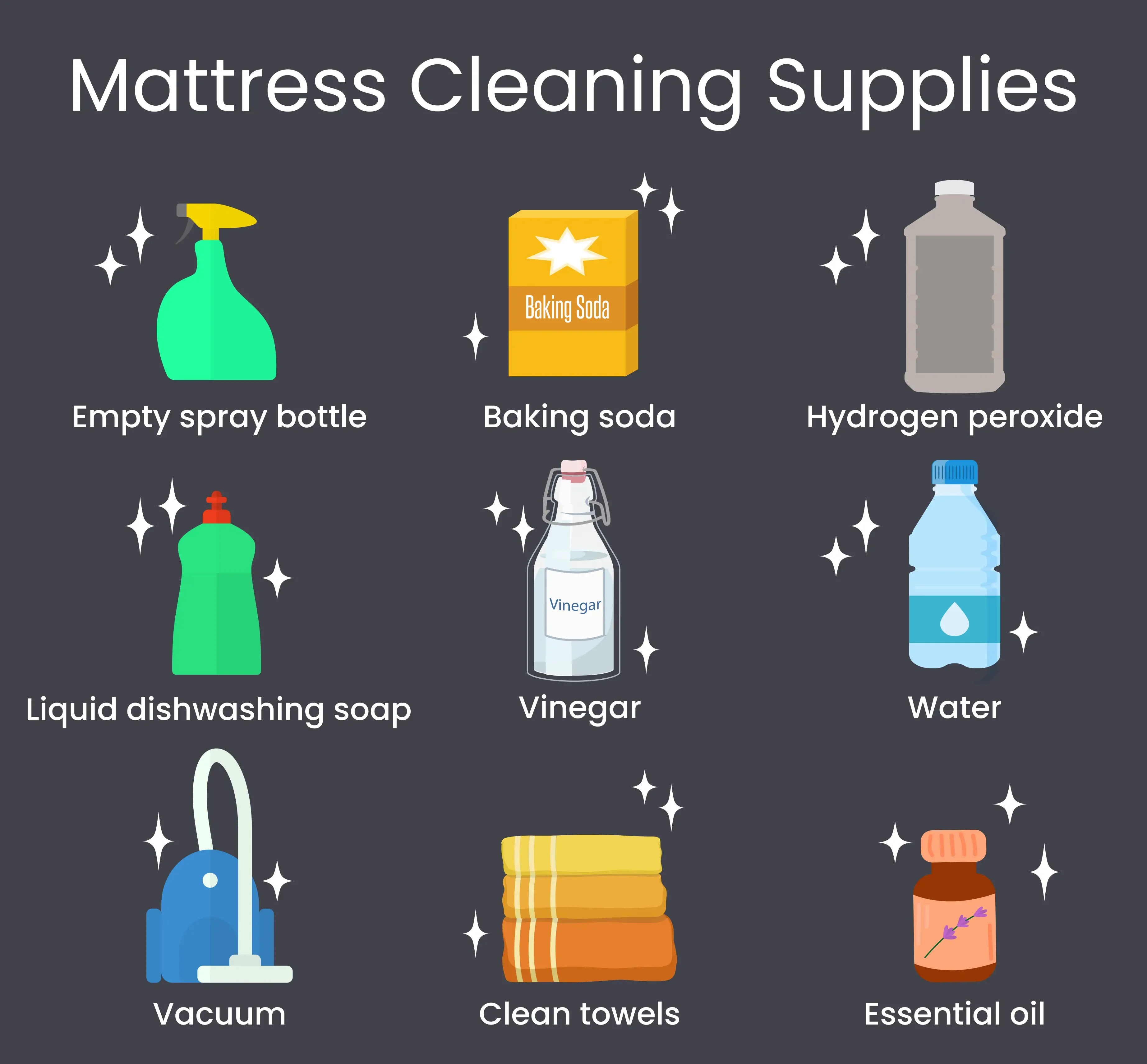
For a routine deep clean, you only need three things:
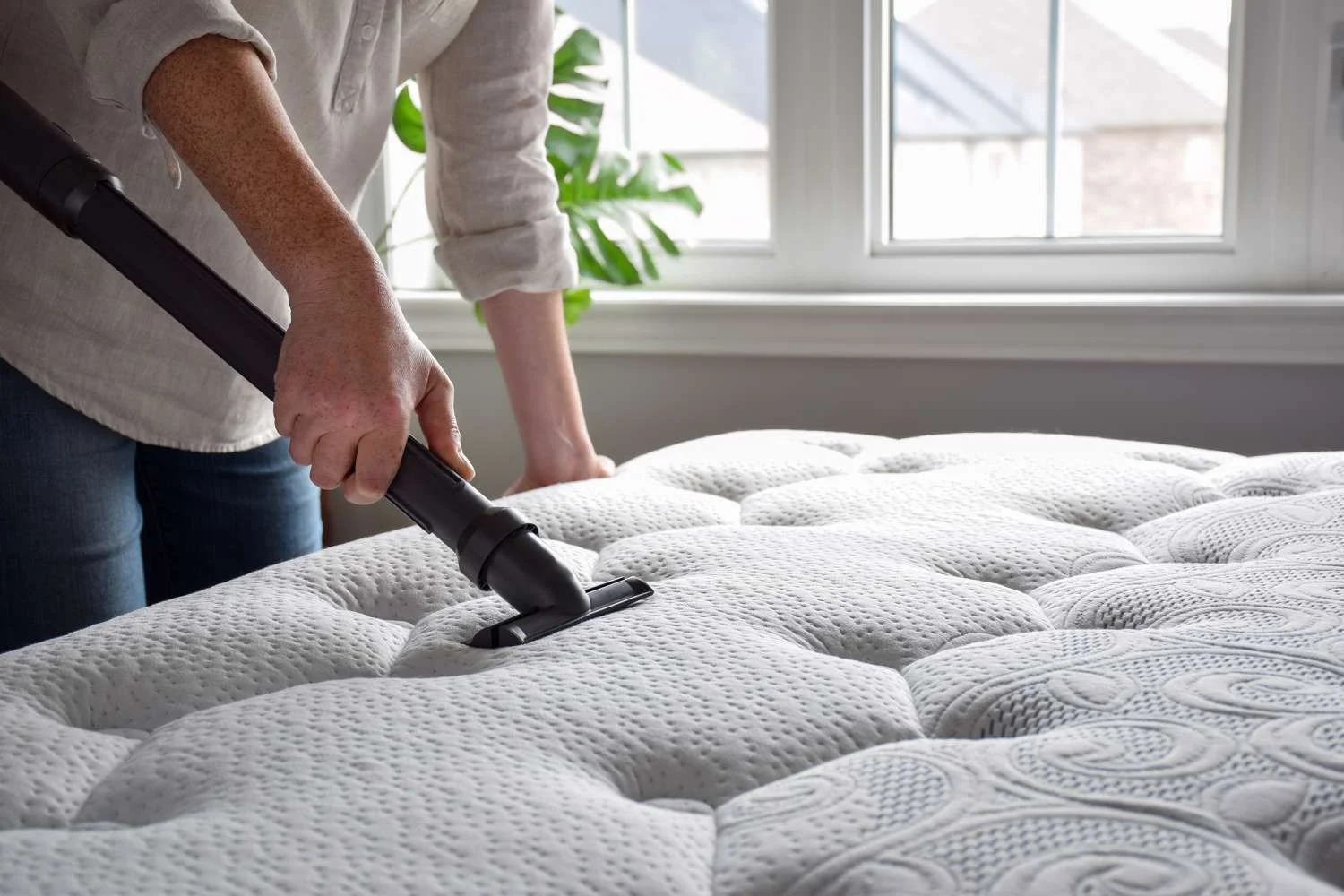
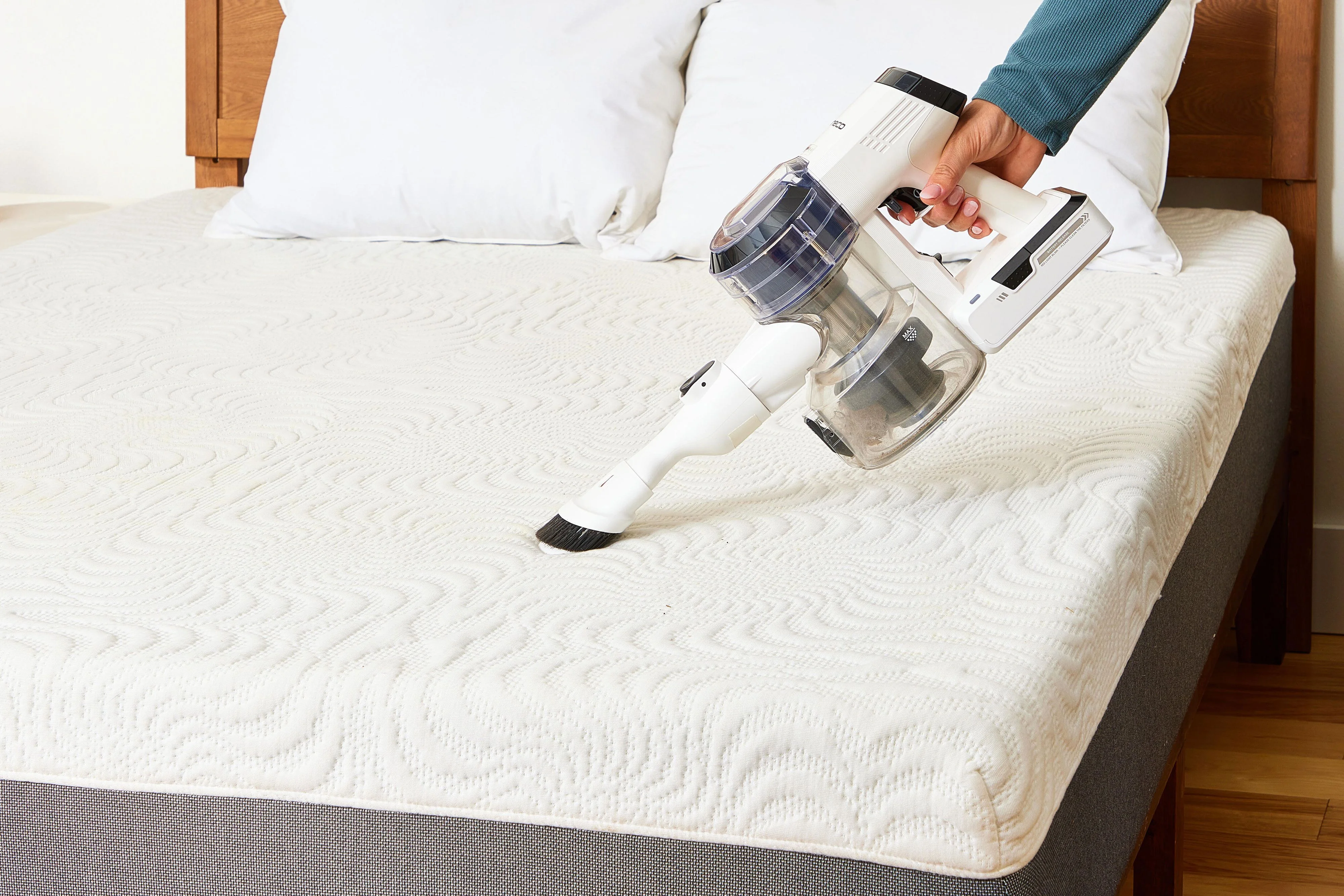
- A vacuum with an upholstery attachment - the soft brush head reaches dust and dander down inside the pillow top quilting.
- A box of baking soda - the standard 1 lb box is enough for a queen.
- A clean white microfiber cloth - colored cloths can transfer dye when damp.
For stain removal, add to that list:
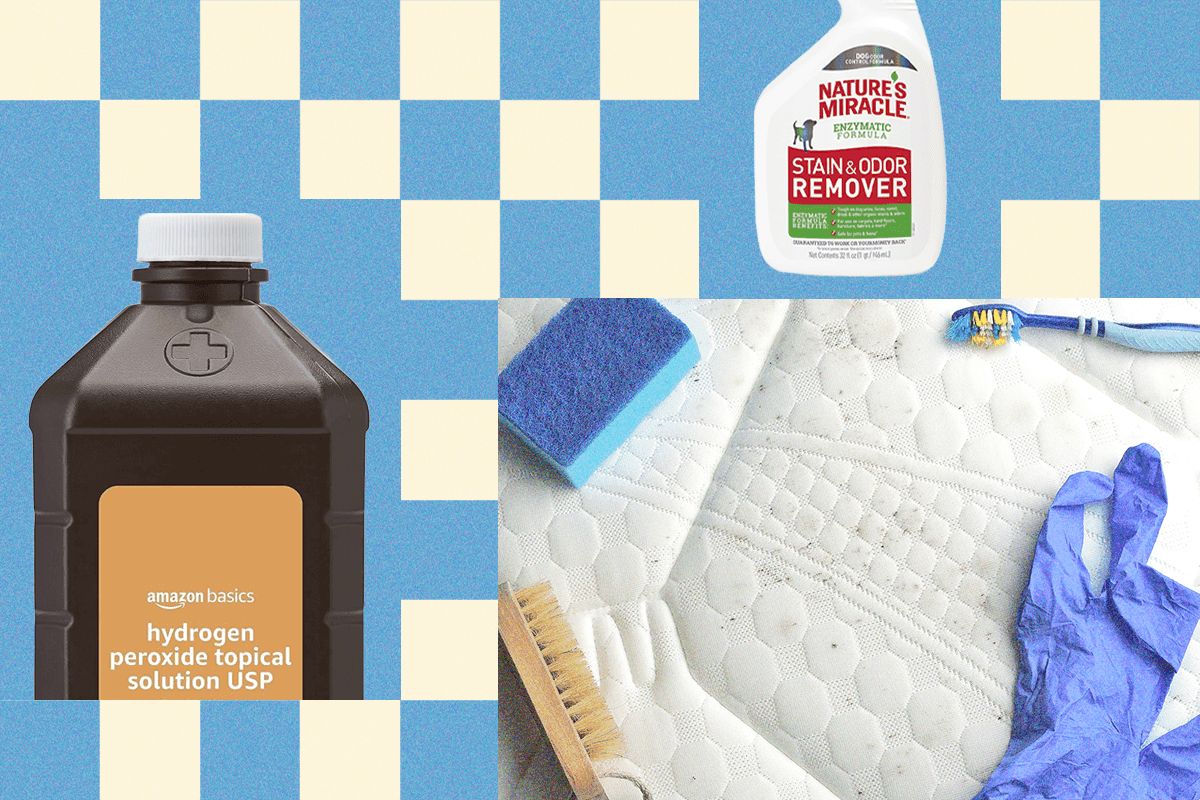
- 3% hydrogen peroxide (the brown bottle from any drugstore)
- White vinegar
- Clear, dye-free liquid dish soap
- A small spray bottle
- An enzyme cleaner (for protein stains like blood, urine, vomit, and pet accidents)
- A bowl or bucket of cool water
A single rule applies across every method: less moisture is better. Pillow tops can take 8-12 hours to dry once saturated, and a damp foam core is exactly where mold and dust mites thrive.
Routine deep clean (every 6 months)
Do this twice a year, on the same calendar trigger as rotating the mattress. Plan for about 90 minutes start to finish, most of which is hands-off waiting time.
- Strip the bed completely. Wash sheets, pillowcases, mattress protector, and any duvet cover in the hottest water their care labels allow. This is also a good moment to vacuum the box spring or platform underneath.
- Vacuum the entire mattress. Use the upholstery attachment and work in slow, overlapping passes - top, sides, and the seam where the pillow top meets the mattress body. The seam traps the most debris.
- Sprinkle baking soda over the whole surface. Use a fine-mesh sieve or sifter for an even coat. Roughly half a 1 lb box for a full or queen, a full box for a king.
- Let it sit at least 30 minutes - ideally an hour. Crack a window if you can; baking soda absorbs both odor and ambient moisture from the pillow top.
- Vacuum thoroughly again. Take your time on this pass. Residual baking soda inside the quilting will work its way back out onto fresh sheets if you rush it.
- Rotate the mattress 180°. Pillow tops are single-sided - never flip them - but rotating head-to-foot evens out wear over the years.
Removing sweat stains and yellowing
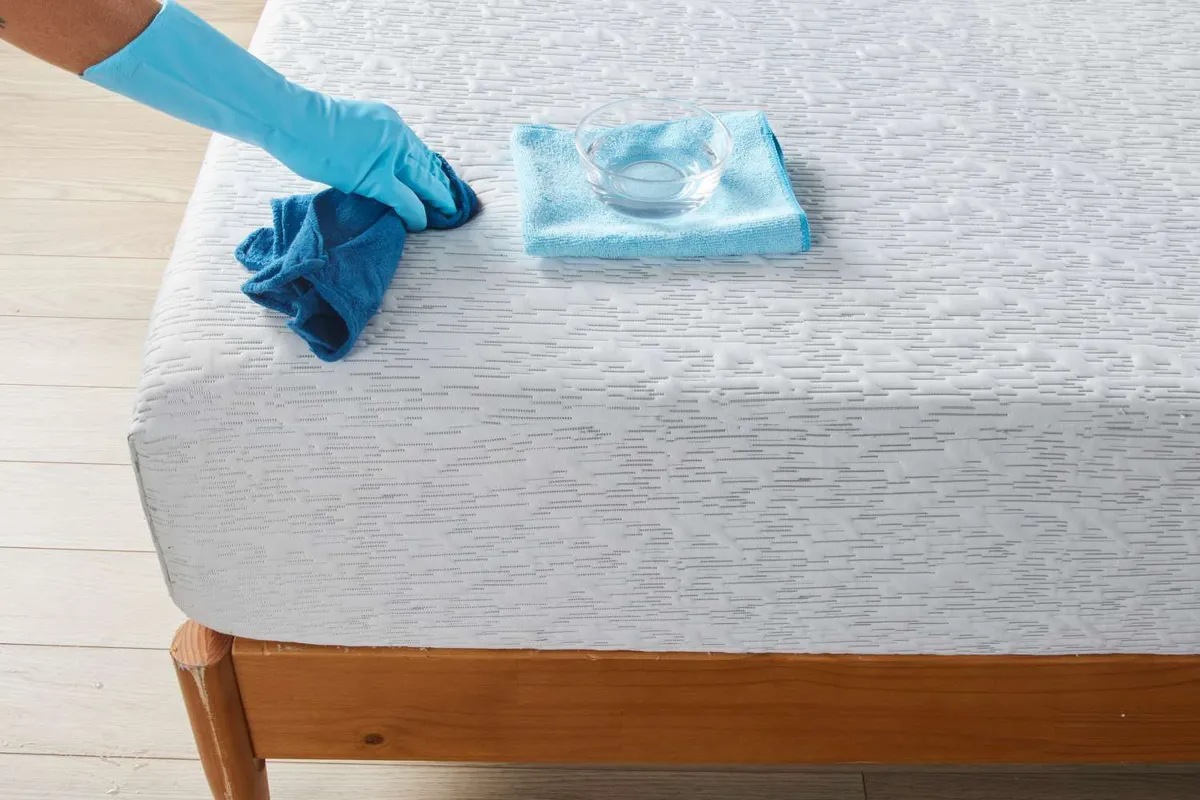
The yellow halos that appear on older mattresses are almost always oxidized sweat - the proteins and oils from your skin reacting with the fabric over months and years. Once they've set, they need an oxidizing cleaner, not just soap.
The mix: 1 cup 3% hydrogen peroxide + 3 tablespoons baking soda + a small squirt (about 1 teaspoon) of dish soap. Stir gently in a bowl until the baking soda dissolves, then transfer to a spray bottle. Use it the same day - it loses potency overnight.
- Vacuum the area first so debris doesn't get pushed into the fibers.
- Mist the stain lightly. The fabric should look damp, not soaked.
- Let the solution work for 5-10 minutes. You'll see the stain start to lift.
- Blot - don't rub - with a clean white cloth dampened in cool water.
- Repeat once if needed. For heavily set yellow stains, two light treatments work better than one heavy one.
- Sprinkle baking soda over the spot, let it dry completely (4-6 hours minimum), then vacuum.
Skip hydrogen peroxide on dark or printed mattress fabric - it can lighten the dye. Test a hidden corner first.
Removing urine stains (fresh and old)
Urine is a protein stain, which means soap alone won't fully break it down. You need either an enzyme cleaner or the peroxide-and-baking-soda solution above. The faster you treat it, the better - fresh accidents come out completely; old, dried ones leave a faint shadow even after cleaning.
For a fresh accident:
- Strip the bedding immediately and start the wash cycle.
- Press a thick towel firmly into the wet area to absorb as much liquid as possible. Stand on it if you have to. Do not rub - that pushes urine deeper into the pillow top.
- Lightly spray the area with a 50/50 mix of white vinegar and cool water. Vinegar neutralizes the alkalinity of urine and helps with odor.
- Blot dry with a fresh towel.
- Apply the peroxide/baking soda/dish soap mix from the previous section. Let sit 15-20 minutes.
- Blot with a damp cloth, then a dry one.
- Cover the spot with a generous layer of baking soda and leave overnight.
- Vacuum thoroughly in the morning.
For a dried, old urine stain, an enzyme cleaner (sold for pet stains at any pet store) is more effective than peroxide. Follow the bottle's directions - most require saturating the area, then letting it air-dry over 24 hours so the enzymes can finish breaking down the urea crystals.
Removing blood stains
Blood is the one stain where temperature matters as much as the cleaner. Always use cold water - warm or hot water cooks the proteins into the fibers and sets the stain permanently.
- Blot away as much blood as possible with a cold, damp cloth.
- For fresh stains, mix 1 tablespoon hydrogen peroxide with 1 teaspoon dish soap in a small bowl. Apply with a cloth, let foam for 30 seconds, then blot.
- For dried blood, make a paste of 2 tablespoons baking soda and 1 tablespoon cold water. Spread over the stain, let sit 30 minutes, then scrape off and blot with a cold-water cloth.
- Rinse by blotting with a clean, cold-water cloth.
- Air dry completely before remaking the bed.
Meat tenderizer (the unseasoned kind) mixed into a paste with cold water also works well on stubborn old blood - the enzymes break down the proteins the same way they tenderize a steak.
Can you steam clean a pillow top mattress?
Yes - cautiously. A handheld garment steamer used briefly across the surface is great for sanitizing and killing dust mites. A wet/dry upholstery cleaner that injects water into the mattress is not recommended for pillow tops; the foam and fiber fill underneath holds water for days and risks mold.
Before steaming, check your mattress care tag and the manufacturer's website. A few brands void the warranty on steam cleaning. If yours doesn't, hold the steamer 6-8 inches above the surface, work in long passes, and let the mattress dry uncovered for at least 4 hours before remaking the bed.
Drying matters more than you think
This is the single biggest mistake we see. After spot cleaning, the pillow top can feel dry on the surface within an hour, but the foam underneath is still damp. Sealing it back up with sheets traps that moisture against a warm body for the next eight hours - which is how mildew and that musty smell start.
After any wet cleaning:
- Open windows or aim a box fan at the mattress for at least 4 hours.
- Press the spot firmly with a dry towel. If the towel comes up damp at all, keep airing it.
- Don't make the bed back up the same evening if you can avoid it.
A quick sun-and-air session - propping the mattress against a wall in a sunny room for an afternoon - does more for freshness than almost any cleaner.
How to keep it clean (so you don't have to do this often)
The best pillow top cleaning routine is the one you don't need to do. Three habits prevent 90% of the stains we treat:
- Use a waterproof mattress protector. A good zippered or fitted protector adds maybe $50-$80 to the bed and keeps the pillow top showroom-clean for the life of the mattress. Most warranty claims we see are denied because of stains the protector would have prevented.
- Wash sheets weekly in hot water. The biggest source of yellow stains is body oil wicking through cotton. Hot wash, full dry, every week.
- Vacuum the mattress every time you change the sheets. Two minutes with the upholstery attachment, no baking soda needed. This alone keeps allergens and dust at bay.
- Air it out monthly. Strip the bed, open the windows, and leave the mattress uncovered for an hour. It's the simplest thing on this list and the one most people skip.
A pillow top that's vacuumed weekly, deep-cleaned twice a year, and protected from spills will look and smell new for the full 8-10 year warranty period - no professional cleaning required.
Frequently asked questions
How often should I deep clean a pillow top mattress?
Every six months for the full vacuum-and-baking-soda routine. Spot clean stains as they happen, and vacuum the mattress every time you change the sheets.
Can I flip a pillow top mattress?
No. Pillow tops are single-sided - flipping puts the plush layer on the bottom and ruins comfort. Rotate the mattress head-to-foot every six months instead to even out wear.
Will baking soda damage my mattress?
No, but trapped baking soda can clump in humidity and work its way back out onto fresh sheets. Always vacuum thoroughly after deodorizing and let the mattress air out before remaking the bed.
Is professional mattress cleaning worth it?
For a pillow top under 5 years old with normal wear, professional cleaning is rarely worth the cost. For older mattresses with set-in odors or biohazard cleanup (large urine accidents, post-illness), it can be - look for a service that uses low-moisture extraction, not steam injection.
How do I get yellow stains out of a pillow top mattress?
Mix 1 cup 3% hydrogen peroxide, 3 tablespoons baking soda, and 1 teaspoon dish soap in a spray bottle. Mist the stain lightly, wait 5-10 minutes, then blot with a damp white cloth. Repeat once if needed and let the spot air-dry completely before remaking the bed.