The short answer
No - pure (100%) linen does not stretch. Flax fibers have very little natural elasticity, so a linen garment will not give the way cotton jersey or wool does. What linen does do is relax: with body heat and wear, fibers loosen and the piece may feel a touch roomier by the end of the day, then bounce back after washing. Linen blends (linen + viscose, spandex, or cotton) are a different story - they have real stretch and recovery.
If anything, you are more likely to fight shrinkage than stretch. Linen typically shrinks 3-4% on the first hot wash if it has not been pre-washed, and it can shrink more if you tumble-dry hot. The good news: shrunken linen can be coaxed back into shape.
Why pure linen does not stretch
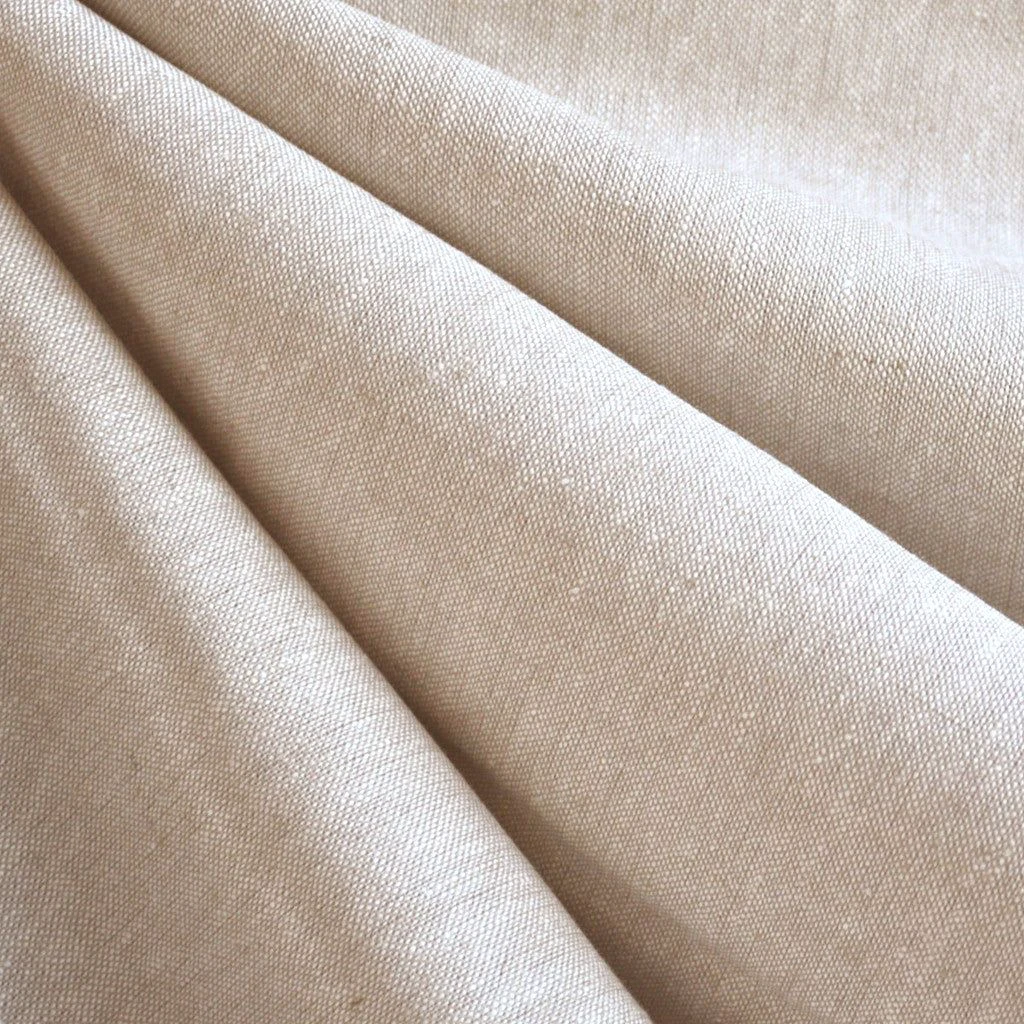
Linen yarn is spun from the long bast fibers of the flax plant. Those fibers are crystalline and stiff - the same structure that makes linen breathable and crisp also keeps it from stretching. There is no natural crimp like in wool, and no thermoplastic give like in synthetics, so the fabric returns to roughly the same dimensions after each wash.
Pure linen vs. linen blends
- 100% linen - minimal stretch (≈1-2% give from yarn loosening, not true elasticity). Wrinkles freely, drapes softly with washing.
- Linen + viscose / rayon - softer hand and more drape, modest stretch (~2-4%).
- Linen + spandex (3-5%) - true four-way stretch and recovery; common in linen pants and skirts.
- Linen + cotton - close to pure linen in stretch, but more forgiving on shrinkage.
Does linen relax or get baggy when worn?
Yes - slightly. As you move, the warp and weft yarns ease into the path of least resistance and the garment feels less crisp. Knees on linen pants and elbows on linen shirts are the usual hot spots. This is yarn relaxation, not stretch: a wash and steam typically resets the silhouette.
Should you size up or down in linen?
If a 100% linen piece is between two sizes, size up - the fabric will not give to accommodate snug shoulders, hips, or thighs, and a small shrink on the first wash can tip a borderline fit into ‘too tight’. For linen-spandex blends, take your normal size or even size down; the spandex provides the give.
Why people love 100% linen
- Cool and breathable - wicks moisture and dries fast in summer.
- Gets softer with every wash without losing shape.
- Strong fibers - quality linen lasts decades.
- Holds dye well; ages into a beautiful patina.
- Naturally biodegradable and low-input to grow.
What you trade off
- Almost no stretch - fit must be right off the rack.
- Wrinkles freely; not for crisp-only wardrobes.
- Can shrink 3-4% on the first hot wash if not pre-washed.
- Higher up-front cost than cotton.
- Hot dryers can make fibers brittle over time.
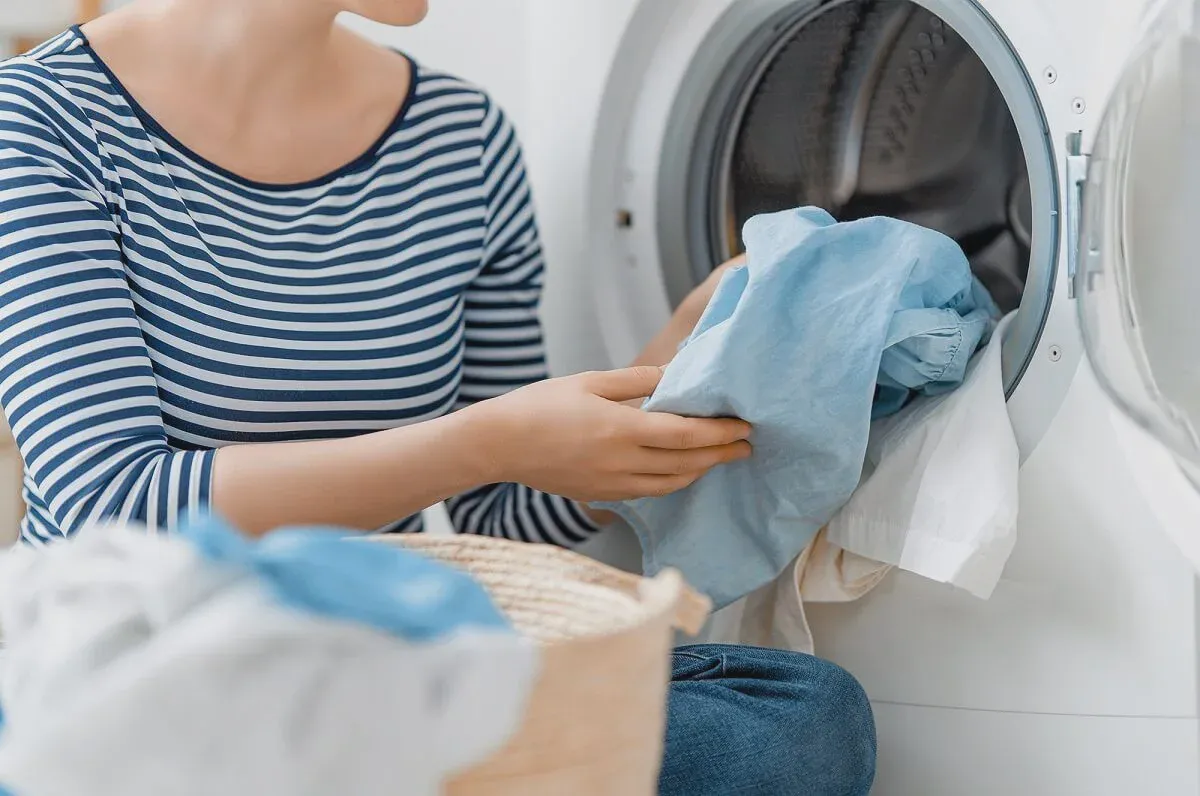
Will washing linen stretch or shrink it?
Washing does not stretch linen - it shrinks it, especially the first time. Industry care guides cite roughly 3-4% shrinkage on a first hot wash for un-prewashed 100% linen, with most reputable brands pre-washing fabric before cutting to absorb that loss. Heat is the trigger; hot water and high-heat drying compound the effect.
Wash settings that protect the fit
- Use cool to lukewarm water (≤30°C / 86°F). Cold is fine for color.
- Pick a gentle or delicates cycle - agitation pulls weave open and stresses fibers.
- Skip fabric softener. It coats fibers and dulls linen’s natural hand.
- Wash linen with linen (or similar weights). Heavy zippers and denim chew the weave.
- Soak no longer than 10 minutes. Long submersion encourages further shrinkage.
Drying linen without shrinking it
The dryer is where most linen damage happens. High heat for a full cycle can shrink linen another ~5% and leave fibers brittle. You have three good options:
- Best: line- or rack-dry while damp, then steam or iron for crispness.
- Acceptable: tumble on low/air for 10-15 minutes, then hang to finish.
- Avoid: full hot-dryer cycles, especially on un-prewashed pieces.
How to stretch linen back after it shrinks
Because linen has no built-in spring, you cannot ‘wear it loose’ - you have to physically reshape it while the fibers are wet and pliable. The classic method:
- Soak the garment in lukewarm water with a teaspoon of hair conditioner or baby shampoo for 10-15 minutes.
- Press out water gently - do not wring.
- Lay flat on a towel and gently pull the garment back to size from the center outward.
- Pin or weight the corners to hold the dimensions while still damp.
- Iron on the linen setting from the center outward as it dries - heat plus tension reshapes the fibers.
You can usually recover most or all of a 3-5% shrink with this method. Garments that were dried hot for full cycles repeatedly may not fully bounce back.
Where this matters at home: linen sheets
The same rules apply to linen bedding. Pre-washed (‘stonewashed’) linen sheets have already absorbed their shrink, which is why their fit is so consistent - but they still benefit from cool washes and low-heat drying. If a fitted sheet starts feeling tight on the corners after a few washes, it is almost always heat shrinkage; soak and reshape it the same way you would a garment.
Linen stretch FAQ
Does linen get looser with wear?
Slightly. Pure linen relaxes - yarns ease into a softer drape during wear - but it does not truly stretch. Most of that ‘give’ resets in the wash. For permanent give, choose a linen-spandex blend.
Can you put 100% linen in the dryer?
Yes, on low or air-dry, and only briefly. Pull pieces out while still slightly damp and hang to finish. Full hot cycles cause shrinkage and brittle fibers.
Will my linen pants stretch out at the knees?
Pure linen pants will bag a little at the knees by the end of the day; the shape almost always returns after a wash. Linen-spandex blends recover faster and bag less.
Does linen stretch when ironed?
Ironing damp linen with a little tension can reshape pieces that shrank - that is the standard fix. Ironing dry linen does not stretch it; it just smooths wrinkles.
Should I size up in linen?
For 100% linen, yes - when between sizes, choose the larger one. The fabric will not give to a snug fit, and a small first-wash shrink can make the smaller size too tight. For stretch blends, your usual size is fine.
What are the disadvantages of linen?
Linen wrinkles freely, has no real stretch, can shrink on hot washes, and costs more up front than cotton. In return you get strong, breathable fabric that softens for years.