Linen has a reputation for being one of the most expensive natural fabrics on the market - and unlike many "luxury" textiles, the premium is earned in the field, not invented in marketing copy. Pound for pound, linen sheets, shirts, and tablecloths can cost two to three times more than comparable cotton. The reason isn't a single thing, it's the whole chain: where flax grows, how it's pulled, who weaves it, and how long the finished cloth lasts.
Here's a clear-eyed breakdown of why linen carries the price tag it does in 2026 - and when paying it actually pays you back.
How linen is made (in one minute)
Linen is woven from the long bast fibers inside the stem of the flax plant (Linum usitatissimum). To turn a flax field into a linen sheet, growers and mills move through roughly six steps, and every one of them is slower than the equivalent in cotton:
Cotton, by comparison, is picked mechanically off a shrub and ginned at speed. The fiber is ready to spin in a fraction of the time. That single contrast - fiber locked inside a stem versus fiber sitting on the outside of a seed pod - drives most of the price gap.
Why linen costs more than cotton: the 9 real reasons
1. Flax only grows well in a narrow band of Europe
About is grown in a coastal strip running from northern France through Belgium into the Netherlands. The climate (mild, wet, humid), the silty soil, and generations of grower expertise are not easily replicated. Smaller flax acreage exists in Lithuania, Ireland, Italy, and parts of China, but the premium long-line fiber that goes into apparel and bedding still comes overwhelmingly from that French/Belgian/Dutch corridor. Limited geography means limited supply, and limited supply pushes prices up before a single fiber is pulled.
2. The harvest is uprooted, not cut
Flax has to be pulled from the soil with the roots attached, not cut at the base like wheat or cotton. If you cut the stem, you lose the very bottom of the fiber - and fiber length is exactly what makes premium linen feel smooth and last for decades. Until recently, this meant hand-pulling; modern flax pullers are specialized machines, expensive to own, that run far slower than a cotton harvester. Either way, the cost per kilogram of fiber leaving the field is high.
3. Retting takes weeks of weather risk
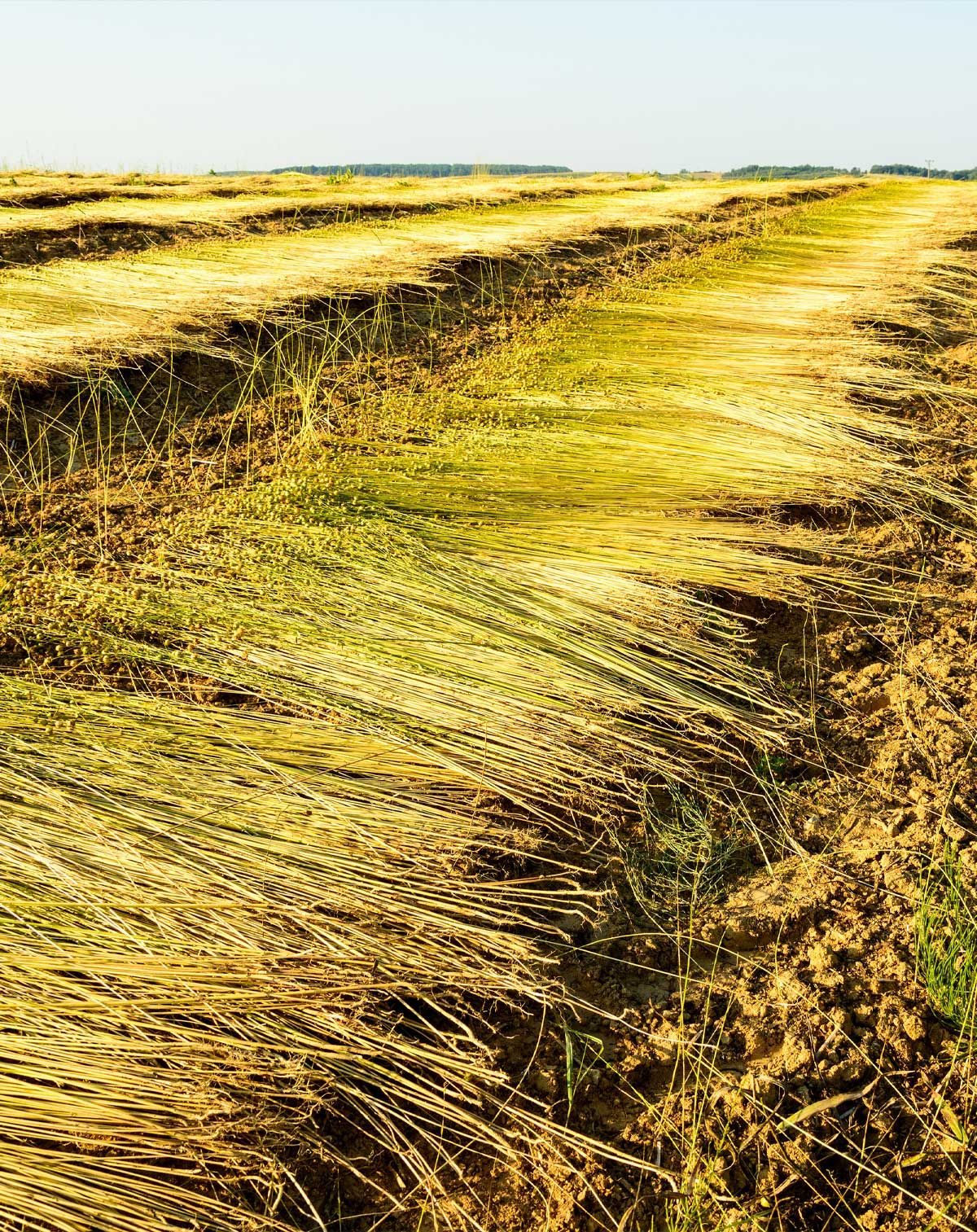
After pulling, flax has to rot in a controlled way so the woody outer stalk breaks down and the inner fiber can be separated. Most premium linen uses , where the pulled flax sits in the field for two to three weeks while alternating dew and sun do the work. That's three weeks of crop sitting outdoors, exposed to weather, before it's even processed. Over-rett and the fiber rots; under-rett and it won't separate cleanly. There's no shortcut without sacrificing quality.
4. The fiber is fragile, so machines run slow
Flax bast fibers are strong lengthwise but brittle to bend. They snap when handled too fast. As a result, - or, at the top end, hand-woven - to avoid yarn breakage. A modern cotton mill can run several times faster than the same mill running linen, which means linen takes more machine-hours, more labor-hours, and more energy per finished yard.
5. European labor isn't cheap
Because the best flax grows in Western Europe, the people pulling, retting, scutching, spinning, and weaving it are paid Western European wages, not the rural-Asia or central-American wages that drive global cotton. Ethically, that's a feature, not a bug - most linen mills publish certifications like and OEKO-TEX Standard 100 confirming working conditions and chemical limits - but it's reflected on the price tag.
6. Linen is only ~1% of global fiber output
Cotton is roughly a quarter of global textile fiber by volume; polyester is more than half. of total textile production. That's a structural scarcity - even when demand spikes, you can't quickly add more flax acreage, because new ground takes years to build the right soil biology and yields the lower-grade fiber for the first few seasons. Low supply against rising sustainable-fabric demand keeps linen at a premium.
7. The fabric grows softer (and lasts decades)
Most fabrics depreciate the moment you bring them home. Linen does the opposite: every wash relaxes the slubby weave and the fibers themselves soften, while structural strength stays nearly intact. The bast fibers in linen are commonly cited as up to 12 times stronger than cotton fibers at the strand level, which is why good linen sheets can run 15-20 years of nightly use. When you amortize a $250 linen sheet set over 15 years, the cost-per-night is below a $90 cotton set you'll replace every three. Part of what you're paying for is the durability - manufacturers price it in because they know it's there.
8. It's hypoallergenic, breathable, and antimicrobial - and that's not just marketing
Linen genuinely outperforms cotton on heat regulation and moisture: the hollow bast fibers wick moisture away from the skin and dry quickly, which is why linen feels cool in summer and warm in winter ("thermoregulating" in marketing-speak; "low thermal effusivity and high capillary action" in fiber-science speak). The same properties make it , which matters for allergy-prone sleepers and is part of why mattress-toppers and bed linens lean on it. Those performance traits aren't free; they reflect the long-fiber, long-staple, slow-processed input.
9. The brand premium is real (and partly justified)
There is a "luxury tax" on linen - once a fiber has been associated with old-money summer dressing and high-end European hotels for a century, brands can charge a premium just for the name on the label. Some of that markup is image; some of it reflects the European flax growers maintain - both of which cost money the consumer is, in the end, paying for. The easiest way to know which you're getting: check whether the brand discloses fiber origin, weave, and certifications, or only talks about thread count and "buttery soft" marketing copy.
So is linen actually worth the price?
For bedding, almost certainly yes. A linen sheet set's higher up-front cost is offset by lasting 3-5× as long as cotton percale, gaining softness instead of losing it, and running cooler in the warm months - which directly affects sleep quality on a hot mattress. For clothing the math is similar: a linen shirt that holds up for 10 summers beats four cotton replacements over the same span on both cost and environmental footprint.
For other use cases (linen tablecloths, towels) the price gap shrinks compared to the durability gain, so the value proposition is even better.
The places linen isn't a good deal are mostly counterfeit ones: blends labelled "linen-look" that are mostly viscose or polyester at a real-linen price, or low-quality short-fiber linen that pills and thins in a year. The premium only pays back when you're buying actual long-fiber linen, ideally from a European mill with named provenance.
How to spot quality linen that's actually worth the premium
Use this short checklist before paying real money for linen sheets, shirts, or tablecloths:
If a product checks all five, the premium is doing real work. If it doesn't, you're paying the label.
Linen pricing FAQ
Is linen really worth the higher price?
For bedding and frequently-worn clothing, yes. A premium linen sheet set typically lasts 15-20 years and gets softer over time, while cotton percale at a third of the price usually needs replacing every 3-5 years. On a cost-per-year basis, real long-fiber linen comes out cheaper - but only if it's 100% linen, ideally from a European mill.
Why is linen more expensive than cotton specifically?
Three big reasons. First, flax fibers are locked inside the plant's stem and have to be retted (rotted) for weeks to release, while cotton sits on the outside of a seed pod ready to gin. Second, flax must be uprooted (not cut) to keep fibers long, which is slow and largely mechanized at low speed. Third, 85% of premium flax grows in France, Belgium, and the Netherlands - Western European labor and operating costs are reflected in the price.
Is European linen actually better than other linen?
Yes, materially. European flax (look for 'Masters of Linen' or 'European Flax' certification) grows in the climate and soil where the fiber reaches its full length and strength. Non-European flax - from China, Egypt, or Eastern Europe - is usable but typically yields shorter, weaker fibers that produce a coarser, less durable fabric.
How can I tell if a linen product is high quality?
Check five things: origin disclosed on the label or product page (European/Belgian/French preferred); 100% linen, not a blend; visible slubs and a slightly uneven weave; pre-washed or stonewashed so it's soft day one; and bedding weight of roughly 165-185 g/m². If a product hits all five, the premium is doing real work.
Does linen really last 20 years?
Good 100% European linen sheets, washed normally and not bleached, regularly last 15-20 years of nightly use. The bast fibers in flax are around 12 times stronger than cotton fibers, and they actually relax and soften with each wash rather than degrading. The most common reason linen fails earlier is buying short-fiber or blended linen labeled as 100%.
Is linen better than cotton for hot sleepers?
Generally yes. Linen's hollow bast fibers wick moisture away from the skin and release heat faster than cotton, so it feels cooler in warm weather. The thermoregulating effect also keeps it from feeling cold in winter. For chronically hot sleepers, the difference between linen and cotton percale is noticeable on the first night.