What is a trundle bed?
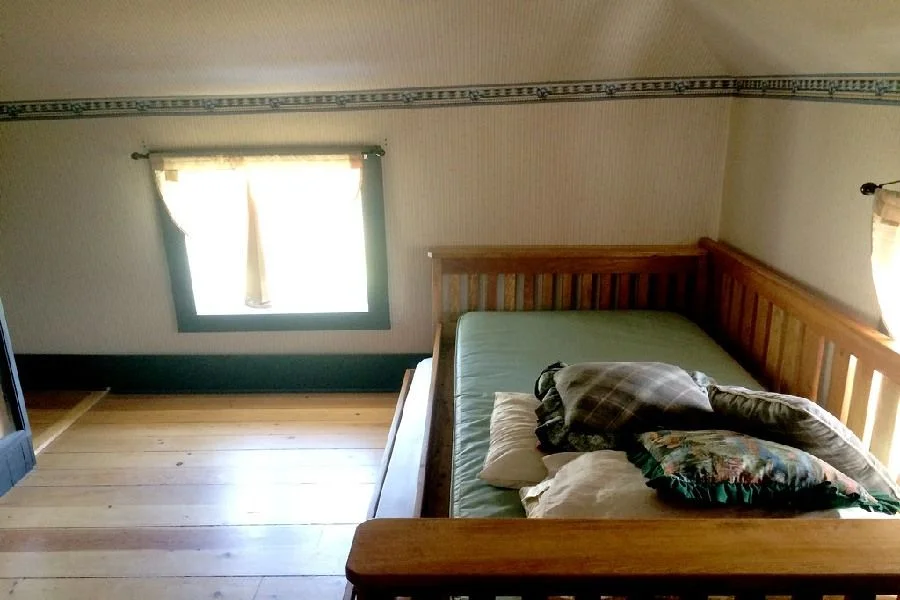
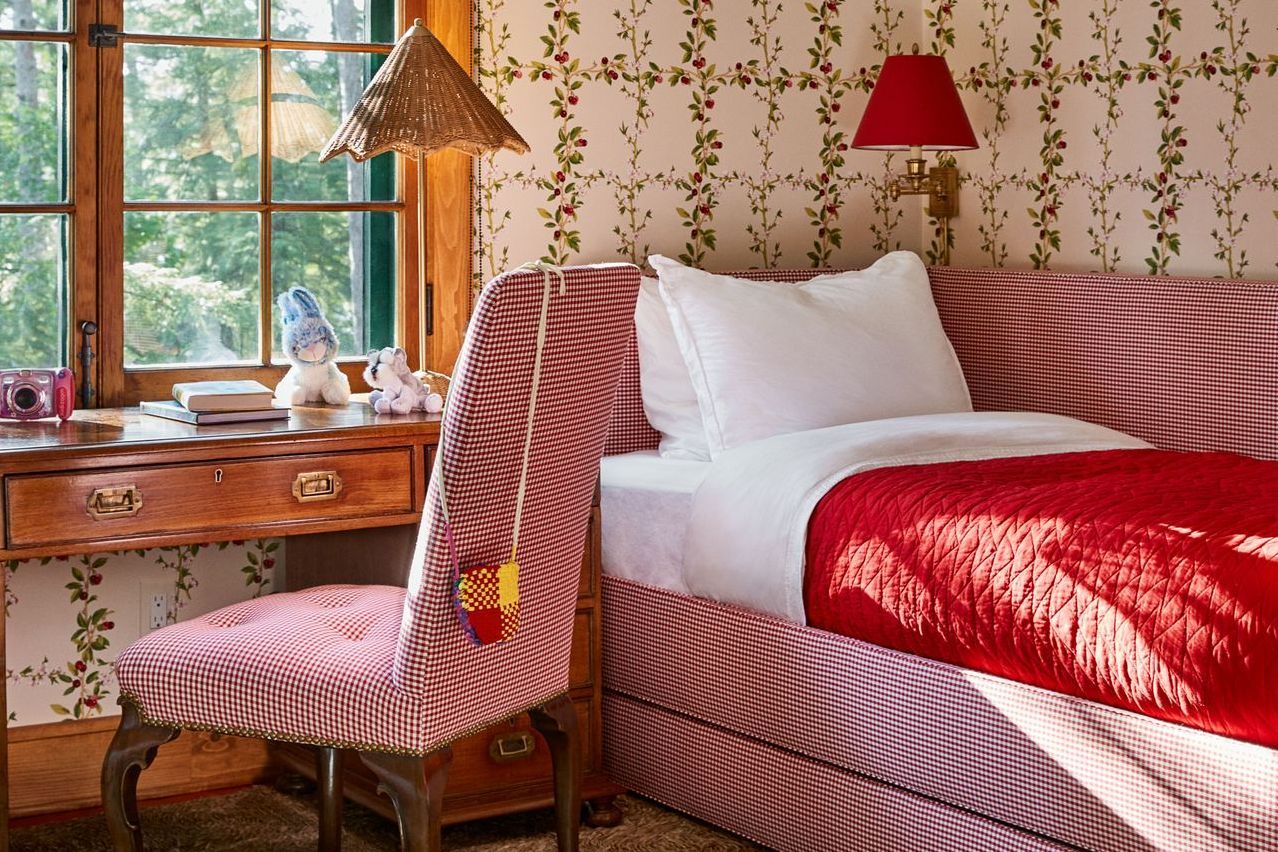
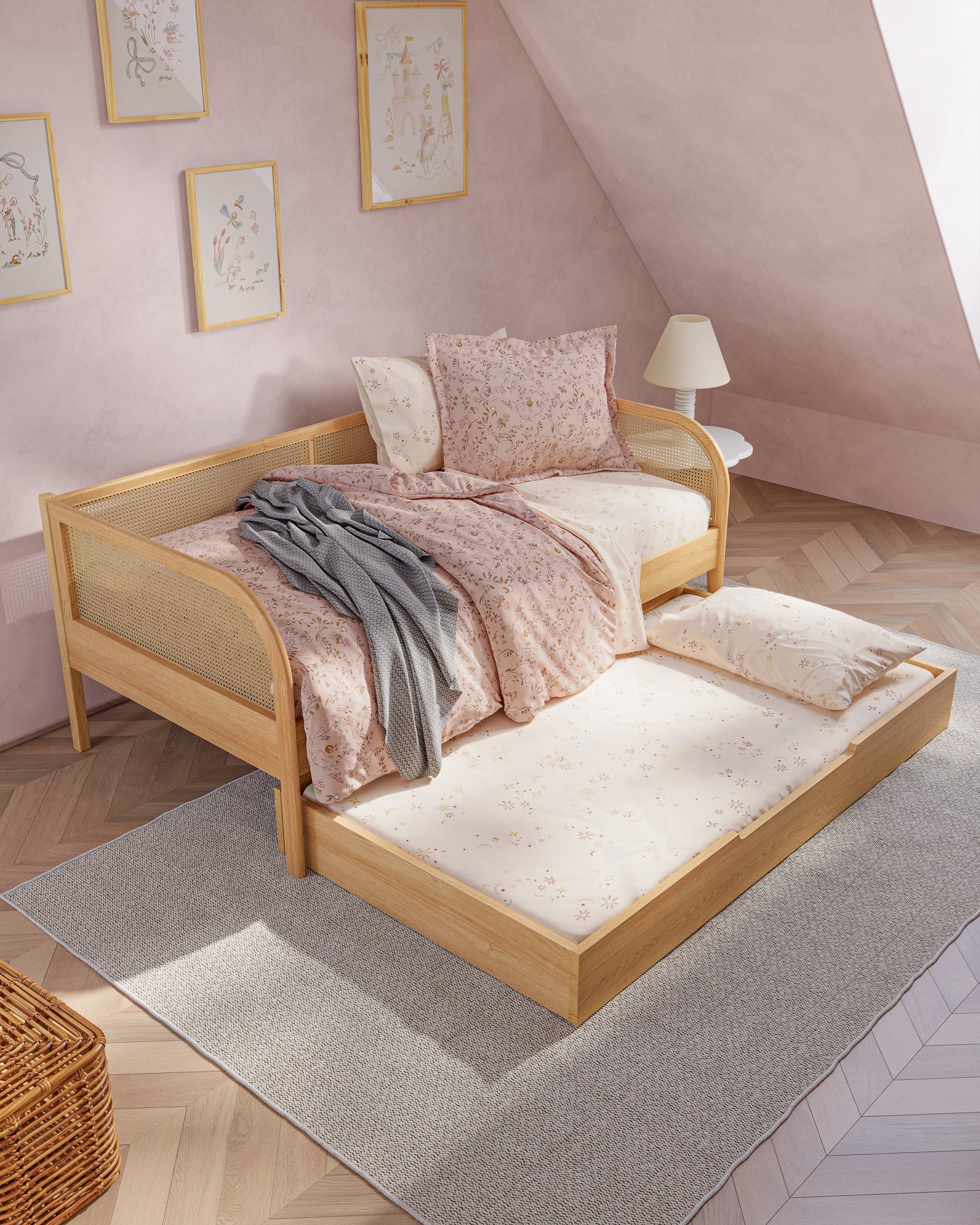
A trundle bed is a two-tier sleeping setup: a primary bed frame with a second, lower mattress on casters or a pop-up mechanism that stores beneath it. When the lower bed is rolled out it adds a full sleeping spot; when stowed, it disappears under the parent bed. That dual function is why trundles work so well in kids' rooms, guest rooms, and small apartments.
Trundle bed size at a glance
Most trundle beds use a twin mattress and frame footprint of roughly 38 x 75 inches. Twin XL (38 x 80 inches) and full (54 x 75 inches) are common too, while queen and king trundles exist but are rare and usually custom-built. The defining constraint isn't the length and width - it's the height: the lower mattress plus its frame has to clear the underside of the parent bed.
Standard trundle mattress dimensions
Twin - 38 x 75 inches. The default. Fits one child or smaller adult and matches the footprint of most twin parent beds.
Twin XL - 38 x 80 inches. Same width as twin, five inches longer. Useful for taller teens and college-style daybeds.
Full (double) - 54 x 75 inches. Comfortable for one adult or two kids. Less common as a trundle because the rolled-out bed needs a wider parent frame and more floor space.
Queen and king - Hard to find as true trundles. Most "queen trundles" you'll see online are actually daybeds with a separate twin pull-out underneath.
Maximum trundle mattress thickness
The hard rule: most trundle frames cap mattress thickness at 6 to 8 inches. Some low-profile designs allow up to 10 inches when the parent bed has extra clearance, but anything above 8 inches usually jams against the parent frame.
To check what fits your specific bed:
- Measure the gap from your floor to the underside of the parent bed slats.
- Subtract the trundle frame's own height (typically 4 to 6 inches with the wheels).
- The remaining number is your maximum mattress thickness.
If your parent bed has a 14-inch clearance and a 5-inch trundle frame, you have about 9 inches to work with - pick a 6 to 8-inch mattress to leave breathing room. Standard twin mattresses run 10 to 14 inches thick, which is why a regular twin almost never works on a trundle.
Trundle vs daybed vs captain's bed vs storage bed
Trundle vs daybed vs captain's bed vs storage bed
These four space-savers get conflated constantly. Here's how they actually differ.
Mattress types that fit a trundle
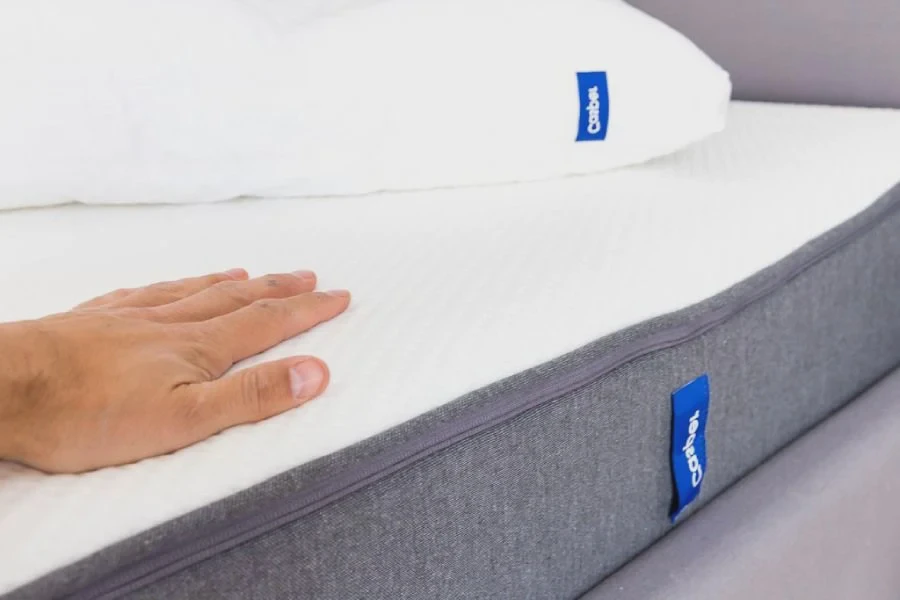
Low-profile memory foam - The most common trundle pick. Foam compresses well during storage, and 6 to 8-inch profiles are widely available.
Innerspring (low-profile) - Available, but quality drops below 8 inches because there's not enough room for proper coil height. Look for pocketed-coil designs marketed specifically for trundles or daybeds.
Hybrid (low-profile) - A short list. Most hybrids start at 10 inches; only a few brands make 8-inch versions that work on trundles.
Pop-up trundles - These mechanisms lift the lower bed to match the parent bed's height, creating one large sleeping surface. They allow slightly thicker mattresses (up to 10 inches) because thickness no longer has to clear the parent frame when stored - but you'll still want to confirm the manufacturer's spec.
Avoid pillow-top, plush, or luxury hybrid mattresses - anything above 10 inches will not roll back under the parent bed.
Frame, sheets, and floor space
Frame height
Trundle frames sit 4 to 9 inches off the floor on casters or glides. Pop-up models are taller because of the lift mechanism. A wheel-lock feature is worth paying for - it keeps the lower bed from sliding when someone sits on it.
Sheets
A trundle takes the same sheet size as its mattress (twin sheets for a twin trundle, etc.), but deep-pocket sheets are the wrong call. Trundle mattresses are thin, so a 14-inch deep pocket bunches up and slips. Look for sheets rated for 6 to 9-inch mattresses or use elastic-edged "shorty" sheets sold for daybeds and bunk beds.
Floor space
Plan room for the trundle when extended, not just stored:
- Twin trundle pulled out: roughly 75 x 76 inches of floor (the parent bed footprint plus the rolled-out twin alongside).
- Walkway clearance: at least 24 inches around the bed for safe access.
- Carpet vs hardwood: wheels roll easily on hardwood and laminate; on carpet, expect to lift slightly. Plastic chair-mat strips under the trundle path help.
Who should buy a trundle bed?
Kids and tweens with sleepovers - The classic use case. One bed for nightly sleep, one for the friend who's staying over.
Guest rooms in small homes - A trundle hides a second sleeping spot without taking the floor space of a full second bed.
Studio and one-bedroom apartments - When a sofa bed feels like too much, a daybed-with-trundle gives you a full second bed for occasional guests.
Vacation cabins and short-term rentals - Sleeps four in the footprint of one twin.
Not ideal for: primary nightly sleep for an adult (mattresses are too thin for long-term spinal support), couples sharing the lower bed full-time, or rooms with very low parent-bed clearance.
Pros and cons of trundle beds
Pros
- Two beds in the floor space of one - ideal for kids' rooms and guest setups.
- Cheaper than a second standalone bed; many models include drawer storage.
- Hides quickly; lower bed disappears under the parent frame when not in use.
- Available in twin, twin XL, and full plus pop-up versions for matched height.
Cons
- Mattress thickness is capped at 6 to 8 inches; thinner mattresses give less long-term support.
- Wheels and casters can squeak or wear out over time, especially on carpet.
- Limited ventilation under the parent bed can trap humidity in damp climates.
- Queen and king true trundles are very rare - most are daybeds with a separate twin pull-out.
Final word
The right trundle bed size starts with the parent bed's clearance, not the mattress catalog. Measure underneath first, subtract the frame height, and shop mattresses within that exact thickness. From there, pick the size that matches who's actually sleeping there: twin for one child or guest, twin XL for taller teens, full for two kids or one adult.
Get those three numbers right - clearance, frame height, mattress thickness - and a trundle delivers two beds for roughly the floor space of one.
Frequently asked questions
What is the standard trundle bed size?
The standard trundle bed uses a twin mattress measuring 38 x 75 inches. Twin XL (38 x 80) and full (54 x 75) are also common, while queen and king trundles are rare and usually custom builds.
How thick can a trundle mattress be?
Most trundle frames cap mattress thickness at 6 to 8 inches so the lower bed clears the parent frame when stored. Some pop-up trundles allow up to 10 inches because the mechanism lifts the bed during use. Always measure your parent bed's clearance and subtract the trundle frame height to find your maximum.
Can I use a regular twin mattress on a trundle?
Usually not. Standard twin mattresses are 10 to 14 inches thick, which is too tall for almost all trundle frames. Look for low-profile mattresses sold specifically for trundles, daybeds, or bunk beds - typically 6 to 8 inches thick.
What's the difference between a trundle and a daybed?
A daybed is a twin-sized frame with a backrest that doubles as a couch. A trundle adds a second mattress on rollers underneath the daybed (or another bed). Daybeds without a trundle sleep one; daybeds with a trundle sleep two.
Can two adults sleep on a trundle bed every night?
It works occasionally, but the thin mattress and twin width make it a poor choice for nightly adult sleep. Trundles are designed for kids, occasional guests, and short stays - not a couple's primary bed.
How much floor space does an extended trundle need?
Plan on roughly 75 x 76 inches of floor when a twin trundle is rolled out alongside the parent bed, plus at least 24 inches of walkway clearance around the perimeter for safe access.