
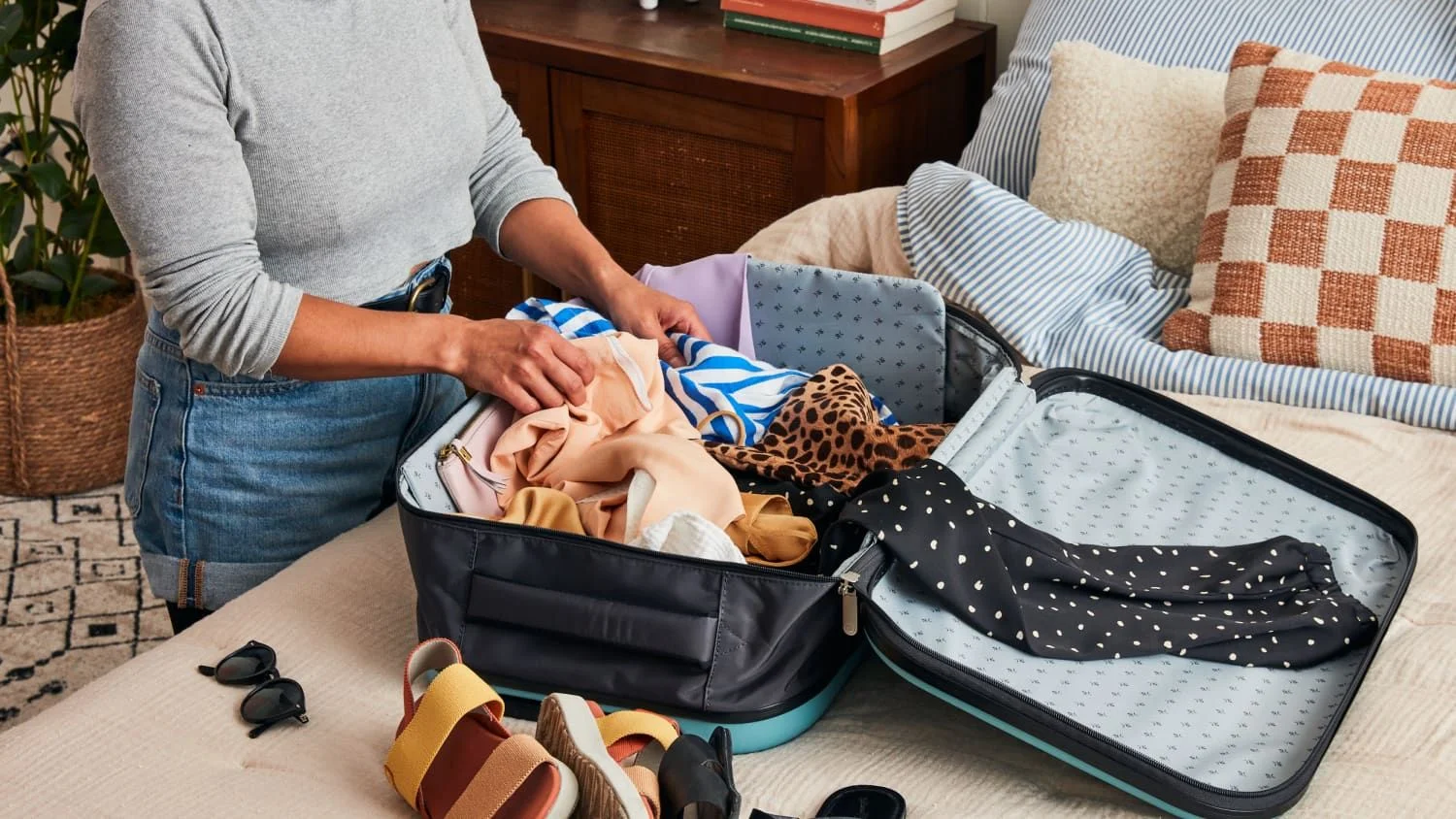
Short answer: yes - the TSA places no restrictions on pillows or blankets in either carry-on or checked baggage. The friction comes from the airline. Most U.S. carriers (Delta, United, American, Southwest) do not count a small travel pillow or folded blanket against your carry-on or personal item allowance. Ultra-low-cost carriers (Spirit, Frontier) are stricter and may treat a full-size pillow as a third bag.
Below is what the TSA actually says, how each major U.S. airline interprets it in 2026, and how to pack a pillow + blanket so it never gets flagged at the gate.
What the TSA actually allows
The TSA's published guidance is unambiguous: pillows and blankets are permitted in both carry-on and checked baggage with no size, fill, or quantity limit. They aren't on the prohibited-items list, and screening officers won't make you unpack them - though a dense or oversized blanket may get a closer look at the X-ray belt.
Two practical caveats:
- Weighted blankets containing glass beads, steel shot, or sand can register as suspicious on imaging - pack them in checked luggage when possible.
- Memory-foam pillows are dense and sometimes get a manual swab. That's normal; nothing is confiscated.
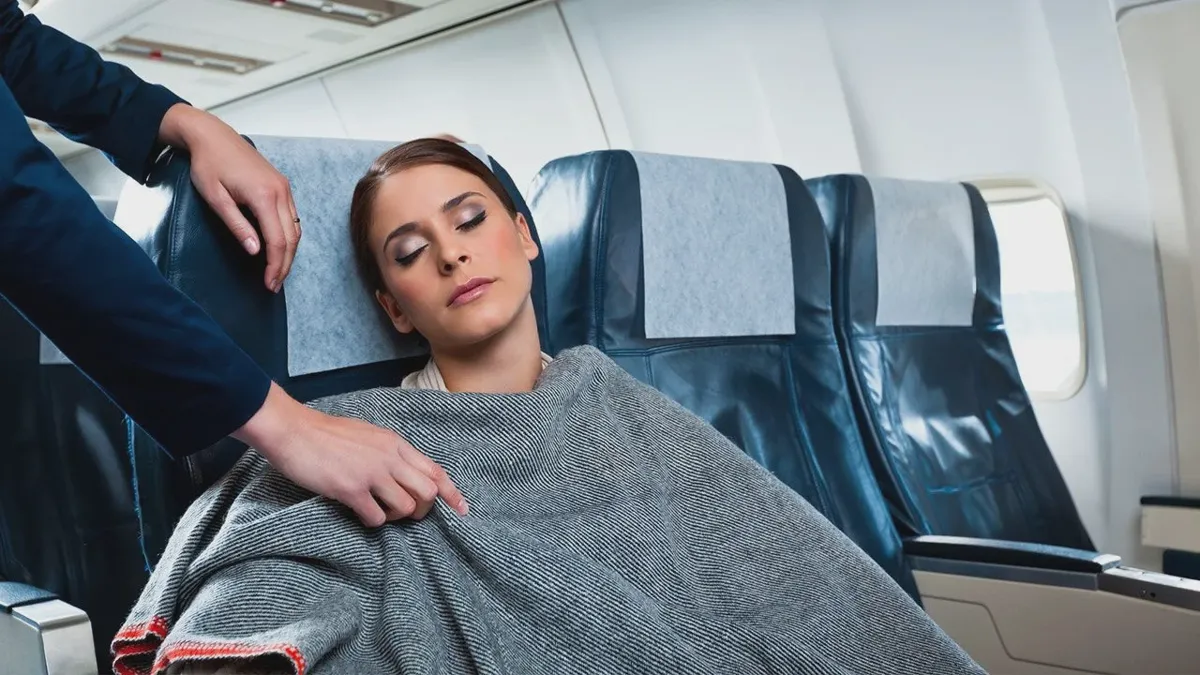
Pillow & blanket policy by major U.S. airline (2026)
This is where airlines disagree. The rule of thumb across legacy carriers: if your pillow or blanket can be carried in your hand or stuffed into a tote/personal item, it doesn't count as a separate bag. Here's what each major U.S. airline says.
Delta Air Lines: Travel pillow and blanket are not counted as personal items as long as they're carried in your hand or fit inside your personal item. Free.
United Airlines: Permitted in addition to your carry-on and personal item; not counted separately. Free.
American Airlines: A pillow, blanket, coat, or jacket is allowed at no charge in addition to standard carry-on. Free.
Southwest: Pillow and blanket carried in hand or in your bag are not counted as carry-on items. Free.
JetBlue: Permits a small travel pillow or blanket free of charge alongside carry-on and personal item.
Alaska Airlines: Pillows and blankets allowed in addition to carry-on; full-size pillows must fit your carry-on or personal item.
Spirit Airlines: Strict bag policy. Small travel pillow allowed; a full-size pillow or large blanket counts as a personal item, which is the only free piece on Bare Fare.
Frontier Airlines: Pillow under 18x14x8 in fits the personal-item bag at no charge. Larger items count as a paid carry-on.
Always confirm on your carrier's site before flying - international and codeshare flights may follow different rules.
Should you bring your own - or rely on the airline?
Most U.S. domestic main-cabin flights no longer hand out blankets and pillows for free. Premium cabins and long-haul international flights still do, but the quality varies wildly and washing protocols are inconsistent. Here's the trade-off.
Pros of bringing your own
- Predictable comfort - same pillow firmness and fabric you sleep on at home.
- Hygiene control. Airline blankets are often re-folded between flights without laundering.
- No surprise fees. Some low-cost carriers charge $10-$15 for an in-flight blanket kit.
- Doubles as a lap blanket in the airport during a delay.
- Better neck support reduces post-flight stiffness on red-eyes.
Cons
- Bulk. A standard pillow eats real estate in a 22-inch carry-on.
- Hassle at security on busy days if the pillow is dense memory foam.
- Easy to leave behind in the seatback pocket.
- Adds weight on multi-leg trips.
How to pick a travel pillow and blanket for flying
Travel pillow specs that actually matter
- Shape: U-shaped neck pillows are the safest pick for upright seats. J-shaped (chin-supporting) pillows are better for window leaners.
- Fill: Memory foam holds shape and supports the cervical curve; microbeads are lightest; inflatable packs flattest but offers the least support.
- Cover: Look for a removable, washable cover. Bare foam against the neck gets sweaty on long flights.
- Carry: A built-in clip or compression strap that attaches to a carry-on handle saves a hand at boarding.
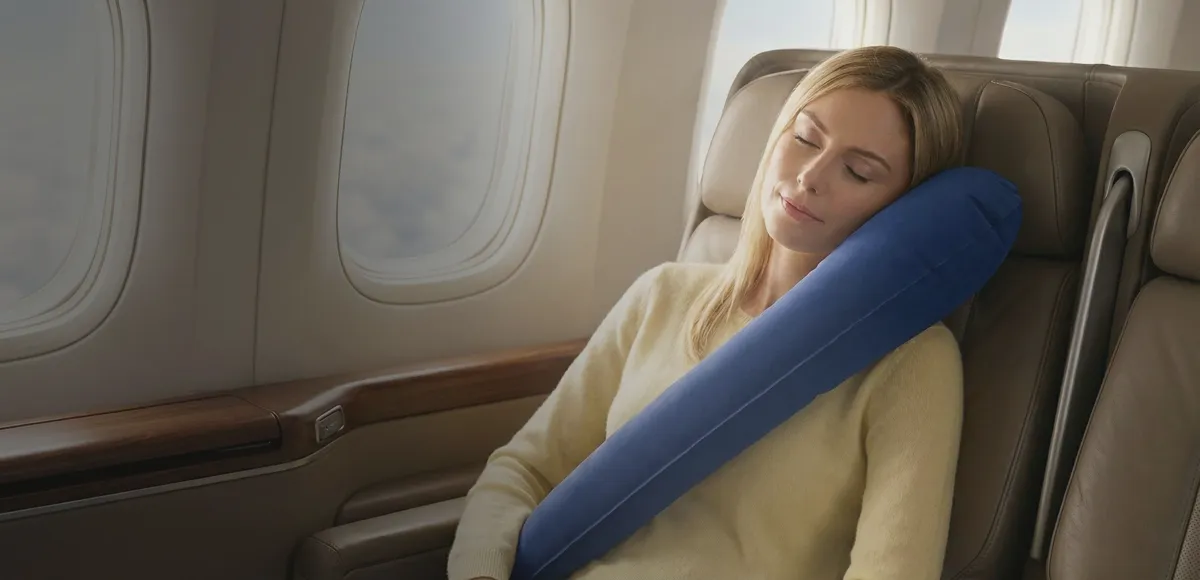
Travel blanket dimensions
Aim for a blanket roughly 60 inches long by 40 inches wide - long enough to cover an adult from shoulder to ankle in a reclined seat, narrow enough to drape without catching the tray table. Children do well with 30-40 inches in length. Look for a fabric that compresses into its own carry pouch (most 2-in-1 travel blankets are designed this way and double as a lumbar pillow).
How to pack so it doesn't get flagged
- Compress the blanket into a roll or its dedicated pouch and tuck it inside your carry-on or personal item - never carry it loose in a separate plastic bag, which gate agents will count as a third item.
- Clip the travel pillow to the outside of your carry-on by its built-in strap. This is universally accepted as 'in hand,' not a third bag.
- If you're flying Spirit or Frontier and only carrying a personal item, fold the blanket flat at the top of the bag so the pillow can sit on top - keeps you under their personal-item dimensions.
- Pull both items out at security only if asked. They normally pass through inside the bag.
- On arrival, put the pillow back on its clip before standing up - pillow loss in seatback pockets is the #1 traveler complaint we see.
Frequently asked questions
Does a blanket and pillow count as a carry-on?
On Delta, United, American, Southwest, JetBlue, and Alaska, no - a small travel pillow and folded blanket are not counted toward your carry-on or personal-item allowance as long as you carry them in hand or fit them inside your bag. On Spirit and Frontier, only a small (under 18x14x8 in) pillow fits free; oversized items count against your personal item.
Does a blanket have to be in a bag to go through TSA?
No. The TSA does not require a blanket to be bagged. It will be screened with your other carry-on items, and an officer may pull it for a closer look if it's particularly large or dense, but you do not need to remove it from the bin or place it in a separate bag.
Can I take a pillow and blanket from the plane?
Generally no. Airline-issued blankets and pillows are property of the carrier, and most airlines explicitly ask passengers to leave them on the seat. Disposable blanket sleeves and amenity-kit eye masks are typically yours to keep.
Are airline pillows clean?
Sealed, plastic-wrapped pillows distributed at boarding are sanitary. Pillows already on the seat at boarding are usually re-folded between short-haul flights without laundering - bring your own if hygiene matters to you.
Can I bring a full-size bed pillow on a plane?
Yes, the TSA allows it. Whether your airline counts it as a separate carry-on depends on size: if it fits inside your carry-on or personal item, it's free. A standalone full-size pillow you carry by hand may be counted as a personal item on Spirit or Frontier.
Are weighted blankets allowed on planes?
Yes. The TSA permits weighted blankets in carry-on and checked bags, but weighted glass-bead and steel-shot blankets can show up oddly on the X-ray and may be hand-inspected. To avoid delays, pack a weighted blanket in checked luggage when you can.
Bottom line
The TSA isn't the obstacle - your airline is. On any legacy U.S. carrier, a clip-on travel pillow and a packable 60x40 blanket count as a freebie on top of your carry-on and personal item. On Spirit and Frontier, fold both inside your one allowed bag and you'll never pay extra. The real win is comfort and hygiene control: a familiar pillow and a clean blanket make a 6-hour red-eye feel half as long, and you skip the lottery of whether the airline blanket on your seat was actually washed. If your travel pillow is the same memory-foam model you sleep on at home, our guide to how long a memory foam pillow lasts will help you spot the year-three flat-out before a long flight.