Short answer: a memory foam pillow lasts 2 to 3 years with normal nightly use. High-density solid memory foam and shredded memory foam can stretch closer to 4 to 5 years, while low-density budget foam often softens noticeably inside 18 months. The pillow's foam type, your sleeping position, how heavy you sweat, and whether you use a protector matter far more than the warranty length on the box.
A 10-year warranty does not mean the pillow will support your neck for 10 years - it means the foam will not crumble or split for 10 years. Functional support life is what you actually feel, and it is much shorter.
Memory foam pillow lifespan by type
Not all memory foam is the same. Density (measured in pounds per cubic foot) and structure (solid block vs shredded fill) drive how fast it loses bounce.
Lifespan by foam type
How long each foam construction holds its support under typical nightly use.
Lifespan ranges reflect functional support life under daily use, not warranty length. A pillow protector and a cool, dry bedroom add roughly 6 to 12 months across every category.
7 signs it's time to replace your memory foam pillow
You do not have to count years. Memory foam tells you it is done by failing one of these tests.
- It does not spring back. Fold the pillow in half and let go. A healthy memory foam pillow unfolds and returns to flat within a few seconds. If it stays creased, the foam cells have collapsed.
- Permanent dent under your head. A visible body impression that does not recover after 24 hours off the pillow means the support layer is compressed for good.
- You wake up with neck or shoulder pain. Memory foam works by holding cervical alignment. When the foam softens unevenly, your neck drops out of line and you feel it in the morning.
- Lumps or hard spots in shredded foam. Shredded fill clumps as it ages. If fluffing no longer redistributes the fill, the foam has lost its rebound.
- Persistent odor that survives airing out. A faint chemical smell on day one is normal off-gassing. A stale or musty smell after months - even after a 24-hour airing in sun - means moisture and skin oils have saturated the foam.
- New or worsening allergy symptoms. Morning sneezing, congestion, or itchy eyes that ease when you travel can point to dust mites and skin debris embedded in old foam.
- Visible yellowing or staining through the cover. Yellow patches are oxidation plus body oils. The foam is not unsafe, but its structure is breaking down faster than the surface suggests.
What actually shortens memory foam pillow life
Five factors do most of the damage. The first three are inside your control.
1. Heat and humidity
Memory foam softens when warm. Sleeping in a hot room, near a sunny window, or under heavy blankets accelerates how fast the cell walls break down. Standard memory foam loses noticeable support faster above 75°F bedroom temperature.
2. Sweat, oils, and skin
The average adult sheds roughly 200 million skin cells per night and loses around a quarter-cup of sweat. Without a barrier, those soak straight into the foam and feed dust mites, which speed up the foam's breakdown from the inside.
3. Washing it like a regular pillow
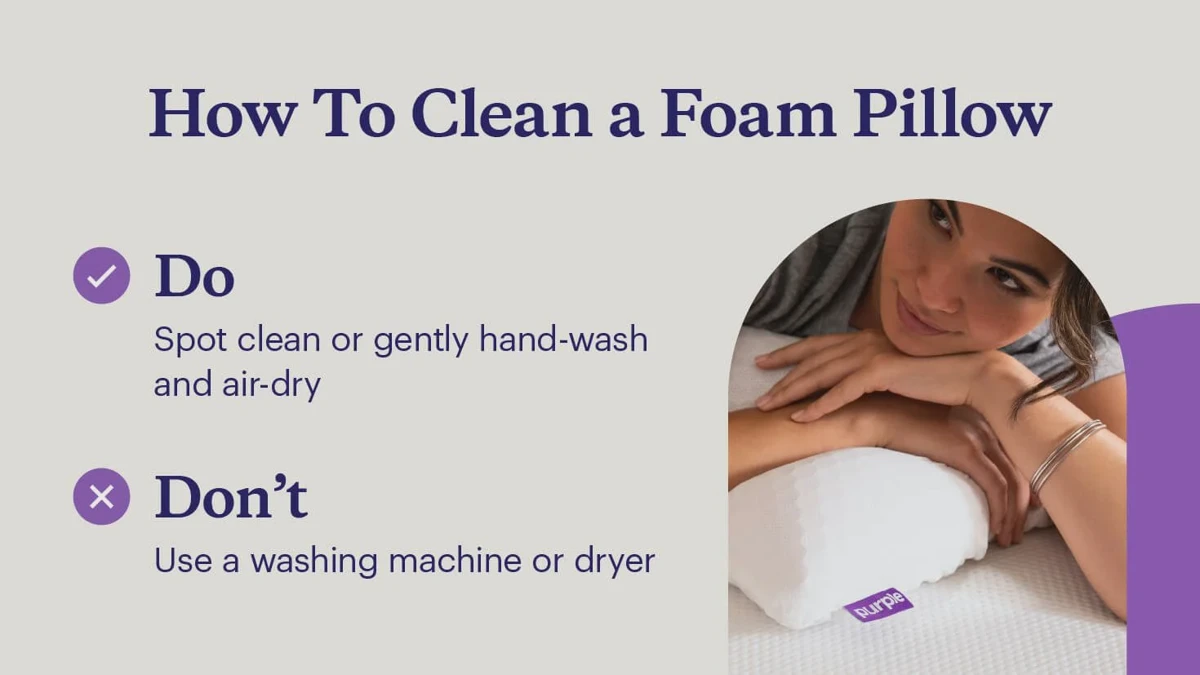
Solid memory foam should never go in a washing machine or dryer. The agitation tears the foam structure, and trapped water destroys cell walls. Even shredded foam pillows survive a machine wash only when explicitly rated for it - check the care tag, not the assumption.
4. Foam density and quality at purchase
A $25 budget pillow and a $90 high-density CertiPUR-US pillow can look identical out of the bag. The cheap one will feel flat in 12 to 18 months. Density numbers are usually buried in the spec sheet - if the brand will not publish them, assume low density.
5. Sleeping position weight load
Side sleepers compress a pillow harder than back sleepers because the full weight of the head plus shoulder pressure concentrates on a smaller area. A pillow rated for 3 years of back sleeping may show flattening at 18 months under a heavy side sleeper.
Memory foam vs other pillow types
- Holds neck alignment longer than down or polyester fill, especially for side sleepers.
- Recovers shape after each night - no daily fluffing required like down.
- Hypoallergenic structure resists feathers and is harder for dust mites to colonize than down.
- Predictable feel: the same support every night until the foam is genuinely worn.
Where memory foam falls short
- Sleeps warmer than down, latex, or buckwheat - gel infusions help but do not cancel it.
- Can off-gas a chemical smell for the first 1 to 2 weeks; CertiPUR-US foam fades faster.
- Cannot be washed; spot-clean only - a removable cover is essential.
- Solid foam does not adjust to your shoulder width the way shredded fill or adjustable pillows do.
How to make a memory foam pillow last longer
These steps add roughly 6 to 12 months across every foam type. None of them require buying anything fancy.
Use a zippered pillow protector under the case
Not just a pillowcase - a tightly woven, fully zippered protector that blocks sweat, oils, and dust mites. Wash the protector every 2 to 3 weeks. This single habit does more for pillow life than anything else on this list.
Spot-clean stains the same day
Dab - do not rub - with a barely damp cloth and a drop of mild dish soap. Press a dry towel into the foam to pull moisture out, then air dry flat in a ventilated room (not direct sun, which yellows foam).
Air it out monthly
Once a month, strip the cover and lay the bare foam on a clean surface in a shaded, well-ventilated spot for a few hours. This pulls trapped moisture out of the cells before it builds up.
Vacuum with the upholstery attachment
A light pass with the soft brush attachment lifts dead skin and dust off the surface. Optional: sprinkle baking soda, leave for 30 to 60 minutes, then vacuum it off to neutralize odors.
Rotate - do not flip
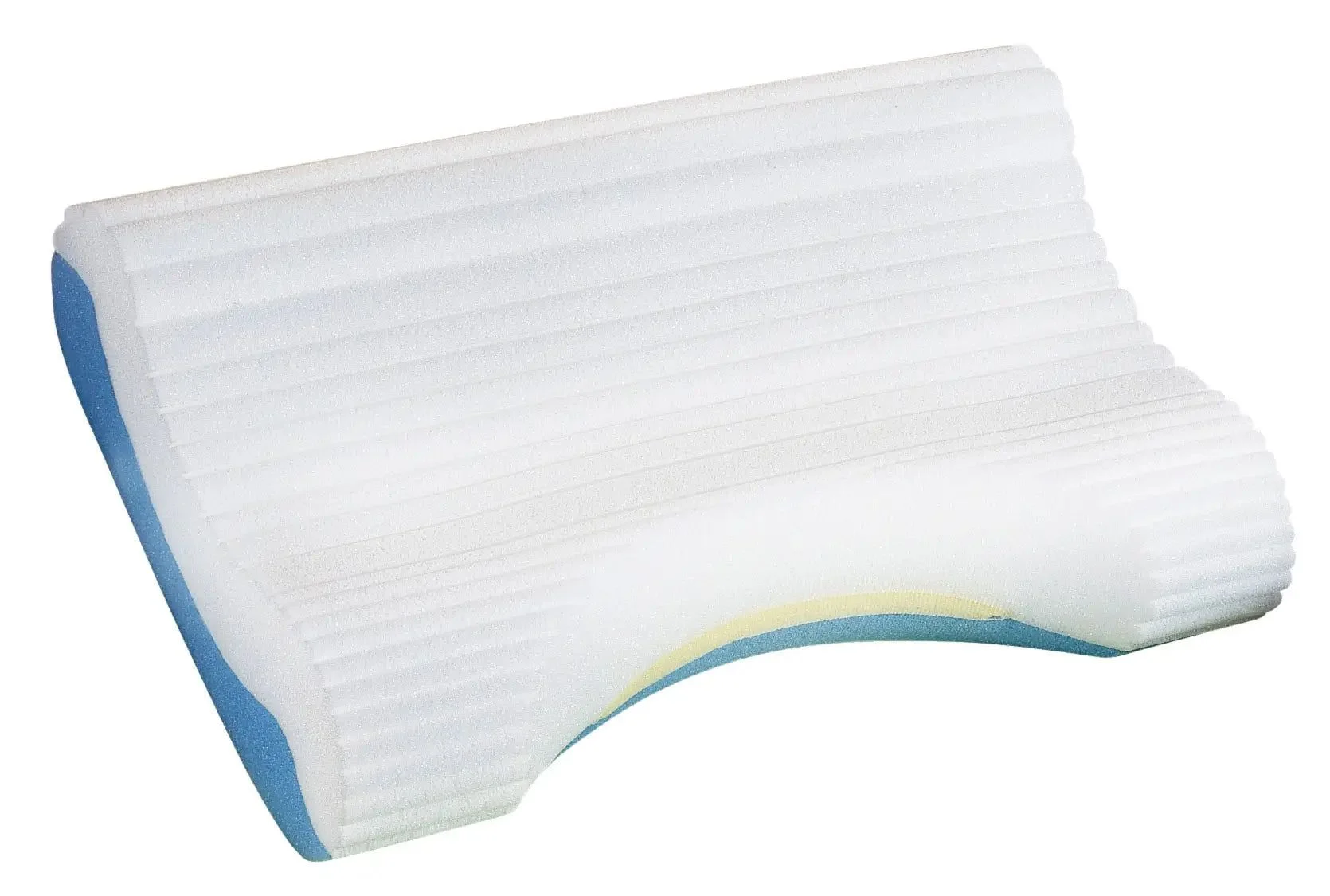
Most contour memory foam pillows have a designated sleep side. Rotate end-for-end every couple of weeks so the same spot is not always under your head, but do not flip a contour pillow upside down.
Keep the bedroom cool
65-70°F is the sweet spot for memory foam (and for sleep). Cooler rooms slow the foam's breakdown and make gel infusions actually work.
When to replace, in plain numbers
- Budget memory foam pillow under $30: expect 12 to 18 months.
- Mid-range solid or gel memory foam ($40-$80): 2 to 3 years.
- Shredded memory foam (any price tier): 3 to 5 years if you fluff and re-loft regularly.
- High-density solid memory foam ($90+): 4 to 5 years, occasionally longer with a protector and a cool bedroom.
- Anything failing the fold test: replace now, regardless of age.
If you are also questioning the bed underneath the pillow, see our guide on how often hotels replace mattresses for hospitality-grade replacement cycles, and our walkthrough on drying pillows without tennis balls for the pillow types that actually can go in the dryer (memory foam still cannot).
Memory foam pillow lifespan FAQs
How often should you replace a memory foam pillow?
Every 2 to 3 years for standard solid memory foam, every 3 to 5 years for high-density or shredded memory foam. Replace sooner if it fails the fold test, holds a permanent dent, or gives you morning neck pain that fades by midday.
Can you wash a memory foam pillow in the washing machine?
No. Solid memory foam will tear and break down in machine agitation, and trapped water destroys the foam cells. Spot clean with a barely damp cloth and mild soap, then press dry with a towel and air dry flat. Shredded memory foam may be machine-washable if the care tag explicitly says so - check before assuming.
Do TEMPUR pillows last longer than other memory foam pillows?
Generally yes. TEMPUR uses higher-density proprietary foam and typically holds support for 3 to 5 years versus 2 to 3 for mid-range memory foam. The 5-year limited warranty covers manufacturing defects, but functional support life can stretch beyond that with a protector and a cool bedroom.
Why does my memory foam pillow smell?
A faint chemical smell in the first 1 to 2 weeks is off-gassing and harmless - air the pillow out unzipped in a ventilated room. A stale or sour smell months later means moisture and skin oils have saturated the foam, which is a replacement signal, not a cleaning problem.
Does sleeping position change how long a memory foam pillow lasts?
Yes. Side sleepers concentrate head and shoulder weight on a smaller area, compressing foam faster. Back and stomach sleepers spread the load and typically get 6 to 12 months more out of the same pillow.
Is yellowing on a memory foam pillow dangerous?
It is not toxic - the color comes from oxidation and body oils. But yellowing usually tracks with foam breakdown underneath. If the discoloration is widespread and you also feel less support, replace the pillow rather than try to clean it.
What is the best way to extend memory foam pillow life?
Use a zippered pillow protector under your pillowcase, keep the bedroom around 65-70°F, spot-clean stains the same day, air the bare foam out once a month in shade, and rotate end-for-end every couple of weeks. These habits add roughly 6 to 12 months across every foam type.