A flat pillow is more than an annoyance - it pulls your neck out of alignment, and over weeks of poor support, that shows up as morning stiffness, tension headaches, and disturbed sleep. The good news: most pillows can be revived in 30 seconds to 20 minutes, depending on the fill. Below are the five fluffing methods our review team uses on the 3,000+ pillows we’ve tested, organized by speed and matched to the specific fill type you have.
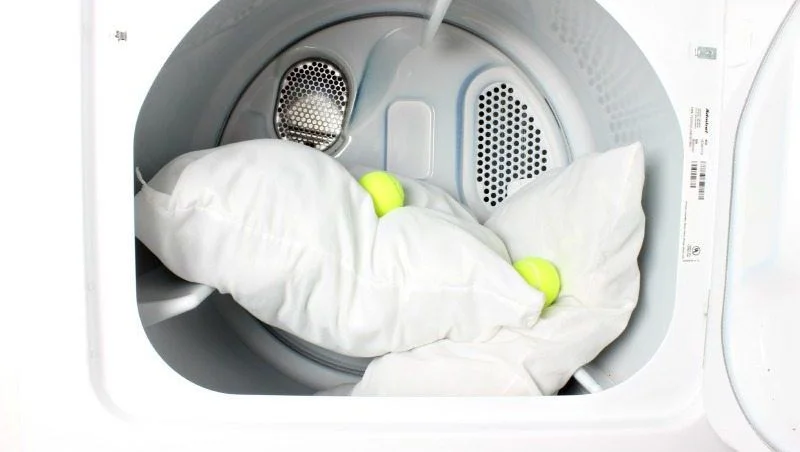
Quick answer: Grab the pillow by opposite sides, squeeze and release like an accordion for about 30 seconds, then rotate 90° and repeat. For stubborn lumps, toss it in the dryer on low heat with two clean tennis balls or wool dryer balls for 15-20 minutes.
Why Pillows Go Flat in the First Place
Every night, your head exerts roughly 10-12 pounds of pressure on the same spot for 6-9 hours. That pressure compresses the fill - whether it’s down clusters, polyester fiber clumps, shredded memory foam, or solid foam - and traps moisture from sweat and humidity. Over time the fill mats together, the pillow loses loft, and your cervical spine drops out of neutral alignment.
Fluffing redistributes the fill, breaks up clumps, and lets trapped moisture escape. Done weekly, it can extend a quality pillow’s usable life by a year or more. Done never, even a $150 down pillow flattens within months.
Method 1: The Accordion Squeeze (30 seconds)
This is the fastest method and works on every fill type except solid memory foam.
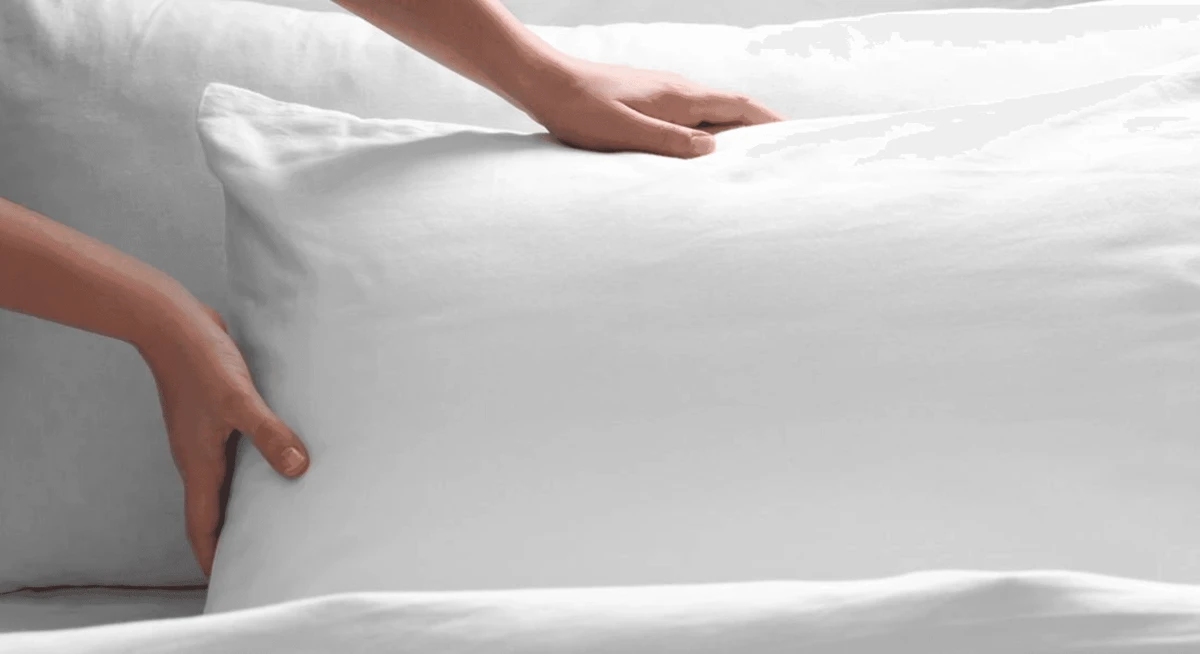
- Grab the pillow firmly by its two short ends.
- Push your hands inward and outward rapidly, like compressing and stretching an accordion. Aim for two squeezes per second.
- After 15 seconds, rotate the pillow 90° so you’re holding the long sides, and repeat.
- Finish by punching each face two or three times to break up any remaining clumps, then smooth the surface with your palms.
Method 2: The Corner Pull (1 minute)
Best for down, feather, and shredded-foam pillows that have shifted fill.
- Hold opposite corners diagonally and gently tug outward to stretch the pillow back toward its original rectangular shape.
- Repeat with the other diagonal.
- Lay the pillow flat and press down on the high spots while pulling the low spots upward, redistributing fill until the surface is even.
Method 3: The Dryer Toss (15-20 minutes)
The deepest fluff, and the one we recommend monthly. Always check the care label first - some pillows are dry-clean only.
- Place the pillow in the dryer with two clean tennis balls (each tucked inside a sock to prevent fuzz transfer) or wool dryer balls.
- Run on low heat or air-dry for 15-20 minutes. Down and feather: low heat, 20 minutes. Polyester: low heat, 15 minutes. Memory foam: air-dry only, no heat - heat damages the foam.
- Stop midway, flip the pillow, and resume so both sides get equal agitation.
If the pillow comes out damp, hang it to finish in open air rather than running another high-heat cycle.
Method 4: The Sun Bath (3-4 hours)
Useful for off-gassing new pillows or drying out pillows that smell musty.
- On a dry, sunny day, drape the pillow over a clothesline, deck rail, or two patio chairs so air can circulate underneath.
- Flip after 90 minutes. Total exposure: 3-4 hours.
- Bring it inside before evening dew. UV exposure helps with bacteria and trapped odors but will fade colored covers - keep printed shams indoors.
Method 5: The Vacuum Reset (5 minutes, foam pillows)
For solid memory-foam or latex pillows that came compressed in a box and never fully expanded.
- Remove the cover.
- Use a handheld vacuum on its lowest setting and slowly pass it over each surface for 30 seconds.
- Knead the foam with both hands like dough - not crushing, just flexing - to break the air pockets that keep it stiff.
- Let the pillow rest uncovered for 24 hours before sleeping on it again.
Match the Method to the Fill
Down / feather: Dryer on low heat for 20 minutes. Avoid high heat - it dries out the natural oils that keep clusters lofty.
Polyester / microfiber: Dryer on low heat for 15 minutes. Avoid hot-water washing, which permanently mats the fiber.
Shredded memory foam: Accordion squeeze plus a no-heat dryer cycle. Anything above 105°F begins to break the foam down.
Solid memory foam: Vacuum reset and hand-kneading only - keep it out of the dryer entirely.
Latex: Hand-fluff plus a short sun bath. Limit direct sun to under three hours - longer exposure degrades the latex.
Buckwheat / millet: Shake vigorously to redistribute hulls. Never use water of any kind.
Daily Habits That Keep Pillows Fluffy Longer
- Shake every morning when you make the bed - 30 seconds of agitation prevents the overnight compression from setting.
- Use a pillow protector under the case. Sweat and skin oils are the #1 cause of fill clumping. A zippered protector blocks both and washes easily.
- Rotate front-to-back weekly so you’re not always sleeping on the same face.
- Avoid the karate-chop dent. That dimple in throw pillows looks crisp but compresses the fill exactly where you don’t want it.
- Wash on the schedule your label allows. For most polyester and down pillows that’s every 4-6 months on a gentle cycle with mild detergent. Always dry fully - a pillow that goes back on the bed damp will mildew from the inside.
When Fluffing Won’t Save It
Fluffing restores loft, but it can’t rebuild fill that’s permanently broken down. Replace the pillow if any of these are true:
- It folds in half easily and stays folded when you let go.
- You wake up with neck pain even after a full night’s rest.
- It feels lumpy after a fresh dryer cycle - that means the fill clusters have ruptured.
- The pillow is more than two years old (polyester), three years (down/feather), or four years (memory foam/latex).
- There are visible yellow stains soaking through the protector - those are sweat-bound bacteria the wash cycle can’t reach.
A quality pillow is the cheapest sleep upgrade you can make. When yours fails the checks above, it’s time to swap it - not fluff it again.
Frequently asked questions
How often should I fluff my pillow?
A quick accordion squeeze every morning and a dryer cycle once a month is the maintenance schedule we recommend. Down pillows benefit from a daily fluff; memory foam needs less frequent attention.
How long should I leave pillows in the dryer to fluff them?
15-20 minutes on low heat is enough for most pillows. Stop and check halfway - if the dryer balls are bouncing freely and the pillow looks plump, it's done.
How do I fluff pillows without a dryer or tennis balls?
The accordion squeeze followed by 30 minutes of sun exposure on a clothesline works almost as well. For polyester pillows specifically, beat each face firmly with the flat of your hand for two minutes to break up matted fiber.
Can you fluff a memory-foam pillow?
Solid memory foam doesn't fluff in the traditional sense - the foam either holds its shape or it doesn't. Use the vacuum reset and hand-kneading method instead, and never put solid foam in the dryer with heat. Shredded memory foam can be fluffed by hand or in a no-heat dryer cycle.
How do I fluff a vacuum-sealed pillow that won't expand?
Unpack it, run it through the dryer on low heat with dryer balls for 30 minutes, then let it rest for 24-48 hours. New foam pillows in particular can take two full days to reach full loft.