Most hotels replace mattresses every 3 to 7 years, but the cycle varies sharply by tier: luxury properties cycle every 3-5 years, mid-range hotels every 5-7, and budget or extended-stay chains can stretch to 8-10. There is no federal law forcing a specific timeline - hotels replace based on guest feedback, occupancy wear, brand standards, and visible signs of failure (sagging, stains, odor).
If you've ever wondered why a hotel bed feels noticeably better than your own - or why some budget hotels feel rough - the answer almost always traces back to where each property sits on this replacement curve.
Hotel mattress replacement cycle by tier
These are the typical lifespans the hospitality industry plans against. Individual properties vary, but the bands below match what major hotel suppliers (Simmons, Serta, Sealy, King Koil) and recycling programs report.
- Luxury (5-star): Every 3-5 years. Brand standards at chains like Ritz-Carlton, Four Seasons, and Park Hyatt prioritize a like-new feel, so mattresses retire well before structural failure.
- Mid-range (3-4 star): Every 5-7 years. Brands like Marriott, Hilton, and Hyatt full-service properties use heavy-duty hospitality coil systems built for this window.
- Budget (1-2 star): Every 7-10 years. Capital constraints push the cycle to the upper end of mattress lifespan.
- Extended-stay: Every 2-4 years. Long-stay guests sleep on the same mattress for weeks at a time, accelerating wear despite lower nightly turnover.
- Boutique / independent: Every 4-6 years. No corporate mandate, so cycles track owner preference and review scores.
Two things drive these numbers: occupancy (a 90%-booked airport hotel wears mattresses faster than a 50%-booked resort) and brand audits. Major flags run periodic quality inspections; a mattress flagged for sag, stain, or guest complaints is pulled regardless of age.
What actually triggers replacement
Calendar age is a guideline, not a rule. Most hotels use a checklist that pulls a mattress the moment any of these appear:
- Visible sag or body impressions deeper than 1.5 inches - the most common reason for early retirement.
- Stains, odor, or biohazard exposure - immediate replacement, no exceptions, even on a brand-new bed.
- Repeated guest complaints or room-change requests tied to the same room number.
- Bedbug or pest incident - mattress is destroyed and replaced, never re-deployed.
- Audit failure during a brand inspection or franchise quality review.
Why hotels replace early
- Protects review scores on TripAdvisor, Google, and OTA platforms
- Brand standards from Marriott, Hilton, IHG mandate quality minimums
- A bad night's sleep costs more than a mattress in lost loyalty
- Hospitality-grade warranties often cover replacement at 5-7 years
Why some hotels stretch the cycle
- A 200-room hotel replacing 200 mattresses is a six-figure capital outlay
- Disposal and recycling logistics add cost on top of the new units
- Independent and budget properties have no corporate audit pressure
- Slower-occupancy properties see less wear, justifying longer cycles
What hotels actually sleep on
Hotels rarely buy off-the-shelf consumer mattresses. The big chains contract custom hospitality lines built to survive 5-10 years of nightly use:
- Marriott co-developed beds with Jamison and Simmons; the Westin "Heavenly Bed" is a Simmons hospitality build.
- Hilton uses Serta Perfect Sleeper Suite Dreams across most flags.
- Ritz-Carlton ships a custom Simmons Beautyrest Black build.
- Four Seasons uses a custom mattress made exclusively for the brand by Simmons.
- Hyatt rolls Hyatt Grand Bed across its full-service portfolio, made by Sealy.
These hospitality SKUs are reinforced - thicker coil gauges, denser foam encasements, fire-barrier compliance - specifically to push the replacement cycle further out, well past the typical memory foam mattress lifespan you'd see at home.
What hotels do with old mattresses
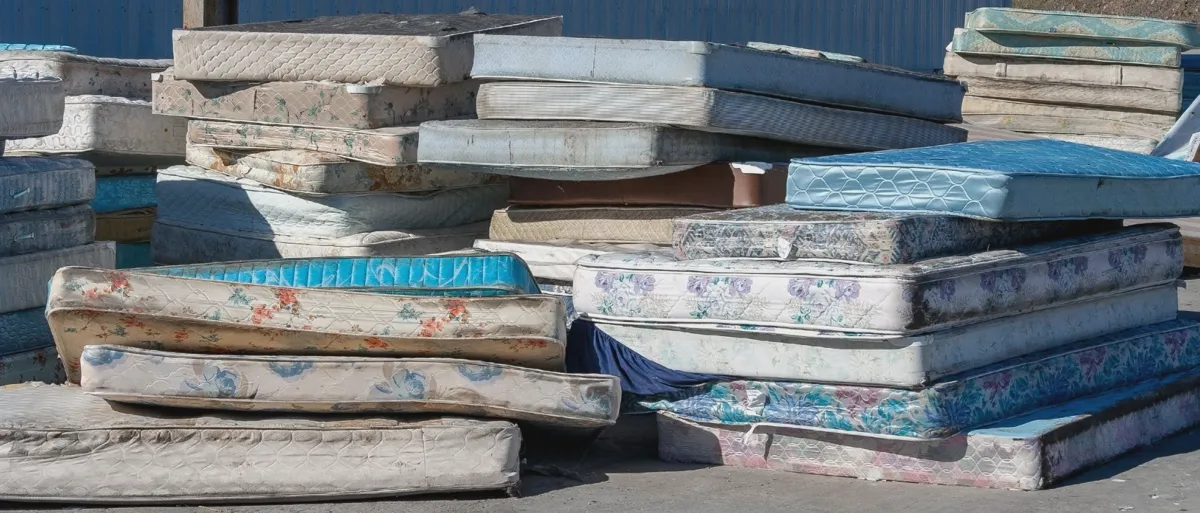
Replaced mattresses very rarely end up in landfills anymore. The most common paths:
- Recycling programs. States like California, Connecticut, and Rhode Island run mandatory mattress recycling under the Mattress Recycling Council, which has diverted over 11 million mattresses since 2015. Hilton's LightStay program recycles mattresses across participating properties.
- Component reuse. Recyclers strip mattresses for steel (springs), polyurethane foam (carpet padding), cotton/fiber (insulation), and wood (fuel pellets) - typically reclaiming 75%+ of materials.
- Donation. Lightly used mattresses sometimes go to shelters or non-profits when local regulations and condition allow.
- Resale. Almost never. Most major brands prohibit reselling used mattresses to guests or third parties for liability and brand-protection reasons.
Homeowners facing the same dilemma can follow our guide on how to get rid of an old mattress.
Want a hotel-grade bed at home?
Frequently asked questions
Do hotels sell their old mattresses?
Almost never. Major chains prohibit reselling used mattresses to protect against liability and brand reputation. The vast majority of retired hotel mattresses go to certified recycling facilities, where steel, foam, and fabric are reclaimed. A small share is donated to shelters when condition and local rules allow.
How long should a $2,000 mattress last?
A quality mid-tier mattress in the $1,500-$2,500 range typically lasts 7-10 years in a household. Hotels see faster wear because of nightly stranger usage and aggressive cleaning chemicals, which is why hospitality-grade builds use heavier coils and denser foam to hit the same target life.
What is the 10/5 rule in hotels?
The 10/5 rule is a guest-service standard, not a mattress rule. Staff make eye contact at 10 feet and verbally greet guests at 5 feet. It's unrelated to bedding cycles, but it's frequently confused with mattress replacement guidelines.
Are there laws requiring hotels to replace mattresses on a schedule?
No US federal or state law mandates a specific replacement interval. Hotels follow brand standards (Marriott, Hilton, IHG, Hyatt all set internal minimums), local health code on stains and biohazards, and voluntary American Hotel & Lodging Association guidance on inspection and rotation.
How can I tell if a hotel mattress has been replaced recently?
Check the law tag stitched to the side seam - it includes the manufacture date. Hospitality SKUs also typically have a brand-specific label (Heavenly, Suite Dreams, Hyatt Grand Bed). A mattress more than 7 years old in a full-service hotel is unusually old; in luxury, more than 5 years is unusual.
How can I tell if a hotel mattress has been replaced recently?
Check the law tag stitched to the side seam - it includes the manufacture date. Hospitality SKUs also typically have a brand-specific label (Heavenly, Suite Dreams, Hyatt Grand Bed). A mattress more than 7 years old in a full-service hotel is unusually old; in luxury, more than 5 years is unusual.
Do hotels rotate or flip their mattresses?
Yes - most modern hospitality mattresses are one-sided (no-flip), but housekeeping rotates them head-to-foot every 3-6 months to even out wear. Flip-eligible mattresses get flipped on the same schedule. This rotation is one of the biggest factors in extending a hotel mattress beyond its expected lifespan.