Your options for getting rid of an old mattress
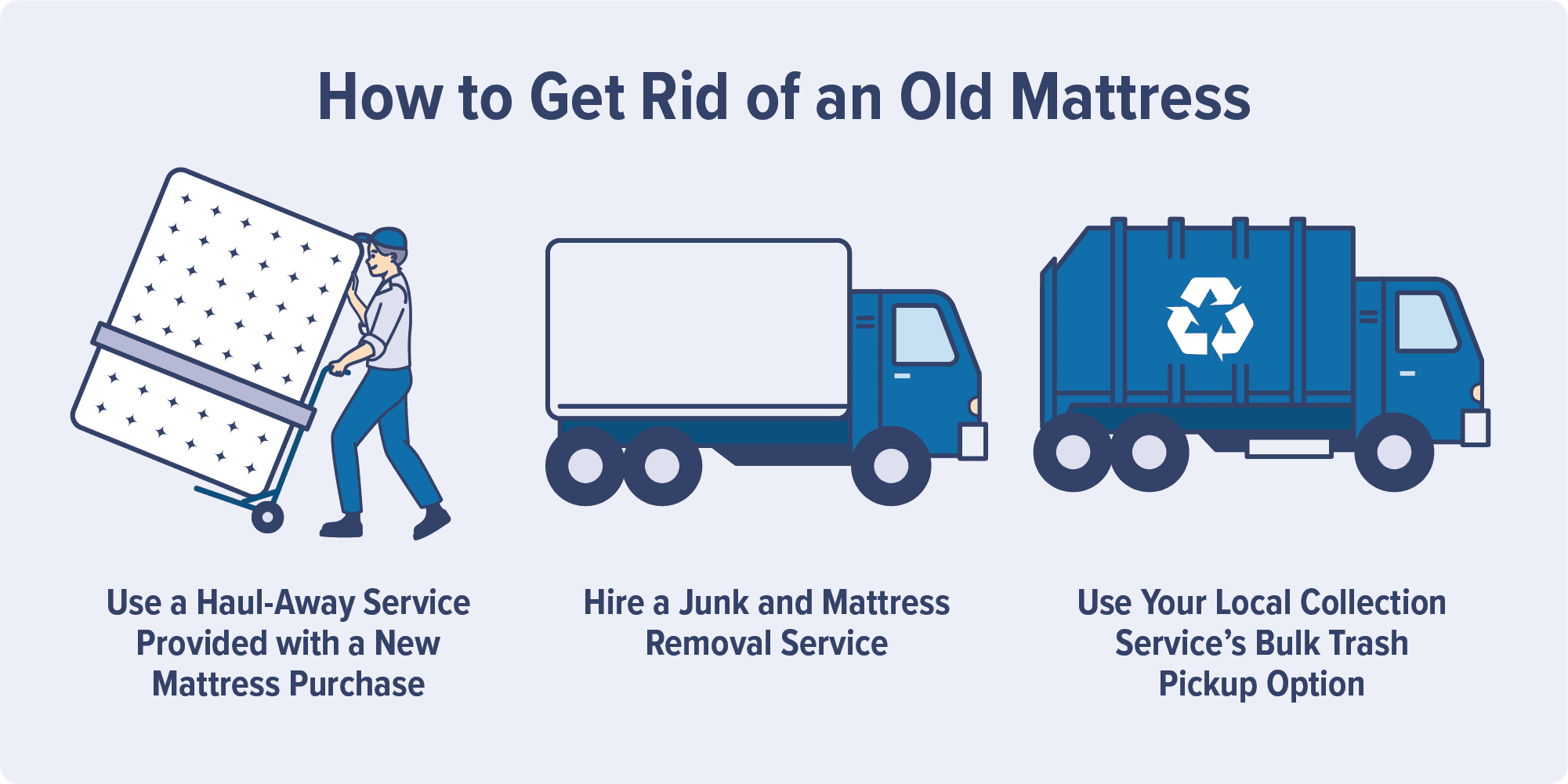
When a mattress reaches the end of its life, you have more than one responsible way to move it out of your home. The right path depends on the mattress's condition and on the resources available where you live. A mattress that is still clean and structurally sound can often be donated for reuse. One that is worn out can usually be recycled, since most of what you sleep on can be broken down into materials that get made into new products. And if you are buying a replacement, the easiest route is often to let the retailer take the old one when they deliver the new one.
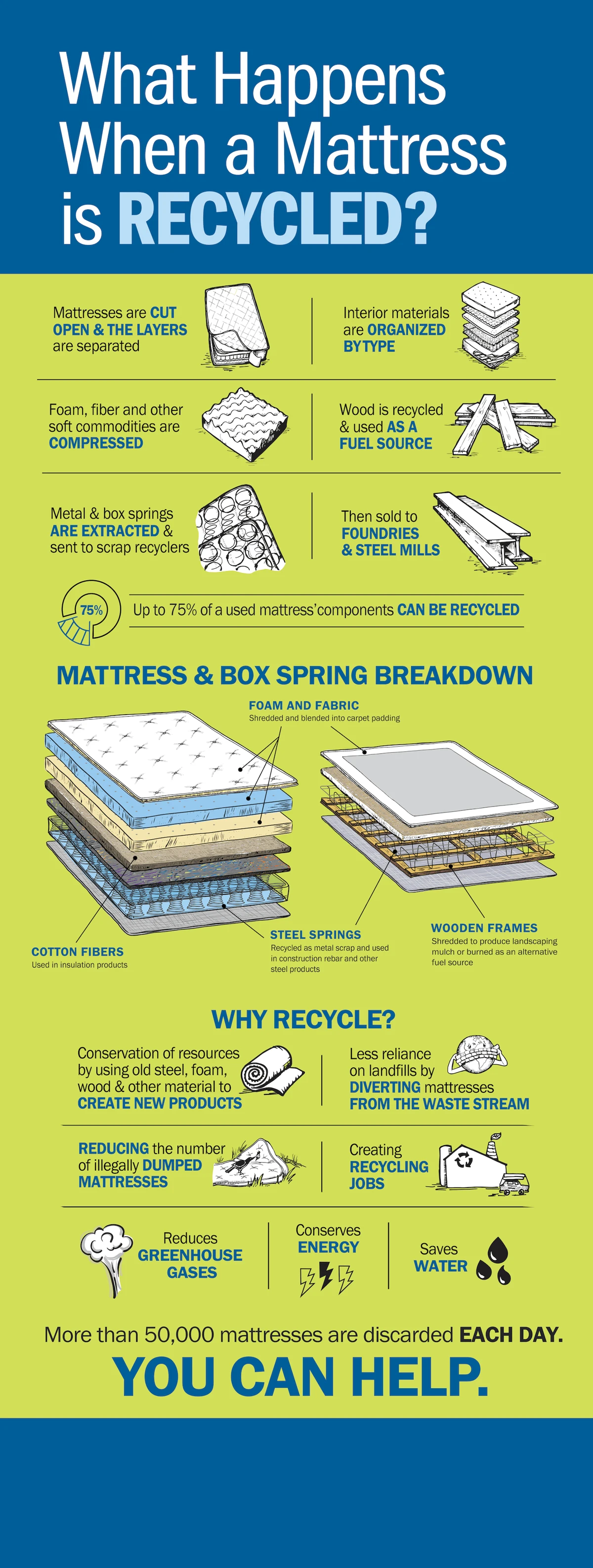
Before you decide, it helps to know that roughly three-quarters of all mattress and box spring components can be disassembled and recycled, with the recovered materials used to manufacture a variety of new products. That single fact is why dumping a mattress on the curb or in an alley is both wasteful and, in many places, against the law. The sections below walk through donation, recycling, retailer haul-away, and bulk pickup so you can pick the option that fits your situation.
Donate a mattress that's still in good shape
If your mattress is clean, intact, and free of stains or damage, donating it keeps a usable bed out of the waste stream and helps someone who needs it. Charities and reuse organizations accept mattresses in good condition for reuse or recycling, though each sets its own standards for what it will take. To find one near you, Massachusetts residents can search the MassDEP Beyond the Bin Recycling Directory, which lists charities and organizations that accept mattresses. Other states maintain similar directories, so it is worth checking what your state environmental agency publishes before you assume a mattress has to be thrown away.
Keep in mind that a donation center may turn down a mattress that is heavily soiled, sagging, or otherwise past the point of reuse. If that is the case, recycling is the next best step.
Recycle your old mattress
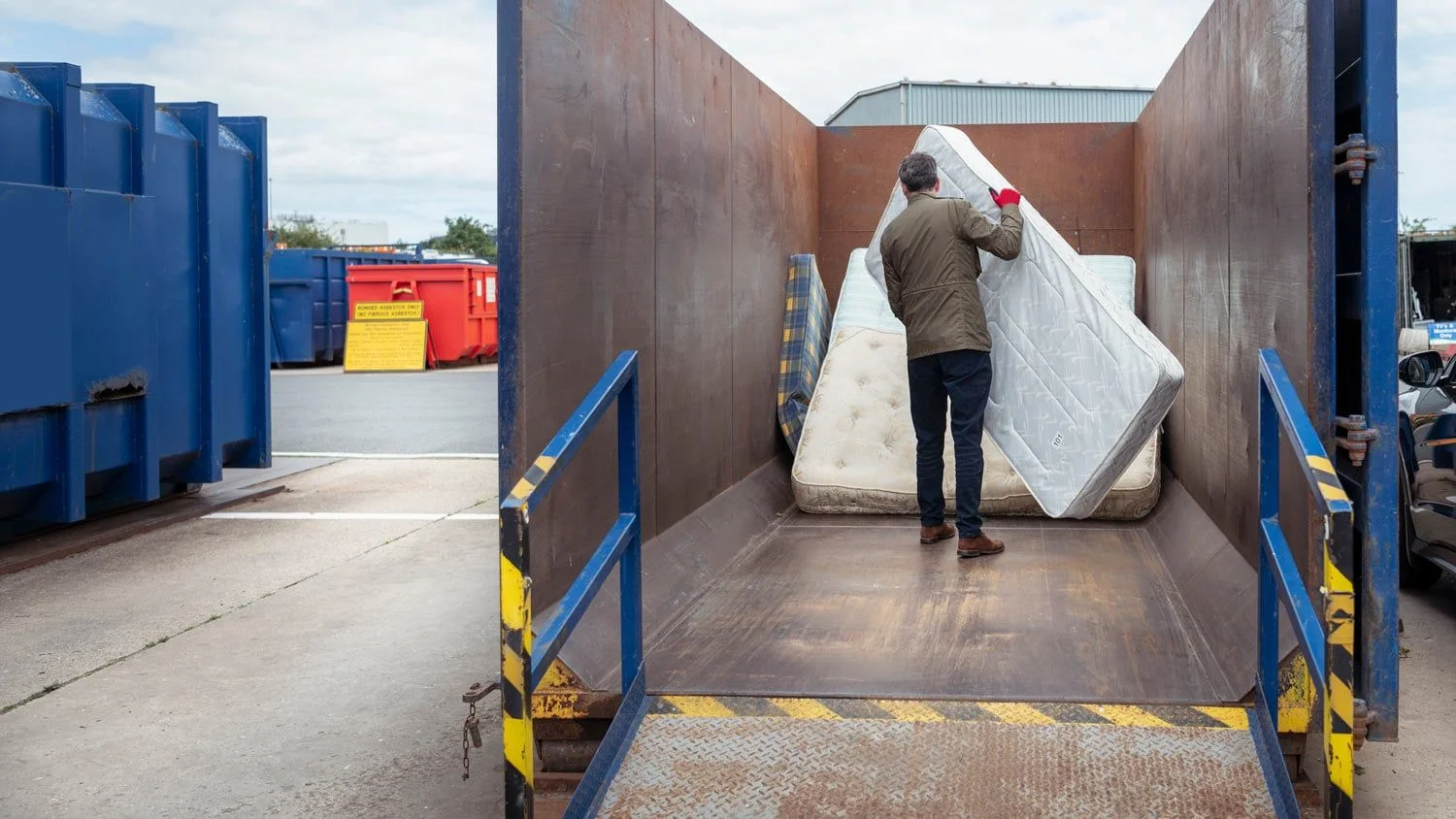
Recycling is the option that works even when a mattress is too worn out to donate. Because roughly three-quarters of a mattress and box spring can be disassembled, the steel springs, foam, wood, and fabric are separated and sent on to be turned into new products rather than buried in a landfill. The scale of this is significant: through the Mattress Recycling Council's Bye Bye Mattress program, more than 17 million mattresses have already been recycled.
To recycle yours, you can drop it off at a participating recycling location, often at no cost, though unit limits may apply and some sites ask you to make an appointment first. A handful of states run their own mattress-recycling programs that fund free drop-off and collection, so the exact options in front of you will depend on where you live. Contacting your local recycling or public works department is the quickest way to learn what is available in your area.
Let the retailer haul it away
If you are getting rid of an old mattress because a new one is on the way, the simplest disposal route is usually built into the purchase. Most furniture and mattress sellers accept old mattresses for recycling and disposal when they deliver a newly purchased mattress to your home. In some states the law goes further: in California, for example, if you are having a mattress delivered, the retailer is required to offer to take back your old mattress at no additional cost.
A few details are worth knowing before you count on this. Delivery or set-up fees for the new product may still apply, the retailer has up to 30 days to take back the old mattress, and the retailer can refuse to pick it up if it poses a health or safety risk. When in doubt, ask about the haul-away policy at the time you place the order rather than on delivery day.
Schedule a bulk or curbside pickup
When donation and retailer haul-away are not options, many municipalities offer a bulky item or bulk waste pickup that will collect a mattress directly from the curb. Some local governments provide this service for free, and in areas served by the Bye Bye Mattress program the collected mattresses are routed to recycling rather than the landfill. Availability and rules vary widely from one town to the next, so check with your local health, public works, or recycling department to find out whether your address qualifies and how to schedule a collection.
If you do set out a mattress for pickup, time it close to the collection date and follow your municipality's instructions. Leaving a mattress out for days, or dropping one off at a closed facility, defeats the purpose and can create exactly the kind of mess the next section warns against.
Why not just dump it or resell it?
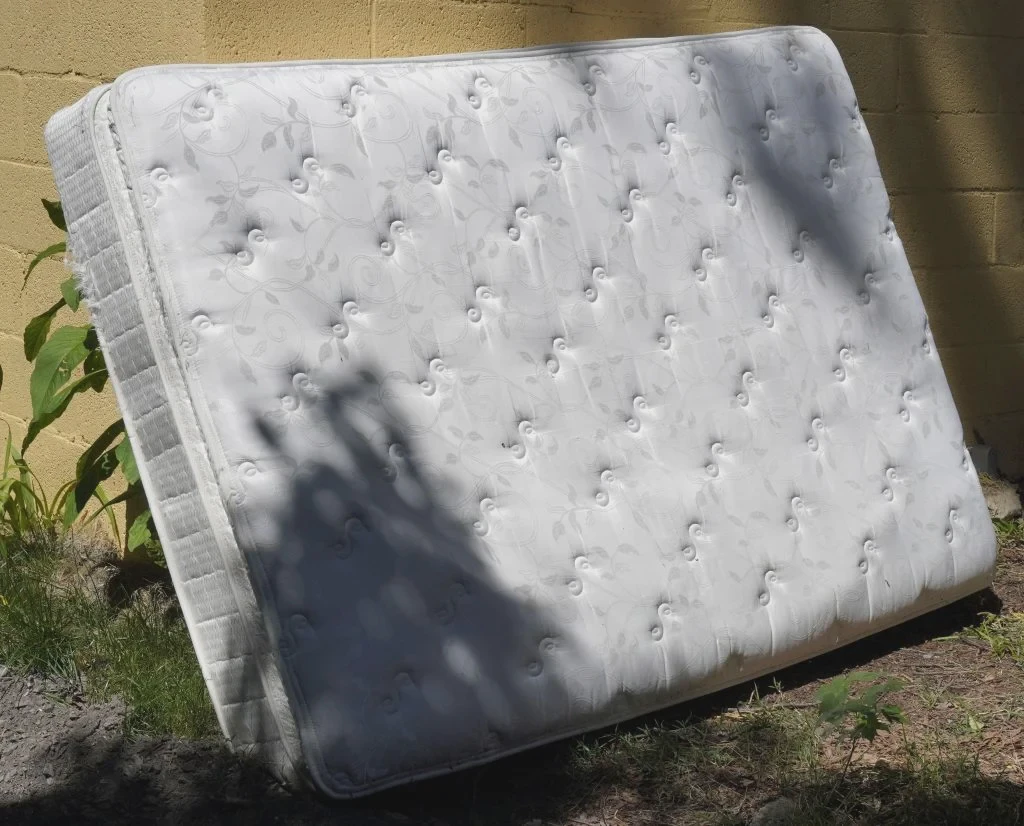
It can be tempting to drag an old mattress to a back alley or leave it in a park, but illegal dumping is not only unsightly, it is against the law in many places. Some states have gone as far as banning mattresses from disposal entirely. In Massachusetts, mattresses have been banned from disposal or transport for disposal since November 1, 2022, which means they must be recycled rather than thrown out with the trash.
Reselling is a different question from disposal, and the rules are stricter than most people expect. Used mattresses are regulated for hygiene and safety reasons, and in several states it is illegal to sell a used mattress unless it has been properly sanitized and labeled. So while donating to a charity that handles reuse is fine, quietly flipping an old mattress for cash can put you on the wrong side of the law. When reuse is not realistic, recycling remains the responsible default.
Frequently asked questions
What's the best way to dispose of an old mattress?
There is no single best way, because it depends on the mattress's condition and your local resources. If the mattress is still clean and usable, donation keeps it in service. If it is worn out, recycling recovers most of its materials. And if a new mattress is on the way, letting the retailer haul the old one away is usually the least effort. When none of those fit, a municipal bulk pickup is the fallback.
How do I dispose of a mattress myself?
You have a few self-service routes. You can drop the mattress off at a participating recycling location, often at no cost, though some sites cap how many units they take or ask for an appointment. You can also schedule a bulky item pickup through your local public works or recycling department, which may be free in some areas. What you should not do is dump it on the curb or in a vacant lot, since that is illegal in many places.
How to dispose of a mattress in New Jersey?
The general options are the same everywhere: donate, recycle, use retailer haul-away, or schedule a municipal bulk pickup. The specifics, including which programs are free and where drop-off sites are located, vary by state and town. Several states run dedicated mattress-recycling programs, so the fastest way to confirm what applies in New Jersey is to contact your local recycling or public works department and ask what mattress disposal services your municipality offers.