
If you are clearing out a guest room or upgrading to a new bed, you have probably wondered whether reselling that old mattress is even allowed. The short answer: in most of the United States, selling a used mattress is legal - but federal law, state statutes, and city ordinances stack on top of each other, and the wrong label (or the wrong stain) can turn a casual Facebook Marketplace listing into a fineable offense.
This guide walks through the federal baseline, the four state-level rule patterns (ban, sanitize, label, license), and a state-by-state cheat sheet you can scan before you list. It is updated for 2026 and reflects the CPSC flammability standard (16 CFR 1633), the FTC mattress labeling rules, and current state-level statutes published by consumer protection offices.
Quick answer: federal law allows it, states add the rules
There is no federal ban on selling used mattresses. The Consumer Product Safety Commission (CPSC) regulates flammability and labeling, and the Federal Trade Commission (FTC) enforces truth-in-advertising rules - neither outlaws resale. States and a handful of cities then layer on their own requirements, which fall into four buckets:
- Outright bans on retail resale (private peer-to-peer sales are usually still legal): IN, LA, MD, WA.
- Full bans on retail and private resale: KS. Kansas is the only state where neither retailers nor individuals can legally resell a used mattress.
- Mandatory sanitization before sale: AZ, CO, CT, DE, FL, MN, NV, NJ, NM, NC, SC, TX, VA.
- Mandatory labeling ("Used" / "Secondhand" disclosure on the law tag): GA, HI, IL, IA, KY, MA, MI, MS, MO, MT, OH, OR, PA, TN, UT, WV, WI.
- Stain or condition restrictions: CA bans sales of mattresses with visible stains; NY requires retailers to hold a special secondhand bedding license.
- Truth-in-advertising states (legal to sell, but illegal to claim the mattress is new): AL, AR, VT. The federal FTC rule already covers this, but these three states write it into their own statutes.
- No state-level law on selling used mattresses: NE. Nebraska adds nothing beyond the federal baseline, so the FTC labeling rule is the only requirement.
If your state isn't in any of those lists (AK, ID, ME, NH, ND, OK, RI, SD, WY), you should call the state Department of Health or Consumer Protection - these states defer to local health-code rules that vary by county.
The federal baseline: CPSC, FTC, and the law tag
Three federal rules apply to every mattress, new or used:
1. The flammability standard (16 CFR 1633)
Since July 1, 2007, every mattress and mattress/foundation set sold or resold by a retailer in the U.S. must pass an open-flame test (16 CFR 1633) and the older cigarette-ignition test (16 CFR 1632). Used mattresses manufactured before July 2007 generally fail 1633 - which is why most states that allow resale require the seller to attach a sworn statement that the mattress was manufactured after that date.
2. The FTC labeling rule
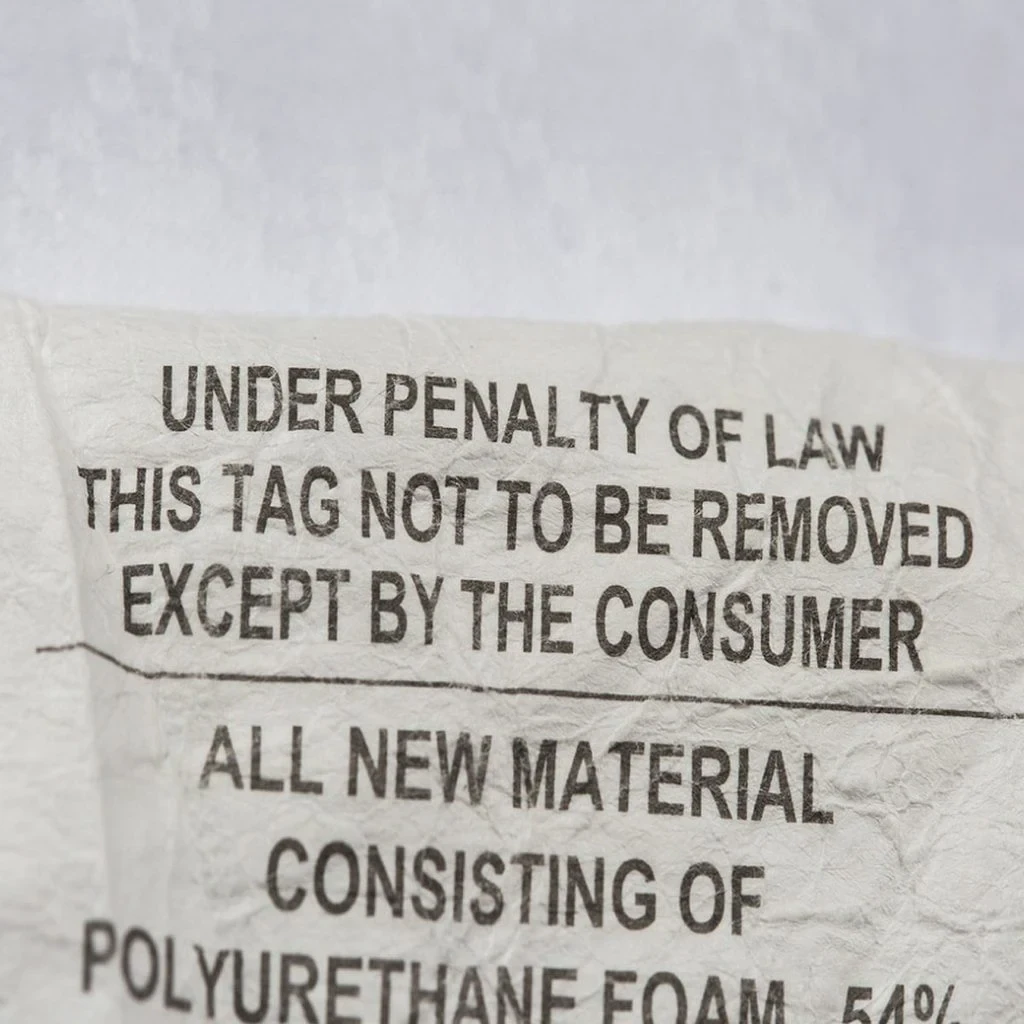
The FTC requires every mattress to carry a permanent 'law tag' disclosing fiber content, country of origin, and manufacturer registration number. Removing it before sale is a federal violation - that's why every tag carries the 'do not remove under penalty of law' wording. The buyer is allowed to remove it after purchase; the seller is not.
3. The truth-in-advertising rule
Selling a used mattress as 'new' is mail/wire fraud and an FTC unfair-practices violation regardless of state law. Even private sellers on Craigslist or Facebook Marketplace must disclose used condition. Several states (AL, VT) write this requirement directly into their statutes.
Decoding the law-tag colors: red, white, yellow
When a state requires labeling for resale, the standardized color system tells inspectors and buyers what's inside:
- White tag - All-new materials. Used only on first-sale mattresses.
- Yellow tag - Contains some used filling material; legal to sell new but must disclose.
- Red tag - Entirely or partially second-hand. Signals the mattress has been sanitized and is being legally resold.
If you're buying a used mattress and there is no red tag - or the red tag is missing - the seller is operating outside the licensing rules in any state that requires labeling. Walk away.
One important caveat: the tag system applies to businesses and retailers only. Private individual-to-individual sales (Facebook Marketplace, Craigslist, a yard-sale handoff to a neighbor) are not required to attach a red or yellow tag, even in labeling states. The truth-in-advertising rule still binds the private seller (you cannot call a used mattress "new"), and a few states require written disclosure of used condition, but the colored-tag regime is a retailer compliance system rather than a peer-to-peer one.

State-by-state cheat sheet
Use this as a starting point - confirm with your state's Department of Consumer Protection or Department of Health before listing, especially if you're selling commercially.
States that ban or heavily restrict retail resale
- Indiana, Louisiana, Maryland, Washington - Retail resale of used mattresses is prohibited; private peer-to-peer sales between individuals are generally still allowed but must disclose used condition.
- Kansas - The only state with a full ban on both retail and private resale. Neither a mattress store nor a private individual can legally sell a used mattress in Kansas; donation or recycling is the only option.
- California - Resale is legal except when the mattress has visible stains. Even one stain makes it illegal to sell, donate, or transfer for value.
- New York - Retailers need a Secondhand Bedding License from the Department of State; private sales must disclose used condition.
States that require sanitization before sale
Sanitization typically means commercial-grade ozone or steam treatment performed by a licensed processor - DIY vacuuming and Lysol does not meet the standard.
- AZ, CO, CT, DE, FL, MN, NV, NJ, NM, NC, SC, TX, VA
States that require explicit labeling but allow resale
- GA, HI, IL, IA, KY, MA, MI, MS, MO, MT, OH, OR, PA, TN, UT, WV, WI
States that defer to local health codes
- AK, ID, ME, NH, ND, OK, RI, SD, WY - Call your county health department before listing. Many counties default to the FTC labeling rule with no state-level addition.
When resale makes sense
- Mattress is less than 5 years old and was protected by a waterproof cover
- No visible stains, tears, sagging, or odor
- You can prove a manufacture date after July 2007 (passes 16 CFR 1633)
- Your state allows private resale and you can disclose 'used' clearly
- You're willing to pay a licensed sanitizer if your state requires it
When to skip resale
- Any visible staining (especially in CA - instant violation)
- Known bed-bug exposure or pest history
- Mattress is over 8 years old and shows sagging or coil failure
- Pre-2007 manufacture date - likely fails federal flammability standard
- Memory-foam mattress that has been compressed/folded for storage (structural damage voids resale value)
How to legally sell a used mattress, step by step
If your state allows it and the mattress passes a basic condition check, here's the workflow that keeps you on the right side of consumer-protection law.
Step 1 - Verify the manufacture date
The law tag lists a manufacture date. If it's before July 1, 2007, do not resell - the mattress predates the federal flammability standard and is illegal to transfer for value in most states.
Step 2 - Inspect for stains, tears, and pests
Strip the mattress, photograph all six sides under bright light, and check seams and tufting for bed-bug evidence (rust-colored spotting, shed skins). Even a single visible stain disqualifies the mattress for sale in California and most reputable resale platforms.
Step 3 - Sanitize if your state requires it
In states that mandate sanitization, you must use a licensed processor - search 'mattress sanitizer + [your state]' to find a state-registered service. Expect $50-$120 per mattress. They issue a sanitization certificate that becomes your proof of compliance.
Step 4 - Label and disclose
Leave the original law tag intact. If your state requires it, attach a 'USED' or 'SECONDHAND' tag (red color in labeling states). In your listing, write the manufacture date, age, any known history (smoke-free home, pet-free home), and the words 'used mattress' explicitly - never imply it's new.
Step 5 - Use a platform that requires disclosure
Facebook Marketplace, Craigslist, OfferUp, and Sharetown all allow used-mattress listings with disclosure. eBay does not. If you're going through a buyback service like Sharetown or Resale Rabbit, they handle sanitization and labeling for you and pay net of those costs.
Should you buy a used mattress?
Even where it's legal to sell, buying a used mattress carries real downsides:
- Hygiene - Mattresses absorb sweat, skin cells, and dust mites. Even sanitized, they harbor allergens that can trigger asthma and skin reactions.
- Bed bugs - The single biggest risk. Bed bugs hide inside seams and tufting and can survive a year without feeding. Visual inspection misses early infestations.
- Structural fatigue - Memory foam loses density after 5-7 years; innerspring coils lose tension after 7-10. A used mattress may not provide the support your body needs.
- No warranty - Mattress warranties cover original purchasers only. Once sold, you're on your own.
If budget is the main driver, a clearance or floor-model new mattress with full warranty almost always beats a used one once you factor in the lifespan difference.
Frequently asked questions
Is it illegal to sell a used mattress in California?
No - but only if the mattress has no visible stains. California's used-bedding law (Business and Professions Code § 19200 et seq.) prohibits selling, donating, or transferring any mattress with visible staining. If it has even one stain, the sale is illegal and the mattress must be disposed of.
Is it illegal to sell a used mattress in Texas?
No, but Texas requires sanitization. The Texas Health and Safety Code requires used mattresses to be sanitized by a state-licensed processor before resale, and the seller must attach a sanitization tag listing the processor's license number.
Is it illegal to sell a used mattress in Pennsylvania?
No. Pennsylvania allows used-mattress resale but requires the law tag to remain attached and a 'used' or 'secondhand' label to be visible. Private sales between individuals must still disclose used condition in writing.
Can I sell a used mattress on Facebook Marketplace?
Yes, in most states. Facebook Marketplace allows used-mattress listings as long as the listing clearly discloses used condition and complies with your state's labeling/sanitization rules. The platform will remove listings that mark a used mattress as 'new.'
What states ban selling used mattresses?
Indiana, Kansas, Louisiana, Maryland, and Washington prohibit retail resale of used mattresses. Private peer-to-peer sales between individuals are generally still allowed but must disclose used condition. California prohibits sale of stained mattresses outright.
Do I have to remove the mattress tag before selling it?
No - the opposite. Federal law prohibits the seller from removing the law tag. The 'do not remove under penalty of law' wording applies only to sellers and retailers. The end-buyer is allowed to remove it after purchase.
Why can't you sell a used mattress in some states?
The reasons are regulatory rather than absolute. Retailer rules on selling a used mattress are typically stringent: the mattress must be clearly labeled and, in many states, sanitized by a licensed processor. States with sanitization or labeling mandates added those rules to protect buyers from bed-bug exposure, allergens, and pre-2007 mattresses that fail the federal flammability standard. Where retailers are blocked entirely (IN, LA, MD, WA), the state concluded that consistent enforcement was easier than inspection. Kansas goes further and bans both retail and private resale outright.
Bottom line
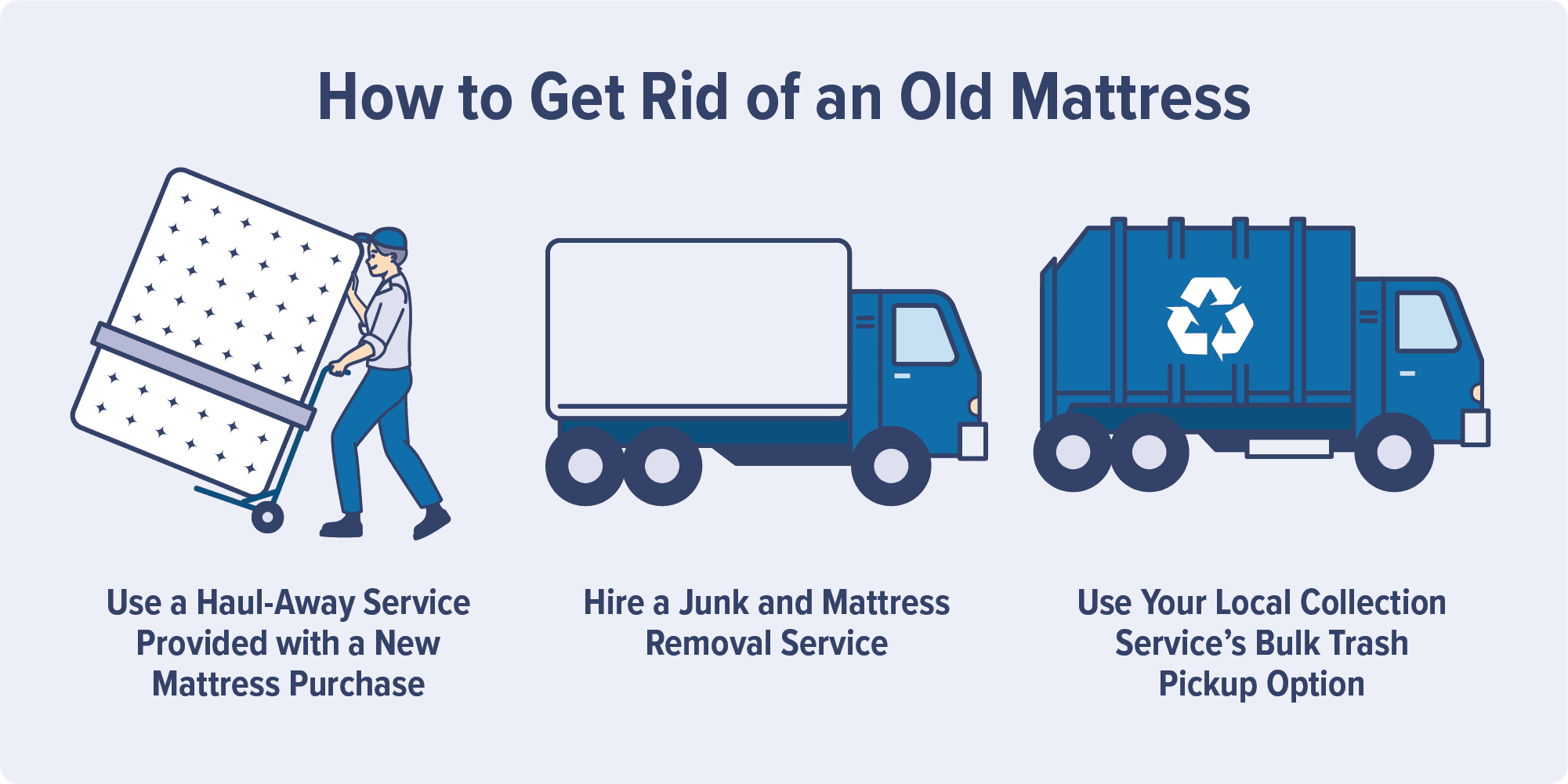
Selling a used mattress is legal under federal law and in most states, but the four-rule pattern - ban, sanitize, label, license - determines what you actually have to do. Before listing, check your state's bucket above, leave the law tag attached, disclose used condition in writing, and skip the sale entirely if the mattress is stained, pre-2007, or has any pest history. When in doubt, donate to a state-registered recycler instead - most states fund a mattress-recycling program that takes them for free.
Shopping for a new mattress instead?
Browse our independently-tested picks across every major brand, size, and budget - every recommendation comes from hands-on review, not vendor talking points.