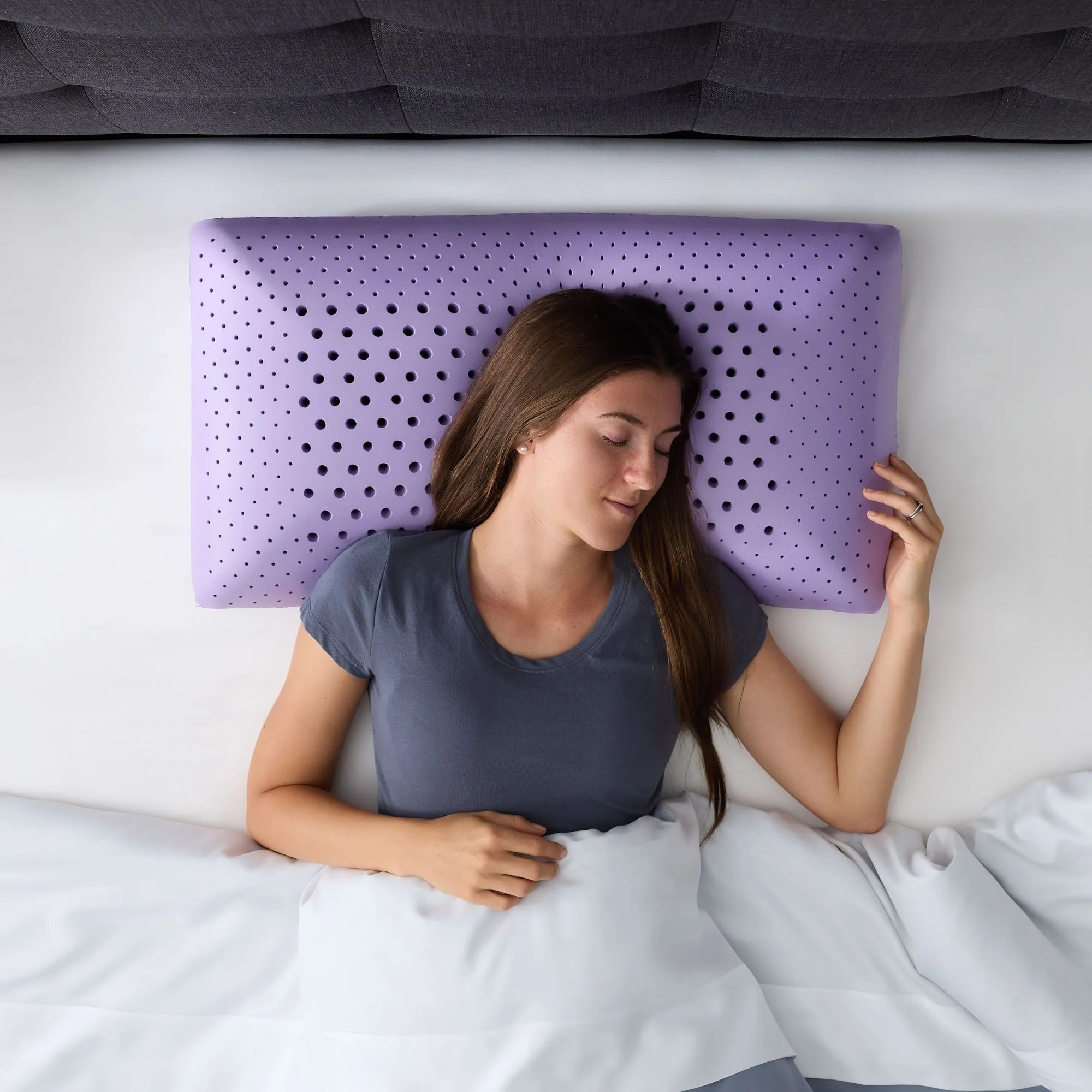

A memory foam pillow that sits too tall under your head can throw your neck out of alignment as quickly as one that's too flat. The good news: most memory foam pillows can be reshaped, softened, or permanently lowered - you just need the right method for the construction you have.
This guide covers seven techniques our editorial team has tested across solid-block, contoured, and shredded memory foam pillows, plus a clear signal for when flattening is no longer worth the effort and replacement is the smarter call.
Why memory foam pillows feel too firm or too tall
Memory foam is viscoelastic - it resists rapid deformation and softens gradually as it absorbs heat. New pillows almost always feel firmer than they will after a 2-4 week break-in, because the foam hasn't conformed to your sleep position yet and the off-gassing process leaves the cell structure stiff.
Three factors drive how a memory foam pillow feels:
- Density. Higher-density foam (5+ lb/ft³) resists compression longer and lasts longer, but takes more break-in time. Budget pillows under 3 lb/ft³ soften faster but flatten permanently within a year.
- Temperature. Memory foam is temperature-reactive. A cool bedroom (under 68°F) keeps the pillow firm; body heat and warmer rooms soften it within minutes of use.
- Construction. Solid-block pillows hold their shape and resist flattening. Shredded foam pillows can be physically reduced by removing fill. Contoured cervical pillows have fixed loft zones designed not to compress.
Before reaching for a method below, identify which type you have - it determines what will work.

Method 1: Tumble dry on low with dryer balls
This is the single most effective method for softening and slightly lowering a solid memory foam pillow without damaging it.
- Confirm the care tag allows tumble drying (most modern memory foam pillows do).
- Place the pillow in the dryer with 2-3 wool or rubber dryer balls (tennis balls work but can leave fuzz).
- Run on low or air-dry for 15-20 minutes. Never use high heat - temperatures above 130°F can break down polyurethane cell walls and create permanent dents.
- Remove and let it cool flat for 10 minutes before use.
The heat softens the foam while the balls compress and redistribute it, knocking down high spots and breaking up stiffness from manufacturing.
Method 2: Manual kneading and rolling
No equipment, surprisingly effective. Work the pillow by hand for 5-10 minutes per day for a week:
- Press both palms flat into the surface and lean your body weight down for 30 seconds.
- Fold the pillow in half, hold for 20 seconds, release. Repeat 10 times.
- Knead the foam like dough, focusing on the thickest area where your head rests.
- Place it on a hard floor and roll it under a rolling pin or your forearms.
For shredded memory foam pillows this also redistributes clumped fill - often the real cause of an unevenly tall pillow.
Method 3: Apply gentle warmth before bed
Pre-warming a pillow that feels too firm at the start of the night drops perceived loft by roughly 1/4 to 1/2 inch within 10-15 minutes of contact:
- Lay the pillow on a heating pad set to low for 10 minutes (never overnight).
- Place a warm - not hot - water bottle on top for 15 minutes.
- Set the pillow on a clothes dryer running another cycle to absorb ambient heat.
Keep direct heat sources under 130°F and never apply heat through a pillowcase made of synthetic fabric that can melt.
Method 4: Remove fill from a shredded foam pillow
This is the only way to permanently lower a shredded memory foam pillow's loft, and it's reversible.
- Locate the inner zipper - most shredded pillows have a hidden zip on the long edge of the inner liner.
- Pull out a small handful of fill (about 1 cup) and seal the rest in a zip-top bag for storage.
- Re-zip, fluff the pillow flat, and sleep on it for two nights before deciding whether to remove more.
Work slowly. It's easy to overshoot and end up with a pancake; the bagged foam lets you add some back if you do.
If your pillow lost loft but still has good fill, see our guide on how to fluff a pillow.
Method 5: Cut down a solid memory foam pillow
If your pillow is a solid block that's permanently too tall, you can shave the bottom layer off with a serrated bread knife or electric carving knife:
- Remove the cover and lay the pillow flat on a cutting board.
- Mark a horizontal cut line about 1/2 inch above the bottom (start conservative).
- Use long, slow sawing strokes - a serrated edge cuts foam cleanly. Pressing harder makes a worse cut.
- Reinsert into the cover; the cut edge sits underneath and is invisible in use.
This voids most warranties, so weigh that against the cost of replacement.
Method 6: Repurpose as a body, knee, or lumbar pillow
If the pillow is high-quality but wrong for your head, demote it rather than fight it:
- Side sleepers can put a too-thick pillow between the knees to align hips and spine.
- Back sleepers with low back pain often benefit from one tucked under the knees.
- A firm memory foam pillow makes an excellent lumbar support for office chairs and car seats.
This preserves the pillow's lifespan and avoids waste.
Method 7: Skip the washing machine - wash the cover only
A common Reddit and forum suggestion is to machine-wash the whole pillow to break it in. Don't. Water saturates and tears polyurethane foam cells, leaving permanent flat spots, mildew risk, and a ruined warranty. Almost every major brand (Tempur-Pedic, Casper, Purple) explicitly prohibits it.
Instead:
- Remove the outer cover and machine-wash on cold, gentle cycle.
- Spot-clean the foam itself with a damp cloth and mild soap.
- Air-dry the cover and foam fully before reassembly.
How long does it take to break in a new memory foam pillow?
Most pillows reach their stable feel between two and four weeks of nightly use. If after a month it still feels too firm or too tall and none of the methods above have helped, the pillow is likely the wrong loft for your sleep position rather than under-broken-in.
Quick loft guide by sleep position:
- Stomach sleepers: 2-3 inches
- Back sleepers: 3-5 inches
- Side sleepers: 4-6 inches (broader shoulders need more)
When to replace instead of flatten
Replacement is the right call when:
- The pillow has a permanent body impression that doesn't rebound after 24 hours of rest.
- It's more than 18-24 months old (foam loses structural rebound past that mark, regardless of brand).
- It develops a sour or musty smell that airing out doesn't fix - a sign of internal moisture damage.
- You wake with persistent neck pain after trying two pillow heights.
A quality memory foam pillow runs $40-$120 and lasts 2-3 years with care. If you're spending more time fighting yours than sleeping on it, replacement is the better economy.
Frequently asked questions
Can I flatten a memory foam pillow permanently?
Yes, but only by removing fill from a shredded pillow or trimming a solid pillow with a serrated knife. Heat, kneading, and dryer methods only soften the foam temporarily - the pillow returns to its molded shape once it cools.
Will putting a memory foam pillow in the dryer ruin it?
Not on low or air-dry settings. High heat (above roughly 130°F) breaks down the polyurethane cell structure and causes permanent indentations or crumbling. Always check the care tag first - a few specialty pillows are dryer-prohibited.
Why is my memory foam pillow so hard?
New memory foam pillows are firmest in the first two to four weeks of use. Cool room temperatures (under 68°F) also keep them stiff. Body heat and break-in time soften the foam noticeably; if it's still rock-hard after a month, the density or loft is likely wrong for you.
Can you wash a memory foam pillow in the washing machine?
No. Water tears the cell structure of solid memory foam and creates permanent flat spots, mildew, and odor. Wash only the removable cover; spot-clean the foam itself with a damp cloth and mild soap, then air-dry fully.
How do I make my memory foam pillow flatter overnight?
Place it under a stack of heavy books or a folded comforter for 8-12 hours. The sustained pressure compresses the foam temporarily. For lasting reduction on a shredded pillow, remove a cup of fill from the inner zipper instead.